Tag: cold winter

  • Cold winter conditions in the Arctic

    Cold winter conditions in the Arctic

    Climate conditions have been negative

    States for 2012 was climate conditions in Scandinavia, Siberia, Alaska and Canada have been colder than average this winter.

    The National Snow and Ice Data Center reports that the Arctic sea ice extent for December 2012 was well below average, driven by anomalously low ice conditions in the Kara, Barents, and Labrador seas.

    NSIDC states that the winter has been dominated by the negative phase of the Arctic Oscillation, bringing the cold climate around the Arctic.

    The Arctic Oscillation is an Arctic climate index with positive and negative phases, which represents the state of atmospheric circulation over the Arctic. The positive phase brings lower-than-normal pressure over the polar region, steering ocean storms northward, bringing wetter weather to Scotland and Scandinavia, and drier conditions to areas such as Spain and the Middle East.

    Reports today also show that the average temperature for USA for 2012 was above average, showing different climate than in the Arctic, outside of Alaska.

    Sources
    NSIDC

    NOAA 1

    NOAA 2

  • Warm summer means cold winter

    Warm summer means cold winter

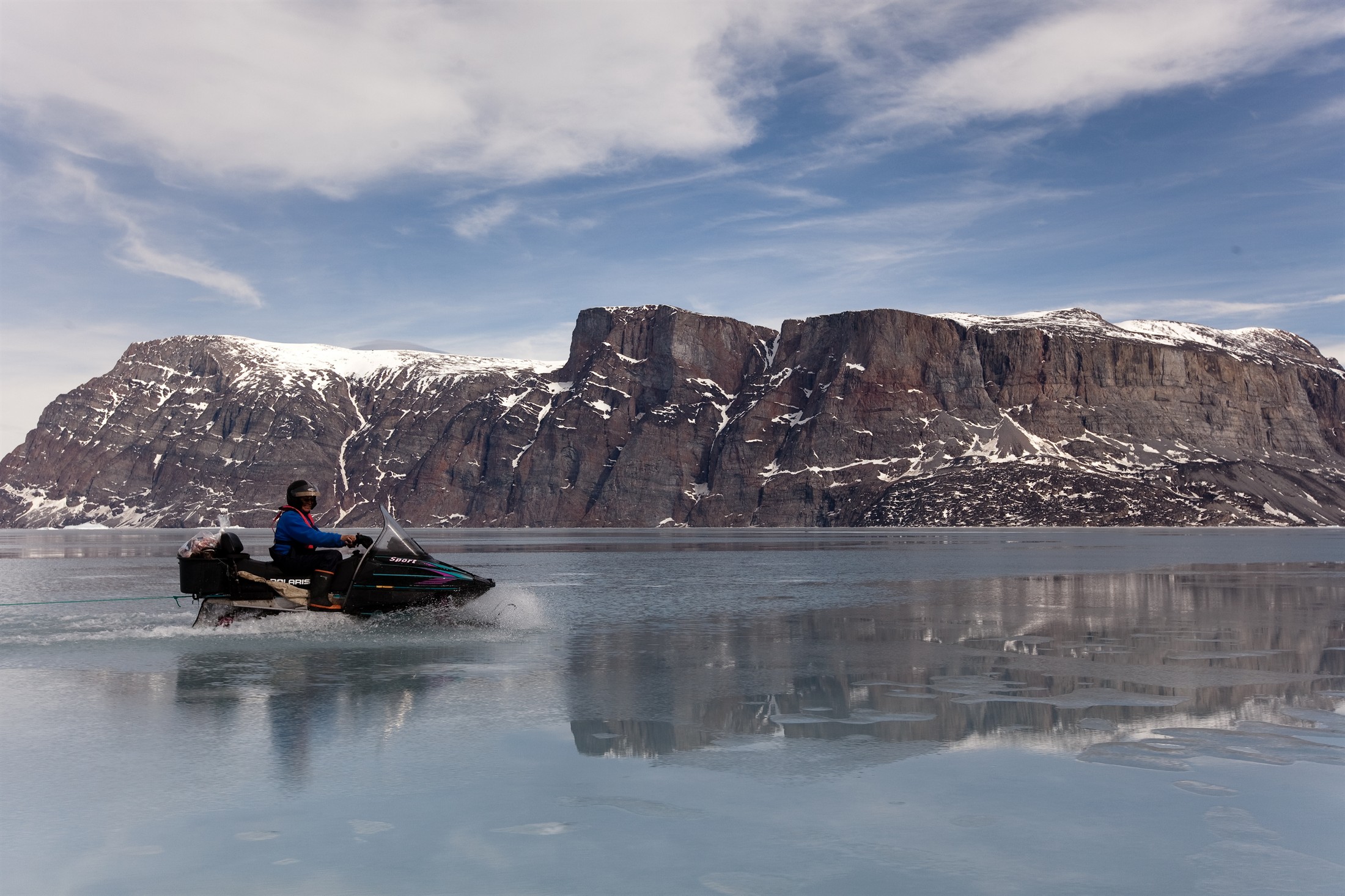
    Snowmobile driving on open water

    Warmer climate, spurred by climate change, can cause colder winters. This is the result of a new study by Jodah Cohen, released this week.

    The study explains the Rube Goldberg-machine of climatic processes that can link warmer-than-average summers to harsh winter weather in some parts of the Northern Hemisphere.

    Average temperatures have risen for over 200 years, most rapidly for the past 40 years. And average temperatures in the Arctic have been rising at nearly twice the global rate, says Cohen, a climate modeler at the consulting firm Atmospheric and Environmental Research in Lexington, Massachusetts.

    A close look at climate data from 1988 through 2010, including the extent of land and sea respectively covered by snow and ice, helps explain how global warming drives regional cooling, Cohen and his colleagues report.

    The strong warming in the Arctic in recent decades, among other factors, has triggered widespread melting of sea ice. More open water in the Arctic Ocean has led to more evaporation, which moisturizes the overlying atmosphere, the researchers say. Previous studies have linked warmer-than-average summer months to increased cloudiness over the ocean during the following autumn.

    That, in turn, triggers increased snow coverage in Siberia as winter approaches. As it turns out, the researchers found, snow cover in October has the largest effect on climate in subsequent months.

    Source: American Association for the Advancement of Science