Tag: drill

  • Cairn Energy plans to drill in Greenland

    Cairn Energy plans to drill in Greenland

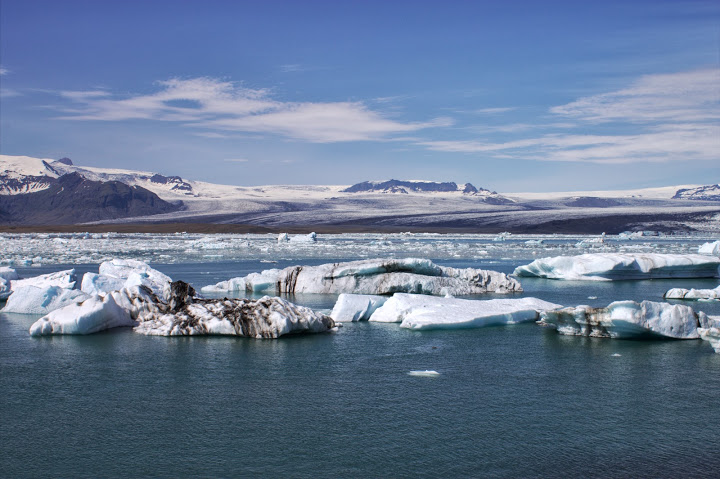
    arctic landscape

    Cairn Energy, one of Europe´s leading independent oil and gas exploration and development companies, has revealed their long term plans for exploration drilling programme, which may involve in resuming activity off Greenland.

    If the company goes ahead with their plans of exploration and exploitation in Greenland, it could mean that they resume drilling operations in the Pitu field by the second half of next year.

    To date, the Edinburgh-based explorer’s drilling programme off Greenland has not been fruitful and had been widely criticized by environmentalists.

    In the firm’s latest half-yearly report it raised its total programme target to an accumulative figure of over four million barrels.

    Chief Executive Simon Thomson explained that the company will commence a year-long multi-well frontier exploration programme as of September that will give shareholders ongoing exposure to the potential for material growth.

    Cairn’s current inventory is made up of 144 leads and 62 prospects in the frontier basins off Morocco, Mauritania, Senegal, Spain, Ireland and Greenland, and the more mature Norwegian Continental Shelf and UK and Norwegian North Sea.

    SOURCES

    Ice News

    See also:

    Arctic Portal Library

    Arctic Portal Mapping System

  • China to drill in Barents Sea

    China to drill in Barents Sea

    China on the map

    The Chinese National Petroleum Corporation (CNPC) strikes a deal with Rosneft over the exploration of three fields in the Barents and Pechora Seas.

    As reported by the Barents Observer, the Chinese National Petroleum Corporation (CNPC) struck a deal with Rosneft over the exploration of three fields in the Barents and Pechora Seas.

    The Agreement was signed during the last week’s visit to Russia, paid by the Chinese President – Xi Jinping. The Agreement included Zapadno-Prinovozemelsky structure in the Barents Sea and the Yuzhno-Russky and Medynsko-Varandeysky structures in the Pechora Sea.

    With the cooperation in place, the CNPC becomes Rosneft’s third foreign partner in the Barents Sea. From before, agreements have been signed with Eni and Statoil. In addition, Rosneft has a comprehensive agreement with ExxonMobil in the Kara Sea.

    The Zapadno-Prinovozemelsky is among the least explored areas on the Russian shelf, and resource estimates are sparse. However, the hydrocarbon potential is believed to be considerable considering the highly perspective surrounding areas.

    China has over the last couple of years displayed a quickly increasing interest in Arctic issues. As previously reported, China could already by year 2020 send as much as 15 percent of its international trade through Arctic waters.

    Chinare 5 in northern Iceland during the summer of 2012

    The country is also bidding for a permanent observer status in the Arctic Council. In the summer of 2012, the country sent its icebreaker “Xue Long” (Snow Dragon) in a historic mission along the Northern Sea Route and made an attempt to reach the North Pole.

    Rosneft was one of the last vertically integrated oil companies to emerge from the reorganization and large-scale privatization of Russia’s oil industry in the years following the dissolution of the Soviet Union.

    Today its plans are about to reach implementation of a number of hydrocarbon exploration and development projects in Russia, the United States and other countries, as well as to set up a joint Arctic Research Center (ARC) in St. Petersburg.

    Source

    Barents Observer

  • Shell puts Alaska plans on ice

    Shell puts Alaska plans on ice

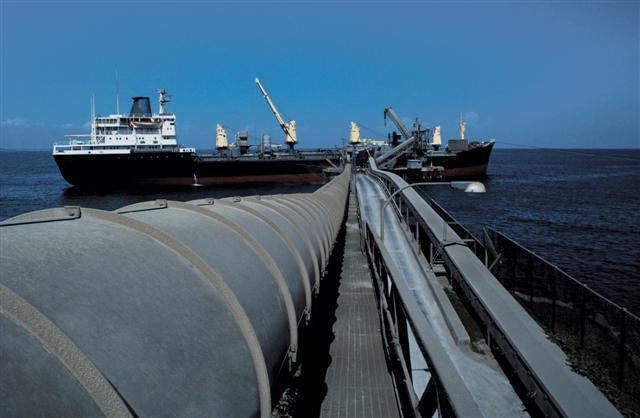
    Oil tanker gets a refill

    Oil giant Shell has put its controversial plans to drill for oil in Alaska on ice, at least for this year. The company had multiple problems with the two drilling platforms to be used for exploration.

    Concerns over safety in the platforms have been raised and the plans critized. Shell pushed hard for permission to explore and in the end got its permission.

    Shell has now sent the two platforms to Asia to be repaired and improved and plans to drill in the Chukchi Sea and Beuforthaven in 2014.

    “We have made progress in Alaska, but this is a long term program that we intend to implement in a safe and thoughtful way,” said Shell president Marvin Odum.

    Shell drilled two test holes last year, according to the company went according to plan.

    “The drilling was perfectly safe, with no serious injuries or impact on the environment,” said in a statement.

    Source

    Offshore

  • New drill for permafrost in Svalbard

    New drill for permafrost in Svalbard

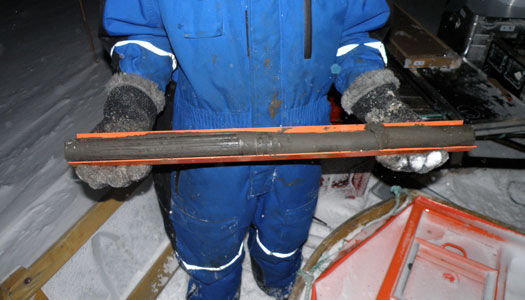
    Permafrost core

    The PAGE21 project, a new EU 7th framework collaborative research project which Arctic Portal proudly is a part of, will expand knowledge of permafrost in the Arctic. Drilling starts next week in Adventdalen, Svalbard.

    A total of 18 institutions from 11 countries are involved and UNIS is in charge of the field campaign in Adventdalen outside Longyearbyen that starts next week.

    The five main research field sites are Zackenberg in North Eastern Greenland, Abisko in Northern Sweden, Adventdalen and Ny-Ålesund in Svalbard, and Samoylov Island and Kytalyk in Russia. The individual key field research sites are collecting field data on the permafrost, such as determining its temperature, its amount of ice, the origin of the ice, and the distribution of permafrost landforms in the study areas.

    A new specially designed hydraulic drill rig has been bought for drilling. UNtil now the drilling has been hand made, down to only 2 meters. The new drill is able to collect cores from the permafrost in both sediments and bedrock down to potentially 50 m depth.

    The drill in testing in Svalbard

    The drilling that starts next week will collect up to 110m of permafrost cores from ice-wedge polygons, pingos and solifluction sheets in Adventdalen.

    The PAGE21 project combines field measurements of permafrost processes, pools, and fluxes, with remote sensing data and global climate models at local, regional and, for the first time, pan-Arctic scales.

    The output from this research will help to advance our understanding of permafrost processes at multiple scales, resulting in improvements in global numerical permafrost modelling and the ensuing future climate projections.

    Source: UNIS

  • Shell pushing to win approval for its plan to drill for oil in the Alaskan Arctic

    Shell

    Royal Dutch Shell is beginning a public lobbying campaign, including national advertising, on Monday. The giant oil company is promising to make unprecedented preparation to prevent the kind of disaster that polluted the Gulf of Mexico earlier this year. With the turmoil and damage created by the BP spill it can be imagined that they have quit a job to do.

    The plan is to drill in Alaska’s Beaufort and Chukchi seas is not a new venture but something that has been stalled by lawsuits and regulatory delays four years. The company was close to overcome all hurdles when the BP accident occurred. Due to the BP accident the Obama registration suspended most new offshore drilling, including within the sesitive waters of the Arctic. Since then the moratorium on gulf drilling has been lifted,Shell is pressing the Interior Department to grant final approval for its Arctic projects by the end of this year so that the company has enough time to move the necessary equipment to drill next summer, when the ice clears.

    following the BP accident, both individuals and official parties have become more aware of the environmental risks involved with such ventures which will hopefully lead to strenghtendend security meassures and the strengthening of response units, if such an accident is to o cure again.