Tag: drilling

  • Conoco’s drilling now on hold

    Conoco’s drilling now on hold

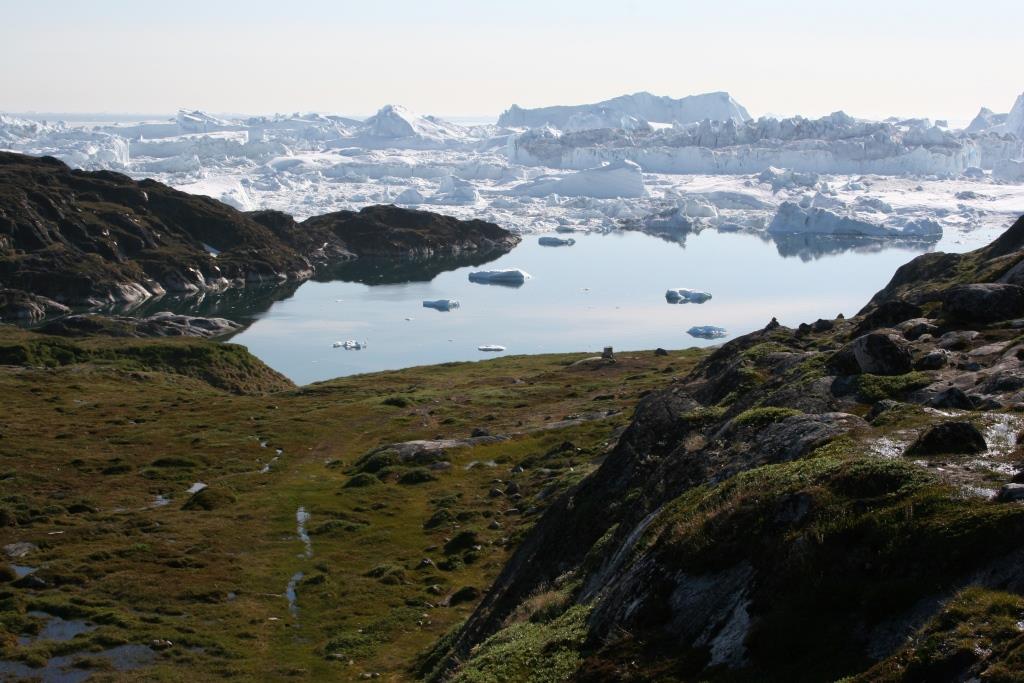
    Alaskan landscape

    In a big blow to Arctic exploration, Conoco’s offshore-drilling program was put on hold.

    Not long after Royal Dutch Shell and Russian Gazprom signed the memorandum on their Arctic Ocean drilling program, ConocoPhillips Alaska announced early Wednesday that an uncertain regulatory environment has forced the company to put the brakes on exploratory drilling it planned for next summer.

    The news is consequential for Alaskans hoping new discoveries will replenish the dwindling flow in the trans-Alaska pipeline, the 800-mile long corridor shipping black crude that funds most state government services.

    The announcement means there may be little oil activity on Alaska’s outer-continental shelf this summer, in part because other companies, including Norwegian oil giant Statoil, have followed the lead of Shell and Conoco.

    ConocoPhillips Company is an American multinational energy corporation with its headquarters located in the Energy Corridor district of Houston, Texas in the United States. It is the world’s largest independent pure-play exploration & production company.

    In the year 2007 Conoco Phillips became the first U.S. oil company to join the U.S. Climate Action Partnership, an alliance of big business and environmental groups. Today, it is a signatory participant of the Voluntary Principles on Security and Human Rights.

    Source

    Alaska Dispatch

  • Alaska drilling season over

    Alaska drilling season over

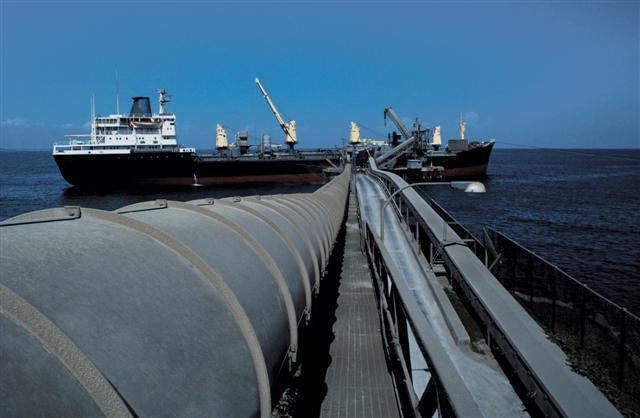
    Pipeline to an oil tanker

    The first drilling for natural resources in Alaskan waters for over two decades has been completed for this year. Shell was drilling and intends to return next year to go even deeper.

    Shell only had permission to go to 1400 feet with two boreholes, well short of oil and gas deposits. But potential deposits will be sought next year.

    Early this summer, at the start of a narrow window for exploratory drilling in the region, thick sea ice clinging to Alaska’s shores prevented Shell’s ships from cruising to the drill sites.

    “The mandatory close of the drilling window offshore Alaska brings to an end a season in which we once again demonstrated the ability to drill safely and responsibly in the Arctic,” said Curtis Smith, a Shell spokesman, in a statement Wednesday.

    “The work we accomplished in drilling the top portion of the Burger-A well in the Chukchi Sea and the Sivulliq well in the Beaufort Sea will go a long way in positioning Shell for a successful drilling program in 2013.”

    Oil companies bored 30 exploratory wells in the Beaufort Sea and another five in the Chukchi Sea between 1982 and 1997, but Shell’s work this summer may signal a new Arctic oil rush. Other companies waiting in the wings with leases in the Chukchi and Beaufort Seas include Repsol and ConocoPhillips.
    Sources:
    Alaska Dispatch
    FuelFIx

  • Drilling into Hell

    Drilling into Hell

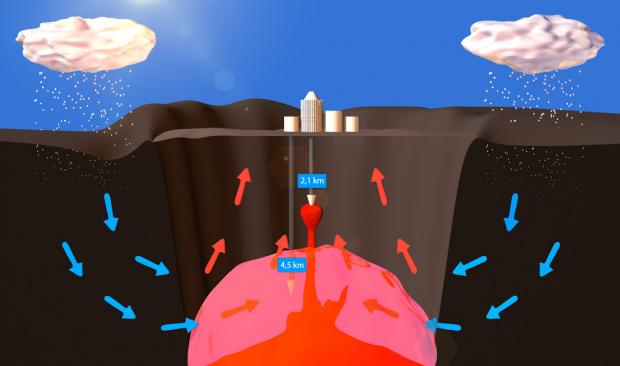
    A simplified diagram of the Krafla Caldera, a collapsed depression in the terrain. IDDP-1 was originally designed to drill to a depth of 4.5 kilometres, down to the pink area where water becomes supercritical, neither water nor steam. Instead the drilling was halted at around two kilometres down because drillers hit a pocket of magma, liquid rock. (Figure: Per Byhring, forskning.no). Click to enlarge.

    The main geothermal power station in Iceland is starting to draw heat from hell. In the North of Iceland, the Crater Hell, or Víti to the natives, portrays running water near glowing magma.

    The geothermal area in the north was always a feasible option for the Icelanders to utilize the vast energy resources, lying deep in the midst of the melting hot lava. But for a long time many doubted whether Krafla would ever actually enter operation, when large-scale volcanic eruptions started only two kilometres away from the station, posing a serious threat to its existence. Work continued, however, and the station went on stream early in 1977.

    The crater erupted in 1724 and the eruption lasted for 5 years. The last eruption was a small one which lasted for nine years, between 1975 and 1984.

    The area will erupt again, but Icelandic scientists have drilled a two-kilometer deep well into the crater to judge opportunities for utilizing this deep geo-energy.

    “This is the hottest production well in the world, with a temperature of 450° C and a pressure of 140 bars, in other words about 140 times that of normal air pressure at sea level,” says Guðmundur Ómar Friðleifsson, who heads the project, to Science Nordic.

    The Icelanders are trying a novel and bold technology before the next eruption occurs. They are drilling as close to the magma chamber as they can. Here they will extract from five to ten times the energy they currently get from the drill holes that serve the power plant.

    In the vicinity of the magma, ground water is so hot and compressed that it is no longer a mixture of water and steam, but rather a superheated dry steam. This superheated steam can liberate more energy than normal steam driving the turbines that convert it into electricity.

    Following a failed attempt at drilling deep further from the volcano, IDDP decided to drill right at Krafla, but not without making thorough preparations. Drilling of the well dubbed IDDP-1 started in March 2009. Iceland was then in the midst of its worst ever economic crisis but work continued nevertheless.

    Initially everything went according to plan. Then the troubles started. The drill string got stuck and was twisted off. New holes had to be drilled next to the old one. Delays ran into weeks.

    Nor could the engineers drill the first and widest well down to 2,400 metres as planned. They decided to call it quits at a depth of 1,958 metres. This proved fortunate because soon all their problems were clear – as glass.

    The last rock they’d reached was solidified natural glass, obsidian. The engineers had drilled right into a pocket of melted rock – into magma. Geologists calculated the thickness of this pocket at 50 metres or more in order to have remained in a molten state inside the cooler rock ever since the magma chamber formed in the 1970s and ’80s.

    The obsidian created a 20-metre glass stopper in the bottom of drill hole IDDP-1. The engineers pumped cold water into the hole and the rock heated it up for months. This allowed them to appraise the heat flow.

    “We are still measuring the heat conduction from the well,” says Friðleifsson, who has managed IDDP since the beginning of 2000.

    Even though IDDP-1 is the hottest production well on the planet and the water is superheated, it has less pressure and heat than the scientists and engineers behind the IDDP originally hoped to reach beneath Krafla.

    “The well IDDP-1 will produce from 25 to 35 megawatts. This is about half of what the entire rest of the Krafla power plant currently generates. Landsvirkjun is now planning to use steam from this well in power production by year’s end,” says Friðleifsson.

    Sources

    Science Nordic

    Landsvirkjun
  • Environmental study in Jan Mayen

    Environmental study in Jan Mayen

    Map of Jan Mayen and the Exclusive Economic Zones around the island and the EEZ´s of the neighbouring countries.

    Environmental study of proposed oil drilling near Jan Mayen will proceed in the near future, despite strong opposition of environmentalist, according to Reuters.
    Jan Mayen is a Norwegian archipelago north of Iceland. The Map shows the EEZ around Jan Mayen, which Norway is entitled to.

    Ola Borten Moe, Minister of Petroleum and Energy in Norway, confirmed that formal studies and reports will go ahead.

    “An impact assessment of Jan Mayen is … important,” Moe said in a statement. “It will cast light on important aspects of opening up for petroleum activities.”

    The length of the study is still unknown but if there are no major environmental or other hurdles, oil companies could be licensed to look for reserves across 100,000 sq km (38,600 square miles) of ocean.

    The last time a new area was opened to exploration in Norwegian territorial waters was 1994, the ministry said.

    Oil reserves are thought to be in the area, Iceland is also hoping to discover oil in the Dreki area, close to Jan Mayen. Iceland has invited for bids for oil search in the area, the bidding closes in February 2012.