Tag: energy

  • One of the biggest energy deals ever

    One of the biggest energy deals ever

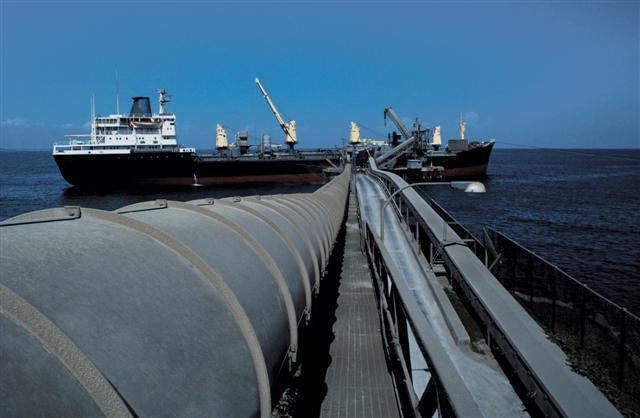
    Oil tanker

    One of the biggest oil deals in history was concluded this week. The Russian state-run company Rosneft is now on par with energy giant Exxon Mobil.

    The deal concluded this week is worth around $55 billion USD.

    The deal works like this: Rosneft will buy TNK-BP which is Russia’s third largest oil company (after Rosneft and Lukoil ). Half of that is BP share. BP (British Petroleum) will in exchange get $12.3 billion of cash and 18.5 percent of Rosneft, raising its holding to 19.75 percent.

    BP will have two seats in the board of the new mega giant which Reuters says will be pumping more oil and gas than Exxon Mobil after the deal.

    Rosneft will also buy the other half of TNK-BP for $28 billion in cash from A.A.R., the consortium formed by the Russian oligarchs to manage their half of the venture.

    “This is a very good signal for the Russian market. It is a good, large deal. I would like to thank you for this work,” Russian President Vladimir Putin told powerful chief executive Igor Sechin at a meeting on Monday.

    “This deal is in line with the Russian government’s strategy of reversing the privatization of oil and gas resources that took place in the 1990s,” said Andrey Golubov, a finance lecturer at Cass Business School in London.

    BP is now betting that a relationship with the Russian state company will be a better route to the deals it wants to drill offshore in the Arctic Ocean. Exxon Mobil, Eni of Italy and Statoil of Norway already have such deals.

    The acquisition, subject to Russian government approvals, will give Rosneft extra output and cash flow to finance exploration of Russia’s vast reserves to replace ageing and depleting fields.

    The only oil and gas acquisitions that have been bigger than today’s deal are Exxon’s merger with Mobil Corp., an all- stock deal valued at $80 billion when it was announced in 1998, and BP’s $56 billion purchase of Amoco Corp. the same year.

    Source:

    BBC

    Reuters

    Bloomberg

    NY Times

  • Call for New Climate Change Solutions

    Call for New Climate Change Solutions

    James Hansen

    The Times – As aspired as a new global climate change agreement in Copenhagen is, it has begun to seem that an agreement with almost any content is enough.

    One of the world’s leading climate change scientists, James Hansen from Nasa’s Goddard Institute, has expressed his doubts on the existing emission trade system comparing it to selling indulgences. Rich countries buy emission credits from developing countries with relatively small amounts and contribute that way to the existing economic imbalance between industrialised and developing countries. The system in itself is not designed to reduce emissions, but rather to create an image of reduction and equality, though failing in both. Very few open discussions have taken place on what exactly should be the content of the new agreement and little or none public evaluation on the success or failure of the Kyoto protocol has taken place.

    Recently, the UN carbon trade management body suspended Chinese wind power farm plans due to the lack of “additionality”, a condition that is required for any project to qualify as a “Clean Development Mechanism”. It is suspected that China has used the CDM system to finance projects that would have in any case been constructed, thus not adding any clean energy mechanisms through the investment into already planed energy scheme.

    It is clear that before further steps are taken in global climate change discourse, the mechanisms existing today must be evaluated and new and better solutions developed to enable a real battle against the world wide problem of global warming.

  • Arctic Energy

    In the recent years, the world’s attention has turned to the Arctic, not least because of its vast energy resources. Due to the climate change and its significant impact to the Arctic environment resources that have long been unreachable are becoming feasible for exploitation. It is estimated that up to fifth of the world’s undiscovered petroleum resources are to be found in the Arctic while the Arctic’s share of the worlds known resources today is around 12%.

    Russia is by far the most important gas producer in the Arctic. Almost all proven Arctic gas reserves are located in Northern Russia as well as 90% of the proven oil reserves. Together produce Northern Russia and Alaska 97% of the total Arctic oil and gas the Arctic’s total global share of production being around 16%. Furthermore, Russia is considered to contain by far the largest volume of the undiscovered petroleum reserves. Other significant regions where petroleum is to be found are Alaska and the Norwegian Sea, which will in future introduce new oil producing states within the Arctic, namely Greenland and Iceland.

    In the face of the petroleum race in the Arctic, some concerns have been raised about the very fragile Arctic environment. In addition to the actual drilling, transportation of the petroleum will impose the Arctic environment to a severe threat in case of an oil spill or shipwreck.

    Even though the conventional petroleum industry is still today dominant in the Arctic, some renewable energy developments are also taken place in the Arctic. The renewable energy sector is however still quite small compared to the conventional one, but can be expected to grow in the future.

    The newly published  Arctic Energy Portal aims at providing a comprehensive information gateway to the Arctic energy projects, new developments and controversies concerning the resource exploitation. At present, the Portal will concentrate mostly on oil and gas, but as new projects and developments take place in renewable energy sector the Portal will broaden its scope of information and cover renewable sector as well.