Tag: environment

  • Coastal tourism: questions and answers

    Coastal tourism: questions and answers

    Marine & Coastal Culture Tourism in Northern Territories

    Conference that focused on the fishing environment in northern territories took place in the University of Akureyri, 18 – 19 June 2013. The conference was organized by the Stefansson Arctic Institute in collaboration with the University of Akureyri Research Center, NORA, the Iclandic Tourism Research Center, Norwegian Seafood Center and the Icelandic Lighthouse Society.

    Marine and coastal culture tourism is growing in popularity in various ways. Some tourists want to learn about life in coastal villages, experience nature and tranquility as well as the wilderness. Others want to experience the excitement of driving charter boats, diving, surfing, go speed boating or hiring a boat and try their luck at fishing. Then there are those who want to sail from port to port and country to country on board gigantic cruise ships.

    How does this fit in with cultural heritage, everyday life, social development, self-sufficiency, fishing quotas and environmental policies of the Nordic nations? How can the Nordic nations collaborate in this area? Do these diverse aspects of tourism have collaborative opportunities? These challenges were discussed at the conference where further questions were pondered through group work and perhaps more answers and collaborative possibilities found.

    Source

    Stefansson Arctic Institute

  • Central Arctic route in use by 2050

    Central Arctic route in use by 2050

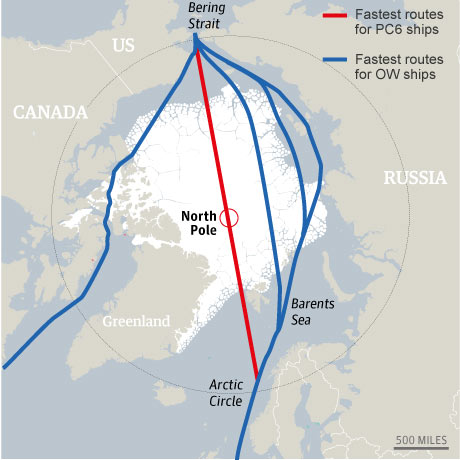
    Guardians map of Arctic Shipping

    Ships should be able to sail directly over the north pole by the middle of this century, considerably reducing the costs of trade between Europe and China but posing new economic, strategic and environmental challenges for governments, according to scientists.

    The dramatic reduction in the thickness and extent of late summer sea ice that has taken place in each of the last seven years has already made it possible for some ice-strengthened ships to travel across the north of Russia via the “northern sea route”. Last year a total of 46 ships made the trans-Arctic passage, mostly escorted at considerable cost by Russian icebreakers.

    But by 2050, say Laurence C. Smith and Scott R. Stephenson at the University of California in the journal PNAS on Monday, ordinary vessels should be able to travel easily along the northern sea route, and moderately ice-strengthened ships should be able to take the shortest possible route between the Pacific and Atlantic Oceans, passing over the pole itself. The easiest time would be in September, when annual sea ice cover in the Arctic Ocean is at its lowest extent.
    PNAS is the Proceedings of the National Academy of Sciences of the United States of America.
    Click here to enter the Arctic Portal interactive data map.

    The scientists took two classes of vessels and then simulated whether they would be able to steam through the sea ice expected in seven different climate models. In each case they found that the sea routes opened up considerably after 2049.

    “The emergence of a … corridor directly over the north pole indicates that sea ice will become sufficiently thin such that a critical technical threshold is surpassed, and the shortest great circle route thus becomes feasible, for ships with moderate ice-breaking capability,” says the paper.

    “The prospect of common open water ships, which comprise the vast majority of the global fleet, entering the Arctic Ocean in late summer, and even its remote central basin by moderately ice-strengthened vessels heightens the urgency for a mandatory International Maritime Organisation regulatory framework to ensure adequate environmental protections, vessel safety standards, and search-and-rescue capability,” it adds.

    The northern sea route has been shown to save a medium-sized bulk carrier 18 days and 580 tonnes of bunker fuel on a journey between northern Norway and China. Shipowners have said it can save them €180,000-€300,000 on each voyage. A direct route over the pole could save up to 40% more fuel and time.

    Sources

    The Guardian

    PNAS

  • Environmental concerns for caribou

    Environmental concerns for caribou

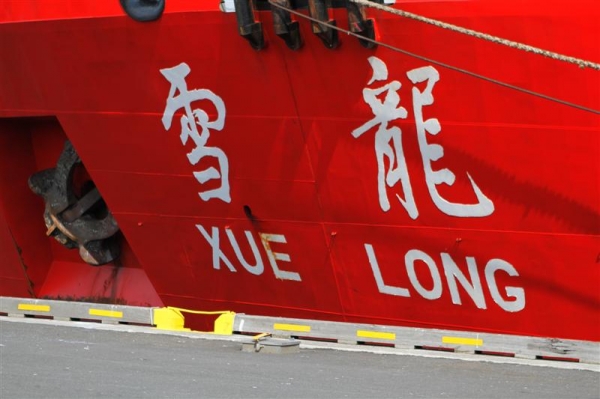
    Chinese icebreaker Xuelong.

    Canada is set to look into a mining project to be funded by China. Four federal ministers will come together to decide how to conduct an environmental review for the Izok Corridor proposal.

    It could bring many billions of dollars into the Arctic but would also see development of open-pit mines, roads, ports and other facilities in the centre of calving grounds for the fragile Bathurst caribou herd.

    “This is going to be the biggest issue,” said Sally Fox, a spokesperson for proponent MMG Minerals, a subsidiary of the Chinese state-owned Minmetals Resources Ltd.

    It would be hard to exaggerate the proposal’s scope. Centred at Izok Lake, about 260 kilometres southeast of Kugluktuk, the project would stretch throughout a vast swath of western Nunavut.

    Izok Lake would have five separate underground and open-pit mines producing lead, zinc and copper. Another site at High Lake, 300 kilometres to the northeast, would have another three mines.

    MMG also wants a processing plant that could handle 6,000 tonnes of ore a day, tank farms for 35 million litres of diesel, two permanent camps totalling 1,000 beds, airstrips and a 350-kilometre all-weather road with 70 bridges that would stretch from Izok Lake to Grays Bay on the central Arctic coast.

    MMG plans a port there that could accommodate ships of up to 50,000 tonnes that would make 16 round trips a year — both east and west — through the Northwest Passage.

    Izok Lake would be drained, the water dammed and diverted to a nearby lake. Three smaller lakes at High Lake would also be drained. Grays Bay would be substantially filled in.

    The result would be a project producing 180,000 tonnes of zinc and another 50,000 tonnes of copper a year.

    The four ministers, of Northern Development, Transport, Natural Resources and Fisheries and Oceans — have three choices. They can send the project back to MMG and ask for changes, they can choose to let the board run hearings itself or they can decide the project’s effects would be broad enough to require the involvement of other governments in hearings.

    Source

    The Record

  • Arctic Report Card 2012 is out

    Arctic Report Card 2012 is out

    arctic landscape

    The Arctic Report Cards produced by the National Oceanic and Atmospheric Administration (NOAA) are a source of reliable and brief information on the current state of the Arctic environment. The Arctic Council working groups CAFF and AMAP supported work on the 2012 Report Cards, which detail dramatic changes in the Arctic with record losses of sea ice and late spring snow.

    The Arctic Council, through the Arctic Monitoring and Assessment Programme (AMAP) and the Conservation of Arctic Flora and Fauna’s (CAFF) Circumpolar Biodiversity Monitoring Programme (CBMP), has contributed to the Arctic Report Card, an annual report released today by NOAA that monitors the often-quickly changing conditions in the Arctic.
    Click here to go to the Reports website.

    Full report is available here.
    The peer-reviewed report contains contributions from 141 authors from 15 countries. For this year’s issue CAFF’s CBMP developed and edited the terrestrial and marine ecosystem chapters in cooperation with others, while AMAP organized an independent peer-review process involving international experts.

    The Arctic region continued to break records in 2012—among them the loss of summer sea ice, spring snow cover, and melting of the Greenland ice sheet. This was true even though air temperatures in the Arctic were unremarkable relative to the last decade, according to the report.

    Major findings include:

    Snow cover: A new record low snow extent for the Northern Hemisphere was set in June 2012, and a new record low was reached in May over Eurasia.

    Sea ice: Minimum Arctic sea ice extent in September 2012 set a new all-time record low, as measured by satellite since 1979.

    Greenland ice sheet: There was a rare, nearly ice sheet-wide melt event on the Greenland ice sheet in July, covering about 97 percent of the ice sheet on a single day.

    Vegetation: The tundra is getting greener and there’s more above-ground growth. During the period of 2003-2010, the length of the growing season increased through much of the Arctic.

    Wildlife and food chain: In northernmost Europe, the Arctic fox is close to extinction and vulnerable to the encroaching Red fox. Additionally, massive phytoplankton blooms below the summer sea ice suggest estimates of biological production at the bottom of the marine food chain may be ten times too low.

    Ocean: Sea surface temperatures in summer continue to be warmer than the long-term average at the growing ice-free margins, while upper ocean temperature and salinity show significant interannual variability with no clear trends.

    Weather: Most of the notable weather activity in fall and winter occurred in the sub-Arctic due to a strong positive North Atlantic Oscillation. There were three extreme weather events including an unusual cold spell in late January to early February 2012 across Eurasia, and two record storms characterized by very low central pressures and strong winds near western Alaska in November 2011 and north of Alaska in August 2012.

    Sources

    Arctic Report Card

    Report video

    SWIPA

    Full report is available here.

  • Arctic Shipping an Evolution , not a Revolution

    Arctic Shipping an Evolution , not a Revolution

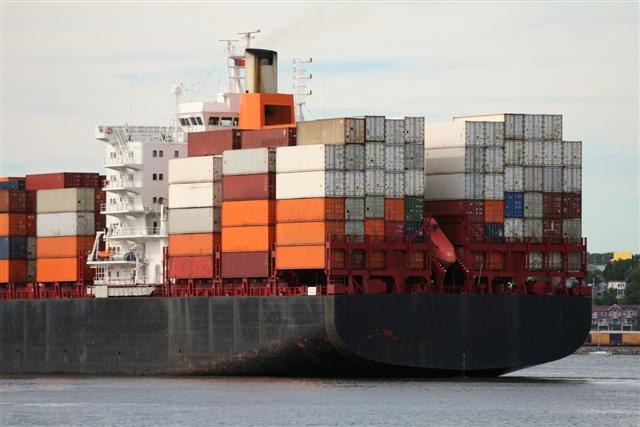
    Cargo Container ship

    What is the future of shipping in the Arctic? Many are following the developments in the Arctic closely, not only the nature and its ways, but the legal regime and environment as well.

    Amongst those are the shipping companies who could utilize the Arctic Shipping routes. Arctic Portal met up with a CEO of a shipping company in Norway, the Tschudi shipping company.

    Tschudi Shipping Company is a privately controlled Norwegian shipowning company operating within the international maritime industry. The company focuses on active ownership and management of vessels and shipping related projects and companies.

  • Arctic Report Card

    Arctic Report Card

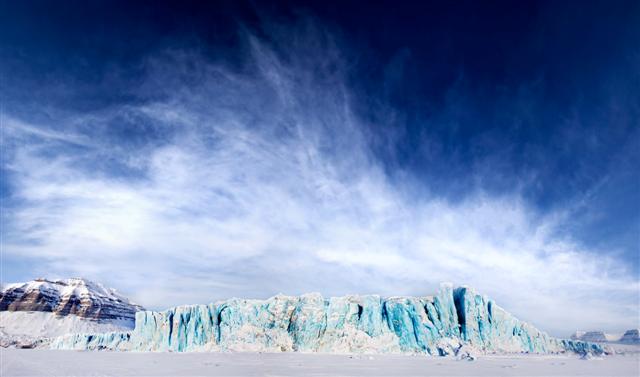
    Dissolving Sea Ice, South of Svalbard

    Issued annually, the Arctic Report Card is a timely source for clear, reliable and concise environmental information on the state of the Arctic, relative to historical time series records.

    Material presented in the Report Card is prepared by an international team of scientists. The Arctic Report Card is collaboratively supported by the international Arctic Council.

    The Conservation of Arctic Flora and Fauna (CAFF) Circumpolar Biodiversity Monitoring Program (CBMP) provides collaborative support through the delivery and editing of the biological elements of the Report Card.

    The 2011 Arctic Report Card has been published. Amongst the results are significant changes in the atmosphere and the sea ice and the ocean.

    The NOAA (National Oceanic and Atmospheric Administration) issues the Arctic Report Card annually The Arctic Report Card is a timely source for clear, reliable and concise environmental information on the state of the Arctic, relative to historical time series records.

    Among the 2011 highlights are:

    Atmosphere: In 2011, the average annual near-surface air temperatures over much of the Arctic Ocean were approximately 2.5° F (1.5° C) greater than the 1981-2010 baseline period.

    Sea ice: Minimum Arctic sea ice area in September 2011 was the second lowest recorded by satellite since 1979.

    Ocean: Arctic Ocean temperature and salinity may be stabilizing after a period of warming and freshening. Acidification of sea water (“ocean acidification”) as a result of carbon dioxide absorption has also been documented in the Beaufort and Chukchi seas.

    Land: Arctic tundra vegetation continues to increase and is associated with higher air temperatures over most of the Arctic land mass.


    Here is a video from NOAA about the report.


    2010 Report card:

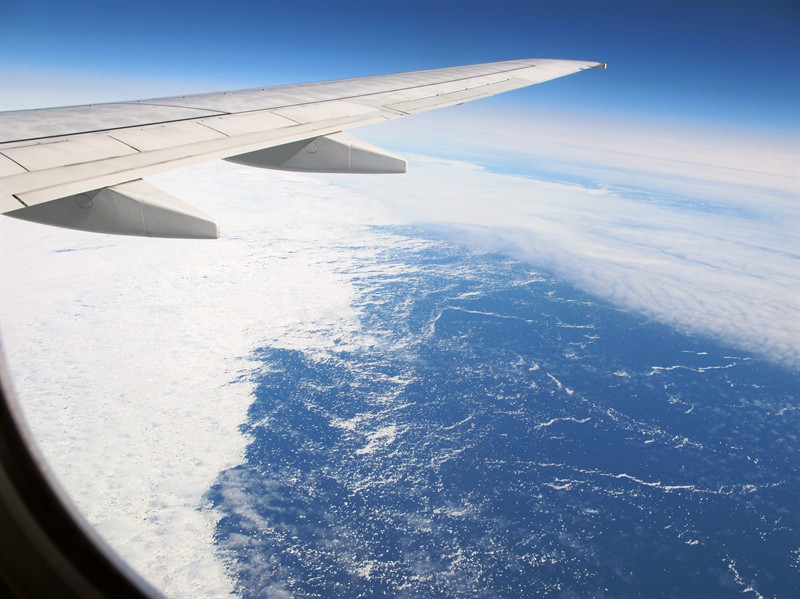
    ice glacier from above

    Highlights of the 2010 report card is:

    • Four years of record minimum sea ice extents
    • Record temperatures and ice loss in Greenland
    • Strong links between the Arctic and mid-latitude weather in winter 2009-2010

    Below is a video about the 2010 report card.

    [http://www.youtube.com/watch?v=NjmHMSv2Amk]

  • Shipping Impacts

    Oil spill

    The Arctic contains some of the last physically undisturbed areas on the planet, something that is becoming very rare in modern times. In recent decades, and especially during this millennium, the Arctic has also been undergoing extraordinary environmental changes. The Arctic is known as a storehouse of massive supplies of natural resources, which is increasing pressure on their extraction due to high commodity prices and a growing worldwide demand for them.

    Increasing regional and coastal marine transport to support the exploration and extraction of oil, gas and hard minerals, coupled with the increasing presence of the global marine tourism industry, can bring various users to the maritime Arctic. The potential impacts of these new marine uses can become significant. However, speculative they might seem, social, environmental, cultural and economic impacts will become a reality, and have, to a certain extent.

    Environmental impacts

    The environmental consequences of increased commercial shipping in the Arctic could become quite serious, not only from accidental oil spills, but also from increased pollution caused by operational discharges of oils and chemicals. Arctic ecosystems can be affected by pollution, noise, alien species, ships colliding with marine mammals, and general disturbance, including loss of feeding and breeding areas.

    Problems can be caused by ships involved in oil and gas exploration and exploitation, including tankers, as well as by general cargo vessels, naval vessels, fishing vessels, tourist cruise ships, and even scientific research vessels. Despite the seriousness of rare catastrophic oil spills, chronic low-level pollution over many years from all kinds of ships poses the greatest threat to the environment and may affect all ecosystems within a given area.

    Contaminants accumulate in the body fat of Arctic organisms because they have evolved to store food for use in their bodies when none is available in the frozen environment. These contaminants are then passed up through the food chain, even to human beings.

    Environmental protection measures

    Increased shipping activity in the Arctic raises the potential for increased numbers of shipping accidents with the detrimental human and environmental effects that might follow.

    Prevention of marine accidents and actions designed to strengthen the effectiveness of preventive measures, can be critical for Arctic marine shipping given the difficulties of responding once an incident has occurred. Preventive measures include ensuring that vessels operating in the Arctic meet appropriate design, construction and equipment standards; that vessel personnel have the specialized skills needed for operating in Arctic conditions.

    Emergency response is particularly challenging in the Arctic for a variety of reasons, including the remoteness and great distances that are often involved in responding. Additionally, the impacts of cold, ice and a harsh operating environment on response personnel and equipment; and the lack of coastal infrastructure and communications to support and sustain a response of any significant magnitude, is immense.

    International conventions relating to ship construction, crewing standards and other aspects of maritime safety apply in all ocean areas for vessels that are flagged in States that are parties to the conventions. However, these standards are not necessarily adequate for ships operating in the environmentally fragile, dangerous and remote polar waters.

    Polar Bear in Svalbard

    Impact of tourism

    Tourism has increased dramatically in the Arctic, because of increased awareness of its beauty and undisturbed nature and also because of a desire to see it before the ice melts and the animals disappear.

    However, excessive tourism could cause environmental damage both from the usual problems caused by an increasing number of vessels and because waste from garbage and sewage would have to be disposed of.

    More generally, if all the new single-year sea ice melts, navigation in the Arctic could remain hazardous for some time to come, as multi-year ice will linger and so will icebergs, in particular those calving off melting glaciers.

    This could result in more accidents, causing further problems, including pollution by leaking heavy fuel oil from cruise ships.

    Source:
    The AMSA report (2009)

  • Arctic Economies – Megaprojects

    Arctic Economies – Megaprojects

    In the recent years the Arctic has gained attention due to the changes in the climate and the affects it has had on the northern environment. What is, however, less talked about is the socio-economic reality that faces people in the Arctic societies, not only because of the climate change, but also because of globalization and changes in global market economies.

    It is well known that the Arctic has enormous resources of oil and gas and for the past 30 years or so, the exploitation of the northern natural resources has become more feasible than ever before, which has accumulated the initiatives of so called megaprojects in northern areas. These projects are in most cases either financed by multinational corporation or they are state funded in a form of Crown corporations or other publicly owned corporations. They have been in most cases criticized of being environmental monsters destroying or creating a risk of demolition of large areas of nature around the project. In addition, the human impact of these activities has been criticized.

    Even though these megaprojects – huge in scale, both environmentally and financially speaking – are in the first place designed to produce profit for the shareholders, they have been in many cases also beneficial for the local communities “hosting” the project.

    Benefits of mega-projects in the north

    Mackenzie mapThe largest expectations are in many cases directed to the possible employment the project will offer for the local people. In the construction phase, the project can provide significant amount of employment. In many small and remote communities, exactly unemployment is one of the major problems causing poverty and other social problems. When the construction phase is over, however, the employment opportunities also decline as low as to 150 persons for a large-scale industry, making the employment only short-term.

    In addition to the employment, possible benefit from a megaproject is the income in to the community in a form of profit to the local shareholders, taxes and increase in local retail. A construction of a megaproject usually booms the local retail to manifold because of the migrant workers who come with the construction.

    The possibility to directly profit from the project depends usually on the ownership of the land. Very few local companies or individuals have the money to invest in the projects in a scale that counts economically for the community. Thus, the only way for the locals to profit from the projects has been through being a shareholder or through bilateral contracts between the company and the community.

    The Mackenzie Gas project is a good example of a megaproject where the local peoples of the area have had an immense impact on the project. Not only are they shareholders in the project through Aboriginal Pipeline group, but they are also participating in The Joint Review Panel for the Mackenzie Gas Project, which will assess the possible environmental and socio-economic effects associated with the proposed pipeline construction.

    Third significant benefit is without a doubt the infrastructure that has to be built in and around the community to meet the needs of the project itself and the people who come with the project. Sometimes, these remote communities have not got the funding for necessary infrastructure because of their remoteness and low density in population, but since population growth – at least temporarily – is inevitable in connection with megaprojects the infrastructure has to be updated and developed.

    Costs of megaprojects

    Though there are some quite impressive benefits connected to the megaprojects, it must be said that the costs seem to be at least equally impressive.

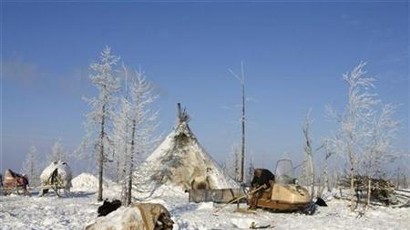
    Despite the scale of the projects, very little of the wealth seems to be left in the communities and the little that is left leaks in many cases back to south where it came from in the first place. Even though the local communities were Russian arctic tribe at risk from yamal gas projectsshareholders in the project, majority of the profit goes outside of the area with the multinational corporations. Further, to tempt the international corporations to invest in the project, some “carrots” need to be offered. They are many times in a form of tax reliefs leading to a loss of revenue for the territory. In addition, even though the migrant workers increase the local retail, the money spent does not stay in the community, since many of the products sold in the retails are manufactured in south and imported to the community. The increase is thus often only temporary, large amount of the work force returning back home as soon as the construction phase is over, or in two to four years.
    Another quite impressive cost that follows megaprojects is the environmental damage the project causes, both to the environment itself, but also to the people who live from the land.

    Many of the projects are situated on the traditional lands of indigenous peoples. In many places reindeer or caribou herding is still exercised making these lands very important for the survival of the herders. If the indigenous peoples do not have an ownership over the lands, they can either loss significant herding land or in extreme cases be forced to relocate as has been done in many oil and gas fields in northern Russia. In The James Bay project environmental organizations actually managed to prevent the construction of the second phase of the project by claiming that it would cause irreparable harm both to the environment and the peoples of the area.

    In addition to the leakages of wealth and environmental damages, some argue that megaprojects are often connected with large social problems in the local communities. Factors like big salaries, large migration worker populations and restlessness that the workers experience in the periodical working situations away from home add to criminal behavior and drug and alcohol abuse, which in turn can cause social problems in the community.

    Mitigation of negative impacts on local residents

    As has been done in the Mackenzie Gas Project, the best way to mitigate the negative impacts of megaprojects on the local residents is to involve them in the project. Best way to do that is to include them financially as shareholders Pipelineas in Mackenzie so that they not only can have their say in the preparation, but can also benefit financially from the exploitation of their lands.
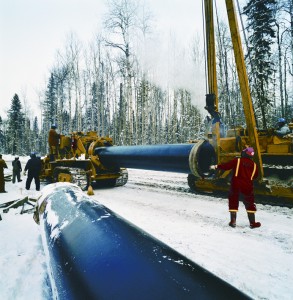
    In connection with the Mackenzie Project, both the local and federal administrators have gone even further by initiating a seven-member joint review panel to assess the potential impacts of the project on the environment and lives of the people in Mackenzie valley. What is quite progressive is that approximately half of the panel is composed of indigenous people’s representatives from their own societies, which without a doubt increases the value of the assessment.

    The possible profit income for the society enables the local people to enhance their communal infrastructure by building necessary institutions and employing staff in areas where it is most needed in that particular community. In addition, many different kinds of educational projects could be connected to the megaprojects, especially in the construction phase, where young locals could be educated in carpentry, as electricians and plumbers, teachers, midwifes and nurses – providing the community thus knowhow locally which otherwise would be sought in larger cities. These educational projects could be used to mitigate the financial leakages that occur when services are bought from outside communities.

    It must also be assured that tax revenues from the projects are used to benefit the local community, even though they would be collected by the province or territory. This requires special arraignments with the government, but should not be impossible to negotiate, especially in the light of the internationally recognized special rights of indigenous peoples.
  • Polar Law Symposium: Russia’s Arctic Policy

    Polar Law Symposium: Russia’s Arctic Policy

    The 2nd Polar Law Symposium was held at the University of Akureyri the past weekend, September 10-12. This years Symposium was environment oriented having an indication of environment in all four themes. The themes this year were New Shipping Routes and Environmental Implications for the Polar Regions, Effective Environmental Governance, The Exploration and Exploitation of Resources and Human Rights and Polar Regions.

    Many distinguished speakers discussed the issues from different perspectives, but perhaps the most interesting or rather most anticipated information being shared at the Symposium was about the new Arctic policy of the Russian Federation by H.E. Victor Tatarintsev, Ambassador of the Russian Federation in Iceland.

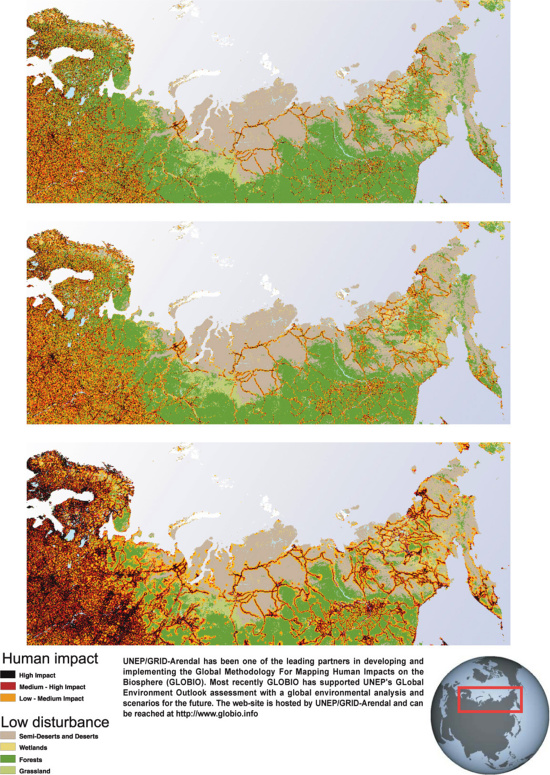
    human impact on the arcticDue to the new environmental developments in the Arctic and the international attention the area has gained in the past few years in international politics the Russian Federation has adapted a new Arctic Strategy to 2020 and beyond.

    The importance of the Arctic for the Russian Federation can not be undermined knowing the fact that it contains 1% of the Russian population and 18% of the territory, but produces 20% of the GDP and 20 % of Russia’s total export.

    According to H.E. Victor Tatarintsev the peace and international cooperation are the key issues in the Arctic in coming years. Russia will emphasize the cooperation through already existing framework, namely the Arctic Council and the Barents Euro-Arctic Council and does not aim at increasing its military presence in the area.

    The Arctic sea route will be of high importance for Russia as a strategic national transport route and reconstruction of the existing infrastructure on the Arctic coast-line will be one of the main tasks on national level. The sea route will not be important only because of the immense oil and gas production in the Russian north but also because of the development gap between the north and south, which must be cut down for the benefit of the people living in the area. New ports must be built to the remote areas to enable import of new technology and development and new kind of tourism in these areas must be made possible.

    Arctic Indigenous peoples play also a role in the new Russian Arctic Policy Russia committing itself to the existing international standards for the protection of indigenous livelihoods and will follow.

    Russian arctic shipDespite the fact that Russia is very committed to the existing cooperation regime and intends to obey the international law in all matters, H.E. Victor Tatarintsev reminded people not to simplify the situation too much. Certain unresolved legal and political issues remain in the Arctic and cooperation should be enhanced to abolish uncertainties around these issues. As an example he pointed out the Russian flag in the bottom of the Arctic sea incident, which according to him was purely scientific expedition and did not imply the political contention as it taken by the international community.

    As a conclusion, it can be said that the Russian Arctic policy aims to intensify the national development with the utmost goal of protecting legitimate aspirations of the Russian Federation while working within the international community.

  • Arctic Energy

    In the recent years, the world’s attention has turned to the Arctic, not least because of its vast energy resources. Due to the climate change and its significant impact to the Arctic environment resources that have long been unreachable are becoming feasible for exploitation. It is estimated that up to fifth of the world’s undiscovered petroleum resources are to be found in the Arctic while the Arctic’s share of the worlds known resources today is around 12%.

    Russia is by far the most important gas producer in the Arctic. Almost all proven Arctic gas reserves are located in Northern Russia as well as 90% of the proven oil reserves. Together produce Northern Russia and Alaska 97% of the total Arctic oil and gas the Arctic’s total global share of production being around 16%. Furthermore, Russia is considered to contain by far the largest volume of the undiscovered petroleum reserves. Other significant regions where petroleum is to be found are Alaska and the Norwegian Sea, which will in future introduce new oil producing states within the Arctic, namely Greenland and Iceland.

    In the face of the petroleum race in the Arctic, some concerns have been raised about the very fragile Arctic environment. In addition to the actual drilling, transportation of the petroleum will impose the Arctic environment to a severe threat in case of an oil spill or shipwreck.

    Even though the conventional petroleum industry is still today dominant in the Arctic, some renewable energy developments are also taken place in the Arctic. The renewable energy sector is however still quite small compared to the conventional one, but can be expected to grow in the future.

    The newly published  Arctic Energy Portal aims at providing a comprehensive information gateway to the Arctic energy projects, new developments and controversies concerning the resource exploitation. At present, the Portal will concentrate mostly on oil and gas, but as new projects and developments take place in renewable energy sector the Portal will broaden its scope of information and cover renewable sector as well.