Tag: EU

  • WTO engaged in EU fishing dispute

    WTO engaged in EU fishing dispute

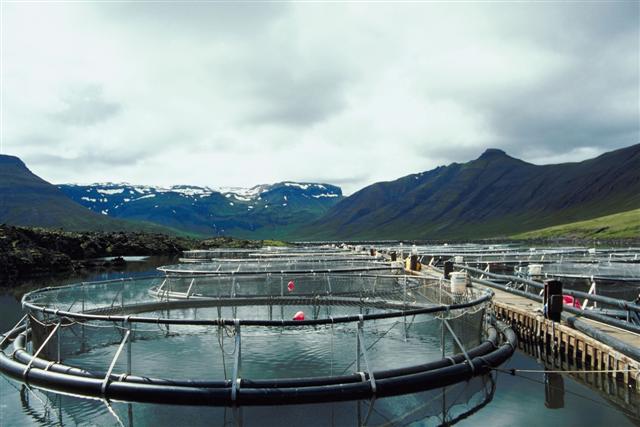
    Fish farm outside of Thorshaven

    The Faroe Islands is seeking to bring its dispute with the EU over their herring and mackerel exports to the World Trade Organisation.

    The Danish mission to Gevena filed a request to establish a WTO panel in the dispute, which pits the Faroe Islands, a self-governing member of the Danish Kingdom, against the EU, which it is not a member of.

    The request will be dealt with at a forthcoming meeting of the WTO dispute settlement body on January 20.

    Last November, the Faroe Islands announced that it had started WTO dispute settlement proceedings against the EU to challenge the bloc’s trade sanctions against Faroese herring and mackerel.
    The sanctions, introduced last August, ban all imports of herring and mackerel products from the Faroe Islands, and deny access to EU ports by vessels transporting these products. The measures set up the awkward situation of Faroese ships being unable to call on Danish ports.

    In a statement accompanying the announcement, Kai Leo Johannesen, the Faroese premier, pointed out that his country was heavily dependent on fish exports, which he said constituted more than 95 percent of total Faroese exports.
    “This step is therefore of major importance for the Faroe Islands, and a crucial step in order to ensure that the EU’s coercive economic measure, whose purpose is exclusively to safeguard the interests of its domestic industry, will be withdrawn and revoked.”
    The ban against Faroese fish products has repercussions in Denmark, where Danish fishing boats have been banned from Norwegian waters due to the conflict.

    The EU can oppose the request to set up a panel during the January meeting, but EU regulations require that the matter be taken up the following month to attempt to mediate the dispute. Previous attempts at resolution have failed.

    Click here for more articles about EU – Faroese fishing dispute.

    Source: the Arctic Journal 
  • EU – Arctic Initiative at October´s events

    EU – Arctic Initiative at October´s events

    Halldór Jóhannsson, director at Arctic Portal, at the Northern Forum General Assembly

    The month of October brought together international partners from all the Arctic states and their European partners at various events.

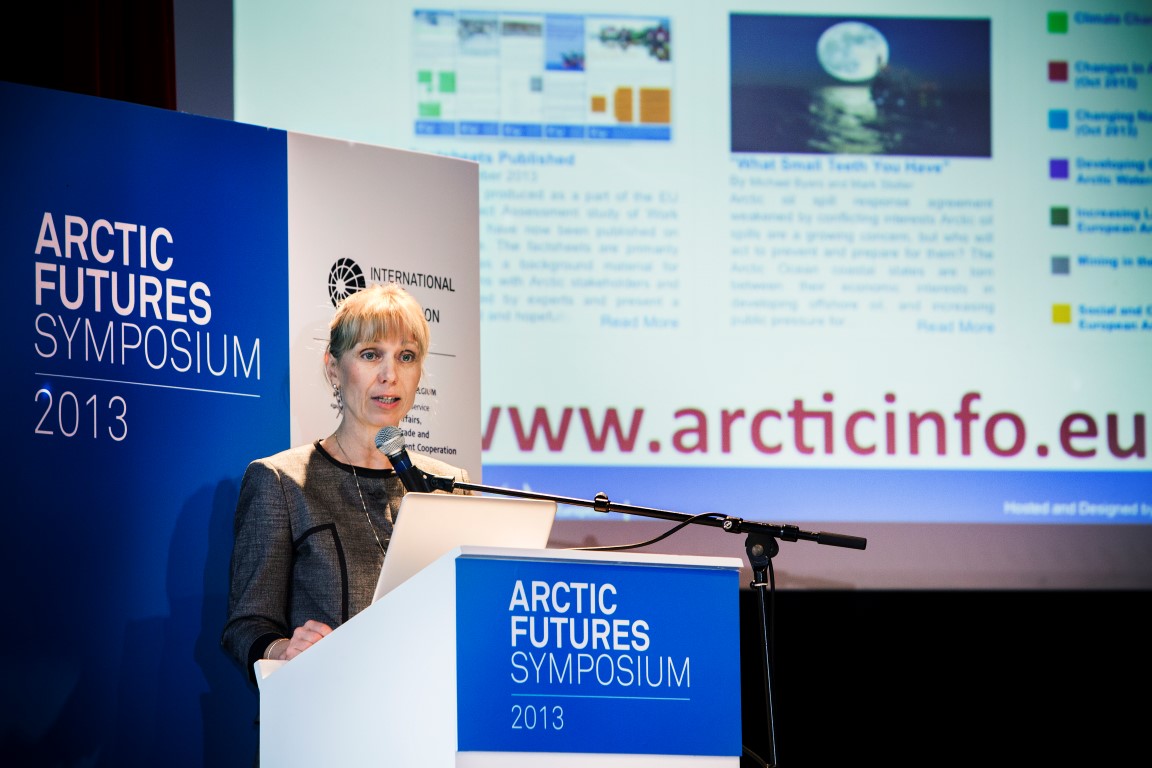
    Representatives of EU – Arctic Information Centre have been visible at a number of conferences recently, The 2013 Arctic Energy Summit that took place in Akureyri, northern Iceland, 8-10 October, The 6th Symposium on Polar Law at the University of Akureyri, northern Iceland, 11-12 October, Arctic Circle in Reykjavik, Iceland, 11-14 October, 2013 Arctic Futures Symposium in Brussels, Belgium, 16-17 October, the 11th General Assembly of the Northern Forum in Moscow, Russia, 16-18 October and the First International Arctic Media Forum in Arkhangelsk, Russia, 20-23 October.

    The Arctic Canter from Rovaniemi, Finland has been the leader of the network of Strategic Environmental Impact Assessment of development of the Arctic. The project is considered to be first and the most important step to strengthen communication and outreach within the EU and between the EU and the Arctic community.

    Paula Kankaanpää, director at Arctic Centre

    The project consists of 19 leading Arctic research and outreach institutions from various European Members states and EEA countries.

    Currently the network includes members from Belgium, Finland, France, Germany, Iceland, Italy, the Netherlands, Norway, Poland, Sweden, the United Kingdom as well as Sámi. Additionally, three international Arctic organizations based in Europe (European Polar Board of European Science Foundation, GRID-Arendal and the University of the Arctic Thematic Networks) constitute important members of the partnership.

    Click here for more information about the project and the project partners.

    The partners will continue their work towards compilation of the existing information related to impacts on development in the Arctic into popularized formats, use in consultation meetings and prepare reports from the results of the consultations followed by recommendations.

  • Finland, EU and the Arctic now released

    Finland, EU and the Arctic now released

    Arctic Centre’s researcher Roza Laptander tells about Nenents’ situation in the Russian Arctic

    Europe Information of the Ministry of Foreign Affairs, Finland, published on Thursday 16th May 2013 the book Arctic Calls – Finland, the European Union and the Arctic Region.

    The book is written by Head of Science Communications Markku Heikkilä and Science Communicator Marjo Laukkanen, both from the Arctic Centre of the University of Lapland in Rovaniemi, Finland.

    The Arctic is undergoing dramatic changes, while international interest in the world´s northernmost regions is growing rapidly.

    This book helps us to see and understand the background to this trend. Through personal experiences, diverse illustrations and numerous interviews, it puts a human face on the Arctic region.

    The book is available in Finnish, Swedish, English and North Sami. The electronic versions are available on the Europe Information and Arctic Centre.

    Source

    Arctic Center

  • Greenland will not favor EU over China

    Greenland will not favor EU over China

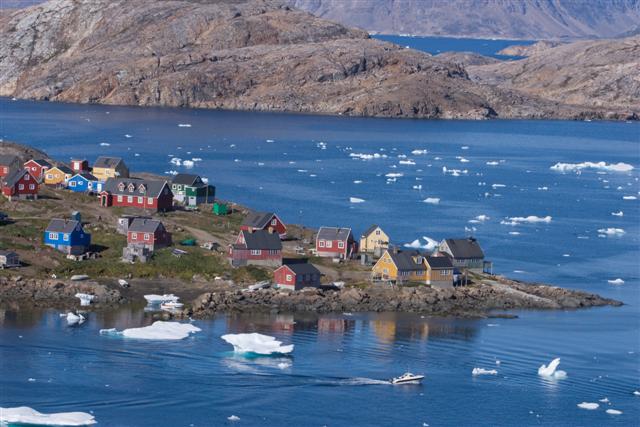
    town in Greenland

    The prime minister of Greenland says he will not favour the EU over China or other investors when granting access to highly prized rare earth minerals. Kuupik Kleist said it would not be fair “to protect others’ interests more than protecting, for instance, China’s”.

    The BBC reports and points out that Greenland is not in the EU, even though Denmark is.

    The EU, US and Japan are in dispute with China over its restrictions on exports of rare earths.

    China currently produces 97% of the world’s rare earths, vital in the manufacture of mobile phones and other high-tech products.

    The dispute has gone to the World Trade Organization (WTO). Last year China argued that its export restrictions were needed to protect the environment, conserve supplies and meet domestic demand.

    Currently Greenland’s rare earth resources are being intensively investigated. The European Commission estimates that those resources could total 9.16% of the global rare earth deposits.

    “All are welcome if they meet our conditions and our requirements to operate in Greenland,” Mr Kleist said.

    The EU sees “especially strong potential” in Greenland’s deposits of niobium, platinum, rare earths and tantalum, among the elements on an EU “critical raw materials” list.

    The share of European exploration companies operating in Greenland is only 15%. More than 50% are from Canada and Australia.

    Mr Kleist, speaking in the Danish capital Copenhagen, said Greenland needed to develop its resources, as it was too reliant on fishing and subsidies from Denmark.

    “I do not see thousands of Chinese workers in the country as a threat,” he said, quoted by Denmark’s Ritzau news agency. He vowed to resist EU pressure concerning Greenland’s policy on rare earths.

    Source

    BBC

  • EU in the Barents region addressed

    EU in the Barents region addressed

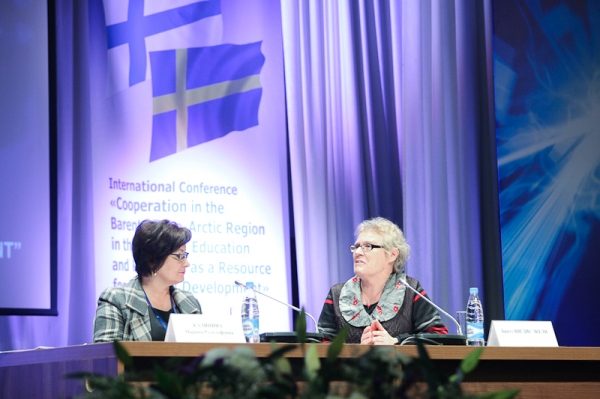
    NArFU conference discussions

    Leading researches and experts, politicians, representatives from business and authorities are attending the conference “Cooperation in the Barents Euro-Arctic Region in the field of education and research as a resource for regional development”.

    The conference is held in the Northern (Arctic) Federal University (NArFU). 

    The conference yesterday started with the plenary session. Ingvild Broch, Coordinator External Review made a short overview of cooperation in the spheres of education and research in the BEAR and pointed out some future challenges. She touched upon some important historical facts of international cooperation between Russia and Scandinavian countries. Marina Kalinina, Vice-rector of International cooperation, NArFU spoke about “University as a Driving Force of Change” and named the priority goals of the Northern (Arctic) Federal University.

    Harry Malinen, Senior expert of the University of Lapland and Lapland University Consortium (Finland) talked about the opportunities for the universities within EU framework. He paid special attention to existing international programs in the Barents region and EU relevant for those who work within research and education area. Anatoly Smirnov, the President of the National Institute for Research of Global Security finished the plenary session with his report about information technologies in the Barents region.

    Later this day a new cooperation agreement was signed between NArFU and Finnmark College. Ingvar Hauge, the senior advisor of Finnmark University College and Elena Kudryashova, the Rector of NArFU signed the document that marks the beginning of a new stage in the history of collaboration between two universities. This agreement aims to develop partnership in educational and exchange programs as well as other important issues.

    “Murmansk and Arkhangelsk universities are the most important partners for us in Russia. I would like to bring forward cooperation in the fields like language, tourism, economics, social works, management of natural resources. And the most important sight of this cooperation is perhaps student and academic exchange, what I think we can bring forward,” Ingvar Hauge commented.

    After a short coffee break the participants of the conference went on parallel sessions that focused on different issues of Barents region cooperation and its connections to cooperation with business and industry, challenges in education, and carrier paths in BEAR for youth.

    Consul General of Sweden in St.Petersburg Mr. Jan Nyberg, visited NArFU in the framework of the conference this day as well. During a working meeting with Elena Kydryashova and Marina Kalinina he discussed the issues of cooperation between Russian and Swedish universities. Jan Nyberg also had an excursion around the campus and had a meeting with the students and lecturers from the Institute of Philology and Cross-Cultural Communication, who study Swedish language.

    During closing plenary session the participants had a possibility to sum-up the result of intensive sessions’ work and to share their findings and proposals for the new Kirkenes Declaration.

    Source

    NArFU

  • The EU outlines its policy for the Arctic

    The EU outlines its policy for the Arctic

    The arctic

    The European Commission and the EU High Representative for Foreign Affairs and Security Policy have today outlined the way forward for the EU’s constructive engagement in the Arctic.

    A press release reads that “the Arctic region is a vital component of the Earth’s environment. Climate change in the Arctic is advancing dramatically, with change visible on a yearly basis, impacting significantly on its ecosystem and the livelihood of its inhabitants. At the same time, rapidly retreating sea ice alongside technological progress are opening up new economic opportunities in the region such as shipping, mining, energy extraction and fishing. While beneficial for the global economy, these activities also call for a prudent and sustainable approach: further repercussions for the fragile Arctic can be expected if top environmental standards are not met.”

    Summarized in three words, ”knowledge, responsibility, engagement”, the strategy adopted today contains a set of tangible actions that contribute to research and sustainable development in the region and promote environmentally friendly technologies that could be used for sustainable shipping and mining. It also underlines the EU’s activities in the Arctic since 2008. For example, the EU has made a contribution of 20 million EUR per year in Arctic research over the last decade and has invested more than 1.14 billion EUR in the sustainable development of the region since 2007.

    Catherine Ashton, the EU’s High Representative and Vice-President of the Commission stated: “With the actions presented today, we want to show the world that the EU is serious about its commitments towards the Arctic region. Developments in the Arctic add further urgency to our work to combat global climate change, and are of increasing strategic, economic and environmental importance to the European Union. The EU wants to make a positive contribution to the cooperation between the Arctic states and take into account the needs of indigenous and local communities inhabiting Arctic areas”.

    Commissioner for Maritime Affairs and Fisheries Maria Damanaki said: “The Arctic is rapidly going through important changes, allowing for new economic activity in a fragile part of the world. There are environmental challenges and opportunities that require global attention and the EU can help substantially: in research, funding, combating global warming and developing greener technologies. This is what the EU’s Integrated Maritime Policy is all about, to contribute to common solutions for the sustainable management of the seas.”

    The Communication contains a series of measures to support the effective stewardship of the Arctic. They include:

    • Support of Arctic research under the Commission’s proposed 80 billion EUR Horizon 2020 research and innovation programme (see IP/11/1475);
    • Contribution to search and rescue in the Arctic through the launch of the next-generation observation satellites (see IP/11/1477);
    • Stepping up of actions to combat climate change;
    • Use of EU’s funding opportunities to maximize sustainable development in the Arctic for the benefit of local and indigenous communities;
    • Promotion and development of environmentally friendly technologies that could be used by extractive industries in the Arctic;
    • Enhancing of bilateral dialogue on Arctic issues with Canada, Iceland, Norway, the Russian Federation and the United States, including by applying for permanent observer status in the Arctic Council;
    • Stepping up of efforts to hold regular dialogue with representatives of indigenous peoples organizations on EU policies and programmes;

    In total, the Communication contains 28 action points, the highlights are:

    • Climate change: the EU, on track to meet its Kyoto target, has incorporated its 20% greenhouse gas reduction commitment into law and remains committed to the long-term target of 80-95% reduction of its emissions by 2050.
    • Sustainable development: for the 2007 – 2013 financial period, the EU provides over €1.14 billion to develop the economic, social and environmental potential of the Arctic regions of the EU and neighbouring areas.
    • Research: The EU has made a leading contribution on Arctic research over the last ten years, contributing around 200 million EUR of EU funds to international research activities in the Arctic.

    The European Parliament and the EU Member States are now invited to submit their views on the proposed actions. The Communication also kick-starts a dialogue and consultation process with the Arctic countries, indigenous peoples and other interested parties to further refine the EU’s policy towards the Arctic.

    Source

    European Commission

  • Danish EU Presidency focuses on maritime issues

    Ship in the arctic

    Danish presidency for the Council of European Union started in January 2012. It is the seventh time Denmark organizes and leads the work of the Council of Ministers.

    Majority of Danish efforts has been put into maritime issues, including the maritime issues around the Arctic. Denmark is one of the Arctic states and the key player in Arctic maritime shipping industry.

    Yesterday, Danish representatives did reach the agreement on a stronger European Safety Agency. The purpose of the Agreement is to ensure that the Agency is able to carry out its tasks in relation to maritime safety and the maritime environment is a better and more efficient manner.

    The negotiations on the new European Maritime Safety Agency have been led by Denmark since the beginning of its EU Presidency. The EMSA has existed for ten years and it was decided that the current marine development bring the need to strengthen it structure both on European and international level.

    The political agreement will be adopted by the European Parliament and the Council.

    Source: European Maritime Safety Agency

  • New website launched for PAGE21

    New website launched for PAGE21

    PAGE 21

    A new website was launched today, PAGE21.eu. The EU funded project brings leading scientists together studying permafrost.

    Permafrost is defined as ground that remains continuously at or below 0°C or at least two consecutive years; some 24% of the land surface in the northern Hemisphere is classified as permafrost.

    The main research question is: What happens when the vast amounts of carbon in Arctic soils are released to the atmosphere?

    Fieldresearchers, operators of long term observatories and modellers from 18 partner institutions in the EU intend to answer this question within the PAGE21 project.

    By pooling expertise from various subjects, the scientists aim to deliver a valuable foundation for the United Nations 5th World Climate Report.

    Arctic Portal designed, programed and hosts the website, which is indeed inspired by permafrost. Arctic Portal also works on data managment for the project.

    Click here to visit the website.

  • EU-ARCTIC-Forum debate on EP Report A Sustainable EU Policy for the High North

    EU-ARCTIC-Forum debate on EP Report A Sustainable EU Policy for the High North

    EU Arctic Policy

    EU-ARCTIC-Forum will be hosting a debate with Arctic Stakeholders on the European Parliaments Report “A Sustainable EU policy for the High North” on 8. December 2010 in Brussels.

    Birgit Schnieber-Jastram, Chair of the EU-ARCTIC-Forum will host the meeting with the rapporteur Michael Gahler MEP and the shadow rapporteurs Anneli Jäätteenmäki MEP, Liisa Jaakonsaari MEP, Indrek Tarand MEP and Konrad Szymanski MEP before the December 9 vote of the Report in the Committee on Foreign Affairs.

    With the debate the EU-ARCTIC-Forum in the European Parliament wants to ensure a proper involvement of stakeholders facilitating thus well informed discourse in Brussels on Energy, Environment and Climate Change, Resources, World Trade Routes, Security, Sustainable Development etc, that are important subjects in the Arctic context.

    Those who want to participate and do not have an access badge to the EP yet, please send your details for registration (name, surname, date of birth, address) asap to Michael Gahler MEP. (michael.gahler(at)europarl.europa.eu)

    8. December at 17.15

    in Room ASP 3 H 1

    in the European Parliament in Brussels.


    Presentation and Consideration of the Draft Report on “A sustainable EU Policy for the High North” in the last meetings of the European Parliaments Committee on Foreign Affairs

    Summary

    Overall the Draft Report seems to be well perceived, both in the EU and in the Arctic. Thus there is justified hope that the Report will not only contribute to outline the EU’s Arctic policy, but also to contribute to confidence building with the Arctic stakeholders. The Draft Report undertakes to asses the existing legal and political framework in the Arctic as well as to establish a clear set of priorities of the European Union with regard to the Arctic. In the last part the Report is formulating suggestions and request to the European Commission and the Council and offering close cooperation to the Arctic states and stakeholders.

    The Draft Report is clearly stating that the Arctic Region is not a legal vacuum, but has a developed set of rules which nevertheless need to be further developed due to changing circumstances.

    Main priorities of the EU in the Arctic set out are:

    • The road to a sustainable socio-economic development and environmental protection
    • The potential of new world transport routes and their vital importance to the EU member’s states
    • The potential of developing resources like Hydrocarbons, Minerals, fish and biogenetic resources

    With regard to a sustainable socio-economic development the Eco-System based management approach as applied in the Barents today is recognized. The Report makes a clear statement as to the responsibility of the EU as one of the main contributors to pollution and climate change.

    In its conclusion the Report requests the Commission to set up a permanent Inter service on the Arctic and likewise in the future EEAS.
    Requests and suggestions are made as to a new circumpolar co-funding and co-programming research programme.
    Finally the importance of EU engagement in the further development of Northern Sea Routes is highlighted and suggestions as to the Galileo project are made.


    After an intense period of organized hearings, meetings and preparations on Tuesday, 9. November, the Draft of the European Parliaments Report on “A sustainable EU Policy for the High North” was presented and debated by the Parliaments Rapporteur Michael Gahler MEP.

    Draft Report

    List of Amendments


    About the EU-ARCTIC-Forum in the European Parliament

    Function

    The EU-Arctic-Forum was constructed to provide the European Institutions with a cross-party platform to foster a better understanding of changes in the Arctic Region and its implication for Europeans citizens politics and businesses, to facilitate a well informed and balanced debate, as well as to bolster the development of a coherent European Policy with regard to the Arctic Region.

    The EU-ARCTIC-Forum is the European Parliament’s platform working on all Issues with regard to the Arctic, providing not only for exchange and input of information but to interlink the so far too often fragmented debates on the Arctic.

    Participants

    The EU-ARCTIC-Forum is involving a number of MEP’s from all major political groups and several committees, Delegations and Intergroup’s such as the Committees on Foreign Affairs, Environment, Transport, Industry, Research and Energy, Development and Transport.

    Thus the EU-ARCTIC-Forum works as the European Parliaments platform interlinking all issues regarding the Arctic Region.

    It invites on a regular basis speakers from the scientific community, business, NGOs, and international institutions in the format of breakfast briefings, seminars or dinner speeches.

    Future Meetings are already organized and interest to participate was already expressed by several Commissioners and other High Officials, Foreign Ministers and Ambassadors of several Arctic States, as well as high profile leaders of the international or European Institutions such as the European Environmental Agency, the International Maritime Organization and the Nordic Council of Ministers, but also from Civil society, NGO’ s and the energy, fishing and shipping industry as well by leading academics in the field.

    Contributions

    In light of the ambition to stimulate and contribute to an informed debate, we call for contributions to the EU-ARCTIC-Newsletter by all interested participants and readers. We want to invite you to share your insights and opinions with the politicians, experts and stakeholders whose work will be addressed by this newsletter.

    The editor of the EU-Arctic-Newsletter and the organizers of the EU-ARCTIC-Forum look forward to your valuable comments and contributions and would like to draw your attention in particular to the forthcoming activities on the European Parliaments Report on “A sustainable EU Policy for the High North” in November and December in Brussels!
  • EU and Greenland broil over Arctic Environment

    EU and Greenland broil over Arctic Environment

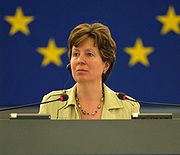
    Diana Wallis

    Vice president of the EU, Diana Wallis has accused Greenland and other Arctic nations of failing to ensure the environment in the Arctic is properly protected Wallis said she could imagine “people on the streets” protesting if wider international stewardship is not guaranteed. These allegations go hand in hand with the E.U pushing for a ban on deep water drilling since the BP accident in the Gulf of Mexico.

    Holm Oslen

    Greenland’s deputy foreign minister Inuuteq Holm Oslen, has as a response accused the EU of suffering “panic reactions” after the BP spill and said that though he welcomes focus and attention on environmental issues he was suspicous towards the motives behind the statement. Oslen was quoted saying ” What we don’t welcome is the notion that there should not be any industrial development in the name of environmental protection. What the rest of you have been benefiting from should not be denied to us in the Arctic,” he said.

    Source: Arctic Focus