Tag: europe

  • Finland, EU and the Arctic now released

    Finland, EU and the Arctic now released

    Arctic Centre’s researcher Roza Laptander tells about Nenents’ situation in the Russian Arctic

    Europe Information of the Ministry of Foreign Affairs, Finland, published on Thursday 16th May 2013 the book Arctic Calls – Finland, the European Union and the Arctic Region.

    The book is written by Head of Science Communications Markku Heikkilä and Science Communicator Marjo Laukkanen, both from the Arctic Centre of the University of Lapland in Rovaniemi, Finland.

    The Arctic is undergoing dramatic changes, while international interest in the world´s northernmost regions is growing rapidly.

    This book helps us to see and understand the background to this trend. Through personal experiences, diverse illustrations and numerous interviews, it puts a human face on the Arctic region.

    The book is available in Finnish, Swedish, English and North Sami. The electronic versions are available on the Europe Information and Arctic Centre.

    Source

    Arctic Center

  • Towards an Arctic Governance: What role for France and Europe

    Towards an Arctic Governance: What role for France and Europe

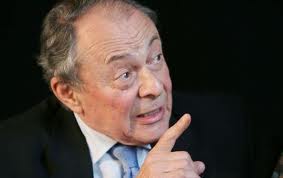
    Michel RocardMichel Rocard, a former Prime Minister and now a special representative for the President of France with regards to matters concerning the poles, Arctic and Antarctic, gave a lecture “Towards an Arctic Governance: What role for France and Europe?” at the University of Iceland on November 1, 2010. The lecture is part of a series organized by the President of Iceland, entitled “New Currents” in which various internationally known scholars and world leaders have taken part over the years.

    Michel Rocard has a long political career behind him. He has served as a Minister of Agriculture in France and was the Prime Minister of France between 1988-1991. He held a seat in the European Parliament for three terms and has been especially active in matters concerning foreign policy, education and employment. In this lecture he will share his vision for the North and discuss the role of Europe in the future of the Arctic region.

    Michel Rocard from Kennslumiðstöð Háskóla Ísl on Vimeo.

  • Finland’s strategy for the Arctic region

    Finland’s strategy for the Arctic region

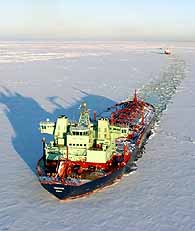
    Jaanmurtaja Icebreaker

    Over the past decade or so the world has become to realise the great importance of the Arctic region to the global ecology.

    New geopolitical situation that emerged after the end of the cold war enabled new scientific research and gradually the economical potential of the region came apparent. This notable change in how the Arctic is perceived has led to a series of new policy statements. Norway was the first Arctic country to establish an Arctic Policy in 2006 under the name “Norwegian High North strategy” and today, seven out of the eight Arctic Countries have an Arctic policy in addition to the EU Commission communication on European Union and the Arctic region.

    Finland was seventh Arctic country to draft an Arctic Policy. The Strategy was released June 4, 2010 and concentrates on seven priority sectors: security, environment, economy, infrastructure, indigenous peoples, institutions and the European Union. The strategy is not a final measure but rather a starting point in shaping Finland’s Arctic policy and will contribute to EU’s Arctic Policy, which is currently a work in progress.

    The strategy identifies as biggest security threats increasing seafaring and exploitation of the natural resources. Though there is no race to the natural resources in sight, activities in the region should continue to be based on the rule of international law and in order to protect the Arctic environment best practices and sustainable development should be pursued in activities throughout the region. The strategy recognizes that infrastructure is still lacking both onshore and offshore and needs to be improved in collaboration with neighboring countries. What comes to the economical potential of the region has Finland Arctic expertise in various sectors, especially in marine technology and logistics, which can be utilized in the large projects particularly in the Barents Region, but also in crosspolar transportation.

    Alexander Stubb

    According to the strategy will Finnish Sami continue to enjoy their rights as indigenous peoples and Finland will continue the work towards a national solution which will meet the minimum requirements of the ILO Convention on Indigenous and Tribal Peoples no.169.

    In the institutional level Finland emphasizes the importance of the Arctic Council as a forum for discussion and decision making. Finland lays down proposals for strengthening the Council so that the Council will be better prepared to act upon the contemporary situation. These proposals include revision of the mandate and working methods of the Council, better burden-sharing and a joint budget, establishment of a permanent secretariat, expansion of the normative role of the Council, enhanced interaction with non-Arctic actors and creation of a Communications and Outreach Strategy for the Council. In addition, Finland offers to host an Arctic Summit, a conference at the highest level, under the auspices of the Arctic Council to discuss and respond to the environmental concerns rising from the natural resource exploitation, to discuss the legitimacy of different actors in the Arctic and to the future development of the Arctic Council.

    But since Finland is an EU member state, as are Sweden and Denmark also, the EU Arctic Policy will play as well important role in Finnish Arctic strategy. The Strategy outlines that EU should consider the special features of the Arctic Region in the Union’s various policy sectors and increase its input in the area.
    Finland supports an establishment of EU Arctic Information Centre at the Arctic Centre of the University of Lapland and concurs the EU admittance as an permanent observer member of the Arctic Council.

  • Increased border cooperation between Europe and Russia

    Increased border cooperation between Europe and Russia

    Norway_Russia_border_agreement

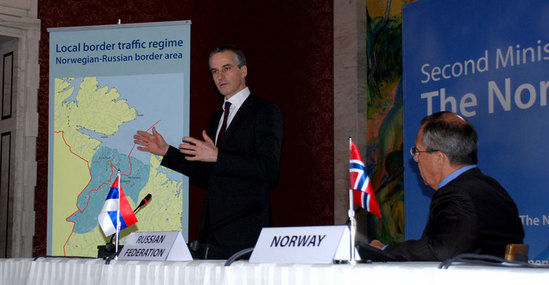
    Barents Observer – Norway and Russia signed yesterday a milestone agreement on visa-free travel between Russia and a Schengen-member state in Oslo.

    The agreement between Norway and Russia on Facilitation of Mutual Travel for Border Residents establishes an Arctic cross-border zone, including the Norwegian town of Kirkenes and the two Russian towns of Nikel and Zapolyarny on the Kola Peninsula, from where the population can cross the border without valid visa by showing only a specific ID-card. The ID-card is intended for locals who have been living in the zone for more than 3 years and have either Russian or Schengen member state citizenship. The new visa-free zone will facilitate the 20 percent increase in traffic crossing the Russian-Norwegian border in the first six months of 2010 compared with the same period last year and is in line with wider European policy of increased cross-border cooperation along the eastern rim of the European Union.

    European Border Dialogues conference, attended by 16 states, reseantly issued a Declaration on Cross-Border Cooperation in a Wider Europe identifying key challenges in current cross-border cooperation in Europe, among which are visa regulations and border crossing procedures. The new Norwegian-Russian agreement is thus a step towards abolishing the visa-regime which discourages cooperation between Europe and Russia and enhancing regional cooperation in the Barents region.