Tag: European Commission

  • EU Arctic preparatory project

    EU Arctic preparatory project

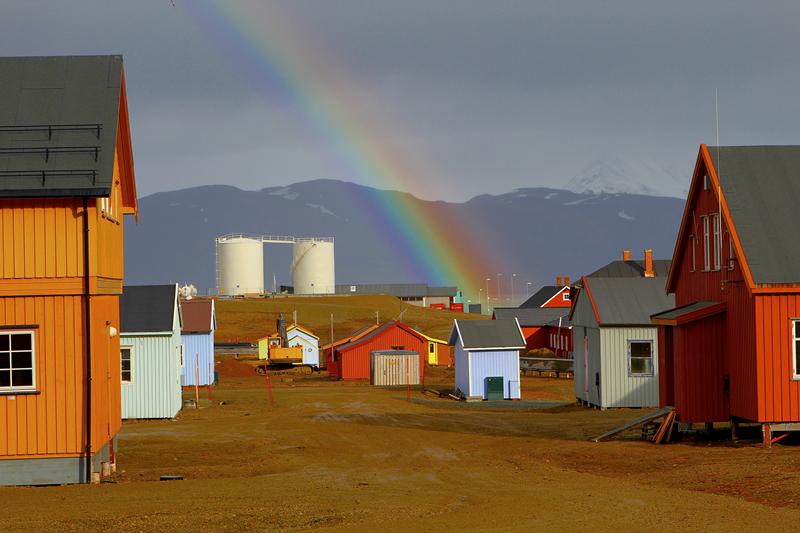
    Ny Alesund in Svalbard

    The European Commission has selected a consortium led by the Arctic Centre, University of Lapland (Rovaniemi, Finland) to carry out an one million euro project* to produce a “Strategic Environmental Impact Assessment of development of the Arctic”. The project will last eighteen months during 2013–2014.

    The consortium known as the EU Arctic Information Centre Initiative comprises an international network of currently 19 leading Arctic research and outreach institutions from the various European Union member states, and the EEA countries.

    Arctic Portal is a partner in the project.

    The preparatory project is a first step to strengthen communication and outreach within the EU and between the EU and the Arctic community about the contribution the EU is making to address environmental and other issues raised by the rapid development of the Arctic region as a result of economic and climate change.

    It provides a platform to test the effectiveness, functionality and sustainability of the proposal by the consortium to establish an EU Arctic Information Centre. The proposed EU Arctic Information Centre would aim to facilitate information exchange between the EU institutions, Arctic stakeholders and the general public.
    The possibility of the EU Arctic Information Centre has been expressed in various EU Commission, Council and Parliament Arctic papers since 2008. The Arctic Centre at the University of Lapland made a concrete initiative of the network model in 2009.

    The project will also enhance the use of impact assessment and its importance as a tool and a channel to put together information for the use of decision- and policy-makers and the related legal processes.

    “The key idea of the Preparatory Action project is to create an efficient application of science-based information and its fulfillment with views and perspectives of stakeholders both inside and outside of the Arctic”, says Director of the Arctic Centre, Professor Paula Kankaanpää.

    To deliver that, the main activities are organized within four work packages:

    1. EU Arctic Information Centre feasibility study
    2. Impact assessment process
    3. Outreach & communication
    4. Project management

    According to Finnish Arctic Ambassador Hannu Halinen, “The ultimate vision is to contribute to the sustainable development of the Arctic by creating an active pan-European network of institutions that represents a substantial Arctic knowledge base. Rapid development of the Arctic, together with complicated political, socio-economic and environmental processes, will demand an effective use of science-based information and pro-active work by relevant communication and research centers to guide the decision- and policy-makers to swift and coherent actions”.

    Mr Jaime Reynolds who coordinates Arctic issues for the Directorate-General for the Environment within European Commission notes: “The project does not constitute the launch of an EU Arctic Information Centre itself; however the EU Arctic Information Centre Feasibility Study and Impact Assessment processes included will be fundamental for considering decisions about the establishment of the Centre.”
    Arctic Centre of the University of Lapland is seeking for a Senior Impact Assessment Expert in Rovaniemi, Finland to work for the Preparatory Action: “Strategic Environmental Impact Assessment of development of the Arctic” project funded by the European Commission. All information can be found here.

    Sources
    Arctic Centre
    EU Arctic information Centre

  • The EU outlines its policy for the Arctic

    The EU outlines its policy for the Arctic

    The arctic

    The European Commission and the EU High Representative for Foreign Affairs and Security Policy have today outlined the way forward for the EU’s constructive engagement in the Arctic.

    A press release reads that “the Arctic region is a vital component of the Earth’s environment. Climate change in the Arctic is advancing dramatically, with change visible on a yearly basis, impacting significantly on its ecosystem and the livelihood of its inhabitants. At the same time, rapidly retreating sea ice alongside technological progress are opening up new economic opportunities in the region such as shipping, mining, energy extraction and fishing. While beneficial for the global economy, these activities also call for a prudent and sustainable approach: further repercussions for the fragile Arctic can be expected if top environmental standards are not met.”

    Summarized in three words, ”knowledge, responsibility, engagement”, the strategy adopted today contains a set of tangible actions that contribute to research and sustainable development in the region and promote environmentally friendly technologies that could be used for sustainable shipping and mining. It also underlines the EU’s activities in the Arctic since 2008. For example, the EU has made a contribution of 20 million EUR per year in Arctic research over the last decade and has invested more than 1.14 billion EUR in the sustainable development of the region since 2007.

    Catherine Ashton, the EU’s High Representative and Vice-President of the Commission stated: “With the actions presented today, we want to show the world that the EU is serious about its commitments towards the Arctic region. Developments in the Arctic add further urgency to our work to combat global climate change, and are of increasing strategic, economic and environmental importance to the European Union. The EU wants to make a positive contribution to the cooperation between the Arctic states and take into account the needs of indigenous and local communities inhabiting Arctic areas”.

    Commissioner for Maritime Affairs and Fisheries Maria Damanaki said: “The Arctic is rapidly going through important changes, allowing for new economic activity in a fragile part of the world. There are environmental challenges and opportunities that require global attention and the EU can help substantially: in research, funding, combating global warming and developing greener technologies. This is what the EU’s Integrated Maritime Policy is all about, to contribute to common solutions for the sustainable management of the seas.”

    The Communication contains a series of measures to support the effective stewardship of the Arctic. They include:

    • Support of Arctic research under the Commission’s proposed 80 billion EUR Horizon 2020 research and innovation programme (see IP/11/1475);
    • Contribution to search and rescue in the Arctic through the launch of the next-generation observation satellites (see IP/11/1477);
    • Stepping up of actions to combat climate change;
    • Use of EU’s funding opportunities to maximize sustainable development in the Arctic for the benefit of local and indigenous communities;
    • Promotion and development of environmentally friendly technologies that could be used by extractive industries in the Arctic;
    • Enhancing of bilateral dialogue on Arctic issues with Canada, Iceland, Norway, the Russian Federation and the United States, including by applying for permanent observer status in the Arctic Council;
    • Stepping up of efforts to hold regular dialogue with representatives of indigenous peoples organizations on EU policies and programmes;

    In total, the Communication contains 28 action points, the highlights are:

    • Climate change: the EU, on track to meet its Kyoto target, has incorporated its 20% greenhouse gas reduction commitment into law and remains committed to the long-term target of 80-95% reduction of its emissions by 2050.
    • Sustainable development: for the 2007 – 2013 financial period, the EU provides over €1.14 billion to develop the economic, social and environmental potential of the Arctic regions of the EU and neighbouring areas.
    • Research: The EU has made a leading contribution on Arctic research over the last ten years, contributing around 200 million EUR of EU funds to international research activities in the Arctic.

    The European Parliament and the EU Member States are now invited to submit their views on the proposed actions. The Communication also kick-starts a dialogue and consultation process with the Arctic countries, indigenous peoples and other interested parties to further refine the EU’s policy towards the Arctic.

    Source

    European Commission

  • New name for the future EU funding programme for research and innovation

    New name for the future EU funding programme for research and innovation

    European Union flag

    The European Commission is pleased to inform that Mrs. Máire Geoghegan-Quinn, European Commissioner for Research and Innovation, has announced on 21 June 2011 the new name for the future EU funding programme for research and innovation: “Horizon 2020 – the Framework Programme for Research and Innovation”. It will enter into force on 1st January 2014, after the end of FP7 on 31 Dec 2013.

    “Horizon 2020 – the Framework Programme for Research and Innovation” is not just a new name for the same Framework Programme. It is the name for the new, integrated funding system that will cover all research and innovation funding currently provided through the Framework Programme for Research and Technical Development, the Competitiveness and Innovation Framework Programme (CIP) and the European Institute of Innovation and Technology (EIT). These different types of funding will be brought together in a coherent and flexible manner. Research and innovation funding will focus clearly on addressing global challenges. Needless red tape will be cut out and access to programs and participation will be made easier and simpler.

    More details can be found in the press release as well as the website of the European Commission.