Tag: Expedition

  • Tara Oceans Polar Circle expedition

    Tara Oceans Polar Circle expedition

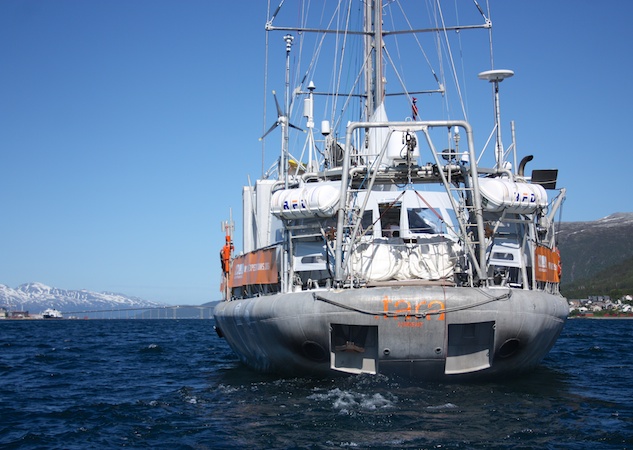
    TARA research schooner

    The Tara research schooner is now in the High North for a new scientific adventure. Over the next seven months, it will travel 25 000 km around the Arctic Ocean via the Northeast and Northwest passages to collect data on polar marine ecosystems and biodiversity and their vulnerability to global change and human activities.

    The Tara Oceans Polar Circle expedition will serve to complete the objective of the Tara Oceans Expedition (2009-2012): to collect plankton in all the oceans of the world. These tiny organisms form the base of the marine food chain, store CO2 and use their photosynthetic activity to act as an immense oxygen pump.

    However, their ecosystems remain one of the least explored fields of oceanography. Biologists and oceanographers will focus their research on the edge of the ice pack, where plankton is most abundant.

    Other issues will also be explored, including the assessment of mercury levels in the atmosphere and in the sea, and the concentration of plastic particles

    Such unprecedented measurements will facilitate our understanding of their impact on the arctic ecosystem.

    Click here to follow the TARA expedition on the internet. Click here to download the information brochure on the expedition.

    Source

    Tara Oceans Polar Circle

  • Canadians to cross the North Pole

    Canadians to cross the North Pole

    Polar bears

    Russian – Canadian expedition will aim to cross the North Pole. The voyage will try to connect the northern Russian shore with the Canadian one.

    The trip is expected to be 8.000 kilometers long. The travel is scheduled to start in February 2013. It is expected to reach Canadian shore in the end of May 2013. It will be led by the Russian captain – Vladimir Chukov.

    Eight explorers will set out in two specially designed vehicles with overinflated tires that allow for travel over the snowdrifts and dangerous Arctic ice cap, where above-freezing temperatures in the summer months can cause the ice to break up.

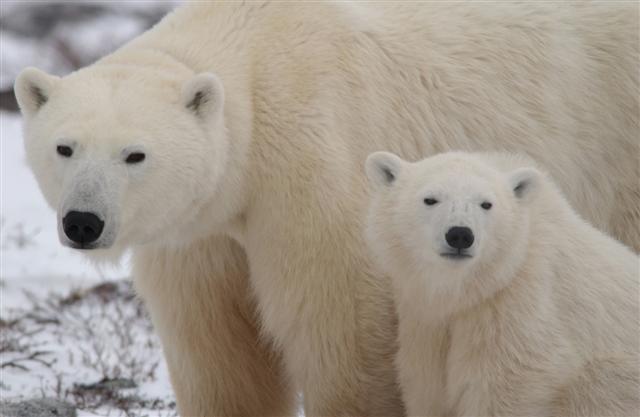
    The expedition will conduct the scientific research to include the observation of the polar bear populations at the Pole and their adaptation to changing Arctic climate. The outcome of the research will be shared with scientists world – wide.

    The expedition will serve for some of the first tests of Russia’s GLONASS satellite navigation technology, Moscow’s bid to challenge the dominant U.S. global positioning system (GPS) as reported by Barents Observer.

    Source

    Barents Observer

  • Denmark to claim the North Pole

    Denmark to claim the North Pole

    Arctic Boundaries map

    Today, 31st of July 2012, Denmark dispatches the official expedition from Svalbard off northern Norway, in order to gather seismic and depth data to substantiate a future possible claim on the North Pole.

    Before 2014, Kingdom of Denmark will make an official claim to the North Pole possibly setting a tug – of – war with Russia and Canada over the seabed resources lying on the top of the world.

    Danish claim would be made under the United Nations Convention of the Law of the Sea (UNCLOS). It would map five sections of continental shelf to include four of them around Faroe Islands and one around Greenland with the area reaching the North Pole. Both, Greenland and Faroe Islands are self – governing territories under the Kingdom of Denmark.

    It is a fact, that melting Arctic sea ice will in very near future greatly open the door for inexpensive exploitation of northern oil and gas resources.

    The Danish claim is to include the area of roughly 150.000 sq km north of Greenland. However, to be able to proceed with the statement, Denmark will have to prove by providing scientific data, that the Lomonosov Ridge which lies across the North Poole, is the extention of Greenlandic land mass.

    Up until now, Denmark managed to identify five potential claim areas around the southern part of Greenland and south of Faroe Islands.

    It is the Commission on the Limits of the Continental Shelf that is eligible to assess the validity of those claims.

    United Nation Convention on Law of the Sea entered into force and by the year of 1998 was accepted by 127 states. Few governments, which did not ratify the Convention, in between United States, Belgium and Canada, have already signed the Implementation Agreement, what surly shows that even when not ratified, the Convention with its universal approach, contributes with a great impact, to domestic rules of various countries.

    The map on the right presents the current Arctic boundaries. Please, click here to access more Arctic – related interactive maps.

    Source

    The Moscow Times

  • The 5th Chinese National Arctic Research Expedition

    The 5th Chinese National Arctic Research Expedition

    The departure ceremonyIn beginning July of 2012 the Snow Dragon started its expedition to the Arctic. The voyage was launched from Qingdao in China. The 5th Chinese National Arctic Research Expedition (CHINARE 5) will sail for around 6 weeks before reaching Iceland in August.

    The voyage to Iceland will strengthen the two countries Arctic research cooperation further and during its stay in Iceland the public will have an opportunity visit the Snow Dragon.

    Xuelong, the Snow Dragon, is the icebreaker of the Polar Research Institute of China (PRIC). It is the largest non-nuclear powered icebreaker in the world. It was built as an ice-strengthened cargo ship, in Ukraine in 1993 but is now a floating laboratory with state of the art facilities and equipment for polar research. It was modified in 1994. The Xuelong is 167m long, almost 23 meters wide and the ice class is B1 level, it can break through 1.1m of ice, including 20cm of snow by 1,5 knots continuously.

    It is both a supply vessel for the four research stations PRIC has, one in Svalbard and three in Antarctica, and a scientific research platform in both Poles.

    This will be the fifth expedition of the icebreaker in the Arctic; the others took place in 1999, 2003, 2008 and 2010. Although CHINARE 1 and 2 were only one-year projects they provided a framework for comparative research in the future within the investigated areas. CHINARE 3 and 4 were conducted under the International Polar Year (IPY) and raised the knowledge level in China about the Arctic’s rapid changes.

    The Xuelong, research vessel for the 5th Chinese expedition, is equipped with advanced systems for self-contained navigation and for weather observation, both extremely important qualities for polar expeditions. There are also excellent facilities for the scientist.

    The icebreaker has a data processing center and seven laboratories with over 500sq meters of working space, it has operational equipment, a freezer to store samples, a low temperature cultivation room, a clean laboratory, a marine biological laboratory, a marine chemical laboratory, a geological laboratory, and a CTD winch, a biological winch, a geological laboratory, and a hallow-section device of EK-500 model.

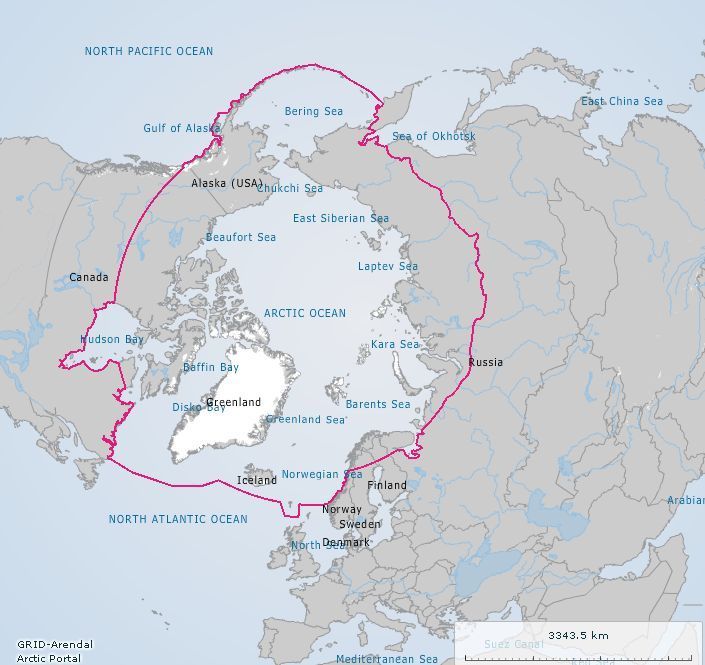
    (Map: Arctic Portal) The Snow Dragon´s expected route.

    Furthermore it contains three operating boats and a helicopter for the transportation and research purposes in the Arctic and Antarctic regions.

    China is now designing a new research icebreaker, to be launched in 2014. It will be equipped with the most advanced appliances for marine, polar and astronomical research. The icebreaker will be stronger then the Xuelong, able to sail through rougher ice conditions.

    The scientists and staff on board the Snow Dragon work in several fields of research. The field work area is very broad and covers Bering Sea, Chukchi Sea, Chukchi Plateau, Canada Basin and the High sea of Norwegian Sea.

    Several research points will be re-visited, from the other four Chinese National Arctic Research Expeditions. Most of them are located in the Bering Sea, the Chukchi area and the Canada basin.

    However, the High Norwegian Sea will be explored by CHINARE for the first time. China is famous from their research stations in Ny Alesund and Svalbard. The opportunity to explore the Norwegian High Sea greatly contributes to the stations ‘scientific research.

    The main subjects of research in the expedition are divided into four fields: physical oceanography and sea ice, marine meteorology, marine geology, marine chemistry and atmospheric chemistry, marine biology and ecosystem research.

    The research´s main objectives are to include the survey of the marine environment and sea – ice – air system, geologic record of rapid changes in the marine environment and the research on the carbon flux, nutrients and bio geochemical cycle in the Arctic.

    (Photo: Getty Images) The Snow DragonHowever, what is more important, during the expedition, the scientists try to study the impact of Arctic changes on Chinese climate and investigate the Arctic ecosystem response to global change.

    Click here to read more about the research fields during the 5th Chinese Arctic expedition.

    The expedition is jointly organized by the Chinese Arctic and Antarctic Administration (CAA) and the State Oceanic Administration of China (SOA). The Polar Research Institution of China (PRIC) is the research body of CAA.

    Please, be referred to CHINARE Portal to find out more about the expedition. To read more about the Arctic shipping, please access the Shipping Portlet and visit Interactive Mapping System.

    Source: Chinare Portal

    Source:

    Chinare Portal

    See also:

    Click here to enter the Arctic Portal News Portlet
  • Hot water surrounded by ice

    Hot water surrounded by ice

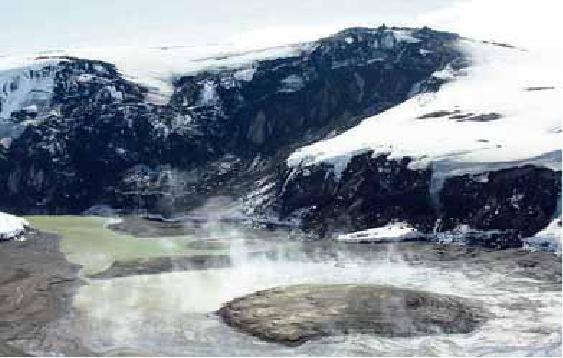
    Hot water surrounded by ice.

    Great melt will occur this year in Europe’s largest glacier, Vatnajökull in Iceland. This is the result of an expedition by Icelandic scientist recently.

    Magnús Túmi Guðmundsson, professor in geography at the University of Iceland, says that the western part of the glacier will melt rapidly. This is due to the volcanic activity in Grímsvötn last year.

    Elevation of land near the glacier was also measured a total of 3cm per year because of the glacier shrinking.

    The consequences are for example raised levels in glacier lagoons and glacier rivers.

    A lagoon which formed after the eruption was researched, which includes a river which was measured 45°Celcius. The lagoon is therefore hot. A few hundred meters was at 25-40° Celsius. Like average bathwater to some.

    “The eastern part of the lagoon is also pretty hot, considering it is surrounded by icebergs.

    Magnús also notes that ash will continue to blow this summer, especially during the dry season. “People in Reykjavík can often still see ash on their cars, that’s ash form Eyjafjallajökull and Grímsvötn. This will take years to stop.”

    Source

    Morgunbladid

  • British to melt Antarctica

    British to melt Antarctica

    A hot water drill will melt through the frozen ice sheet

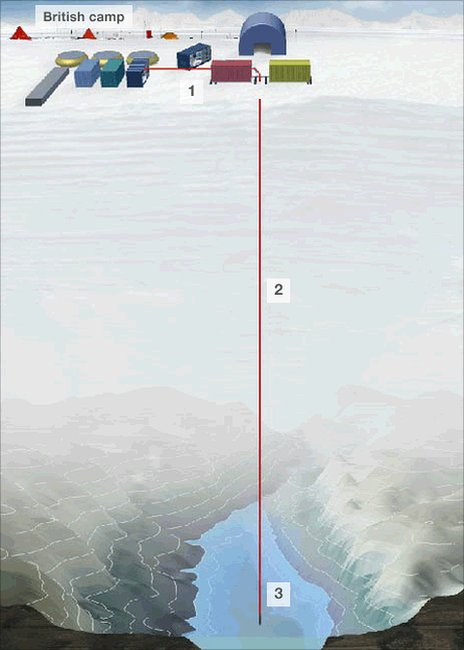
    British expedition is going to Antarctica to search for life. Their plan is to dig, with hot water, three kilometers down the ice.

    The plan is to sample a lake under the ice with hopes to find forms of life, unknown today.

    A bonus is finding clues to future climate change impacts.

    The BBC reports the team is the first to sample a sub-glacial Antarctic lake.

    “Our project will look for life in Lake Ellsworth, and look for the climate record of the West Antarctic Ice Sheet,” said the project’s principal investigator Professor Martin Siegert from Edinburgh University.

    “If we’re successful, we’ll make profound discoveries on both the limits to life on Earth and the history of West Antarctica,” he told BBC News.

    The picture on the right explains how this will be done. The unique equipment is specially made for the assignment, which received 7 million pounds by the UK’s Natural Environment Research Council.

    “This is an unknown environment – we don’t know for example whether there will be dissolved gases in the water,” Matt Mowlem, the designer of the equipment said.

    “So the water at its pressure of 300 atmospheres will be sampled. But when we pull the probe up and the flasks hit the cold air in the borehole, the water will try to freeze; the pressure then increases to around 2,700 atmospheres, and that’s greater than anything experienced in ocean engineering.”

    Once the probe has been hauled up, a coring device will be lowered down the borehole to take samples of the lake floor sediment.

    Click here to see a video of the story by BBC.

  • Royal Arctic Charity Expedition

    Royal Arctic Charity Expedition

    Prince Harry

    Britain’s Prince Harry will join a team of wounded military servicemen at the start of their expedition to trek unaided to the Geographic North Pole.

    The Prince – Patron of the charity Walking with the Wounded – will join the group at their base camp in Longyearbyen, north Norway on 29th March, where he will undertake three days of training with the team. The Prince will then trek with the team for five days as they commence their expedition high above the Arctic Circle. Prince Harry will depart the ice on 5th April, to return to the United Kingdom for continued military training.

    The Walking with the Wounded team includes four wounded soldiers, who have suffered life-changing injuries during active service, including two amputees. They will be accompanied by two expedition leaders and a Norwegian polar guide. Their four week expedition will see the team covering up to 200 miles of the frozen Arctic Ocean by foot, pulling their own equipment in sleds weighing in excess of 100kg and in temperatures that can drop to minus 45° celsius (-49°F)

    The Walking with the Wounded Expedition supports other charities that help injured soldiers rebuild their lives. The money raised from this expedition will be used for educational courses and training programmes to aid rehabilitation back into ordinary life.

    Source: The Prince of Wales