Tag: Finland

  • Finland´s visit to Iceland starts today

    Finland´s visit to Iceland starts today

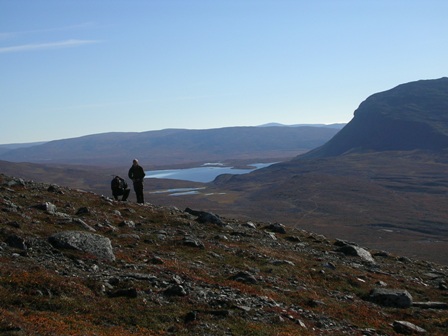
    Icelandic nature

    Today, 28th of May 2013, the President of Finland, Sauli Niinistö will pay an official visit to Iceland, together with his wife and various Arctic experts.

    During his visit in Iceland, President Niinistö will attend a conference on the Arctic that will be held at the University of Iceland.

    The President will also officially visit Reykjavik University and learn about IT (information technology) and innovation in high tech industries at a special introductory meeting.

    The Finnish president will also visit the geothermal area in Svartsengi and learn about the use and utilization of green energy there as everywhere in Iceland.

    The Finnish President will depart on May 29th after two days visit.

    Source

    News of Iceland

  • Joint Arctic defense strategy?

    Joint Arctic defense strategy?

    Satellite station in the arctic

    Two Arctic states might join military forces in the Arctic. Sweden and Finland have held talks about a joint weaponary and it is a central part of Sweden’s vision for Nordic Defence cooperation. Sweden is looking for a joint Nordic policy in foreign affairs, secutiry and defense strategy.

    Foreign Minister Carl Bildt and Defense Minister Karin Enstrom have written the proposal.

    “We want to create a more efficient use of resources, higher quality, better effects and an expanded variety of defence capabilities through cooperation”, the two ministers write, according to the BarentsObserver.

    “Joint ownership and use of military capacities and resources, so-called pooling and sharing, is a central part of the Swedish vision for Nordic defence cooperation”, they underline.

    The Finnish side positively responds to the Swedish proposal. Defence Minister Carl Haglund says to Yle that the possible conclusion of a treaty with Sweden is worth thorough examination, but believes that such an agreement can come only after “several years”.

    “Indeed, in practice this would mean that we should have some kind of defense agreement with Sweden, because we would be talking about crucial capabilities, for example in the navy or the air force,” Haglund says.

    At the same time, the Finns are reluctant to get Norway on board. Haglund underlines that “in any case, Nordic NATO member countries should not be included in this cooperation”.

    Sources

    BarentsObserver
    Dagens Nyheder
    Yle

  • Russian 100 million icebreaker to Finland

    Russian 100 million icebreaker to Finland

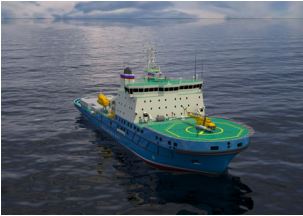
    Russian icebreaker

    Russia is building a new icebreaker in Finland, to be ready in 2015. The vessel is planned to be used in year-round operation in the Baltic Sea and in summer season in the Arctic seas. The vessel is able to operate in temperatures as cold as -40°С and the maximum icebreaking capability is 1.5 m.

    Arctech Helsinki Shipyard will build the 16 MW icebreaker with a total worth of the vessel about 100 million EUR. The contract has been awarded together with OJCS Vyborg Shipyard.

    The main tasks of the vessel are icebreaking and assisting of heavy-tonnage vessels in ice, towing of vessels and other floating structures in ice and open water. The vessel will also be used for fire fighting on floating objects and other facilities, assisting vessels in distress in ice and open water and also for cargo transportation.

    The vessel will measure 119.8 m in length and 27.5 m in breadth. The four main diesel generator sets have the total power of 27 MW. The total propulsion power is 18 MW consisting of two full-circle azimuth thrusters.

    Arctech Helsinki Shipyard Inc. specializes in arctic shipbuilding technology, e.g. building icebreakers and other Arctic offshore and special vessels. Arctech is a joint-venture, which is 50/50 owned by STX Finland Oy and Russian United Shipbuilding Corporation. The joint venture agreement was signed in December 2010. Arctech is located in Helsinki and has approximately 400 employees.

    Source

    Arctech

  • Postdoctoral Researcher wanted at Oulu

    Postdoctoral Researcher wanted at Oulu

    Oulu Finland

    The Department of Geography at the University of Oulu in Finland is looking for a Postdoctoral Researcher/Senior Research Fellow for the next five years.

    The five-year period begins 1st September 2012 or upon agreement and the applications are open until the 2nd of July.

    The research profile of the successful candidate should complement the focus of the Physical Geography Research Group (PGRG) at the Department of Geography. The PGRG focuses on analysing geomorphological, biogeographical and hydrological phenomena in high-latitude and high-altitude environments, namely in boreal, sub-Arctic, Arctic and mountainous landscapes.

    The key research subjects are geomorphological processes (including permafrost), geodiversity, biodiversity, species distribution modelling and tree line ecotone under global change. Methodologically, the main focuses are geoinformatics, spatial analysis and statistical modelling.

    Studies are often based on comprehensive field data sets. The PGRG includes one professor, one to three postdoctoral researchers, three to five doctoral students, research assistant(s) and over ten Master students.

    The required qualifications for the successful candidate include a doctoral degree and high quality scientific competence, teaching experience in Physical Geography as well as evidence of international collaboration in the field in question, and success in acquiring supplementary (extramural) funding.

    For further information contact Professor Jan Hjort, Department of Geography, tel. +358-29-448-1704, jan.hjort(at)oulu.

    See more here.

    Source

    Uni. of Oulu

  • Nordic Council of Ministers

    Nordic Council of Ministers

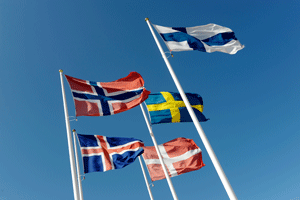
    Flags of Scandinavian countries

    The cornerstone of Nordic cooperation is the Nordic Council, which represents Denmark, Finland, Iceland, Norway, Sweden, the Faroe Islands, Greenland and Åland.

    The “Norden” consists of two separate but interoperable entities, The Nordic Council, an official inter-parliamentary body, and the Nordic Council of Ministers, a forum for Nordic inter-governmental cooperation. In addition to the Council and the Council of Ministers, there are more than 20 official Nordic institutions – and about the same number of unofficial ones. The Nordic Innovation Centre (NICe), NordForsk, Nordic Culture Point, Nordic Project Fund (NOPEF), the Nordic Centre for Welfare and Social Issues and the Nordic School of Public Health (NHV) are full Nordic institutions, as are the Nordic houses in Iceland and the Faroe Islands. One of the main institutions in the second category is the Nordic Investment Bank (NIB), which has been jointly owned by the five Nordic and three Baltic states since 2005. Another key organisation is the Nordic Cultural Fund, which supports culture in the Region as well as Nordic projects elsewhere in the world.

    Norden

    The Nordic Council is the official inter-parliamentary body. Formed in 1952, it has 87 elected members from Denmark, Finland, Iceland, Norway and Sweden, as well as the three autonomous territories (Greenland, the Faroe Islands and Åland). The members are all national MPs nominated by the party groups in their home parliaments. There are no direct elections to the Council. It is run by a Presidium and convenes for an annual autumn meeting called the Session, which passes recommendations to the national governments. The main priorities in the work of the Nordic Council are: climate, environment and energy; education and research; and welfare and culture.

    The cornerstone of the cooperation is The Helsinki Treaty, which regulates official cooperation between Denmark, Finland, Iceland, Norway and Sweden. It was signed on 23 March 1962 and came into force on 1 July 1962. The main objective of the treaty is to maintain and develop further co-operation between the Nordic countries in the legal, cultural, social and economic fields, as well as in those of transport and communications and environmental protection. In addition, the treaty establishes a foundation for joint positioning in matters of common interest which are dealt with by European and other international organisations and conferences.

    The Council of Ministers is the official inter-governmental body. The prime ministers have overall responsibility for its work. In practice, this responsibility is delegated to the ministers for Nordic cooperation and the Nordic Co-operation Committee, which co-ordinates the day-to-day work. Despite its name, the Council of Ministers, which was founded in 1971, consists of several councils. These councils meet a couple of times a year. At present, there are 11 of them.

    On of the areas of Nordic cooperation is the Arctic. The Nordic countries cooperate to improve the quality of life for the indigenous peoples in the northern areas and to promote social and cultural development for the Arctic people. Nordic cooperation also strives to protect the sensitive and characteristic Arctic nature, and to ensure sustainable use of the region’s resources, and protection of its biological diversity.

    An Advisory Expert Committee was established in conjunction with the adoption of the new Arctic Co-operation Programme in 2002. The Arctic Expert Committee is made up of Nordic members of the Arctic Council and representatives from the autonomous territories. In Nordic Council terms the Arctic Expert Committee will offer advice to the Ministers for Co-operation and the Nordic Co-operation Committee on matters relating to the Arctic.

    Following the increasing importance of the Arctic region in international politics, the Nordic Council will discuss the controversial question of a Nordic strategy for the Arctic Region in its meeting in Reykjavik, 21-23 March, 2012 . The meeting will also discuss oil extraction in the Arctic and recommendations for allocating responsibilities in the event of environmental incidents. A plenary session will be in the Icelandic parliament on Friday 23 March, 08:30-11:45 local time.

    Sources: Norden.org, Nordic Co-operation

  • One month for Rovaniemi abstracts

    One month for Rovaniemi abstracts

    Rovaniemi, Finland

    The 5th Polar Law Symposium will start in Rovaniemi, Finland, on 6th of September. The two day event will bring together internationally renowned scholars from all over the world where the Arctic will be the main focus.

    There are several themes for the symposium, as seen below. Previous symposia have proven to be extremely successful in promoting both scholarship and understanding of polar issues.

    Their outcomes were beneficial to scholars, students and academicians, government agencies, policy makers, jurists and various stakeholders alike.

    The symposium invites researchers, faculty members, young scholars, jurists, post-graduate research students, policy makers, stakeholders and others interested to submit abstracts within the scope of the below mentioned theme.

    The abstract should contain no more than 200 words and should be sent to Kamrul Hossain by 31. March 2012.

    The theme for the symposium is quite open. It covers a wide variety of topics relating to the Arctic and the Antarctic.


    • Human rights issues, such as autonomy and self-government vs self-determination, the rights of indigenous peoples to land and natural resources and cultural rights and cultural heritage, indigenous traditional knowledge.
    • Local and national governance issues.
    • Environmental law, climate change,security and environment implications of climate change, protected areas and species.
    • Regulatory, governance and management agreements and arrangements for marine environments, marine mammals, fisheries conservation and other biological/mineral/oil resources.
    • Law of the sea, the retreating sea ice, continental shelf claims.
    • Territorial claims and border disputes on both land and at sea.
    • Peace and security, dispute settlement.
    • Jurisdictional and other issues re the exploration, exploitation and shipping of oil, gas and minerals, bioprospecting.
    • Trade law, potential shipping lines through the northwest and northeast passages, maritime law and transportation law.
    • The roles and actual involvement of international organizations in the Polar regions, such as the Arctic Council, the European Union, the International Whaling Commission, the Nordic Council, the North Atlantic Treaty Organization, and the United Nations, as well as NGOs.

    These include:

    • Human rights issues, such as autonomy and self-government vs self-determination, the rights of indigenous peoples to land and natural resources and cultural rights and cultural heritage, indigenous traditional knowledge.
    • Local and national governance issues.
    • Environmental law, climate change,security and environment implications of climate change, protected areas and species.
    • Regulatory, governance and management agreements and arrangements for marine environments, marine mammals, fisheries conservation and other biological/mineral/oil resources.
    • Law of the sea, the retreating sea ice, continental shelf claims.
    • Territorial claims and border disputes on both land and at sea.
    • Peace and security, dispute settlement.
    • Jurisdictional and other issues re the exploration, exploitation and shipping of oil, gas and minerals, bioprospecting.
    • Trade law, potential shipping lines through the northwest and northeast passages, maritime law and transportation law.
    • The roles and actual involvement of international organizations in the Polar regions, such as the Arctic Council, the European Union, the International Whaling Commission, the Nordic Council, the North Atlantic Treaty Organization, and the United Nations, as well as NGOs.
  • Symposium in Rovaniemi calls for abstracts

    Symposium in Rovaniemi calls for abstracts

    Rovaniemi, Finland

    The venue for the 5th Polar Law symposium will be Rovaniemi in Finland. The symposium is held in September 2012.

    The Symposium – the home which is in Akureyri Iceland – brings together internationally renowned scholars, partaking in both Antarctic and Arctic research, from different parts of the globe.

    Previous symposia have proven to be extremely successful in promoting both scholarship and understanding of polar issues. Their outcomes were beneficial to scholars, students and academicians, government agencies, policy makers, jurists and various stakeholders alike.

    The last symposium was hosted by the University of Greenland and held in Nuuk, Greenland, where, among others, the honorable President of the Republic of Iceland and the Premiere of Greenland participated in thelively discussions.

    The theme for the symposium is quite open. It covers a wide variety of topics relating to the Arctic and the Antarctic.

    These include:

    • Human rights issues, such as autonomy and self-government vs self-determination, the rights of indigenous peoples to land and natural resources and cultural rights and cultural heritage, indigenous traditional knowledge.
    • Local and national governance issues.
    • Environmental law, climate change,security and environment implications of climate change, protected areas and species.
    • Regulatory, governance and management agreements and arrangements for marine environments, marine mammals, fisheries conservation and other biological/mineral/oil resources.
    • Law of the sea, the retreating sea ice, continental shelf claims.
    • Territorial claims and border disputes on both land and at sea.
    • Peace and security, dispute settlement.
    • Jurisdictional and other issues re the exploration, exploitation and shipping of oil, gas and minerals, bioprospecting.
    • Trade law, potential shipping lines through the northwest and northeast passages, maritime law and transportation law.
    • The roles and actual involvement of international organizations in the Polar regions, such as the Arctic Council, the European Union, the International Whaling Commission, the Nordic Council, the North Atlantic Treaty Organization, and the United Nations, as well as NGOs.

    Researchers, faculty members, young scholars, jurists, post-graduate research students, policy makers, stakeholders and others interested to submit abstracts within the scope of the above mentioned theme. The abstract should contain no more than 200 words and should be sent to Kamrul Hossain (khossain@ulapland.fi) by 31. March 2012.

    The symposium will be held in the Arctic Centre, University of Lapland, Rovaniemi, Finland from 6th to 8th of September.

    Participants’ registration is from June 15th – August 15th, 2012. Registrations are sent to Raija Kivilahti
    (raija.kivilahti@ulapland.fi).

  • International Network for Circumpolar Health Research (INCHR) Annual Meeting and Scientific Sessions

    International Network for Circumpolar Health Research (INCHR) Annual Meeting and Scientific Sessions

    logo_thule

    INCHR Annual General Meeting (AGM) will take place at Oulu, Finland, on June 14-15, 2011. The program consists of a Sámi Health workshop and INCHR Scientific Sessions with oral and poster presentations, and of an INCHR General Assembly. New members welcome -membership application will be available at the meeting!

    The registration fee 75 Euro includes lunch, coffee and congress material. Detailed information about the program, registration, accommodation and abstract submission can be found from the INCHR website and from the congress secretary, Dr Hannele Savela.

    The deadline for abstract submission is on April 1st , 2011. The deadline for registration is on May 15th, 2011.

    Summer Institute in Circumpolar Health Research (SICHR)

    The Summer Institute in Circumpolar Health Research will be held in Oulu, Finland, 13-17 June 2011. It consists of two 1.5 day courses, aimed to PhD level and other graduate students. The registration to the courses is open on-line until May 15th 2011.

    Registration fee is 150 Euro for one course and 250 Euro for both courses. The course fees include participation in the INCHR Annual Meeting meeting on 14-15 June. The travel and hotel bookings are an individual responsibility of the participants. The deadline for registration for the courses is on May 15th, 2011.

    Course 1: Contaminants and Human Health, June 13-14, 2011

    The course gives the students knowledge about current contaminants, their sources and health effects on human and surrounding environment in the Arctic regions and populations. Further on, the students will have the awareness of different assessment methods related to health effects of contaminants, and how the health effects are evaluated and validated on a population level.

    Course 2: Risk Communication, June 16-17, 2011

    University of Oulu

    The course gives the students an overview on different aspects related to risk communication: concepts, definitions and ethics of risk communication, risk communication models, process of risk communication, case study examples, risk assessment and management in relation to risk communication, risk management and community decision making , conflict resolution by risk communication, conflicting risks and messages and difficulty of communicating scientific information.

    Travel grants: Nordic PhD level students are entitled to apply for a course travel grant, including registration, travel and accommodation costs. The grant also covers free participation to INCHR Annual Meeting. If you are interested in applying a travel grant, please contact Dr Kirsi Latola, Thule-institute, University of Oulu, by May 15th, 2011.

    The events are organized by the INCHR and the Centre for Arctic Medicine at Thule Institute, University of Oulu. The courses are arranged in collaboration by the fore mentioned institutions and the Finnish Graduate School of Toxicology . The student travel grants and the financial support for the courses are provided by NordForsk Top-level Research Initiative “Effect studies and adaptation to climate change”, organized by the Nordic Network “People and Ecosystems in a changing world “.

  • Finnish professor: ILO Convention may well be ratified in Finland

    Finnish professor: ILO Convention may well be ratified in Finland

    Arctic Centre

    Research professor of the Northern Institute for Environmental and Minority Law (Arctic Centre/University of Lapland) Timo Koivurova cautions’ those who think that the ILO-Convention No. 169 will never be ratified in Finland.

    “Many have mistakenly interpreted the announcement by the Finnish Minister of Justice that the ILO 169 will not be ratified to mean that it will never be ratified in Finland. This is, of course, a misunderstanding. It will again be for the next Government of Finland to think this through” States Timo Koivurova in an interview to the Barents Observer.

    It has been previously reported that Finland’s Minister of Justice, Tuija Brax, told media that the skeleton law, prepared for a long time by the Ministry of Justic, broke worn because of the Centre Party’s opposition. Professor Koivurova argues that there are also many other misunderstandings related to the ILO 169 ratification in both Finland and Sweden.

    Timo Koivurova

    “Many experts – also in ILO – are puzzled over why the ILO 169 is read in Finland and Sweden as if it was a detailed Act of law, when, in effect, it is an international convention envisaged to be of universal application (even if it has been ratified only by 22 countries worldwide). Any international convention, including ILO 169, contains flexibility as to how it is implemented to match with the realities of different countries and regions. ILO Convention says this explicitly in its Article 34”

    Professor Koivurova also sees that the Norwegian model of implementing the ILO 169 shows that the ILO Convention can be interpreted flexibly.

    “What we in Finland and Sweden can learn from Norway is that the ILO 169 was not interpreted only to protect the rights of Saami, but the State transferred most of its lands and waters in Finnmark to all the population groups living there, Kvens, Norwegians and Saami” says Timo Koivurova.

    Another important thing according to the Professor is to realize is that the northern region benefited from this: decision-making powers and land ownership were really transferred from Oslo to Finnmark.

    See also Finland will not ratify Convention on Sami rights

    Source: Barents Observer

  • Finland will not ratify Convention on Sami rights

    Finland will not ratify Convention on Sami rights

    Saami children

    Despite repeatedly critics from UN and EU, Finland has no intention to ratify ILO-Convention No. 169. Convention No.169 is a legally binding international instrument open to ratification, which deals specifically with the rights of indigenous and tribal peoples.

    Today, it has been ratified by 20 countries. Once it ratifies the Convention, a country has one year to align legislation, policies and programmes to the Convention before it becomes legally binding. Countries that have ratified the Convention are subject to supervision with regards to its implementation

    The Sami people lives in all four member countries in the Barents Region. Norway was one of the first countries to ratify the convention, accepting more power and influence in issues dealing with indigenous and Sami rights, like reindeer herding. In Finland, the debate on the ILO-Convention has been going on for decades. Minister of Justice, Tuija Brax, says to Alma Media newspapers that the skeleton law, prepared for a long time by the Ministry of Justice, broke down because of the Centre Party’s opposition. Finland has a majority coalition formed by four parties.

    UN has repeatedly criticized Finland for that it has not ratified ILO-Convention No. 169 related to the indigenous people’s rights. In the context of land rights, the UN special reporter James Anaya recommends strengthening the position of Sami languages, traditional livelihoods and reindeer herding Discussing EU’s Arctic Policy, the EU Parliament demanded in January that Finland and Sweden should approve the ILO-convention. Also, Finland’s Minister for Foreign Affairs Alexander Stubb said to YLE News in January that this situation is harmful for Finland’s foreign policy.

    Source: Barents Observer