Tag: funds

  • Iceland and Norway advertise funds

    Iceland and Norway advertise funds

    Ducks swimming in Reykjavík pond

    The foreign ministries of Iceland and Norway have established two funds as a part of their cooperation in the field of Arctic studies and Arctic scientific research.

    The ministers of foreign affairs signed a three year Memorandum of Understanding in Akureyri on September 29, 2011, concerning co-operation. It indicated key activities, including the establishment of a Nansen Professorship in Arctic Studies at the University of Akureyri, Norwegian and Icelandic Arctic Science Cooperation Fund and Exchange scholarships for Icelandic and Norwegian Students in Arctic Studies.

    Exchange scholarships for Icelandic and Norwegian Students in Arctic Studies are one of the key activities in this co-operation. The purpose of the exchange scholarship program is to encourage the exchange of students between higher education institutions in Norway and Iceland in the field of Arctic science.

    Students at all levels (bachelor, master, doctoral) can apply if they are enrolled at Icelandic and Norwegian higher educational institutions. Priority will be given to Master and Ph.D. students and students wishing to study at Norwegian and Icelandic universities that are members of the University of the Arctic network.

    The purpose of the science fund is to encourage scientific cooperation between higher education institutions, research organizations and research groups in Norway and Iceland in the field of Arctic science or other activities as decided by the joint Icelandic-Norwegian Committee. Grants are awarded for travel and accommodation cost in relation to the participation of individuals or groups in scientific conferences and/or joint meetings in Norway and Iceland. In this context Arctic science encompasses research, monitoring, education and dissemination of knowledge that relate to both distinctive and common denominators of nature, culture, economy and history of the Arctic region with a bilateral and/or international perspective.

    More information can be found here.

    Sources

    Arctic Studies

    Foreign Ministry of Norway

    Foreign Ministry of Iceland

  • UArctic funds slashed in Canada

    UArctic funds slashed in Canada

    Lubov Radnaeva, secretary of the UArctic council and Lars Kullerud, president of the UArctic.

    The Canadian government has slashed its funding to the University of the Arctic from 710.000 to 150.000. Subsequently Canada will lose the office it hosted at the University of Saskatchewan, which was staffed by UArctic’s dean of undergraduate studies, Hayley Hesseln.

    Since UArctic’s launch in 2001, Aboriginal Affairs and Northern Development had contributed more than $4 million a year to UArctic – money that went, among other things, to develop its undergraduate circumpolar studies program, now offered through Nunavut Arctic College.

    Hesseln said the flow of money stopped when territorial governments expressed interest in pursuing their own institutions, and the vision of what a northern university should be.

    “We’ve reached a point where the federal government is interested in funding the University of the Arctic, but the territories want to do their own thing,” she said according to Nunatsiaq Online.

    The result is that Canada will have little say in the UArctic network’s curriculum development, she said, while Canadian students will have a more difficult time accessing its programs, offered through 33 Canadian universities.

    Founded in 2001, the network now boasts 121 institutions, 33 of them Canadian. UArctic has had more than 10,000 registrations for its courses since 2002, said Hesseln.

    “You have a lot of aboriginal students in the North and they don’t do as well when they come to a large southern institution. They will be more successful taking these courses online in their own communities.”

  • Climate Investment Funds

    Climate Investment Funds

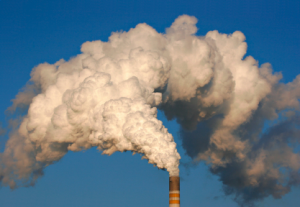
    Industry pollution

    Now when almost all the major players have announced their emission reduction targets, the talk has turned to money and the ways the battle against climate change can be financed.

    The US has proposed that a new climate fund should be established under the World Bank, which would direct funding to climate projects in developing countries. Further, the Asian Development Bank intends to direct 700 million dollars to two new investment funds that will primarily concentrate on financing climate change projects in developing countries. In short term, it has been estimated, that some 10 billion dollars are needed to cover the costs of the most current developments. In long term, some 100 billion dollars a year might be needed to cover the costs of climate change adaptation.

  • Nordic council of Ministers Arctic Co-operation Program funds the new joint UArctic and Arctic Portal project Arctic Virtual Learning Tools

    Nordic council of Ministers Arctic Co-operation Program funds the new joint UArctic and Arctic Portal project Arctic Virtual Learning Tools

    Arctic Portal news

    Nordic council of Ministers continues to support UArctic activities by granting 650 000DKK for this year for a new joint project led by Thule Institute, University of Oulu, Finland. New project Arctic Virtual Learning Tools joins UArctic and Arctic Portal into close co-operation where new UArctic educational material and virtual classroom will be distributed and shared through Arctic Portal.

    The new online material will consist of revised UArctic BCS core courses, on-line text books developed for new global change Master’s courses at Thematic Network on Global Change and print version on UArctic Atlas. Some of the materials will be also translated to Russian. Later as project goes on more material can be added.

    The Virtual Classroom will offer an option not only for easier access to higher education, but will lead a technological revolution in distance learning – a two-way communication between the teacher and the persons being taught with open discussions, capabilities for participants to ask questions and comment on the subject presented and the teacher to respond in real-time.

    The project partners include the APECS (Association of Polar Early Career Scientists), International Centre for Reindeer Husbandry and several representatives from Canada, USA, Iceland, Norway, Finland and Russia.

    The lead project partners are:

    • University of the Oulu, Thule Institute, Finland, Kirsi Latola, UArctic Thematic Networks
    • University of Lapland, Finland, Scott Forrest, Director of Special Projects, UArctic International Secretariat
    • Nordurslodagattin ses. – Arctic Portal, Iceland, Halldor Johannsson
    • University Centre of the Westfjords, Iceland, Peter Weiss

    More information: Kirsi Latola, Kirsi.latola@uarctic.org