Tag: glaciers

  • Glaciers in Asia to expand

    Glaciers in Asia to expand

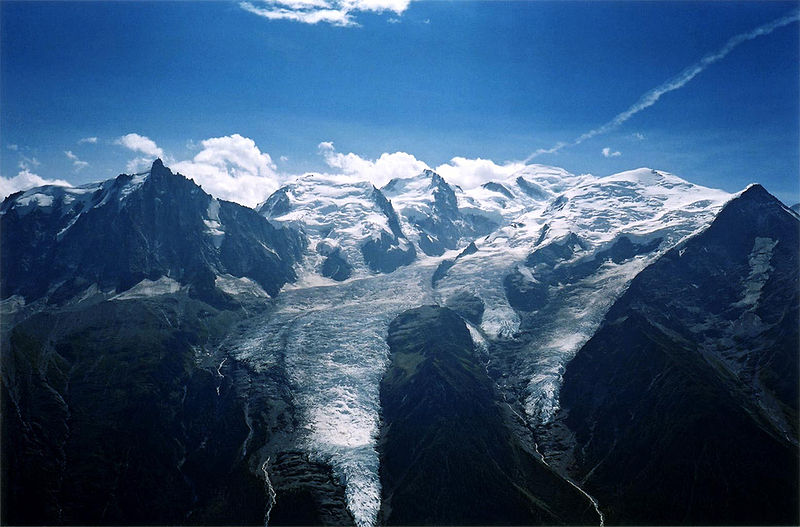
    Snowy mountains

    French scientists report that glaciers in the Karakoram Mountain Range in Asia are growing, not shrinking as previously suspected.

    Karakoram Range is a great mountains system, extending close to 500 km from the eastern part of Afghanistan in a southeasterly direction along the watershed between Central and South Asia. The area was recognized as one with a great concentration of highest mountains in the world and the longest glaciers outside the high latitudes.

    General research indicated that glaciers in the Himalayas were decreasing and in fact they could be gone before the year of 2035. However, the French suggested that ice sheet in Karakoram became thicker in the last few years, but the credible explanation for this statement could not be yet provided due to little knowledge about the glaciers in this region.

    Nevertheless, it is the fact that the Himalaya’s glaciers are the main source of water for over billion people who live in the region. The need for further research has been stressed by the French scientists.

    Source: Morgunbladið
  • Great melt – But not in the Himalayas

    A melting glacier in the Himalayas.

    A new study led by a research team from the University of Colorado Boulder shows that glaciers and ice caps in the world, outside Greenland and Antarctica, are shedding roughly 150 billion tons of ice annually.

    This is the first comprehensive satellite study of the contribution of the world’s melting glaciers and ice caps to global sea level rise. The result indicates they are adding roughly 0.4 millimeters annually according to physics Professor John Wahr who led the study. Melting sea ice contributes to global rise in sea levels, which could lead to significant threats in the future.

    The team used satellite images to conduct the study and the annual shed between the years 2003-2010 was enormous. The total does not count the mass from individual glacier and ice caps on the fringes of the Greenland and Antarctic ice sheets — roughly an additional 80 billion tons.

    Launched in 2002, two GRACE satellites whip around Earth in tandem 16 times a day at an altitude of about 300 miles, sensing subtle variations in Earth’s mass and gravitational pull. Separated by roughly 135 miles, the satellites measure changes in Earth’s gravity field caused by regional changes in the planet’s mass, including ice sheets, oceans and water stored in the soil and in underground aquifers.

    One unexpected study result from GRACE was that the estimated ice loss from high Asia Mountains — including ranges like the Himalaya, the Pamir and the Tien Shan — was only about 4 billion tons of ice annually. Some previous ground-based estimates of ice loss in the high Asia Mountains have ranged up to 50 billion tons annually, Wahr said.

    A leading glacier expert in Iceland, confirms that the melt in the Himalayas is not as great as many have thought. He says that it is a misunderstanding that millions of people will be without water if the glaciers melt. Even if they melt, it would continue to snow in the Himalayas and it would be sufficient for the water supply.

    He also concluded that the total loss in the Himalayas was not sufficient, as the cap near the top in the Himalayas was getting thicker, while the outsides were shrinking.

    Tómas also point out that the great gap in between studies of the Himalayas shows that the measurements are not as accurate as many think. A study from a few years back showed great melt in the Himalayas, much greater then this study.

    Source: Colorado Boulder
  • Great retreat in French Alps

    Great retreat in French Alps

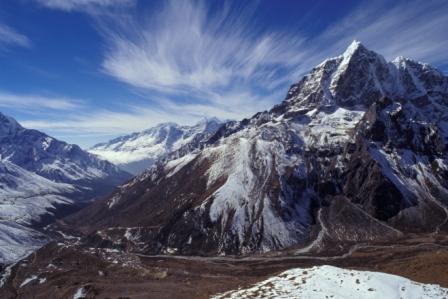
    Mont Blanc in France

    As reported here on Arctic Portal Icelandic glaciers are retreating fast, and now the BBC reports the same problem in France.

    A new research has confirmed that in only 40 years the French glaciers have lost 25% of their area.

    The area around Mont Blanc was calculated to be 375 sq km. in the late 1960´s/early 1970´s but by the late 2000´s it was only 275 sq. km.

    The research has been presented at the American Geophysical Union (AGU) Fall Meeting, the world’s largest annual gathering of Earth scientists.

    The same is happening in Switzerland, Austria, Slovenia, Germany, France, and Italy, even Iceland.

    Source: BBC

  • Icelandic glaciers melting fast

    Icelandic glaciers melting fast

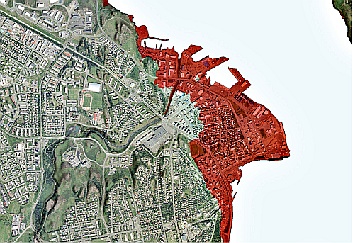
    Reykjavík if sea levels rise 6m.

    Iceland could lose all its glaciers in a few hundred years. A glacier expert predicts a 6m rise of the sea.

    DV newspaper reports that climate change is melting the glaciers and in about 200 years the glaciers could all be gone.

    “Climate change has hit us with full force. This is very visible in the Arctic,” glacier expert Tómas Jóhannesson told DV.

    It is only 6000-8000 years ago Iceland was glacier free.

    Rise of sea levels will continue but in the 20th century the levels rose of about 2mm each years, around 20cm the whole year.

    Akureyri if sea levels rise 6m.

    “Now the rise if about 3mm a year,” Tómas said and this will continue to rise.

    Naturally this is of great importance in Holland and the Dutch predict 1m rise of sea levels in the 21st century.

    If the Greenlandic glacier would melt it would raise the sea levels of about 6m. DV had expert draw maps of how towns in Iceland would look like if the sea levels rise the whole 6m.

    Source: DV