Tag: global warming

  • Mammal invasion in Russia?

    Mammal invasion in Russia?

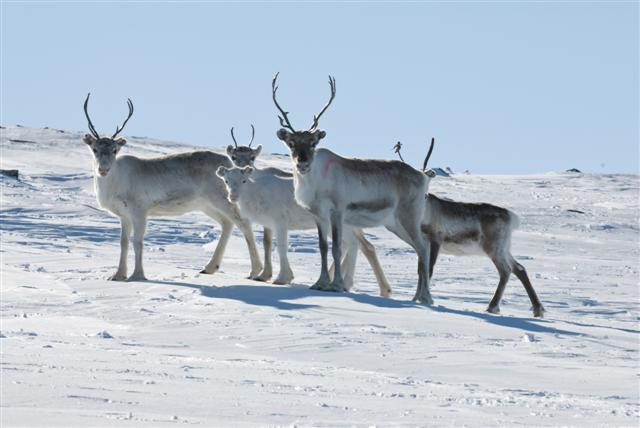
    Reindeers in the arctic

    By 2080, Russia might witness a vast mammalian invasion, as sub-arctic European animals flee global warming and adapt to a thawing tundra. This is the result of a newly published study in the journal PloS One.

    “North Western Russia will be some kind of hotspot of species richness,” said Christer Nilsson, an ecology professor, via Skype from Umeå University in Sweden to the website Mother Jones. “Species will be on the move and there will be new combinations of species.”

    Red and fallow deer, wild boar, the Eurasian badger, rabbits, mice and beaver will all be on the move as new tracts of habitable land open up.

    In a surprising twist, Professor Nilsson and his team found that most species in the Barents Region, which includes the northern half of Norway, Sweden, Finland and a big chunk of North Western Russian, will actually be favored by climate change.

    Forty-three out of the 61 animals studied will expand and shift their “ranges”—or habitats—mostly in a north-easterly direction, sometimes traveling hundreds of miles.

    But no one can predict how all the animals will interact in their new, climate-changed world, and far from helping animals, climate change might force new, and deadly, interactions: “Predators might be in contact with new prey,” Nilsson said.

    The report found something encouraging: No extinctions predicted in the area surveyed. “We couldn’t find any evidence that any species will disappear, given the climate change predictions we’ve used,” Nilsson said. Nevertheless, vulnerability of those already threatened may increase due to the introduction of new competing or predatory species.

    Sources
    Mother Jones

    Plosone

  • Cod growing due to global warming

    Cod growing due to global warming

    Cod in Icelandic waters

    Researchers in agriculture had anticipated the North Sea cod to get smaller over time due to global warming. A new study shows quite the opposite, they are actually growing due to global warming.

    The study was introduced in Global Change Biology, an international journal.

    “When the seawater gets warmer, all life processes in the cod speed up,” says Peter Grønkjær, an associate professor of marine ecology at the Department of Biological Sciences at Aarhus university, who headed the study. “This causes the cod to digest their food faster and makes them convert it into extra muscle tissue,” he added.

    Overfishing has started a process in which the cod spend their energy on reproducing themselves rather than on growing bigger.

    “But over the past 30 years the increased ocean temperatures have compensated for the anticipated decrease in cod size,” says Grønkjær.

    He also states that global warming seldom has positive effects on the cod, but this change is the odd point. “But this doesn’t mean that the warming of the North Sea is generally good for the cod. The higher temperatures alter the ecosystem, which causes the composition of the crustaceans that the cod feed on to change too. And that makes it harder for the fry to survive.”

    The researchers made the discovery by reviewing figures from the International Council for the Exploration of the Sea (ICES).

    These figures showed that the ocean temperatures at various times that the average sizes of the fish at various times, that the location of the fish at various times and that when the fish became sexually mature at various times.

    “By linking all this data together, we can conclude that the weight change is caused by changes in the temperature,” says Grønkjær.

    The new findings will be used for developing strategies for how cod stocks in the North Sea can be preserved.

    Sources

    Science Nordic
    Videnskab

  • Greenlandic ice sheet to melt completely?

    Satellite image of Greenland

    The Greenlandic ice sheet may completely melt in 2000 years as it is more vulnerable to global warming than previously thought. This is the results of a study released this week.

    The conductors were scientist from the Potsdam Institute for Climate Impact Research (PIK) and the Universidad Complutense de Madrid.

    The temperature threshold for melting the ice sheet completely is in the range of 0.8 to 3.2 degrees Celsius of global warming, with a best estimate of 1.6 degrees above pre-industrial levels. Today, already 0.8 degrees global warming has been observed. The time it takes before most of the ice in Greenland is lost strongly depends on the level of warming.

    “The more we exceed the threshold, the faster it melts,” says Alexander Robinson, lead-author of the study now published in Nature Climate Change.

    In a business-as-usual scenario of greenhouse-gas emissions, in the long run humanity might be aiming at 8 degrees Celsius of global warming. This would result in one fifth of the ice sheet melting within 500 years and a complete loss in 2000 years, according to the study.

    “This is not what one would call a rapid collapse,” says Robinson. “However, compared to what has happened in our planet’s history, it is fast. And we might already be approaching the critical threshold.”

    In contrast, if global warming would be limited to 2 degrees Celsius, complete melting would happen on a timescale of 50.000 years. Still, even within this temperature range often considered a global guardrail, the Greenland ice sheet is not secure.

    Previous research suggested a threshold in global temperature increase for melting the Greenland ice sheet of a best estimate of 3.1 degrees, with a range of 1.9 to 5.1 degrees. The new study’s best estimate indicates about half as much.

    “Our study shows that under certain conditions the melting of the Greenland ice sheet becomes irreversible. This supports the notion that the ice sheet is a tipping element in the Earth system,” says team-leader Andrey Ganopolski of PIK.

    “If the global temperature significantly overshoots the threshold for a long time, the ice will continue melting and not regrow – even if the climate would, after many thousand years, return to its preindustrial state.”

    Sources

    PIK Potsdam

  • Greenland rises after melt

    Greenland rises after melt

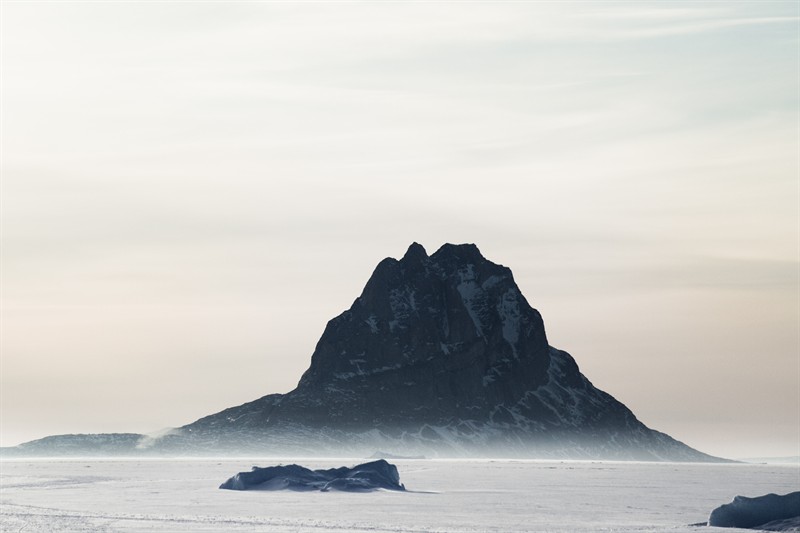
    Foggy peak in Uummannaq, Greenland

    Greenland is rising from the sea. A new study released on Friday shows a startling revelation to scientists who study global warming.

    Scientist from Ohio State University used a network of high profile GPS stations to measure the uplift. The results show that the rate of ice loss has accelerated in southern Greenland by 100 billion tons.

    Michael Bevis led the exploration. “Pulses of extra melting and uplift imply that we’ll experience pulses of extra sea level rise,” he said about the results.

    This means the sea has risen and splashed further, and with more power, on the ice which then melts faster. He states that this is partly due to global warming.

    Previous studies have recorded measurements indicating that as that ice melted away, the bedrock beneath it rose. In some places the land rose 5cm in only 5 months. The medium rise was 0.5 cm.

    Source: The State Column

  • Arctic current warmer than for 2,000 years

    Arctic current warmer than for 2,000 years

    arctic lake

    A North Atlantic current flowing into the Arctic Ocean is warmer than for at least 2,000 years in a sign that global warming is likely to bring ice-free seas around the North Pole in summers, a study showed.

    Scientists said that waters at the northern end of the Gulf Stream, between Greenland and the Norwegian archipelago of Svalbard, averaged 6 degrees Celsius (42.80F) in recent summers, warmer than at natural peaks during Roman or Medieval times.

    “The temperature is unprecedented in the past 2,000 years,” lead author Robert Spielhagen of the Academy of Sciences, Humanities and Literature in Mainz, Germany, told Reuters of the study in Friday’s edition of the journal Science.

    The summer water temperatures, reconstructed from the makeup of tiny organisms buried in sediments in the Fram strait, have risen from an average 5.2 degrees Celsius (41.36F) from 1890-2007 and about 3.4C (38.12F) in the previous 1,900 years. The findings were a new sign that human activities were stoking modern warming since temperatures are above past warm periods linked to swings in the sun’s output that enabled, for instance, the Vikings to farm in Greenland in Medieval times.

    “We found that modern Fram Strait water temperatures are well outside the natural bounds,” Thomas Marchitto, of the University of Colorado at Boulder, one of the authors, said in a statement. The Fram strait is the main carrier of ocean heat to the Arctic

    Source: Reuters / Alister Doyle

  • Effects of Climate Change

    Effects of Climate Change

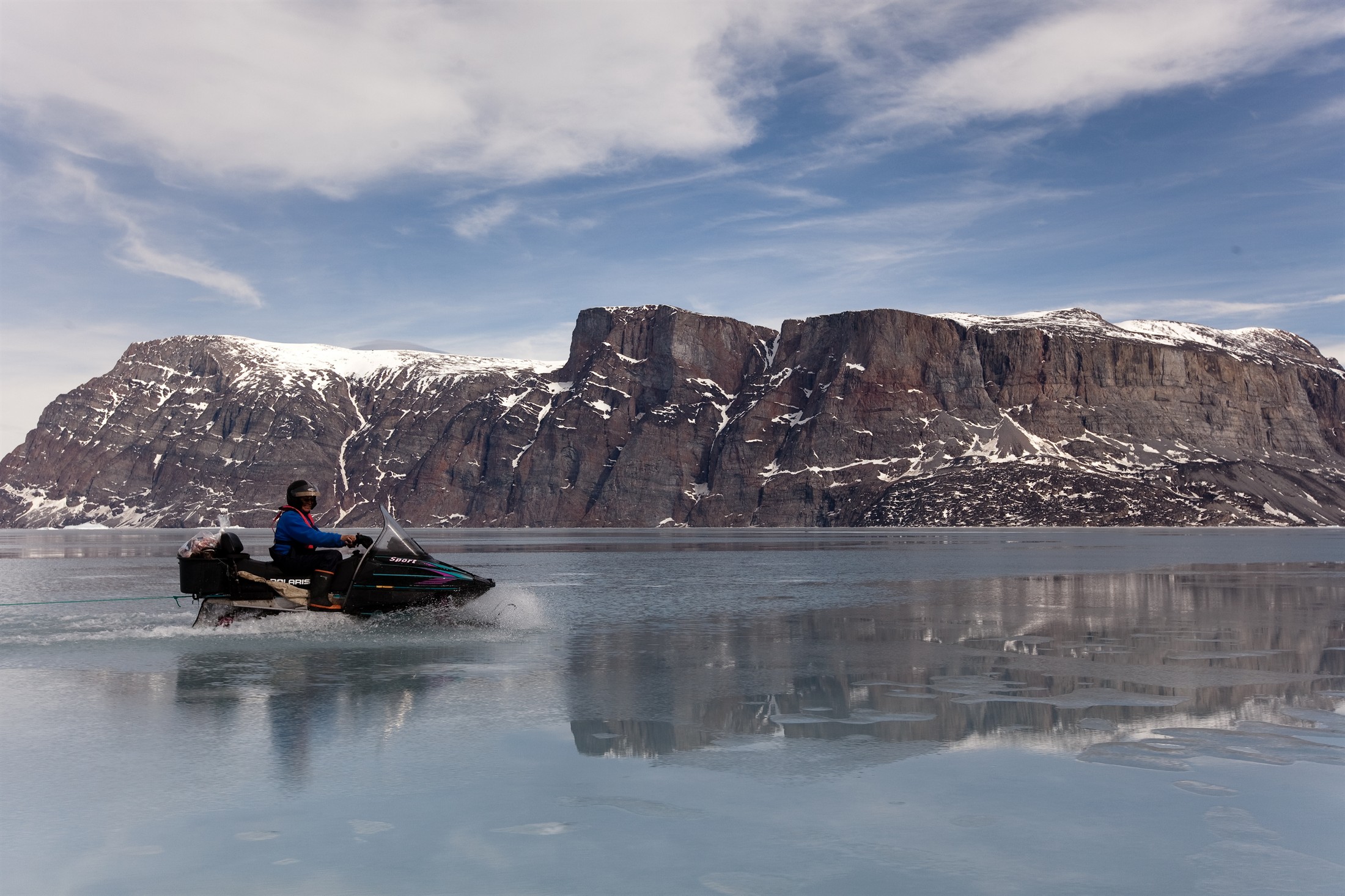
    Snow mobile travel over sea ice in Uummannaq, Greenland

    The effects of global warming are believed to be extensive. Estimating the precise effect is not possible as there as several unknowns in the equation so this should be regarded as best available estimates rather than facts.

    The International Panel on Climate Change (IPCC) predicts that global warming will continue to grow and get worse much faster than was expected. Effects of a rise in global temperature are severe.

    Warm and dry countries will become even drier and warmer often severely challenging the local population and making water an even scarcer commodity than it is today. Countries within most continents are likely to be affected by this but most prominently large regions of Africa. This will add to political unrest and some scientist have estimated that large migrations of people to north may follow as regions of the globe will no longer be available to sustain its current population.

    The list below includes some of the estimated effects:

    • Most places will continue to get warmer. The temperature change will benefit some regions while harming others. Globally mortality will rise and food supplies will be scarcer due to more frequent heat waves.
    • Weather patterns will continue to change and intensify. Stronger floods and droughts where wet regions will get wetter and dry regions dryer. Extreme weather events will become more frequent and worse. Glaciers and winter snow will shrink endangering many water supply systems.
    • Sea Levels will continue to rise for many centuries. Rising sea levels will endanger many of the worlds largest city’s in the world including cities like New York to Shanghai. Thirteen of the world’s fifteen largest cities are on coastal plains.
    • Ecosystems will be stressed. Some managed agricultural and forestry systems may experience a short time gain while long time effect may be drastic. Species in the Arctic, mountain areas
      and in the seas will move towards more habitable climate and species that can not move, like the polar bear, will face extinction. Furthermore tropical diseases and pests will spread to other regions. Many of these problems have been observed already in numerous places.
    • Increasing carbon dioxide levels will affect biological systems. This may affect the fertilization of plants. The oceans will continue to become more acidic, endangering coral reefs and affecting the fisheries and other marine life.

    Source: Spencer R. Weart

    Here below you can watch “Observations on Climate Change in the Arctic by WWF

    [http://www.youtube.com/watch?v=Jak1pExql0U]

  • The dire situation of the world’s fisheries in the Arctic and beyond

    The dire situation of the world’s fisheries in the Arctic and beyond

    Fishing ship

    Fishing within the North East Atlantic has been a significant economic resource as well as a practice that has become rooted in the culture of fishing nations utilizing the resource. In the Icelandic sagas, the fish was considered to be a gift from the gods and free for all who sought it (Jón Þ. Þór, 2006). This has however changed in Iceland as well as the world in whole.

    Technological advancements have multiplied the possible catch of each vessel and the world’s population growth has increased the demand for fish significantly. Legal issues in connection with maritime boundaries and rights to fisheries both in countries’ economic zones as well as international waters have mostly been settled under the UNCLOS. The realisation that stocks would have to be managed to yield a maximum return has lead to the establishment of fisheries management schemes the world over, both within countries’ Exclusive Economic Zones (EEZ) and multilateral cooperation’s in connection to the high seas and migratory stocks.

    Despite measures taken, the somewhat dire situation of the world’s fisheries has become increasingly apparent, which can mostly be contributed to overfishing and the effect global warming has on the worlds fish stocks (FAO 2009). These findings, call for evaluation and further examinations of both the regulatory framework in place as well as the existing management schemes and cooperation’s.

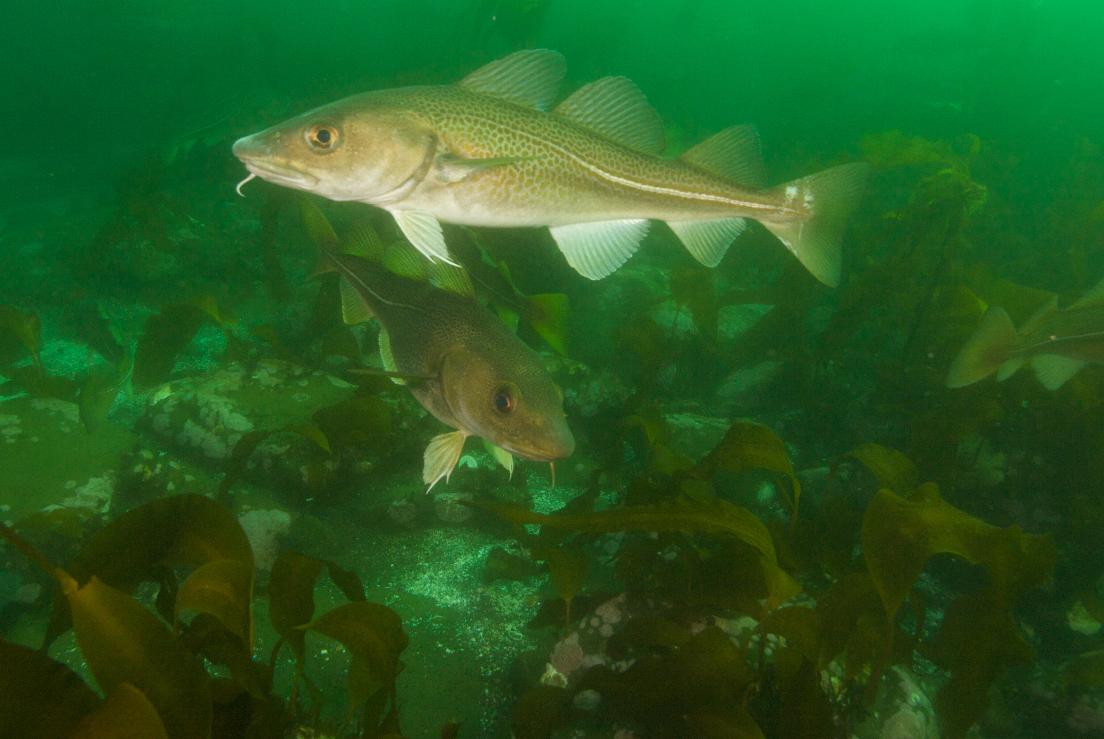
    Climate change and predicted fluctuations in fish stocks have been a constant through the earths history, the rapid change now and in the foreseeable future is however unprecedented (UNDP 2007). Climate change is increasing the world’s temperature and one of the consequences is the migration of fish stocks towards the two poles to cooler water’s. For stocks already residing in cooler waters this may have a severe affect and recent studies indicate that the Atlantic cod stock may be significantly challenged. The warming will lead to a loss of habitat by the Cod in its more southern range and reduce survival during early life and offset growth. This is estimated to result in a decline of the Atlantic Cod stock by as much as 50% by 2050, and cause it to migrate further North (Cheung et al 2009).

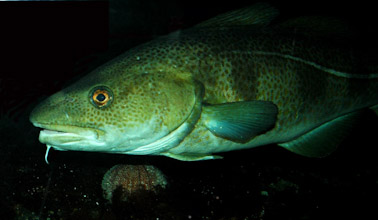
    Cod up close

    Fish and fisheries are extremely important to the Arctic region as its waters are often considered to be one of the richest fishing grounds in the world. Despite the drastic effects the significant fluctuations or collapse of the stock would have on the northern hemisphere its counterparts in the south would be considerably more vulnerable. Nations within Africa, who many of them are among the least developed nations in the world, generally have a less diversified economy and fewer means to deal with such change. In a global context fisheries are a significant part of the worlds nutritional intake, with at least 20% of the worlds annual consumption of dietary protein (Fao, 2007 (Allison et al 2009).

    Due to negative reports of the state of the fisheries globally, international and regional bodies are starting to react. One of the most commonly criticized fishery policies or organization is the European Union, which has recently addressed the issue of over fishing within its chambers. At the end of May 2009 European fisheries ministers concluded in a meeting to effectively scrap current rules that decide fishing quotas. Given this conclusion the European Union has decided to draw up a new common fisheries policy before 2012.

    It will be interesting to see if the new fishing policy will be adequate to deal with E.U problems in connection to fishing as 80% of E.U fishing grounds are estimated to be overfished (BBC News, 2009). Similarly it will be interesting to sea how regional bodies like the North East Atlantic Fisheries Committee (NEAFC) will be able to manage changes in migratory patterns of stocks.
    The position as it is portrayed by many of the leading specialist’s and organizations on a global scale will demand for close cooperation and some difficult decisions so world fishing can become sustainable within the changing environment at hand.

    Illegal and unregulated fishing also continues to be an important issue. It’s value has been estimated being between $4bn and $9bn. It also presents a further danger to species, which are already under threat of being overfished. Some interesting videos on the matter can be seen by following the links bellow:

    Sources

    • Allison, Edward H. Conway, Ashley S. Halls, Graham M. Pilling, John D. Reynolds, Neil L. Andrew & Nicholas K. Dulvy. (2009) Vulnerability of national economies to the impacts of climate change on Fisheries. Fish and Fisheries magazine
    • Cheung, William W.L. Lam, Vicky W.Y. Sarmiento, Jorge L. Kearney, Reg Watson & Pauly, Daniel (2009). Projecting global marine biodiversity impacts under climate change scenarios. Fish and Fisheries magazine
    • FAO (2007) The State of World Fisheries and Aquaculture
      2006. Food and Agriculture Organisation of the United
      Nations, Rome. Retrieved 18.02.09 from: http://www.fao.org/docrep/009/a0699e/A0699E00.HTM
    • FAO (2009) THE STATE OF WORLD FISHERIES AND AQUACULTURE
      2008. http://www.fao.org/docrep/009/a0699e/A0699E00.HTM
    • Jón Þ. Þór (2002) Sjósókn og Sjávarfang. Saga Sjávarútvegs á Íslandi. 1. Bindi Árbáta og skútuöld. Bókaútgáfan Hólar á Akureyri.
      UNDP (2007). Climate change threatens unprecedented human development reversals. http://content.undp.org/go/newsroom/2007/november/hdr-climatechange-20071127.en