Tag: Greenland

  • Arctic wonders discovered in Greenland

    Arctic wonders discovered in Greenland

    Greenland´s ice cap melts rapidly during extended summer period.

    For the first time ever, lakes have been discovered beneath the ice sheets of Greenland, following a discovery from researchers from Cambridge University. “Our results show that sub glacial lakes exist in Greenland, and that they form an important part of the ice sheet’s plumbing system,” says, Steven Palme from the team.

    There have been hundreds of lakes discovered beneath the Arctic Ice sheets, but this is a first for Greenland, with two roughly 10 kilometers square located by airborne radar. They are believed to be formed by different processes however.

    Greenland comprises a thinner ice sheet and proper land mass, and has surface lakes in the summer which are likely to feed these subterranean reservoirs. Previously it was thought that the steeper ices surface of Greenland would make this unlikely.It’s very possible that more lakes exist.

    “Because the way in which water moves beneath ice sheets strongly affects ice flow speeds, improved understanding of these lakes will allow us to predict more accurately how the ice sheet will respond to anticipated future warming,” Palme said.

    Source: IceNews

  • Greenland plays host to legal dispute

    Greenland plays host to legal dispute

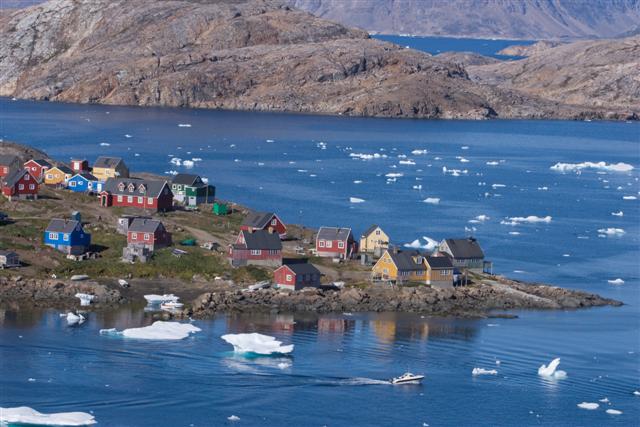
    Coast of Greenland

    Meeting the challenges of their previous decisions, Greenlandic government decided to discuss controversial mining law that was passed at the end of last year.

    Local regulations that make it easier for foreign investors to mine for raw materials caused major disputes in some circles.

    Current activities around Greenlandic mines could make Greenland the world´s leading rare earth producer what would mean increased presence of foreign workers in the country as the current population of 55 000 people would quickly become insufficient.

    New legislation is about to state that the foreign workers, very often underpaid, would have to earn at least the equivalent to Greenlandic minimum wage, meaning that more locals would be taken where possible.

    What is more the new legislation is likely to include concessions to unions on disability and holiday pay.

    Last week Greenlandic government awarded UK – based company London Mining 30 – year license to build and run a giant iron ore mine.

  • Ten students – one goal

    Ten students – one goal

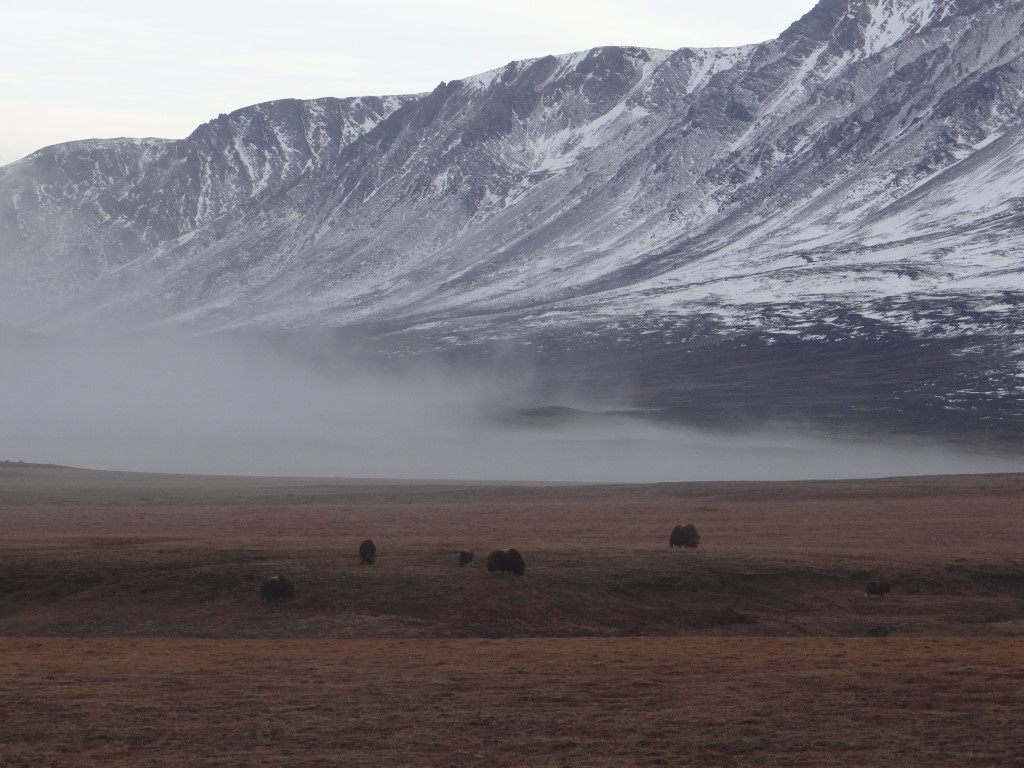
    Musk ox grazing in the morning fog.

    The Arctic Portal, together with Page21 project is happy to promote another outreach product on permafrost research.

    The video presents the Ph.D course that took place in Zackenberg, North – East Greenland.
    The movie shows the fieldwork of ten young permafrost researchers from four Nordic Universities who set out to remote Zackenberg valley at 74 ° N in NE-Greenland.

    The students participate in a PhD course entitled AG 833 “High-Arctic Permafrost landscape dynamics in Svalbard and NE-Greenland”.

    Goal of this course is to better understand the landscape history and to link present and future periglacial processes with carbon and nitrogen dynamics at two high-Arctic sites: Zackenberg valley in NE-Greenland and Svalbard.

    AG 833 is organized by the University Centre in Svalbard (UNIS), Norway, and the Center for Permafrost (CENPERM) at the University of Copenhagen, financially supported by Perma-Nordnet of NORDEN, a project as part of the “Nordic Ministerial Council” Arctic collaboration program in Norway.

  • Cairn Energy plans to drill in Greenland

    Cairn Energy plans to drill in Greenland

    arctic landscape

    Cairn Energy, one of Europe´s leading independent oil and gas exploration and development companies, has revealed their long term plans for exploration drilling programme, which may involve in resuming activity off Greenland.

    If the company goes ahead with their plans of exploration and exploitation in Greenland, it could mean that they resume drilling operations in the Pitu field by the second half of next year.

    To date, the Edinburgh-based explorer’s drilling programme off Greenland has not been fruitful and had been widely criticized by environmentalists.

    In the firm’s latest half-yearly report it raised its total programme target to an accumulative figure of over four million barrels.

    Chief Executive Simon Thomson explained that the company will commence a year-long multi-well frontier exploration programme as of September that will give shareholders ongoing exposure to the potential for material growth.

    Cairn’s current inventory is made up of 144 leads and 62 prospects in the frontier basins off Morocco, Mauritania, Senegal, Spain, Ireland and Greenland, and the more mature Norwegian Continental Shelf and UK and Norwegian North Sea.

    SOURCES

    Ice News

    See also:

    Arctic Portal Library

    Arctic Portal Mapping System

  • Greenland rare earth potential noticed

    Greenland rare earth potential noticed

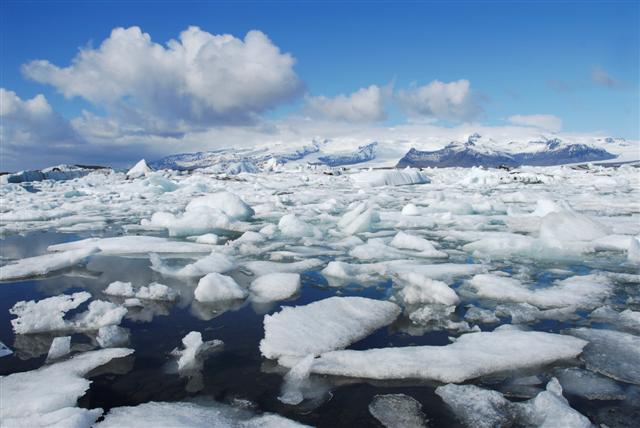
    Sea ice is largely present in Greenland

    Various actors to include both Arctic and non – Arctic states, have now recognized Greenland´s increasing presence in the rare earth field, according to economy analysts.

    Greenland, which is self – governing dependency of Denmark, owns some of the largest amounts of rare earth elements in the world.

    European Commission data indicates Greenland has “strong potential” in six out of the 14 elements listed on the union’s critical raw material list. These include rare earths, tantalum and niobium as well as the platinum group metals. Greenland’s rare earth resources currently amount to around 10 million tonnes (nine per cent of the earth’s total).

    Analysts point out that a number of Greenland’s significant deposits, such as Kvanefjeld, are in the advanced stage of exploration, meaning the dependency could well be set to become a medium-size supplier.

    In recognition of the increased role Greenland is likely to play in the field, London Mining – a company backed by Chinese steelmakers – has sought permission to build a US$2.35bn iron ore mine near the country’s capital Nuuk which, if given the green light, would be the biggest industrial development to take place in Greenland.

    Source

    IceNews

  • Greenland´s ice cap melt rapid spread

    Greenland´s ice cap melt rapid spread

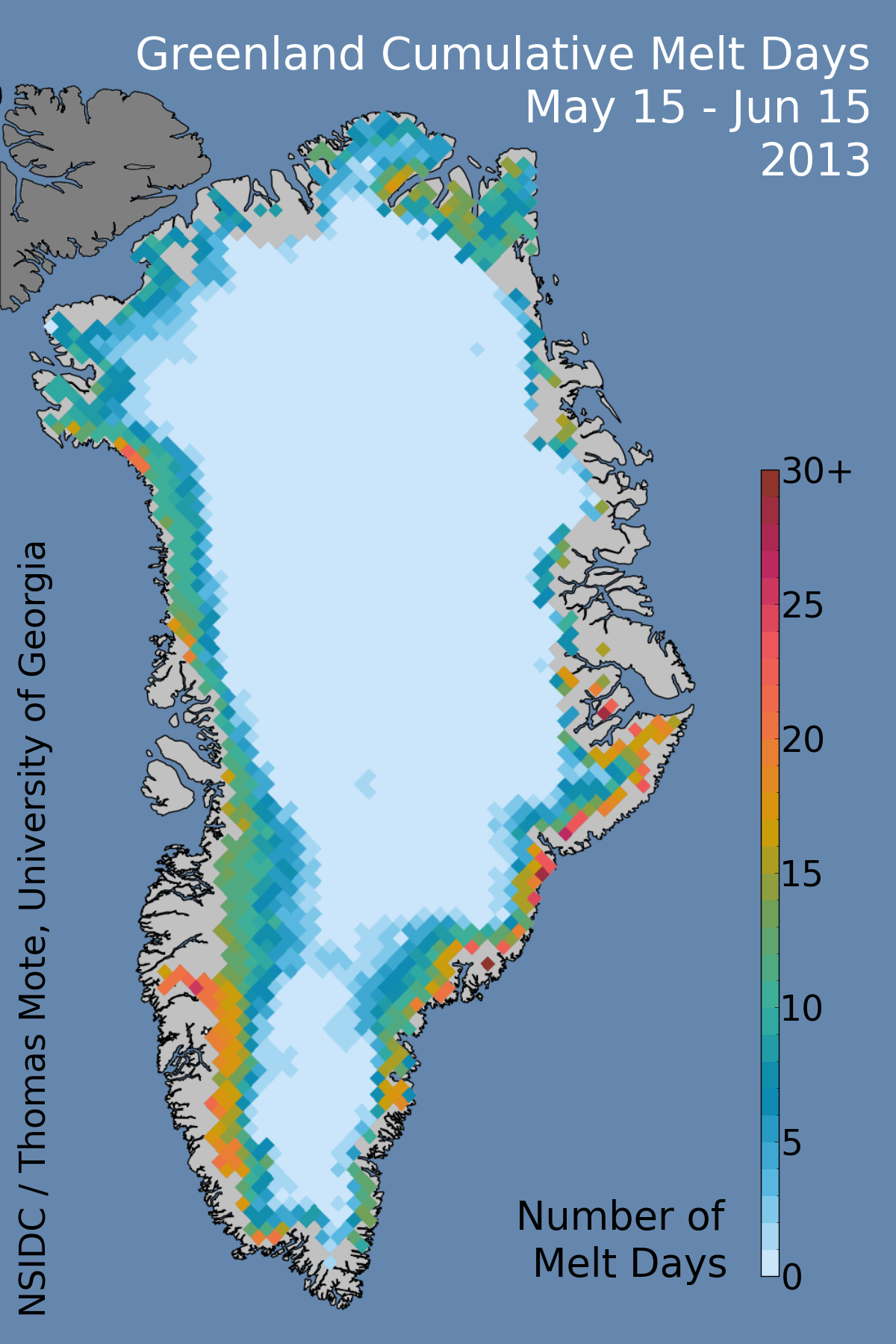
    Cumulative surface melt days for mid-May to mid-June in Greenland.

    Summer melt on Greenland ice sheet had slightly late start this summer but the surface has been now melting very quickly.

    In the last three months the melt has been spreading rapidly over the significant area, extending over more than 20% of the ice sheet in early June and reaching above 2000 meters elevation in some areas.

    The satellite used for the research reported small lakes that started to form on the ice sheet.

    After the annual re-calibration of the melt algorithm in mid March, very little melt was detected until May.

    A few southern coastal areas began melting in mid-May, followed by inland higher-elevation ice and all remaining coastal areas about June 3, when warmer conditions arrived.

    Surface melting reached the “Saddle” region of the ice sheet on June 11 and 13. Only the central eastern coast remains relatively melt free.

    Cool conditions in April and May shifted to warmer-than-average weather along both coasts in early June, which initiated more widespread melt on the ice sheet.

    The sea ice on both sides of Greenland remained at near-normal extent through the period.

    More information about this year´s melt of Greenlandic ice sheet is available at National Snow and Ice Data Center, University of Georgia.

    Source

    National Snow and Ice Data Center

  • Anthony Speca gives a lecture in Akureyri

    Anthony Speca gives a lecture in Akureyri

    Antony Speca

    Today, 18th of April at the University of Akureyri in northern Iceland, Anthony Speca gave speech on Nunavut, Greenland and politics of resource revenues. Another lecture from The Arctic Lecture series, organised by the University of Akureyri, touched upon economic situation in Canadian North and Greenland. Mr Speca highlighted that the idea that Nunavut could one day put more into Confederation than it takes out is not a flight of fancy.

    Nunavut’s entire 2011-12 territorial formula financing grant of about $1.2 billion is less than half of the resource income that Newfoundland and Labrador, the newest net-contributing of “have” province, is projected to collect the same year.

    If self-reliance is truly Nunavut’s aim in negotiatingdevolution, then it seems sensible for Nunavut to align. Co nceptually the fiscal self-reliance it will gain from a share of resource revenues with the political self-reliance it will gain from more province-like power over resource development.

    Anthony Speca is founder and Managing Principal of Polar Aspect, a Nunavut-based consultancy dedicated to public policy, government strategy and economic negotiation in the Canadian and circumpolar North.

    Borgir Research Center in Akureyri

    He has advised government on fiscal policy and the devolution of lands and resources, particularly fiscal federalism and resource-revenue sharing.

    As a columnist for Northern Public Affairs magazine, Anthony also writes on international politics and economics in the Arctic, and its implications for Canada. Anthony is a trained negotiator and accredited mediator, with a special focus on negotiations and disputes involving government, indigenous peoples, or rural or resource-based business.

    Anthony trained as a negotiator at the London School of Economics and Political Science and was accredited as a mediator in both the UK and USA in 2013. Anthony obtained a Ph.D. in philosophy from the University of Toronto in 1999.

    His research culminated in his book, Hypothetical Syllogistic and Stoic Logic (Brill 2001).

    For more detailed information about the politics of resource revenues of these northern terretories, plese see the Speca’s report here.

    Source

    UNAK

  • Greenland will not favor EU over China

    Greenland will not favor EU over China

    town in Greenland

    The prime minister of Greenland says he will not favour the EU over China or other investors when granting access to highly prized rare earth minerals. Kuupik Kleist said it would not be fair “to protect others’ interests more than protecting, for instance, China’s”.

    The BBC reports and points out that Greenland is not in the EU, even though Denmark is.

    The EU, US and Japan are in dispute with China over its restrictions on exports of rare earths.

    China currently produces 97% of the world’s rare earths, vital in the manufacture of mobile phones and other high-tech products.

    The dispute has gone to the World Trade Organization (WTO). Last year China argued that its export restrictions were needed to protect the environment, conserve supplies and meet domestic demand.

    Currently Greenland’s rare earth resources are being intensively investigated. The European Commission estimates that those resources could total 9.16% of the global rare earth deposits.

    “All are welcome if they meet our conditions and our requirements to operate in Greenland,” Mr Kleist said.

    The EU sees “especially strong potential” in Greenland’s deposits of niobium, platinum, rare earths and tantalum, among the elements on an EU “critical raw materials” list.

    The share of European exploration companies operating in Greenland is only 15%. More than 50% are from Canada and Australia.

    Mr Kleist, speaking in the Danish capital Copenhagen, said Greenland needed to develop its resources, as it was too reliant on fishing and subsidies from Denmark.

    “I do not see thousands of Chinese workers in the country as a threat,” he said, quoted by Denmark’s Ritzau news agency. He vowed to resist EU pressure concerning Greenland’s policy on rare earths.

    Source

    BBC

  • Huge interest in east-Greenland oil

    Huge interest in east-Greenland oil

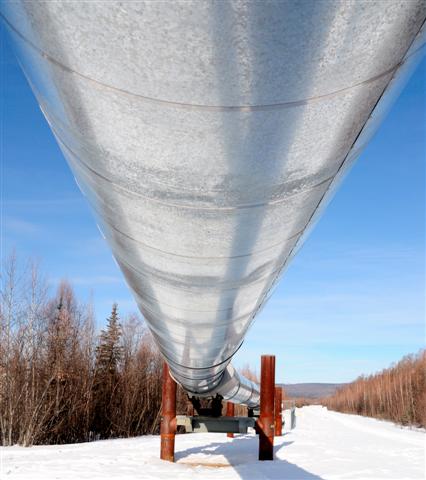
    Arctic Oil Pipeline

    Companies are queuing up to get a part of a potential oil boom in the waters off East Greenland.

    There is great interest in extracting oil off the coast as interest in the first preliminary round of tendering for the area shows.

    The Energy Ministry in Nuuk received 11 applications for exploration and exploitation of oil and gas in the Greenland Sea, according to Greenland self-government, Naalakkersuisut, in a press release. The deadline was December 15th.

    The number of applicants shows that there is competition for several license blocks that were offered. Forthcoming is an extensive evaluation and negotiation process before the best applications are selected.

    “The result of the licensing round is an important milestone in achieving a long-term and sustainable economy for Greenland,” says Ove Karl Bertelsen, a member of Naalakkersuisut.

    The area in the Greenland Sea covers 50,000 square kilometers. A total of 19 blocks were offered, ranging in size from 1752 to 3306 square kilometers.

    The offering process is divided into two rounds. The first is the so-called Kanumas-Group consisting of Statoil-Hydro, BP, ExxonMobil, Chevron, Japan Oil, Gas and Minerals National Corporation – and the state oil company Nunaoil.

    The second round is an open round where all companies are allowed to apply. The same terms and conditions apply for the two blocks.

    Source

    Jyllands Posten

  • New report on melting glaciers

    New report on melting glaciers

    Melting glacier in Svalbard

    A new report of current rates of changes of land ice in the Arctic and North-Atlantic region has been released. It shows that the Greenlandic glacier shrinks by 200 square kilometers every year.

    Helgi Björnsson, a glaciologist at the University of Iceland, says that the Greenlandic glacier is melting rapidly, at twice the rate in the last 10-20 years. The glacier tongue is also stretching further out in the ocean than ever.

    The report states that the world oceans are rising of 3,3 mm every year, and almost 1/5 of that is because of the Greenlandic glacier. Only 20 years ago it was 2 mm less per year.
    The report included research on ice in Greenland, Iceland, Svalbard and Scandinavia.

    Glaciers in Iceland are also getting thinner, by 1 meter every year. Since 1990 glaciers in Iceland has shrunk by 150 square kilometers.

    The report is available here, in the Arctic Portal Library.

    This is the first Interim report of current rates of changes of land ice in the Arctic and North-Atlantic region from the Nordic Centre of Excellence ‘Stability and Variations of Arctic.

    Land Ice’ (SVALI). SVALI is one of three Nordic Centres of Excellence within the Nordic Top Research Initiative sub-programme ‘Interaction between Climate Change and the Cryosphere’. The report (Deliverable D.1.1-7 in the project) is written by the partners in Theme 1 “Observing the present – baseline and changes”.

    The report is a step towards answering one of the key questions to be addressed within SVALI: How fast is land-ice volume in the Arctic and North-Atlantic area changing?

    The report is available here, in the Arctic Portal Library.

    Sources

    Rúv

    SVALI report