Tag: Greenland

  • Bear and her cub came to close

    Bear and her cub came to close

    The bear and her cub shot in Greenland

    A polar bear and a cub were shot in the town of Kangaatsiaq in Greenland yesterday. The pair had been circling the town for a few days.

    The people had tried to drive them away but when they came close to the town they saw no other option but to shoot.

    The mother had been swimming in the fjord with her cub on the back, like this video shows.

    After the pair went in the town shots were fired in the air but unfortunately that did not scare them away.

    “We had to shoot them both. The cub would not have survived without his mother,” Peter Løvstrøm from the department of hunting and fishing in Greenland said.

    “The meat will be distributed to the community’s institutions but the skin and everything else will be analyzed by the government,” Løvstrøm said. Those means are typical for such circumstances.

    Source:

    KNR

  • The first live search and rescue exercise

    The first live search and rescue exercise

    SAREX 2012 exercise

    The first live search and rescue exercise among the 8 Arctic states, “SAREX 2012”, took place 10-14 September in stormy weather and high seas in a remote area along Greenland’s east coast. The exercise involved personnel, authorities, airplanes, helicopters and ships from Canada, Denmark, the Faroe Islands, Greenland, Iceland, Norway, Russia and the United States.

    The Artic Councils website reports that all the ships, airplanes etc. were regional units normally operating in the High North nationally and in that context the exercise was conducted in a very realistic environment.

    Following the Search and Rescue agreement approved at the Ministerial meeting in Nuuk, May 2011, Denmark hosted this major scale exercise to launch a Search and Rescue mission in the High North. The emerging melting of ice and opening of new land and sea in the High North bring tourists and industry to the area.

    Every year 40 – 50 cruise ships sail among icebergs in cold waters where the temperature ranges from 0 – 5 degrees. These areas are also remote and far from dedicated rescue resources. The goal of the exercise was to test communications, equipment and procedures nationally and between the participating nations, to address the challenges caused by an influx into remote areas.

    The exercise consisted of three phases. In the first phase, Greenland’s Maritime Rescue Coordination Centre (MRCC) initiated a full scale search operation with aircrafts, ships and helicopters to quickly locate a missing cruise ship. Once the ship was located all efforts were focused on rescuing the passengers and crew from the wrecked ship. Fire fighters and medical personnel were flown in and parachuted.

    Landing in the sea was necessary since no landing elsewhere was possible. On board the cruise ship the situation was chaotic with injured people, people in shock, fire and smoke but in the end all personnel were brought safely to land for further treatment. The last part of the exercise was evacuating a fairly large number of injured people to the nearest hospital in Reykjavik, Iceland around 500 km away.

    For Denmark this exercise brings back memories of the loss of the passenger- and transport ship Hans Hedtoft. It disappeared in 1959 south of Greenland after a collision with an iceberg. The only item ever recovered from that was a life buoy which was later found on the coast of Iceland.

    All in all the exercise was a success. Many procedures were conducted professionally and proven correct, but more importantly the exercise also revealed areas for improvement both at the national level but also between the nations in a large scale combined operation.

    The aim being that the 8 Arctic states will be better prepared should a similar undesirable situation happen in reality.

    Source

    Arctic Council

  • Greenland controversially seeks whaling increase

    Greenland controversially seeks whaling increase

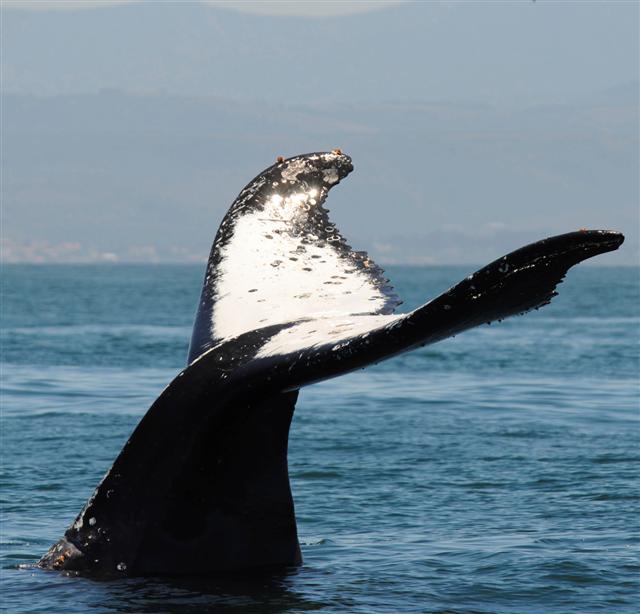
    Whale tail

    Greenland seeks more quotas for whale hunting in the next five-yearly quotas. An agreement with the International Whaling Commission (IWC) will be discussed soon.

    The 64th Annual Meeting of the International Whaling Commission and the associated meetings of its Scientific Committee and other sub-groups will take place in Panama City, Panama from 11 June – 6 July 2012.

    The annual IWC meeting will open with a discussion on whaling by indigenous people in the Arctic. The five-yearly quotas are up for renewal.

    Voting on several issues will be discussed, amongst them is to declare the South Atlantic a whale sanctuary and to ask the UN to take charge of whale conservation.

    For a number of countries, like the USA, renewing quotas for their indigenous peoples under Aboriginal Subsistence Whaling (ASW) rules is the top priority, according to the BBC.

    “We distinguish between commercial whaling, which we oppose, and ASW which we strongly support,” said Doug DeMaster, acting US commissioner to the IWC. “The cultural needs, the recognized tradition – we support the aboriginal use of large whales if they meet a ‘needs’ criteria that’s established by the IWC, and if the removal levels are considered sustainable by the scientific committee of the IWC.”

    Anti-whaling groups have questioned Greenland’s needs for whaling under ASW, saying that Greenland sold some of their meet commercially. A study in Greenland found whaling meat on the menu in many restaurants and also for sale in supermarkets.

    The criticism states that whaling is not meant for commercial sale, one can give it away in your home but not sell it to tourists.

    At this year’s IWC meeting, the Danish government – which represents Greenland – is asking for an increased quota for fin and humpback whales on the basis that the indigenous peoples’ need is not being met.

    The meeting in Panama is likely to be lively, but governments have promised not to repeat walkouts as happened in the last meeting.

    The legalities of Whaling today:

    Objection: A country formally objects to the International Whaling Commission (IWC) moratorium, declaring itself exempt. Example: Norway and Iceland

    Scientific: A nation issues unilateral “scientific permits”; any IWC member can do this. Example: Japan

    Indigenous (aka Aboriginal subsistence): IWC grants permits to indigenous groups for subsistence food. Example: Greenland

    Sources

    BBC
  • Polar bear shot near Nuuk

    Polar bear shot near Nuuk

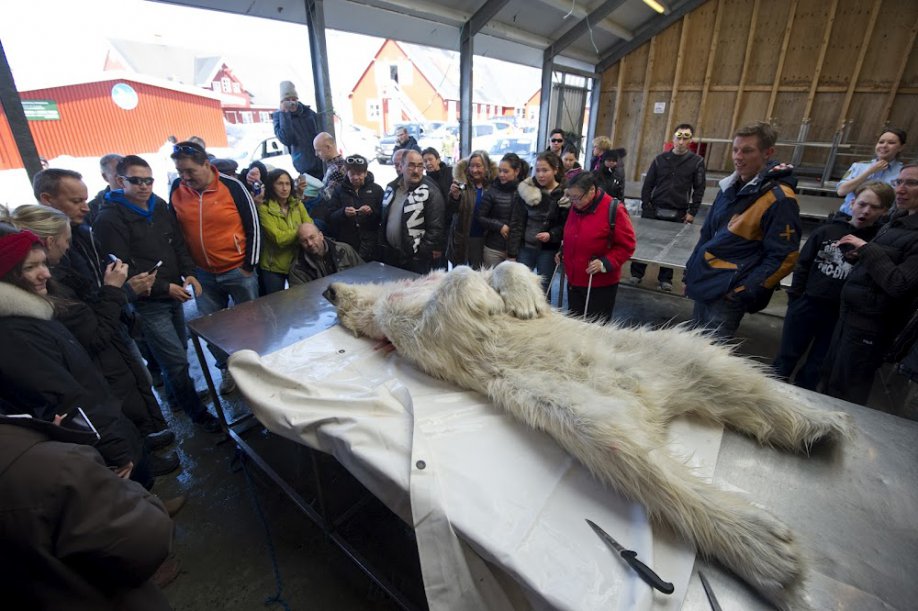
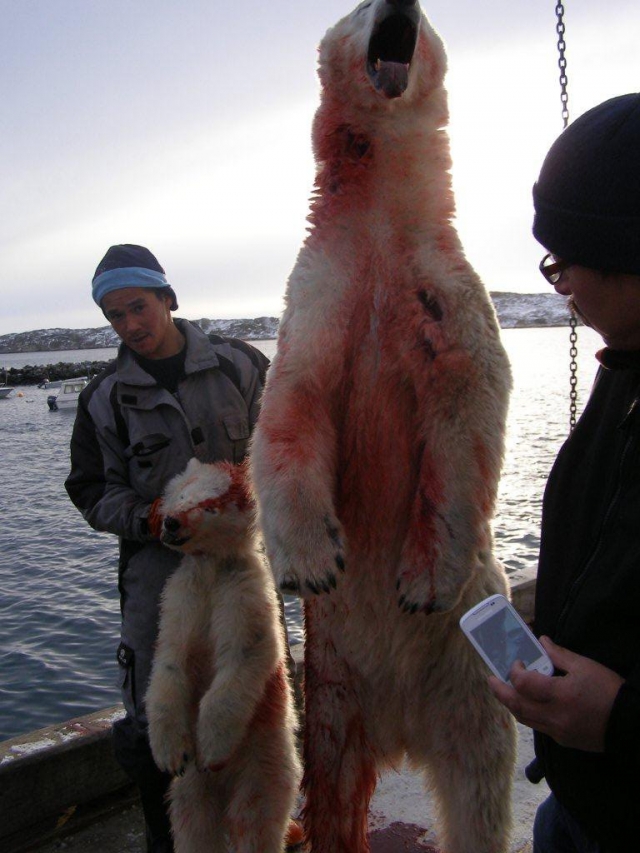
    The polar bear shot caught the attention of the people in Nuuk

    A polar bear was shot near Nuuk in Greenland this week. It is rare that polar bear come this close to the capital.

    Two brothers spotted the bear, at first they thought it was a huge dog. A closer look identified the bear.

    The male polar bear smelled the brothers who ran to safety. The bear clawed the house but then moved away, and approached Nuuk.

    He was shot due to safety of the inhabitants.

    Many people have looked at the bear since it was shot, as can be seen on the pictures with the story below.

    Sources

    Sermitsiaq

  • A new port in Nuuk

    A new port in Nuuk

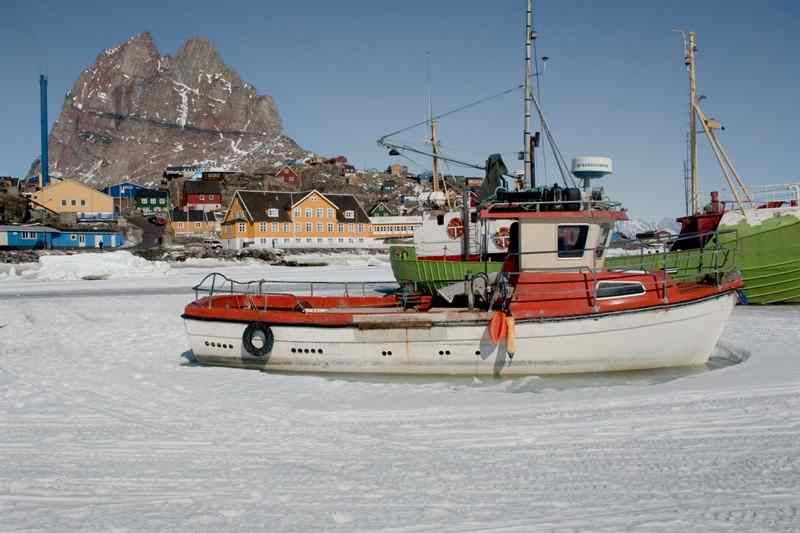
    Ships in Greenlandic ice.

    The government of Greenland is building a new port in the capital, Nuuk. The old port is too small for the future activities in Greenlandic waters.

    The new port, to be opened in 2014, will be both a container port with storage facilities and a hub-port for service of oil exploration.

    The new port will be run by a company owned by four partners, the government of Greenland, the municipality of Sermersooq, the Royal Arctic Line shipping company and the port of Ålborg in Denmark.

  • Great melt – But not in the Himalayas

    A melting glacier in the Himalayas.

    A new study led by a research team from the University of Colorado Boulder shows that glaciers and ice caps in the world, outside Greenland and Antarctica, are shedding roughly 150 billion tons of ice annually.

    This is the first comprehensive satellite study of the contribution of the world’s melting glaciers and ice caps to global sea level rise. The result indicates they are adding roughly 0.4 millimeters annually according to physics Professor John Wahr who led the study. Melting sea ice contributes to global rise in sea levels, which could lead to significant threats in the future.

    The team used satellite images to conduct the study and the annual shed between the years 2003-2010 was enormous. The total does not count the mass from individual glacier and ice caps on the fringes of the Greenland and Antarctic ice sheets — roughly an additional 80 billion tons.

    Launched in 2002, two GRACE satellites whip around Earth in tandem 16 times a day at an altitude of about 300 miles, sensing subtle variations in Earth’s mass and gravitational pull. Separated by roughly 135 miles, the satellites measure changes in Earth’s gravity field caused by regional changes in the planet’s mass, including ice sheets, oceans and water stored in the soil and in underground aquifers.

    One unexpected study result from GRACE was that the estimated ice loss from high Asia Mountains — including ranges like the Himalaya, the Pamir and the Tien Shan — was only about 4 billion tons of ice annually. Some previous ground-based estimates of ice loss in the high Asia Mountains have ranged up to 50 billion tons annually, Wahr said.

    A leading glacier expert in Iceland, confirms that the melt in the Himalayas is not as great as many have thought. He says that it is a misunderstanding that millions of people will be without water if the glaciers melt. Even if they melt, it would continue to snow in the Himalayas and it would be sufficient for the water supply.

    He also concluded that the total loss in the Himalayas was not sufficient, as the cap near the top in the Himalayas was getting thicker, while the outsides were shrinking.

    Tómas also point out that the great gap in between studies of the Himalayas shows that the measurements are not as accurate as many think. A study from a few years back showed great melt in the Himalayas, much greater then this study.

    Source: Colorado Boulder

  • From Pole to Pole with the Arctic Tern

    Bird marked with tracker

    Carsten Egevang, a researcher at the Greenland Institute of Natural Resources, has compiled a video which shows the travelling of the Arctic Tern.

    The video talks about the migratory odyssey of the Arctic tern. These terns fly from the Arctic to the Antarctic and back every year.

    During its lifetime, the tiny bird flies the equivalent of three round trips between the Earth and the Moon.

    The birds were marked and then visited a year later to compile the information. It took some time to spot the birds again!

    This amazing story has been put together in this video:

    http://www.youtube.com/watch?v=bte7MCSBZvo

  • Statoil strengthens around Greenland

    Statoil strengthens around Greenland

    Oil barrels

    Statoil in Norway, owned at 70% by the state, has bought searching permissions in Greenland. This strengthens the status of Statoil around Greenland.

    The seller is oil explorer Cairn Energy who sold 30% of their oil research permissions.

    The reason is that Cairn wants to go into cooperation with a big company with experience of searching for oil in the Arctic.

    Statoil is the frontrunner in that race.

    Cairn spent more than anticipated in research in 2011, over 400 million pounds. Simon Thomson, says that Statoil´s experience will increase the odds of finding oil around Greenland.

    “In Greenland, Statoil’s extensive Arctic operating and development experience makes them the partner of choice for the Pitu block where we see significant potential,” he said to the BBC.

    Sources

    BBC

  • Three polar bears in Kulusuk

    Three polar bears in Kulusuk

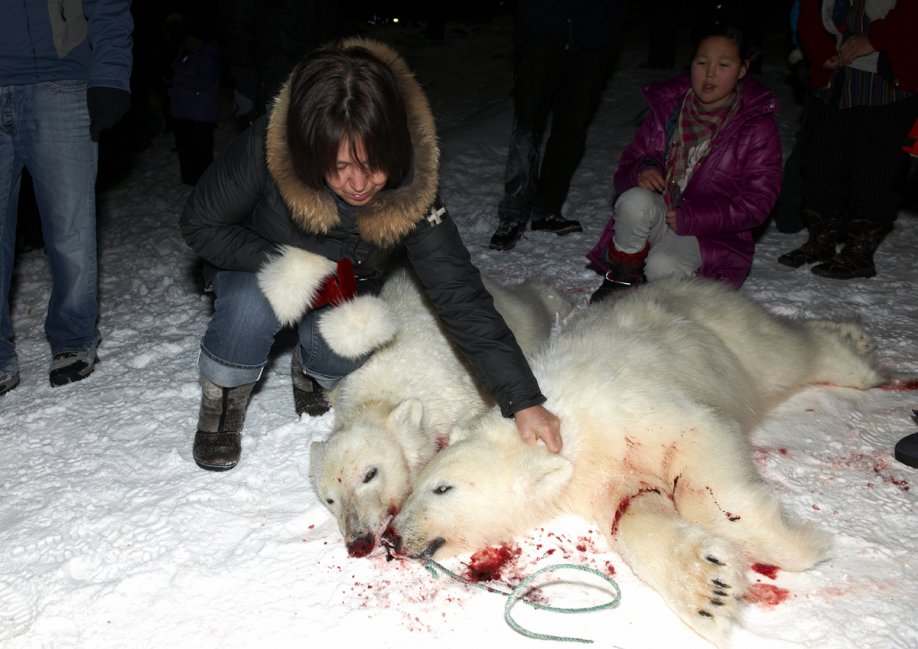
    Polar Bears dead

    Three polar bears were shot in Kulusuk, Greenland, yesterday. They drifted with sea ice to the town and were in search for food.

    A young girl approached the bears but the 13 year old thought they were dogs. Luckily she was not harmed, as the bears were shot shortly after. The mother and here two cubs were close to the airport in Kulusuk when they were first seen.

    The people tried to scare them away and thought they had succeeded. But the bears kept coming back and when the girl saw them yesterday afternoon they were shot.

    Although it was not the ideal end to the story, it was a necessity in this instance. The local elderly peoples home were given the meat but the fur was given to the government of Greenland.

    Source: Sermitsiaq

  • Greenland seeks help to lift EU ban

    Greenland seeks help to lift EU ban

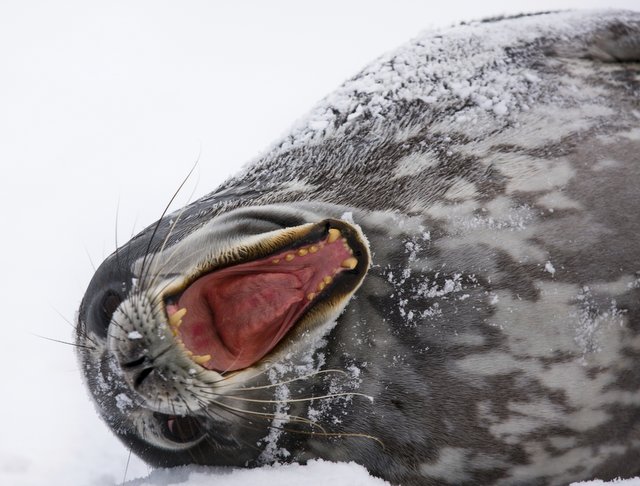
    Seal is yawning

    Greenlanders are counting on Denmark to raise the issue of EU ban on import seal products, due to a burgeoning seal population in the Arctic regions. Denmark has the presidency of the EU which it took over i the beginning of 2012.

    Politiken reports that the Greenland Fisheries and Hunters Organisation KNAPK is hoping that the important seal hunting will be lifted so the seal population will continue to grow normally, and fish stocks as well.

    “Hunting seal and sealskin production ensures employment throughout Greenland and in particular in the outlying regions. Seal hunting and skin production helps raise living standards and livelihoods for hunters in our country,” KNAPK Chairman Leif Fontaine told Sermitsiaq in Greenland.

    Fontaine says that the EU’s ban has wrecked the worldwide trade in indigenous seal products, but equally importantly is threatening both the seal population and fish stocks in the Arctic regions. “We are concerned that the import ban on seal products is harming the eco-systems in our waters,” Fontaine says, adding the increasing population of seals is a ‘ticking bomb’ under the Greenland fishing industry.

    “Greenland’s Nature Institute has documented that the 17.5 million seals in the North Atlantic at 16 million tonnes of fish and shellfish each year,” Fontaine says. “At the same time we are seeing emaciated seals across all of the Arctic and are concerned that the seals are dying of hunger,” he adds.

    Fontaine notes that Denmark is legally bound to secure the livelihoods of indigenous Greenland hunters.

    Sources

    Politiken

    Sermitsiaq