Tag: herring

  • WTO engaged in EU fishing dispute

    WTO engaged in EU fishing dispute

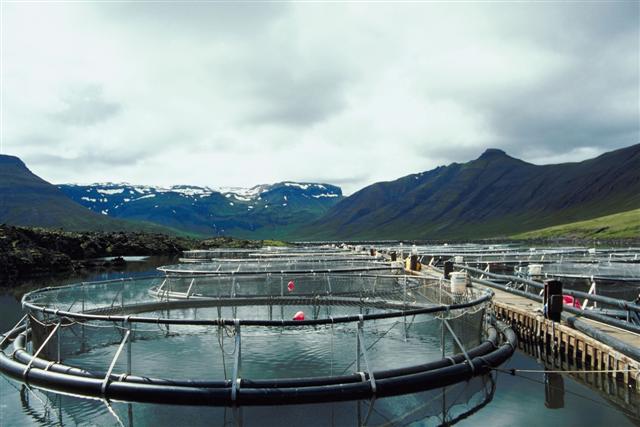
    Fish farm outside of Thorshaven

    The Faroe Islands is seeking to bring its dispute with the EU over their herring and mackerel exports to the World Trade Organisation.

    The Danish mission to Gevena filed a request to establish a WTO panel in the dispute, which pits the Faroe Islands, a self-governing member of the Danish Kingdom, against the EU, which it is not a member of.

    The request will be dealt with at a forthcoming meeting of the WTO dispute settlement body on January 20.

    Last November, the Faroe Islands announced that it had started WTO dispute settlement proceedings against the EU to challenge the bloc’s trade sanctions against Faroese herring and mackerel.
    The sanctions, introduced last August, ban all imports of herring and mackerel products from the Faroe Islands, and deny access to EU ports by vessels transporting these products. The measures set up the awkward situation of Faroese ships being unable to call on Danish ports.

    In a statement accompanying the announcement, Kai Leo Johannesen, the Faroese premier, pointed out that his country was heavily dependent on fish exports, which he said constituted more than 95 percent of total Faroese exports.
    “This step is therefore of major importance for the Faroe Islands, and a crucial step in order to ensure that the EU’s coercive economic measure, whose purpose is exclusively to safeguard the interests of its domestic industry, will be withdrawn and revoked.”
    The ban against Faroese fish products has repercussions in Denmark, where Danish fishing boats have been banned from Norwegian waters due to the conflict.

    The EU can oppose the request to set up a panel during the January meeting, but EU regulations require that the matter be taken up the following month to attempt to mediate the dispute. Previous attempts at resolution have failed.

    Click here for more articles about EU – Faroese fishing dispute.

    Source: the Arctic Journal 
  • Overview of Arctic Fishing

    Traditional fishing in Greenland

    The civilizations of northern Europe commercialized fishing, taking cod and herring in the seas off Norway and European Russia. During the past and recent years the Arctic and the Sub-Arctic was and will be a valuable food production area and has supplied over the years valuable nutrition for the south.

    Historically the Arctic supported the urbanization of the south, providing the cities with oil from whale and shark products that was used for lamp posts, production of soap, and for lubrication of machinery of the industrial revolution.

    Arctic fishermen and whalers of the past are long known for their overfishing and whaling. Oil was a valuable product and in high demand in the beginning of the industrial revolution.

    The cod fisheries in the Canadian Grand Banks became available as soon as the vessels where good enough. Naturally fishing increased with better technology and the when exports were more frequent.

    This even led to over fishing in the Arctic, especially in the Barents Sea and the northern Norwegian Sea, in the second half of the 20th century.

    The fishing fleets in Norway and Russia turned to capelin but déjà vu, the stocks were overharvested in a few years.

    Conservation measures have seen the stocks strengthened but the stock in the Barents Sea has gained ground again.

    Around Iceland, a big fishing nation, the stocks have also collapsed but are not in any danger. Iceland still relies heavily in fishing, but not as much as before.

    Fishing in the Bering Sea has come under scrutiny in recent years because of its potential involvement in the decline in the number of Sea Otters and pinnipeds.

    Traditional racks for the drying of cod

    Historically, fishing for salmon species, herring and halibut have been important.

    Visitors to south-western Alaska need only read the menu if a local restaurant to recognize that salmon and halibut are a source of local pride, and catching of those species are a popular tourist attraction.

    Salmon fishing is also important in the Russian side of the sea as well as for Japanese trawlers.

    In the 1970 and 1980s the fishing of the Walleye Pollock increased dramatically, with annual catches of up to 20 million tones eventually being recorded.

    However catching then dropped sharply n the area, probably because of overfishing and the rise in water temperature.

    Fisheries in the Arctic have changed significantly throughout the history where subsistence based fisheries have been the core value. The catch from the sea has made the Arctic and the Sub-Arctic area inhabitable due to the abundance of nutrition from both fishes and sea mammals. Those species made life in the cold bearable.

    During the recent years, an understanding of the importance of the biodiversity in the Arctic has increased. Regulations, quotas and bans of fishing and hunting have been implemented in order to preserve the delicate Arctic environment.