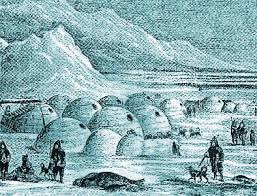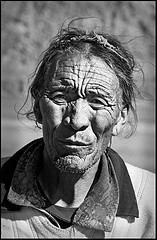
The Arctic region has many faces. Historically it has been veiled by an aura of mystique, a frozen wonderland untouched by the outside and the effects of industrialization, populated by a mysterious group of people from a different phase in the history of man.
As interesting and romantic this notion may seem it holds little or no truth in the Arctic today. The Arctic is both an industrial region, as well as a region in close connection to its history and culture. A mixture of traditional subsistence activities as well as a part of the global market economy. The new and the old submerge to strenghten each other with new technology and knowledge, contributing to a cultural rejuvenation occuring in the Arctic.
Currently there is a vast amount of work being done on the internet to promote and strenghten the various aspects of Arctic cultures. Individualls, organizations, governments, scientists, indigenous groups are all contributing to this work. A small part of this work can be viewed here and links provided for further information.
Feature
 Arctic Languages is a resource that strengthens Arctic indigenous languages. It includes background papers and articles related to indigenous languages, video clips of Arctic indigenous people explaining how important their languages are to them, and descriptions of current best practices in the protection and revitalization of indigenous languages.
 The International Centre for Reindeer Husbandry (ICR) was established by the Norwegian Government in 2005 in Kautokeino, as a contribution to the unique international cooperation of circumpolar reindeer herding peoples. ICR is an independent professional unit, with its own board and budget. Its activity is funded by the Norwegian Government through annual grants from the budgets of the Ministry of Labor and Social Inclusion, the Ministry of Agriculture and the Ministry of Foreign Affairs.
ICR is to be a knowledge base for providing and exchanging information and documentation between different reindeer peoples, national authorities and research- and academic communities at the national and international levels. The Centre will thus contribute to adding value, to improving information and to enhancing understanding for world reindeer husbandry and reindeer peoples, their traditional knowledge and their future development.
ICR’s purpose is to
- contribute in maintaining and developing a sustainable reindeer husbandry in the north
- strengthen the cooperation between the reindeer herding peoples
- document the traditional knowledge of reindeer herders
- communicate knowledge about circumpolar reindeer husbandry to our target groups
ICR’s international target groups are reindeer herders, national authorities, research, education and knowledge institutions, organizations and industrial interests. ICR has an international board with members from Russia, Norway, Sweden and Finland. The Centre enjoys wide professional and political support internationally. Its establishment was recommended by, among others, the Arctic Council, the 3rd World Reindeer Herders’ Congress in Yakutsk 2005, and the Norwegian Parliament. The Centre is a member of University of the Arctic.
ICR also hosts the secretariat of Association of World Reindeer Herders (WRH). This is a circumpolar organization representing over 20 indigenous reindeer peoples and about 100 000 reindeer herders in 9 different national states. WRH promotes professional, commercial, and cultural contact between the different reindeer peoples of the world, and disseminates information about reindeer husbandry. WRH has observer status to the Arctic Council. Through WRH, ICR has first-hand access to a unique international network of reindeer herders, their organisations and institutions.
The establishment of International Centre for Reindeer Husbandry in Kautokeino represents one measure to secure the future of this unique cooperation in the North. The Centre enjoys wide professional and political support, both nationally and internationally, and its establishment was recommended by, among others, the Arctic Council in the report Sustainable Reindeer Husbandry (2002), and by the 3rd World Reindeer Herders’ Congress in the Yakutsk Declaration of March 2005. It was also recommended by the Norwegian Government appointed committee of experts in the report published as NOU 2003:32 (Norwegian Public Report) entitled Look North! Challenges and Opportunities in the Northern Areas. The Norwegian Minister of Foreign Affairs announced at the 4th Arctic Council Ministerial meeting in Iceland, November 2004. Norway has decided to establish an international centre for reindeer herders in the Arctic, in Kautokeino, in close cooperation with the World Reindeer Herders. This will be a resource centre for exchange of information between herders in different countries and promoting cooperation between them».
 This website is concerned with Arctic cultures and environments, with a broad comparative focus on critical issues, problems and opportunities which face the peoples of the Circumpolar North. The aim is to increase understanding and contribute to an enlightened discourse on Arctic issues across the Internet using world. These include the topics of sustainable development and community viability, social and environmental policy and contemporary human and environmental crises. Special attention is given to the causes and effects of environmental change and economic globalization, especially the impacts on community viability, flexibility of vulnerable ecosystems and cultural and biological diversity in the North.
 The Arctic Health website is a central source for information on diverse aspects of the Arctic environment and the health of northern peoples. The site gives access to evaluated health information from hundreds of local, state, national, and international agencies, as well as from professional societies and universities. In addition, our own always expanding Arctic Health Publications Database can help you find arctic specific articles, out of print publications and information from special collections held in the Alaska Medical Library.
The Arctic Health website is sponsored by the National Library of Medicine’s Division of Specialized Information Services and maintained by the University of Alaska Anchorage’s Alaska Medical Library.

ArcticStat is a permanent, public and independent statistical database dealing with the countries, regions and populations of the Circumpolar Arctic. ArcticStat was born out of the desire to facilitate comparative research on the socioeconomic conditions of the peoples of the Arctic by bringing together already existing data which are dispersed and often hard to find.
 IsumaTV is an independent interactive network of Inuit and Indigenous multimedia. IsumaTV uses the power and immediacy of the Web to bring people together to tell stories and support change. Our tools enable Indigenous people to express reality in their own voices: views of the past, anxieties about the present and hopes for a more decent and honorable future. Our sincere goal is to assist people to listen to one another, to recognize and respect diverse ways of experiencing our world, and honor those differences as a human strength.
IsumaTV uses new networking technology to build a new era of communication and exchange among Indigenous and non-Indigenous people and communities around the globe.
IsumaTV was launched in January 2008 by Igloolik Isuma Productions, independent producers of The Fast Runner Trilogy of award-winning Inuit-language films: Atanarjuat The Fast Runner, The Journals of Knud Rasmussen, and Before Tomorrow; in association with Nunavut Independent TV Network (NITV), imagineNATIVE Film+Media Arts Festival, Vtape, Native Communications Society of the NWT and other non-profit agencies.
Education
The  Barents Arctic Network of Graduate Schools (BANG) brings together Ph.D. students and experienced senior scientists specialised in problematics of the Barents region, and representing various disciplines.
The main themes of BANG are:
- international cross-border transitional cooperation;
- rapid social, economic, and cultural transforms;
- resource development conflicts; and
- environmental challenges.
 is an award-winning organization offering unique educational expeditions to the Antarctic and the Arctic. Our mandate is to provide students, educators and scientists from around the world with inspiring educational opportunities at the ends of the Earth and, in doing so, help them foster a new understanding and respect for the planet.
 The University of the Arctic (UArctic) is a cooperative network of universities, colleges, and other organizations committed to higher education and research in the North. Our members share resources, facilities, and expertise to build post-secondary education programs that are relevant and accessible to northern students. Our overall goal is to create a strong, sustainable circumpolar region by empowering northerners and northern communities through education and shared knowledge.
We promote education that is circumpolar, interdisciplinary, and diverse in nature, and draw on our combined strengths to address the unique challenges of the region. The University of the Arctic recognizes the integral role of indigenous peoples in northern education, and seeks to engage their perspectives in all of its activities.
 PolarTREC is an educational research experience, funded by the U.S. National Science Foundation and managed by the Arctic Research Consortium of the U.S., in which K-12 teachers participate in polar research, working closely with scientists as a pathway to improving science education.
In celebration of the International Polar Year (2007-2009), a global scientific campaign to advance our understanding of the polar regions, thirty-six U.S. teachers will spend two to six weeks working with a research team in the Arctic or Antarctic, exploring the environments, cultures, history, and science. PolarTREC teachers will learn about cutting-edge scientific research on topics ranging from atmospheric chemistry to seabird ecology and will share their experiences with scientists, educators, communities, and hundreds of students of all ages across the globe.
PolarTREC builds on the past TREC program (Teachers and Researchers Exploring and Collaborating in the Arctic) to encompass learning experiences in both the Arctic and Antarctic. Visit the TREC website for more information about the 2004-2006 TREC expeditions.
 The history of UArctic goes long back, to a proposal made to the Senior Arctic Officials of the Arctic Council to look into the establishment of an ‘Arctic university.’ The subsequent work performed by the Circumpolar Universities Association laid the groundwork for the network and activities that exist today.
 The University of the Arctic’s importance as an international actor was demonstrated in the role it played in the 2007-2008 International Polar Year, helping to coordinate the education and outreach activities resulting from the IPY’s international scientific research projects. The UArctic Rectors’ Forum first met in 2007, which provided a new opportunity for the leadership of the circumpolar region’s higher education institutions to address areas of common interest. To better serve its members, UArctic developed the GoNorth program to promote student recruitment to northern higher education institutions and the UArctic Catalogue as joint listing of course and program information from all members.
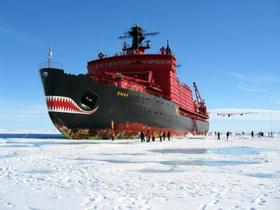 Since the end of the cold war the Arctic has been changing in ever increasing speed. Not only does the international community face immense environmental challenges that will influence every part of the world, but also will the Arctic states face territorial claims, issues concerning maritime transportation and infrastructure, natural resource exploitation and a whole new political setting. The Arctic is becoming a lively international region rich of natural resources and high economic potential. The fact is, however, that there is lacking a common political agenda for the future in the Arctic and a legal framework for the emerging maritime activities. Infrastructure on the Arctic coastline is not ready to welcome the incipient economical activities and the participation procedure of the indigenous peoples in developing the area has not yet been fully established. Most of these activities must be undertaken jointly by all the Arctic nations for them to have real impact. The shortage of the Arctic Council mandate to deal with issues other than environment has led to a situation where decisions are made in isolation creating thus incomplete and fragmented framework for the Arctic region.
 Expedition of 1872-74. Weyprecht realised that a comprehensive polar research could not be a task of one nation only, but should involve a coordinated international effort. He recognized that a time of mere geographical discovery had past and a series of coordinated expeditions dedicated to scientific research should be undertaken to further peoples understanding on fundamentals of meteorology and geophysics. Unfortunately, he died before the international research became a reality, but his inspiration led to an establishment of the largest coordinated series of scientific expeditions ever undertaken in the Arctic during the 19th century, or to what is now known as the First International Polar Year.
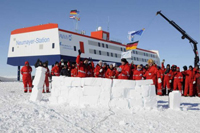 The latest International Polar Year, organized through the International Council for Science (ICSU) and the World Meteorological Organization (WMO), took place in 2007-2008. It was gigantic international multidisciplinary collaborative with around 10 000 scientists and 50 000 other participants from over 60 countries. Main objectives of this megaproject were to significantly increase the scientific knowledge and understanding of the polar areas, especially the wide-ranging and significant impacts of climate warming in the Arctic and Antarctic, and to conduct research projects beyond the resources of individual countries. In addition, the Polar Year aimed at educating a new generation of polar scientists and engineers and raise awareness of the public and policymakers of the importance of the polar areas for the entire planet. The disciplinary breadth of the third IPY far exceeded the previous Polar Years of 1882, 1932 and the 1957 IGY providing more comprehensive picture of the polar areas.