Tag: humpback

  • Journeys of whales in Icelandic waters – new satellite sender on a Blue Whale

    Journeys of whales in Icelandic waters – new satellite sender on a Blue Whale

    For the past two years, the Icelandic Marine Research Institute has been conducting experiments by tagging whales dwelling on Icelandic waters with satellite senders to track theirblue whale migration route around the island and map their departing points of Icelandic waters.
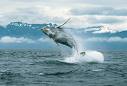
    In the fall 2008 four whales, two Minke Whales and two Humpback Whales, were marked by shooting them with a special air gun developed for this purpose especially. In February 2009 another two Humpbacks were tagged and finally in June this summer one more Humpback and a Blue Whale were tagged.

    This is a first time that the migration pattern of a Blue whale has been tracked and thus very important and interesting information for both the public and the research community. The Blue Whale was marked in Skjálfandi bay in northern Iceland in June 23 and has since travelled almost 8000km from north-coast of Iceland to the southeast coast, visiting west-coast Greenland on its way.
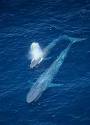
    Blue whaleThe travelling pattern of the Blue Whale is characterized by rapid sprints, while it can dwell in restricted areas for several days, most likely for food gathering.

    The migration of Blue Whales to south is soon getting started and the research institution hopes that the senders will continue to send signals through that period giving them thus valuable information on the migration pattern itself and a hint of their hibernation.

    It is possible to follow the Blue Whale’s migration pattern HERE.

    Further information can be found on the Icelandic Marine Research Institute’s website, and other Arctic Portal features

  • Online Whale Watching: Valuable information for fishermen

    Online Whale Watching: Valuable information for fishermen

    Last autumn the Marine Research Institute of Iceland started an experimentation of marking whales with satellite senders that send signals of their route around Iceland. The aim of the experiment is to map their migration route around the island and map their departing points of Icelandic waters.

    From 4th to 7th of November, four of those satellite senders were pinned to two humpback whales and two minke whales just north of Iceland. To mark the whales, a special air gun was used and a small research boat. Usable signals were received from both of the humpback whales, but none from the minke whales.

    Below you can see a map with the migration of one of the humpback whales. Its journey starts in the North of Iceland and the last signals received by the whale were at the south coast of Iceland, a trip that the whale made in a week or so.

    Humpback whale migration pattern around Iceland - map

    The interesting thing is that the whale stayed for a while in a location south-west of Iceland. Therefore some speculations were made that the whale had found some kind of feed. Based on those speculations, some herring fishing vessels went to the same location as the whale and gave the area a try. After some few tosses of the fishing equipment they found considerable amount of herring. So by observing the behavior of the whale, the fishing vessels were able to locate their catch.

    satellite sender device

    In a capelin research expedition by the Marine Research Institute of Iceland that is now going on, two humpback whales were pinned with two satellites senders at the east coast of Iceland. Already some signals have been received by one of those humpback whales that were marked 1st of February this year. It is possible to follow the migration of one of the humpback whale at the Marine Research Institute of Iceland website, to see the whale´s migration pattern

    whale

    Who knows if those two humpback whales that were marked in the capelin research expedition will lead the way to large shoal of capelin for Icelandic fishermen to catch?

    All information and photos are from the the Marine Research Institute of Iceland website, www.hafro.is