Tag: ice

  • Less ice does not mean less danger

    Less ice does not mean less danger

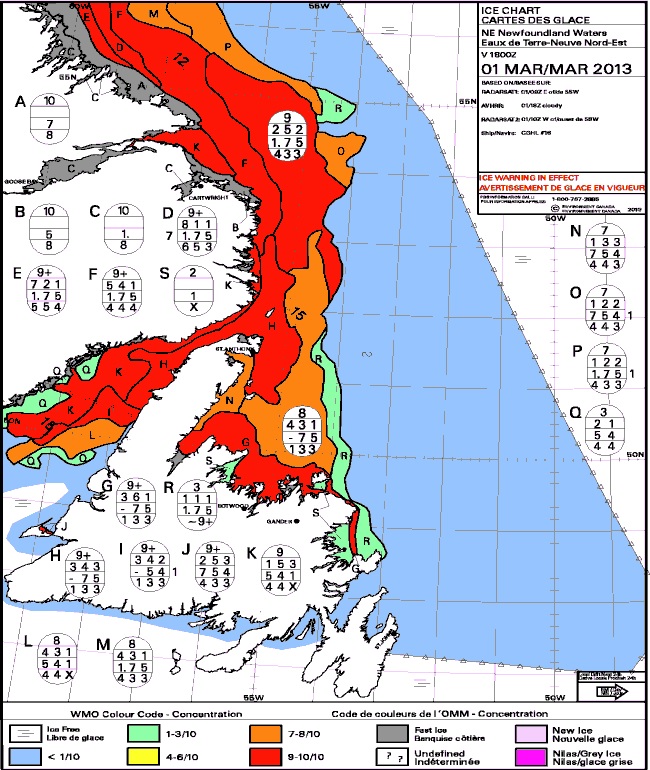
    A container ship enroute from Montreal to England was stopped by ice in the Strait of Belle Isle

    Ice Information Services of the World Work to Enhance the Safety of Marine Operations in Ice-Covered Waters

    25th of October 2013 in Reykjavik, the capital city of Iceland hosted by the University of Iceland and the Icelandic Meteorological Office this month, experts from the International Ice Charting Working Group (IICWG) held their 14th annual meeting in Reykjavik, Iceland.

    The IICWG issued the following statement: “While the extent of the Arctic ice pack rebounded somewhat this year from the record minimum set in 2012, this should not be taken as a sign that the trend of diminishing Arctic sea ice has stopped. This is an illustration of the extreme inter-annual variability that is to be expected. The long term trend remains toward a seasonally ice-free Arctic Ocean.”

    The retreat of the sea ice during the last two decades is facilitating a striking increase in marine activity in the Arctic which has prompted Arctic Council governments to adopt multinational agreements on Search-and-Rescue and Oil Pollution Response. At its meeting in Reykjavik, the members of the IICWG that provide information on sea ice and iceberg conditions discussed how they could best support Arctic and Antarctic Search-and-Rescue and Oil Pollution Response.

    After setting a record minimum in 2012 of 3.4 million square kilometres, the sea ice pack in the Arctic Ocean recovered somewhat this year. The U.S. National Snow and Ice Data Center reports that the sea ice extent dropped to 5.1 million square kilometres on September 13, significantly more than the minimum in 2012 but still more than a million square kilometres less than the long term average.

    – Active sea ice dynamics in the region forced the premature evacuation of the
    Russian drifting ice station, North Pole-40.

    – Passengers from a cruise ship were stranded for a short while on a drifting ice floe
    that unexpectedly broke away from the shore in the Canadian Arctic

    Less ice does not mean less danger – the large variability in local sea ice conditions from
    year to year and from region to region presents major hazards for shipping and other
    offshore activities.

    – The tanker “Nordvik” entered Matisen Strait in Russia’s Northern Sea Route
    without permission due to its insufficient ice class and was holed by ice – there was no pollution.

    – Some 35 adventurers attempting to cross the Northwest Passage in a variety of yachts and smaller boats were surprised by locally difficult ice conditions causing some to abandon their attempt.

    – Supply barges carrying goods for some Arctic Canada communities were delayed by ice conditions more difficult than experienced in recent years.

    – The ice extent in the Baltic Sea was average. The ice melt started late keeping icebreakers working late in the season.
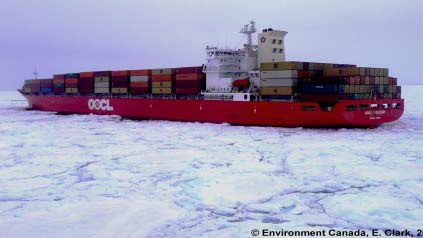
    Cargo ship

    Commercial interest in the Arctic is increasing rapidly.

    – By October 23, thirty-one ships (all escorted) have made complete transits of the Northern Sea Route this year, including the first ever container ship. Six hundred and one authorizations were issued for voyages within the NSR, about half of which were escorted in convoy.

    – The Nordic Orion, carrying coal from western Canada to Finland, became the first bulk carrier to traverse the Northwest Passage.

    – Oil and gas development is occurring in virtually every region of the Arctic including Russia, Norway, Iceland, Greenland, Canada and Alaska.

    Greenland glaciers continue to calve huge “ice islands” that float southward into the North Atlantic. Pieces of these ice islands have been observed as far south as Newfoundland posing a danger to shipping and offshore operations.

    While Arctic sea ice extent is diminishing, the same is not true of the sea ice around Antarctica where maximum sea ice extents have been slowly increasing during the austral winter.

    President Olafur Ragnar Grimsson of Iceland addressed the meeting emphasizing the urgency for the scientific community to engage in dialogue with political and business leaders in shaping the future of the Arctic. He stressed that the Arctic is now a global concern and the guidance of scientific knowledge is critical to avoid irreversible mistakes.

    The IICWG notes with satisfaction that Arctic governments are responding to the reality of this increasing activity in their northern waters. Russia has opened the first of ten new Search-and-Rescue Centres along the Northern Sea Route. The member states of the Arctic Council adopted important new agreements on emergency response. The IICWG looks forward to next year’s release of the International Maritime Organization’s Mandatory Polar Code. In their role of providing ice information for the safety of maritime activities in ice – covered waters, the IICWG members are working hard to support these initiatives.

    The IICWG was formed in 1999 to promote cooperation between the world’s ice services on all matters concerning sea ice and icebergs and brings together the operational ice services of Canada, Denmark (Greenland), Finland, Germany, Iceland, Norway, Poland, the Russian Federation, Sweden and the United States, as well as the British Antarctic Survey and the International Ice Patrol.

    For more information, please see regional contacts on the IICWG web site:
    http://nsidc.org/noaa/iicwg

    For up to date information on Sea Ice Services in the world see:
    http://wdc.aari.ru/wmo/docs/WMO574.pdf

    For more information on the IICWG, please contact:
    Mr. John Falkingham
    IICWG Secretariat
  • A new record low before the ice increase

    A new record low before the ice increase

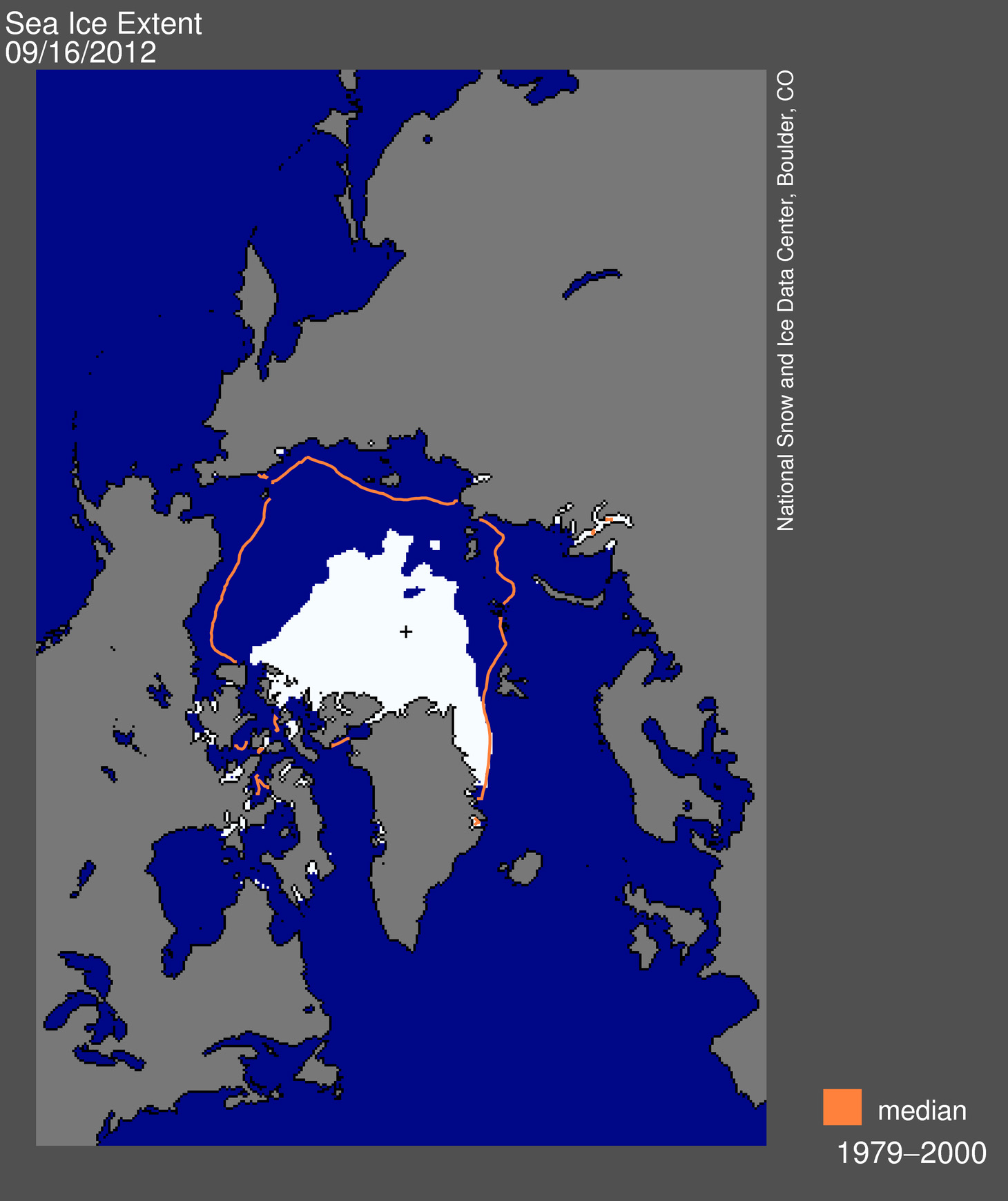
    Arctic sea ice extent for September 16, 2012

    The summer sea ice is increasing again as winter looms but recorded its lowest ever extent since satellite measurements began in 1979. The ice on September 16th was significantly lower than the previous record year of 2007.

    On September 16, 2012 sea ice extent dropped to 3.41 million square kilometers, 760,000 square kilometers below the previous record minimum extent in the satellite record, which occurred on September 18, 2007.

    That means there less ice in the Arctic which would cover all of Norway, Denmark and Finland combined.

    The National Snow and Ice Data Center reports that in response to the setting sun and falling temperatures, ice extent will now climb through autumn and winter. However, a shift in wind patterns or a period of late season melt could still push the ice extent lower. The minimum extent was reached three days later than the 1979 to 2000 average minimum date of September 13.

    This year’s minimum is 18% below 2007 and 49% below the 1979 to 2000 average.

    Overall there was a loss of 11.83 million square kilometers (4.57 million square miles) of ice since the maximum extent occurred on March 20, 2012, which is the largest summer ice extent loss in the satellite record, more than one million square kilometers greater than in any previous year.

    Source:

    NSIDC

  • Hot water surrounded by ice

    Hot water surrounded by ice

    Hot water surrounded by ice.

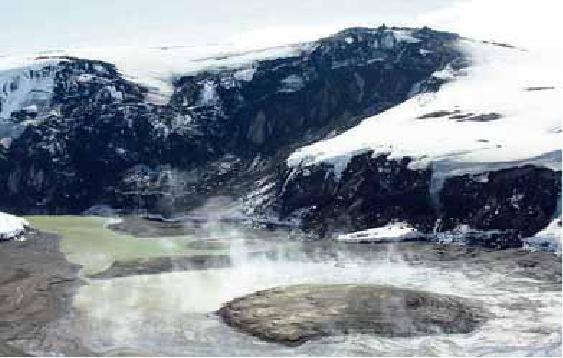
    Great melt will occur this year in Europe’s largest glacier, Vatnajökull in Iceland. This is the result of an expedition by Icelandic scientist recently.

    Magnús Túmi Guðmundsson, professor in geography at the University of Iceland, says that the western part of the glacier will melt rapidly. This is due to the volcanic activity in Grímsvötn last year.

    Elevation of land near the glacier was also measured a total of 3cm per year because of the glacier shrinking.

    The consequences are for example raised levels in glacier lagoons and glacier rivers.

    A lagoon which formed after the eruption was researched, which includes a river which was measured 45°Celcius. The lagoon is therefore hot. A few hundred meters was at 25-40° Celsius. Like average bathwater to some.

    “The eastern part of the lagoon is also pretty hot, considering it is surrounded by icebergs.

    Magnús also notes that ash will continue to blow this summer, especially during the dry season. “People in Reykjavík can often still see ash on their cars, that’s ash form Eyjafjallajökull and Grímsvötn. This will take years to stop.”

    Source

    Morgunbladid

  • Over 600 Anglers rescued in Russia

    Over 600 Anglers rescued in Russia

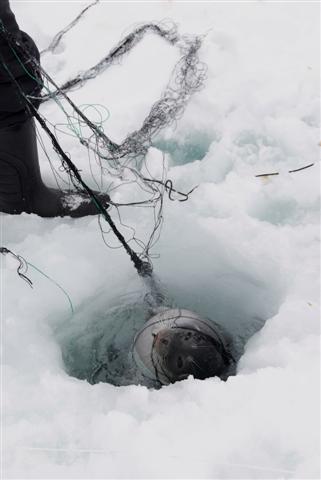
    fishing through ice

    Over 600 anglers, fisherman who were angling through the ice, have been rescued after an ice sheet broke off. The Russians were not harmed.

    The emergencies ministry said that 48 people were involved in the rescue operation, two helicopters and 11 ships weere used to fetch the people of the moving ice sheet.

    Fishing through bore-holes on ice-bound waters is a popular winter pastime in Russia.

    Taymuraz Kasayev, of the emergencies ministry, said the area’s residents had been told to stay away from the ice.

    “We warned people through the media that going out on to the ice on this stretch of the coastline is extremely dangerous and is not allowed,” he told the NTV television channel.

    One of the rescued anglers, Vladimir Vasilenko, said he had ventured on to the ice floe knowing that the windy conditions might pose a risk.

    “The wind was blowing from the shore, and it was clear that something might happen, but people were still going out, so we did too,” he said.

    “It was the excitement, of course. We also heard on the radio that it would be the last chance for fishing on the ice. And so we rushed out to go fishing.”

  • LNG tankers put to the test in ice

    LNG tankers put to the test in ice

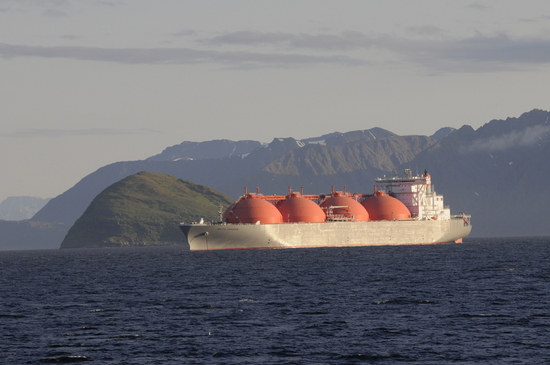
    An LNG tanker

    Many large vessels have to be strengthened to be able to sail in ice. Large companies are testing their fleets in order to be able to sail through the northern sea route.

    Gazprom is one of them which is working with Sovcomflot to carry out test for LNG tankers in ice.

    Gazprom director Aleksei Miller and Sovcomflot´s General Director Sergei Frank met last week and concluded in a press release:

    “The relevance of LNG shipping along the Northern Sea Route to the Asian-Pacific region in growing quickly. With regard to gas exports to the region, the development of LNG production is an absolute priority in comparison with pipeline deliveries. Consequently, the deliveries of Russian LNG through the Northern Sea Route allows us to significantly reduce transportation costs, thus making the LNG highly competitive.”

    Gazprom is considering to sail from the Shtokman area to Japan with gas. Statoil is thinking the same.

    Source: BarentsObserver

  • Fishermen stuck in ice in danger

    Fishermen stuck in ice in danger

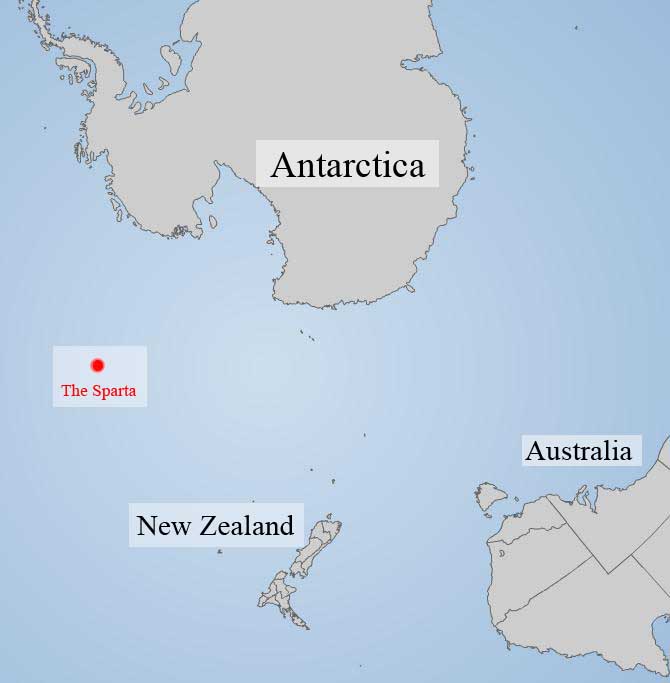
    Approximite destination of Sparta.

    A Russian fishing boat is trapped in heavy sea ice near Antarctica and its crew has moved to lifeboats. The ship is in danger of cracking and sinking so the crew evacuated the ship. It has reported a hole in its hull beneath the water line.

    The next icebreaker is days away and no helicopters are near the ship. A number of ships are on their way to rescue the ship.

    “However, the closest ones are hampered by heavy ice, making vessel movement very difficult. The closest vessel which can cut through the ice is several days away,” Rescue co-ordinator Tracy Brickles said.

    The Sparta is holed beneath the waterline and stuck in heavy sea ice, about 2,000 nautical miles (3,704km) south-east of New Zealand.

    A military plane spent about an hour above the ship but could not land to rescue the crew.

    The crew of 32 has immersion suits on. The crew comprises 15 Russians (including the captain), 16 Indonesians and a Ukrainian, AFP news agency reported.

    They were throwing cargo overboard to lighten the ship, and some had boarded lifeboats as a precaution, the RCCNZ said.

    Remaining crew are pumping water out of the ship and had attached a tarpaulin over the outside of the hole in an attempt to keep the water out, it said. They had requested that additional pumps be sent to help.

    The ice surrounding the ship is estimated to be up to 1.5m thick.

    Click here to see images of the ship from BBC.

    Sources: BBC, AFP, UPI, ITAR-Tass, RCCNZ.

  • Breakthrough of the Russians

    Breakthrough of the Russians

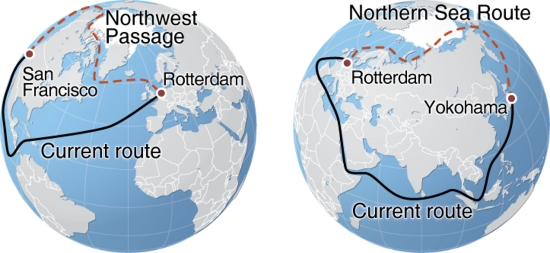
    Map of Northwest Passage and Northern Searoute

    Although the ice in the Arctic is slowly diminishing, regular sea transport has not begun in the area. Russians have perhaps the most interest in Arctic shipping due to the enormous resources near the Arctic Ocean, in their own backyard.

    But Russia has two mainfold problems. They need more icebreakers and more infrastructures to use the Northern Sea Route more regularly.

    Nikolay Patrushev, Russia’s Security Council’s secretary says instruments for navigation and communication and bases for search and rescue services are not sufficient. Russia plans to build a series of new search and rescue vessels and make the port of Amderma into a main base for a new emergency unit. Six icebreakers are being built, three of them nuclear powered.

    Tankers with a draught of over 12 meters can now use the Northern Sea Route and Russia’s second largest producer of natural gas, Novatek, is sending the largest tanker ever through the Northeast Passage in August.

    Russia’s Ministry of Transport believes cargo transport through NSR will increase from last year’s 1.8 million tons to 64 million tons by 2020, according to the BarentsObserver.