Tag: icebreaker

  • Students from DUT design icebreaker

    Students from DUT design icebreaker

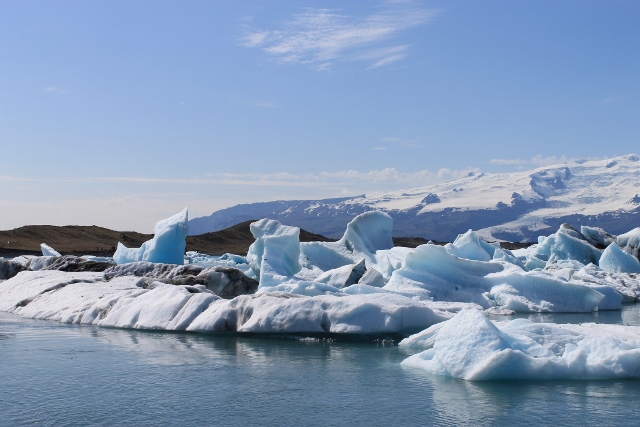
    Ice covered waters in the Arctic

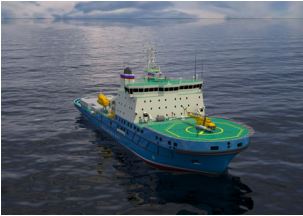
    Five maritime engineering bachelor students of the Delft University of Technology produced a design for an Arctic modular towing supply vessel (AMTSV) as part of their minor on Arctic Engineering. In cooperation with Dutch shipyard Damen this has now culminated in an offering of a 100m double acting supply ship is capable of operating in the Barents Sea year round and in the Baffin Bay and Beaufort Sea for 8 months.

    The vessel actually has two bows; when she sails through open water the accommodation will be in the front.

    Through ice however, she will sail with her thrusters first. The ‘stern first’ concept is not new in Arctic shipping.

    However, in this case it’s a veritable ‘double-bow’ vessel, a concept which is incorporated in the structural lay-out of the ship. This means the AMTVS could be classed as such.

    The AMTSV has the ability to sail through 1.6m of level ice at 3kn. Research showed this to be an optimal solution, because the shape of an ice bow is completely different compared to an open water bow.

    When using two bows no compromises have to be made. Another argument for this concept is that, while sailing through ice, the thrusters will create a flow around the hull which decreases friction.

    Because the vessel can sail in both directions, she also has to be capable of towing in both directions. Hence a double acting winch of 300t is installed. This winch is installed inside the accommodation so the harsh weather will not affect it.

    There are no compromises on crew conditions as they can work in the enclosed superstructure (ESS) located behind the conventional superstructure. This superstructure can be kept up above zero degrees with an outside temperature of -55°C. Temperature sensitive cargo can also be kept in this area.

    This Arctic concept vessel will be running on LNG, with dual fuel engines, in an effort to make it more environmentally friendly.

    The main disadvantage of LNG is that it requires a lot of storage capacity. However, ice strengthened vessels have a lot steel weight in the hull compared to open water vessels and this means that the centre of gravity is relatively low. Therefore the disadvantage is negated by placing the LNG tanks on top of the ESS.

    The project has not officially been implemented yet, however such a possibilities are being researched.

    Source
    IMAREST

  • Russian 100 million icebreaker to Finland

    Russian 100 million icebreaker to Finland

    Russian icebreaker

    Russia is building a new icebreaker in Finland, to be ready in 2015. The vessel is planned to be used in year-round operation in the Baltic Sea and in summer season in the Arctic seas. The vessel is able to operate in temperatures as cold as -40°С and the maximum icebreaking capability is 1.5 m.

    Arctech Helsinki Shipyard will build the 16 MW icebreaker with a total worth of the vessel about 100 million EUR. The contract has been awarded together with OJCS Vyborg Shipyard.

    The main tasks of the vessel are icebreaking and assisting of heavy-tonnage vessels in ice, towing of vessels and other floating structures in ice and open water. The vessel will also be used for fire fighting on floating objects and other facilities, assisting vessels in distress in ice and open water and also for cargo transportation.

    The vessel will measure 119.8 m in length and 27.5 m in breadth. The four main diesel generator sets have the total power of 27 MW. The total propulsion power is 18 MW consisting of two full-circle azimuth thrusters.

    Arctech Helsinki Shipyard Inc. specializes in arctic shipbuilding technology, e.g. building icebreakers and other Arctic offshore and special vessels. Arctech is a joint-venture, which is 50/50 owned by STX Finland Oy and Russian United Shipbuilding Corporation. The joint venture agreement was signed in December 2010. Arctech is located in Helsinki and has approximately 400 employees.

    Source

    Arctech

  • Russia to build a new icebreaker

    Russia to build a new icebreaker

    Cargo Ship

    Russian is building a new icebreaker to be delivered in 2015. The shipbuilding company Baltiisky Yard oversees the project of the 25 megawatt vessel to serve the Russian Arctic.

    The ice breaker will be the biggest of Russia´s diesel-engine icebreakers and designed to operate in heavy winter ice conditions. Russias fleet will include nuclear and non – nuclear powered vessels.

    According to the company, the vessel will be 146,8 meters long and have a deadweight of 22258 tons. It will have a crew of 38 and will be able to operate autonomously for 60 days in up to two meters thick ice.

    The construction contract is worth close to 7,5 billion RUB.

    So far ships have been chartered out on research operations, search and rescue emergencies as well as touristic expeditions.

    Sources

    Maritime Professional

  • The Snow Dragon bound for North Pole

    The Snow Dragon bound for North Pole

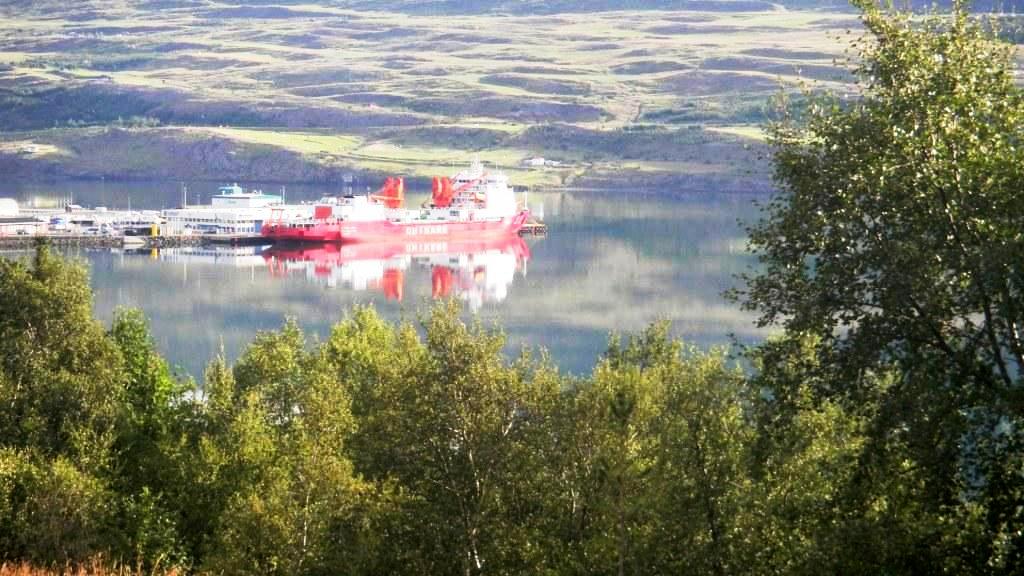
    Xuelong stationed in Akureyri, Iceland

    The Chinese research ice – breaker Xuelong, which left Akureyri in the northern part of Iceland, on Monday evening, is now on the way, to be the first non – Russian icebreaker to sail the transpolar route, straight across the top of the globe.

    Last week, the Snow Dragon completed the Northern Sea Route, reaching Reykjavik, Iceland on Saturday the 17th of August and then after spending the day in Akureyri, started the journey back to Asia.

    The scientists and the crew on board will try to prove that there is a future possibility of using Central Arctic Shipping Route for international navigation during the summer months.

    Currently, the vessel is just about to reach the Barents Sea.

    The M/V Xue Long is an A2-class ice-breaker with capability of breaking ice of 1.1 meters thickness. It was originally built as a cargo ship for Polar Regions by the Kherson Shipyard in Ukraine. After modifications in 1994 it became China’s first research ice-breaker. The vessel belongs to the Chinese Arctic and Antarctic research expeditions (CHINARE).

    The vessel is 167 meters long and 22.6 meters wide. It has a full-loaded draft of 9 meters, a full-loaded displacement of 21,250 tons and a cruising radius of 12,000 nautical miles. Two helicopters can be carried at the same time.

    Source

    Chinare5

  • Xuelong to sail through future central route

    Xuelong to sail through future central route

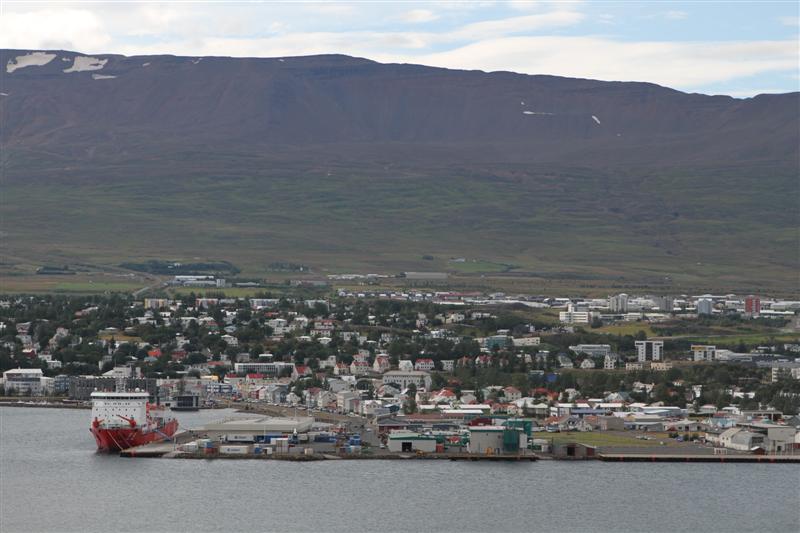
    Xuelong in the port of Akureyri

    The Chinese icebreaker Xuelong is heading to the North Pole. The CHINARE5, Chinas Fifth National Research Expedition, is aiming for the future central Arctic shipping route on its way back to China.

    This historic voyage is hoping to break the ice at the North Pole in an effort to show that it is indeed possible to sail an icebreaker through the route.

    The central Arctic shipping route is to many the most feasible route in Arctic shipping, as it is the shortest way through the Arctic.

    Xuelong will carry out more research in the Arctic Ocean on its way back to China, after successfully conducting extensive research on route to Iceland in the summer.

    The Xuelong sailed the Northern Sea Route, along the coast of Russia, in its journey. It is scheduled to be in Shanghai in the end of September.

    Source

    Chinare5

  • Exhibition and science lab in Lenin

    Exhibition and science lab in Lenin

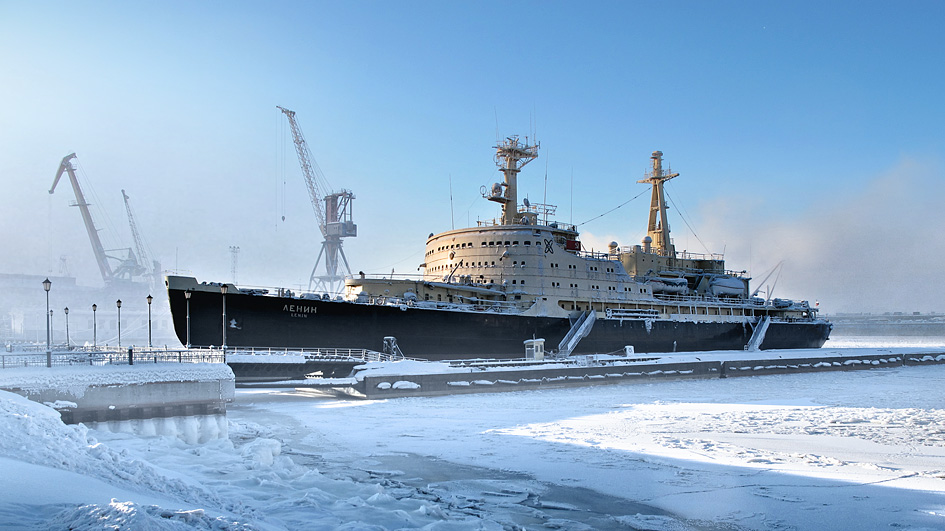
    The Lenin icebreaker.

    A Russian icebreaker will be modified into a floating museum. The icebreaker Lenin will serve the purpose of being a science and historical exhibition.

    The Arctic Centre of the University of Lapland, Polaria in Tromsö and Atomflot in Murmansk have been granted 1.2 million euros by Kolarctic ENPI CBC program for the project.

    The Arctic Centre will be the lead partner and act as the main exhibition producer in the project Arctic Expo Centre – Nuclear-Powered Icebreaker Lenin – ICE.

    The aim of the project is to develop new exhibitions and innovative communication tools as a means to improve the information on local and cross-borders concerns. This will help to facilitate a mutual understanding among neighboring people about common issues and the Arctic. As the exhibition is planned on board Icebreaker Lenin, the goal is also to tell about the technology and history of icebreaking.

    “Through exchange of expertise and share of experiences each member will increase the opportunities to develop its own exhibition and activities such as education package for teachers and pupils on certain issues, special tours for tourists”, says chief executive producer Nicolas Gunslay, Arctic Centre.

    “The goal is to raise awareness on topics related to the Arctic marine environment, climate change, and globalization,” he added.

    The icebreaker Lenin was launched in 1957 and is the world’s first nuclear powered surface ship and the first nuclear powered civilian vessel. It had a crew of 240 persons while in operation.

    He left service in Russia in 1989.

  • Vaygach breaks off as fire kills two

    Vaygach breaks off as fire kills two

    Vaygach Fire

    The Russian nuclear powered icebreaker Vaygach is up and sailing again after a fire last week. The tragic accident cost two lives.

    It was the night of 15th of December that the fire broke out in the living compartments of the icebreaker. Two people could not be saved which is another tragic accident in Russian waters after an oil rig sank earlier in the week, costing many people their lives.

    Vaygach went through inspection in Dudinka and then kept breaking ice like usually, in the Northern Sea Route.

    It took two hours for the crew to get the fire under control. The fire did not reach the reactor compartment so a nuclear accident was not a threat.

    The source of the fire is thought to be a short-circuit.

    Sources

    BarentsObserver

    Rosatomflot

    Blogger51

  • Chinese Icebreaker to reach Iceland over the Arctic

    Chinese Icebreaker to reach Iceland over the Arctic

    Snow Dragon

    The Chinese government plan to send an icebreaker over the Arctic to ship in Iceland this summer. The ship will sail the North -East Passage to Iceland and the North-West Passage back. This would be the first time a ship would go through the Arctic from the Pacific Ocean to Iceland and back again in one summer.

    The first idea of the expedition was discussed at visit from Chinese officials to the Icelandic president last autumn. Mr. Ólafur Ragnar Grímsson, president of Iceland mentioned to the Chinese officials that the expedition could ship in Iceland. According to the director of the Norwegian Polar Institute, the Chinese officials had accepted the offer from President Grímsson and will send the Icebreaker “Snow Dragon” to sail over the Arctic and ship in Iceland.

    China’s “Snow Dragon” (Xue Long) is the largest non-nuclear icebreaker in the world. The Ice breaker will sail from the Sea of Japan and the Pacific Ocean, through the Bering Strait. The route through the Arctic will be the North-East passage, along the coast of Russia and Norway, before reaching Iceland.

    The Ice Breaker will sail back through the Arctic after a quick stop in Iceland. On the way back, the vessel will sail through the North-West Passage, along the coast of the Canadian Arctic archipelago and the Alaskan Arctic shore.

    The Chinese expedition could therefore be historical, since no one have sailed through both of the Arctic Passages and reaching the two large oceans, the Pacific and the Atlantic, in the same summer.

  • Future Central Arctic Shipping Route

    Central Arctic Shipping Route

    A shipping route through the central Arctic Ocean depends on significant reduction of ice thickness in that area.

    The so-called multi-year ice in the central Arctic Ocean has been changing drastically (up to 40% decrease) and disappearing completely in the last 50 years.

    If this development continues, ships with icebreaker abilities can navigate the central Arctic Ocean in nearest future.

    The image shows a possible new shipping route in the future. Of course much of the ice would have to melt for this to come to reality.

    The image also shows shy Iceland hopes to be utilized regarding Arctic Shipping, possibly with a hub-port to Europe and America.