
Exchange Scholarships for Icelandic and Norwegian Students in Arctic Studies Application deadline: 15th May 2012, for the academic year 2012-2013
The Ministers of Foreign Affairs of Iceland and Norway signed a three year Memorandum of Understanding in Akureyri on September 29, 2011, concerning co-operation in the field of Arctic scientific research. Exchange scholarships for Icelandic and Norwegian Students in Arctic Studies are one of the key activities in this co-operation.
The scholarships in 2012/2013 will be 520€ per month for subsistence and a maximum 1.200 € travel grant. Minimum duration is one month and the maximum duration is 12 months.
The eligibility criteria are the same as for Nordplus Higher Education grants for studies or work placements, with the addition that doctoral students are also eligible for support. Priority will be given to Master and Ph.D. students and students wishing to study at Norwegian and Icelandic universities that are members of the University of the Arctic network.
Students should hand in their applications to the International office of their home institution.
Following documents need to be part of the application:
- Statement of purpose (500-1000 words) explaining the relevance of his or her planned studies or placement abroad for arctic research and education.
- Scanned copy of approved learning agreement, at least by the home institution and preferably also by the host institution.
- Transcript of records
Source: University of the Arctic
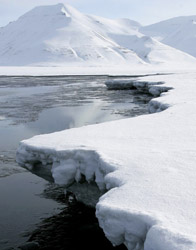
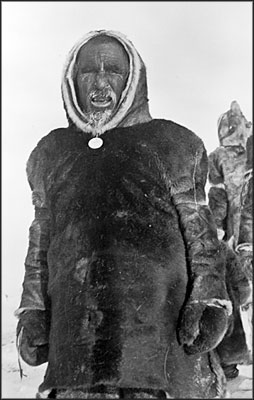 The Saami languages also categorize snow according to texture and context. For example, words used in connection with skiing and reindeer husbandry are different, even though the snow would be the same. It is also interesting to notice that even though Saami and Finnish are related languages and many of the words for snow in Saami sound familiar to Finnish speakers, the Finnish language itself only has three different official words for snow. The Saami word vahtsa means one or two inches of new snow on top of old snow. New wet snow is called slahtte and falling rain mixed snow slabttse. Falling wet snow lying on the ground is called släbtsádahka or släbsát. Skilltje, bulltje and tjilvve are words for snow and ice that fall on objects, reindeer moss and trees. Large lumps of snow hanging on the ridge are nearly always called bulltje. Åppås on the other hand is virgin, clear snow.