Tag: North Pole

  • Breaking ice scares Russian researchers

    Breaking ice scares Russian researchers

    Search and rescue in the arctic

    Yesterday, 27th of May 2013, Russian government approved the plans to evacuate sixteen people and large amount of materials from the floating research station ´´North Pole – 40´´ that has been drifting close to the North Pole.

    The nuclear powered research icebreaker ´´Yamal´´ is now preparing to leave the Arctic waters on the rescue mission. The vessel is planned to leave Murmansk at the end of this week and it will reach its home station about two weeks later.

    The cost of this action is estimated to reach close to 1.6 million Euros.

    The Arctic ice has now broken up in pieces and makes it impossible for the crew to be rescued by plane or helicopter. The ice ridging on the floe does not allow building an airstrip for any plane. The floe has drifted out of reach for helicopters.

    Russian government claims that the ´´North Pole – 40´´ research icebreaker will continue its work in the Arctic even after it has been removed from the ice floe.

    An abandoned Polar station on Severnaya Zemlya is now being prepared to host Arctic researchers and their equipment.

    Russian drifting station ´´North Pole – 40´´ has been an important contributor to exploration of the Arctic. It carries out the program of complex year – round research fields of oceanology, ice studies, meteorology, aerology, geophysics, hydro-chemistry and marine biology.

    The “North Pole – 40” is organized by Russian Arctic and Antarctic Research Institute.

    Source: Barents Observer

  • Treaty for the Arctic?

    Treaty for the Arctic?

    The sea divided into east and west.

    Diplomats and fisheries officials from five Arctic states will meet in Washington later this month to discuss regulations on commercial fishing near the North Pole.

    Government representatives from five Arctic states, i.e. Norway, Denmark, Canada, United States and Russia, agreed yesterday to meet later this month in order to discuss the laws that will apply to commercial fishing within the Arctic Circle.

    About 70 percent of the world’s total white fish supply comes from Arctic waters. This marine resource is extremely significant to Arctic regional and coastal communities.

    Fishing in the Circumpolar North has been and is a significant economic resource. Fishing is also rooted in the culture of many of the Arctic nations.

    World catch in numbers

    Now Exclusive Economic Zones divide where nations can catch fish but this economic activity has shaped the cultural values in the Arctic and is an important factor in the daily life of the coastal residents.

    If an agreement is made, it will represent the third such accord struck by countries in the far north to manage the commercial development and industrialization of the region, which is expected to increase with global warming. The other two agreements reached so far regulate oil spill response and search and rescue.

    The 12th Conference on Polar Meteorology and Oceanography that will take place in Seattle, Washington on 29th of April, is sponsored by the American Meteorological Society and organized by the AMS Polar Meteorology and Oceanography Committee.

    This year it will treat not only about natural science but also serve as a place to discuss legal and political issues between Arctic stakeholders.

    Source

    Barents Observer

    Fishing Portlet

  • Central Arctic route in use by 2050

    Central Arctic route in use by 2050

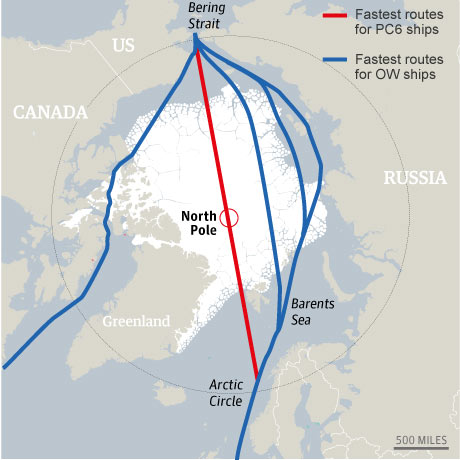
    Guardians map of Arctic Shipping

    Ships should be able to sail directly over the north pole by the middle of this century, considerably reducing the costs of trade between Europe and China but posing new economic, strategic and environmental challenges for governments, according to scientists.

    The dramatic reduction in the thickness and extent of late summer sea ice that has taken place in each of the last seven years has already made it possible for some ice-strengthened ships to travel across the north of Russia via the “northern sea route”. Last year a total of 46 ships made the trans-Arctic passage, mostly escorted at considerable cost by Russian icebreakers.

    But by 2050, say Laurence C. Smith and Scott R. Stephenson at the University of California in the journal PNAS on Monday, ordinary vessels should be able to travel easily along the northern sea route, and moderately ice-strengthened ships should be able to take the shortest possible route between the Pacific and Atlantic Oceans, passing over the pole itself. The easiest time would be in September, when annual sea ice cover in the Arctic Ocean is at its lowest extent.
    PNAS is the Proceedings of the National Academy of Sciences of the United States of America.
    Click here to enter the Arctic Portal interactive data map.

    The scientists took two classes of vessels and then simulated whether they would be able to steam through the sea ice expected in seven different climate models. In each case they found that the sea routes opened up considerably after 2049.

    “The emergence of a … corridor directly over the north pole indicates that sea ice will become sufficiently thin such that a critical technical threshold is surpassed, and the shortest great circle route thus becomes feasible, for ships with moderate ice-breaking capability,” says the paper.

    “The prospect of common open water ships, which comprise the vast majority of the global fleet, entering the Arctic Ocean in late summer, and even its remote central basin by moderately ice-strengthened vessels heightens the urgency for a mandatory International Maritime Organisation regulatory framework to ensure adequate environmental protections, vessel safety standards, and search-and-rescue capability,” it adds.

    The northern sea route has been shown to save a medium-sized bulk carrier 18 days and 580 tonnes of bunker fuel on a journey between northern Norway and China. Shipowners have said it can save them €180,000-€300,000 on each voyage. A direct route over the pole could save up to 40% more fuel and time.

    Sources

    The Guardian

    PNAS

  • Canadians to cross the North Pole

    Canadians to cross the North Pole

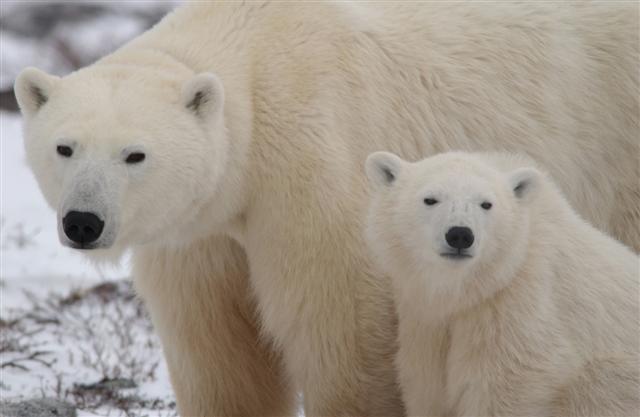
    Polar bears

    Russian – Canadian expedition will aim to cross the North Pole. The voyage will try to connect the northern Russian shore with the Canadian one.

    The trip is expected to be 8.000 kilometers long. The travel is scheduled to start in February 2013. It is expected to reach Canadian shore in the end of May 2013. It will be led by the Russian captain – Vladimir Chukov.

    Eight explorers will set out in two specially designed vehicles with overinflated tires that allow for travel over the snowdrifts and dangerous Arctic ice cap, where above-freezing temperatures in the summer months can cause the ice to break up.

    The expedition will conduct the scientific research to include the observation of the polar bear populations at the Pole and their adaptation to changing Arctic climate. The outcome of the research will be shared with scientists world – wide.

    The expedition will serve for some of the first tests of Russia’s GLONASS satellite navigation technology, Moscow’s bid to challenge the dominant U.S. global positioning system (GPS) as reported by Barents Observer.

    Source

    Barents Observer

  • The Snow Dragon bound for North Pole

    The Snow Dragon bound for North Pole

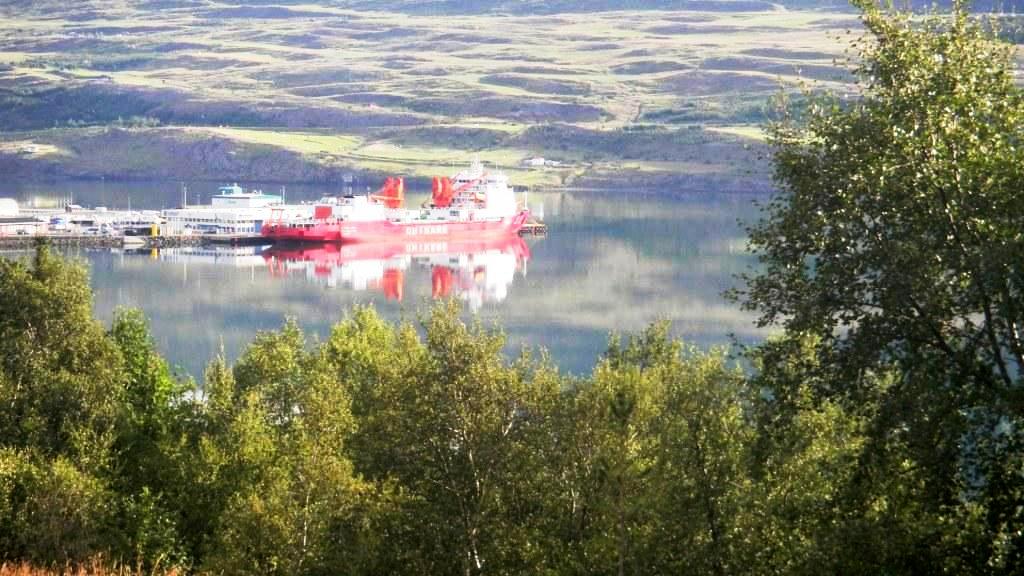
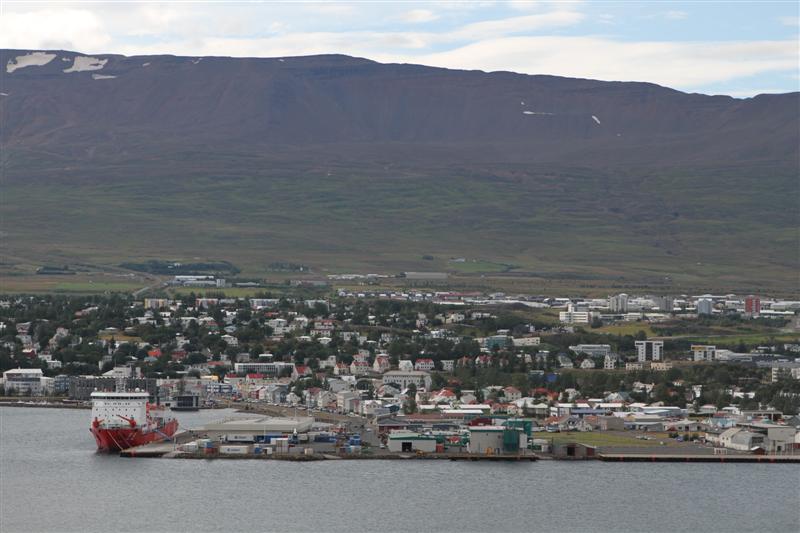
    Xuelong stationed in Akureyri, Iceland

    The Chinese research ice – breaker Xuelong, which left Akureyri in the northern part of Iceland, on Monday evening, is now on the way, to be the first non – Russian icebreaker to sail the transpolar route, straight across the top of the globe.

    Last week, the Snow Dragon completed the Northern Sea Route, reaching Reykjavik, Iceland on Saturday the 17th of August and then after spending the day in Akureyri, started the journey back to Asia.

    The scientists and the crew on board will try to prove that there is a future possibility of using Central Arctic Shipping Route for international navigation during the summer months.

    Currently, the vessel is just about to reach the Barents Sea.

    The M/V Xue Long is an A2-class ice-breaker with capability of breaking ice of 1.1 meters thickness. It was originally built as a cargo ship for Polar Regions by the Kherson Shipyard in Ukraine. After modifications in 1994 it became China’s first research ice-breaker. The vessel belongs to the Chinese Arctic and Antarctic research expeditions (CHINARE).

    The vessel is 167 meters long and 22.6 meters wide. It has a full-loaded draft of 9 meters, a full-loaded displacement of 21,250 tons and a cruising radius of 12,000 nautical miles. Two helicopters can be carried at the same time.

    Source

    Chinare5

  • Xuelong to sail through future central route

    Xuelong to sail through future central route

    Xuelong in the port of Akureyri

    The Chinese icebreaker Xuelong is heading to the North Pole. The CHINARE5, Chinas Fifth National Research Expedition, is aiming for the future central Arctic shipping route on its way back to China.

    This historic voyage is hoping to break the ice at the North Pole in an effort to show that it is indeed possible to sail an icebreaker through the route.

    The central Arctic shipping route is to many the most feasible route in Arctic shipping, as it is the shortest way through the Arctic.

    Xuelong will carry out more research in the Arctic Ocean on its way back to China, after successfully conducting extensive research on route to Iceland in the summer.

    The Xuelong sailed the Northern Sea Route, along the coast of Russia, in its journey. It is scheduled to be in Shanghai in the end of September.

    Source

    Chinare5

  • Denmark to claim the North Pole

    Denmark to claim the North Pole

    Arctic Boundaries map

    Today, 31st of July 2012, Denmark dispatches the official expedition from Svalbard off northern Norway, in order to gather seismic and depth data to substantiate a future possible claim on the North Pole.

    Before 2014, Kingdom of Denmark will make an official claim to the North Pole possibly setting a tug – of – war with Russia and Canada over the seabed resources lying on the top of the world.

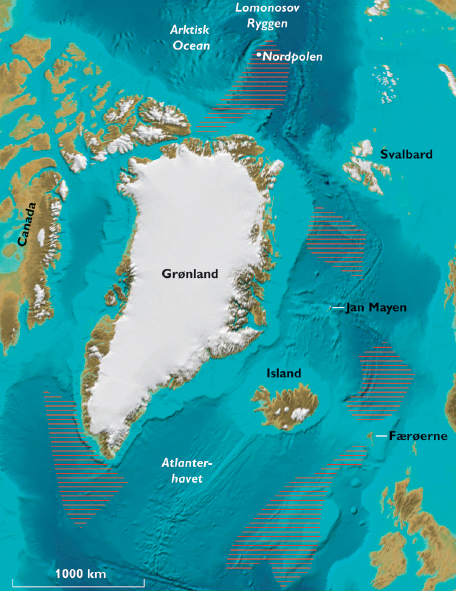
    Danish claim would be made under the United Nations Convention of the Law of the Sea (UNCLOS). It would map five sections of continental shelf to include four of them around Faroe Islands and one around Greenland with the area reaching the North Pole. Both, Greenland and Faroe Islands are self – governing territories under the Kingdom of Denmark.

    It is a fact, that melting Arctic sea ice will in very near future greatly open the door for inexpensive exploitation of northern oil and gas resources.

    The Danish claim is to include the area of roughly 150.000 sq km north of Greenland. However, to be able to proceed with the statement, Denmark will have to prove by providing scientific data, that the Lomonosov Ridge which lies across the North Poole, is the extention of Greenlandic land mass.

    Up until now, Denmark managed to identify five potential claim areas around the southern part of Greenland and south of Faroe Islands.

    It is the Commission on the Limits of the Continental Shelf that is eligible to assess the validity of those claims.

    United Nation Convention on Law of the Sea entered into force and by the year of 1998 was accepted by 127 states. Few governments, which did not ratify the Convention, in between United States, Belgium and Canada, have already signed the Implementation Agreement, what surly shows that even when not ratified, the Convention with its universal approach, contributes with a great impact, to domestic rules of various countries.

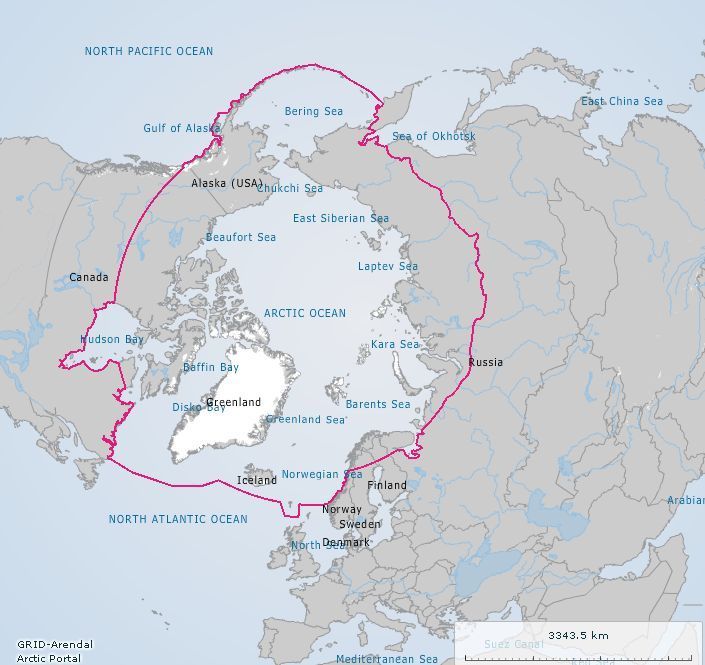
    The map on the right presents the current Arctic boundaries. Please, click here to access more Arctic – related interactive maps.

    Source

    The Moscow Times

  • Norway to drill near the North Pole

    Norway to drill near the North Pole

    Oil working station

    Norway is taking deep sea drilling a step further. The country is ready to take its drills as close to the North Pole as it possibly can, near the 84th latitude.

    The 22nd License Round announced this week by Minister of Petroluem and Energy Ola Borten Moe includes as many as 72 blocks in the Barents Sea, several of them near the polar ice ridge.

    “These areas are just as Norwegian as the Trondheim Fjord”, Borten Moe stressed, adding that his political party, the agrarian Center Party, in its work promotes the slogan “take the whole country in use”, thus signaling that also the northernmost Arctic waters will be exploited. “We are not going to the 84th latitude tomorrow […] the development I am describing has a 25-30 year time frame”, he said, Norwegian newspaper VG reports.

    The news are already troubling environmentalist that see the act as “depressive”.

    Not all Norwegians agree that this would be effective. A recent report from the Norwegian Institute Marine Research state that as many as 74 of the 86 blocks included in the 22nd License Round should not be opened because of environmental concerns.

    The Norwegian Climate and Pollution Agency warns against the drilling, which it fears will reach a magnitude way beyond the capacity of current safety and preparedness systems. The Directorate for Nature Management warns against drilling near the ice edge and in areas with sea bird colonies.

    But Norway has already mapped enormous areas in the Arctic waters, with data collected from an area up to the 85th latitude.

    Source

    BarentsObserver

    Verdens Gang

  • No tourism at the North Pole 2012?

    Yamal icebreaker at the North Pole

    Lack of icebreakers will most likely halt any tourism activity by cruise ships on the North Pole next year. Because of increased traffic by Russian vessels in the Northern Sea Route the icebreakers have enough to do.

    Director for Fleet Operations in Atomflot, Andrey Smirnov, has confirmed this in the Russian media.

    Russia wants to increase its traffic even more next year but lack of icebreakers and ships who are specially strengthened for sailing in ice covered waters will hinder traffic to the North Pole.

    According to Prime Minister Vladimir Putin, Russia plans to spend RUB 20 billion for the construction of a new nuclear-powered icebreaker in the near future. Funds have also been allocated for the construction of three shallow-draft diesel-powered icebreakers which, because they are part of a newer and more advanced class, will be able to replace five old vessels.

    According to Smirnov tourist cruises in the Arctic are only profitable if there are no less than two-three cruises per season: – One single cruise does not pay off.

    Cargo transport through the Northern Sea Route is expected to skyrocket in course of the next decade. Russia’s Ministry of Transport believes cargo transport through NSR will increase from last year’s 1.8 million tons to 64 million tons by 2020.

    Russian icebreakers have been transporting tourists to the North Pole for 20 years. The agency selling trips to the North Pole has already scheduled a trip with the largest of the Murmansk-based icebreakers, 50 Years of Victory,
    for the summer of 2012, the Barents Observer reports.

  • Four horse race?

    Four horse race?

    Map of the North Pole

    Denmark has confirmed it will make a claim for the North Pole. Four out of five states around the pole have the right to make these claims and Denmark is the last one in line to do so.

    The Commission on the Limits of the Continental Shelf (CLCS) oversees territorial claims in the Arctic.

    “The Kingdom has submitted documentation to the CLCS for claims relating to two areas near the Faroe Islands and by 2014 plans to submit documentation on three areas near Greenland, including an area north of Greenland which, among others, covers the North Pole,” read the Danish Arctic Policy, released last week.

    Upon ratification of the United Nations Convention on the Law of the Sea (UNCLOS), the countries have ten years to make their claims to an extended continental shelf. If these claims are confirmed by CLCS, the country will receive exclusive rights to resources on or below the seabed of that extended shelf area.

    That means alot can be at stake. Due to this, Norway (1996 ratification), Russia (1997), Canada (2003) and Denmark (2004) launched projects to provide a basis for seabed claims on extended continental shelves beyond their exclusive economic zones.

    Canada has not sent its claims, but Denmarks has or will research these areas to claim the North Pole (from 176.dk). has time until 2013 to do so.

    USA has signed but not ratified the contract. That means they cannot make any territorial claims unless they do so. All four states have now confirmed that claims will be sent (or will be in time), so the over used cliché about the Race to the North Pole is between four countries. That is unless USA ratifies UNCLOS, which it has hinted will happen with Hillarys Clinton words about making that her “priority”.

    Look at the Interactive Arctic Portal map to see the Exclusive Economic Zones in the Arctic. Light blue is a territory nobody can claim. Yet.