Tag: Northern Research Forum

  • NRF calls for papers!

    NRF calls for papers!

    Northern Research Forum

    The global climate change is by scientists predicted to have great environmental and socio-economic impacts in the whole Arctic as well as in northern Europe. There will be direct and indirect impacts on nature and on communities as well as uncertainties. In addition, global warming is predicted to accelerate off-shore oil and gas drilling in the Northern icy seas and open a new (global) sailing route from the North Atlantic Ocean through the Arctic Ocean to the eastern parts of the globe.

    Northern Research Forum in cooperation with the ESPON-ENECON project organizes international conference: „Climate Change in Northern Territories” that will take place in Akureyri 22 – 23 of August 2013.

    The event will bring early career researchers together for an open dialogue on issues of Northern and global relevance, to work with senior mentors, and to develop international and interdisciplinary collaborations.

    Puffin

    All NRF Young Researchers (YR) are required to participate in the Open Assembly from August 21st – 23rd. Each YR will make a presentation and provide a written final version (word document) of the presentation to the NRF for publication in the conference proceedings.

    Each YR is required to electronically submit his/her paper by the 15th of April 2013 as well as publishing permissions for the NRF if selected as a YR (each selected YR will be provided the opportunity to finalize their papers after the Assembly if they prefer a different version be published in the conference proceedings). Each YR will write and orally present session summaries and actively participate in the assembly open dialogue and the post assembly evaluation.

    Please, access the NRF website for more information and to register for the event. The registration deadline is 1st of April.

    Source

    Northern Research Forum

  • NRF open assembly videos online

    NRF open assembly videos online

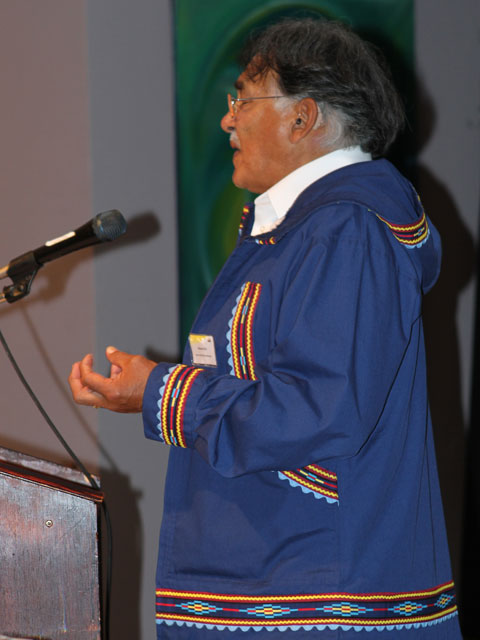
    Mayor Edward Itta from North Slope Borough

    The Northern Research forum hosted the 6th NRF Open Assembly in Hveragerði, Iceland, in September. Arctic Portal broadcasted live from the event.

    On our website you can now look at all the lectures from the event. In total 45 videos are now available.

    Here you can access the vidoes, organized by dates and then after each session. You can see videos of people like Professor Lonnie Thompson, Dr. Arthur Chilingarov and the president of Iceland, Ólafur Ragnar Grímsson.

    Many excellet presentations were at the assembly, from indigenous people like Mayor Edward Itta from North Slope Borough (pictured).

    You can find the program for the assembly here.

    Here you can also see Arctic Portal´s pictures from the assembly.

  • NRF and Our Ice Dependent World

    Northern Research Forum

    The 6th NRF Open Assembly will be held in Hveragerði, Iceland in the beginning of September. From 3rd – 6th of September the theme “Our Ice Dependent World” will be addressed.

    Representatives from Canada, USA, Russia, China, India and Nepal are amongst others joining forces to discuss this issue. It regards not only the Arctic and Antarctica, but also the Himalayas.

    Arctic Portal will record the Assembly and webcast it.

    The overall objective is to address the impact of dwindling ice – terrestrial as well as ocean bound – on the complex interface of nature and society in all climatic zones of the world. In light of the man-made part of climate change, particularly meaning global warming, and the natural phenomena of ice is gradually becoming a concept of global politics – a common heritage of humankind- affecting societal life in quite dramatic ways on a global scale.

    This turn in the interrelationship and working of the society/nature interface is the focus of the Assembly requiring two intertwined questions to be addressed:

    • First, what will the economic, industrial, cultural and political consequences of the accelerating global ice melt be in different time spans, i.e. in the short (5-10 years), medium (10-20 years) and long term (20- years)?
    • Second, what economic, industrial, cultural and political possibilities and challenges are facing human kind in light of global ice reductions?

    There are also more subthemes which can be seen at the Assemblies website along with more information about the Assembly.

  • NRF 6th Open Assembly Open for registration

    Northern Research Forum

    Registration for the 6th NRF Open Assembly is now open. The 6th NRF Open Assembly will be held at Hotel Örk in Hveragerdi,south Iceland.

    The overall objective of the Open Assembly in Hveragerði, Iceland, is to address the impact of dwindling ice – terrestrial as well as ocean bound – on the complex interface of nature and society in all climatic zones of the world, with an emphasis on the Arctic, the Antarctic and the Himalayans. In light of the man-made part of climate change, particularly meaning global warming, and the natural phenomena of ice is gradually becoming a concept of global politics – a common heritage of humankind- affecting societal life in quite dramatic ways on a global scale. This turn in the interrelationship and working of the society/nature interface is the focus of the Assembly.

    Further information about the 6th NRF Open Assembly

    Registration for the 6th NRF Open Assembly

  • The 6th NRF Open Assembly to be held in Hveragerði, Iceland

    Northern Research Forum

    The 6th Northern Research Forum (NRF) Open Assembly which was originally planned to be held in Oslo and Kirkenes in the autumn of 2011 has been moved to Iceland. The move of congress venues was prompted by unforeseen financial challenges, according to the NRF Secretariat.

    The venue of the 6th Open Assembly is a small town in the south of Iceland located 45 km to the east of Reykjavík, the capital of Iceland. The town of Hveragerði is well known for its geothermal park, which is centrally located in the town.

    The NRF secretariat says that all preparations are well underway and the Open Assembly will be held on the 4th – 6th of September.

    For further information, please visit the NRF Webpage

  • The Arctic in the new millennium:

    Nexus

    Confrontation or cooperation
    November 25th, the University of Akureyri
    NEXUS, research forum for security and defense
    UNAK, Polar Law Institute
    Northern Research Forum

    On 25 November, the University of Akureyri, NEXUS: a Research Forum on Security and Defence), and the Northern Research Forum – in cooperation with the Icelandic Foreign Ministry – are co-organizing a Conference on Arctic matters. The Conference will be held at the University of Akureyri from 9:00 to 17:00 hours.

    Before noon there will be lectures on traditional security, societal security and human rights, as well as environmental security in the Arctic. After lunch, working groups will be formed on these same themes, and will then present their findings in plenary at the end of the day.

    The conference will be WebCasted on the Arctic Portal

    Program

    9.00

    • Welcoming speech by Stefán B. Sigurðsson, Rector of University of Akureyri

    9.10

    • Jónas Gunnar Allansson, Senior Arctic Official, Ministry of Foreign Affairs.
      – Setting the agenda

    9.25

    States, citizens and security – chaired by Auður Ingólfsdóttir

    • Jennifer Rhemann, Polar Law MA Candidate, University of Akureyri, Association of Polar Early Career Scientists (APECS) Discipline Coordinator for Polar Law and Policy and Council Co-Chair
      – Security Benefits of International Collaboration in Scientific Endeavours and Conservation Efforts
    • Gústav Pétursson, MA in International Relations
      – The High North: A Multidimensional Security Approach
    • Ágúst Þór Árnason, Director of Polar Law Institute
      – Citizenship in a Global Context: Future Perspectives for the 21st Century

    10.15 – 10.25
    Coffee break

    10.25
    Traditional- and political security – chaired by Alyson Bailes

    • Björn Bjarnason, Former minister of Justice and chair of Varðberg and Samtök um vestræna samvinnu
      – Arctic Security: An Icelandic Perspective
    • Jakob Þór Kristjánsson, PhD student at the University of Iceland
      – Security Dilemma in the High North, is a Resource War Looming?
    • Margrét Cela, PhD student at the University of Lapland
      – Traditional security in the official policies of the Arctic eight

    11.15 -11.20
    Coffee break

    11.20
    Environmental- and energy security – chaired by Jennifer Rhemann

    • Auður Ingólfsdóttir, Assistant professor, Bifröst University
      – Climate Change and Environmental Security in the Arctic: Links between geopolitical concerns and local challenges
    • Húni Hallsson, Project Manager, Polar law Institute
      – Arctic shipping: Evaluation of risks and benefits
    • Guðmundur Egill Erlendsson, ML and LL.M in Polar Law, Associate at Lögmannsstofa Akureyrar, and Freelance scholar
      – Energy Security Issues in the North: Viable Alternatives and Extreme Measures
    • Soffia Guðmundsdóttir, Pame
      – To be announced
    • Tom Barry, Executive Director of CAFF (Concervation of Arctic Flaura and Fauna) & Eydís Líndal Finnbogadóttir, Manager of Geographic Information Systems at the National Land Survey of Iceland
      – Monitoring in the Arctic and the Arctic Spatial Data Infrastructure project

    13.00-13.45
    Lunch break

    13.45
    Working groups begin

    • Working group 1 – States, citizens and security:
      chaired by Jóhanna Þórdísardóttir, MA in International Relations
    • Working group 2 – Geopolitics and traditional security:
      chaired by Gústav Pétursson
    • Working group 3 – Environmental and energy security:
      chaired by Jennifer Rhemann

    15.00 – 15.20:
    Coffee break

    15.20 – 16.40
    Group presentations. Each presentation should take 10-15 minutes followed by
    10 – 15 minutes discussion. Chaired by Margrét Cela

    16.45
    Alyson Bailes, Adjunct Professor, University of Iceland
    – Closing remarks

    17.00
    Closing and thank you remarks from NEXUS (Margrét Cela Chair of NEXUS), UNAK, NRF and MFA Followed by reception

     

    nexus_sponsors

  • Plenary themes and sub-themes of the 5th NRF Open Assembly

    The future of Northern co-operation

    • New Northern policies of the Arctic States
    • The Arctic Council and multilateral co-operation
    • Bilateral relationship

    The new Geography of a warming North

    • Climate change: Facts – Scenarios
    • Threats to manmade environment
    • Human security e.g. health and wellbeing – education
    • Threats to sovereignty and local autonomy
    • Human – environment relationship

    The accessible Arctic in the global Economy

    • Oil, gas and coal
    • Renewable energy
    • Energy Security of the Arctic and the world
    • New Sea Routes – Revolution in Global Shipping and Trade

    Leadership in the age of uncertainty

    • Impacts of climate change
    • Climate change: “awakening” and Good governance
    • Citizenship and climate change: Adaptation – implementation
  • The Location of the 5th NRF Open Assembly

    Nestled between the Chugach Mountains to the east and the shoreline of Cook Inlet to the west, Anchorage is a unique combination of a wilderness and modern city life. Within just a few minutes from downtown, you can be alone in a forest or hiking in the mountains. Anchorage has many parks and bike trails and it is quite common to spot the moose and other wildlife that make their home in the city.

    Anchorage residents value their access to the wilderness and the abundance of outdoor activities including two spectacular marine environments: Prince William Sound and Kenai Fjords National Park. Both offer spectacular scenery and wildlife viewing as well as opportunities for fishing and other outdoor excursions.

    Anchorage is Alaska’s largest city, with nearly half of the entire state population residing here! Though it is a young city by most standards – it was founded in 1915 – Anchorage has a rich and fascinating history that extends back to the original indigenous population. What you see today began as a tent city to house Alaska Railroad workers and has grown to encompass a vibrant and diverse population. The city is known for being the crossroads for air transportation, home of Alaska’s largest university, the University of Alaska Anchorage, as well as enjoying rich cultural diversity from the indigenous Alaska Natives to the immigrant populations who choose to make Anchorage their home.

    This mingling of cultures and traditions makes Anchorage known for great restaurants, world class museums and art, friendly people and stunning natural beauty.

  • The Fifth Open Assembly of the Northern Research Forum

    Anchorage, Alaska, 24 – 27 September 2008

    The 5th Open Assembly of the Northern Research Forum, Seeking Balance in a Changing North, will take place in Anchorage, Alaska, USA on September 24th – 27th 2008. The event is being organized by the Northern Research Forum, together with the 5th NRF Host Organizing Committee representing the Office of the Governor of Alaska, Office of the Mayor of Anchorage, US Arctic Research Commission, Inuit Circumpolar Council, Institute of the North, University of Alaska Anchorage, Alaska Native Science Commission, The Northern Forum, Chickaloon Village Traditional Council, Anchorage Museum of History and Art, Cinza Research, and Anchorage Convention & Visitors Bureau.

    The purpose of the Northern Research Forum is to promote intensive dialogue among members of the research community and a wide range of other northern stakeholders. This dialogue addresses the critical issues, problems and opportunities facing circumpolar peoples in the context of social and environmental changes and economic globalization. The Forum provides an open meeting for policy-relevant discussion on the role of research in addressing issues of sustainable development, community viability, peace and security, social and environmental policy, and the impacts of global change.

    The purpose of the Northern Research Forum is to promote intensive dialogue among members of the research community and a wide range of other northern stakeholders. This dialogue addresses the critical issues, problems and opportunities facing circumpolar peoples in the context of social and environmental changes and economic globalization. The Forum provides an open meeting for policy-relevant discussion on the role of research in addressing issues of sustainable development, community viability, peace and security, social and environmental policy, and the impacts of global change.