Tag: Norway

  • Live from Arctic Resilience workshop

    Live from Arctic Resilience workshop

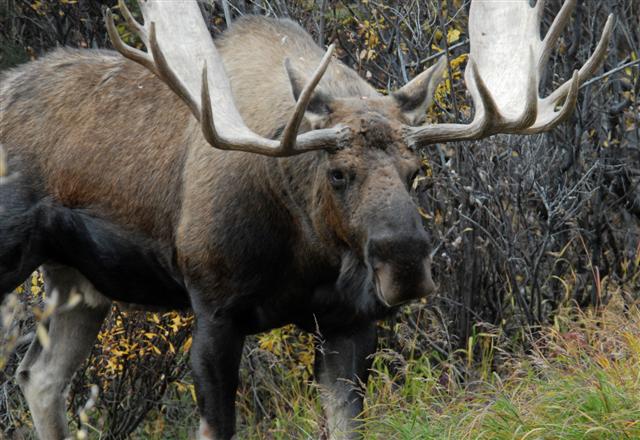
    Reindeer in the wild

    Arctic Portal is broadcasting live from the Arctic Resilience Report (ARR) workshop in Kautokeino, Norway, this week. The ARR is an Arctic Council project led by Stockholm Environment Institute and the Stockholm Resilience Centre.

    We will broadcast the sessions today after broadcastin live yesterday. The sessions will also be available on the Arctic Portal website later.

    The schedule for today is as follows: (all times on Norwegian time)

    09:00 – 10:30 Case study: Reindeer herding

    Chairs: Svein D. Mathiesen (ICR) and Cathy Wilkinson (SRC)

    Short presentations:

    • Nils Henrik Sara, President, Norwegian Sami Reindeer Herders Association (NRL), Resilience and Sami reindeer husbandry
    • Svein D. Mathiesen, Professor, International Centre for Reindeer Husbandry, Vulnerability in Reindeer Husbandry
    • Marie Roué, Director of Research, National Centre of Scientific Research, France, Reindeer management plans or how to answer questions poorly worded
    • Ellen Inga Turi, PhD student, Umeå University and Sámi University College, Resilience in Sami Reindeer husbandry governance
    • Erik Reinert, UArctic EALAT Institute at International Centre for Reindeer Husbandry, Destabilizing stability? Comparing Shocks and Crises in FinancialMarkets and Reindeer Herding

    12:30 – 13:30 Lunch

    13:30 – 14:05 Adaptive and transformative capacity

    Chairs: Annika E. Nilsson, SEI and Sarah Cornell, SRC

    Presentations:

    – Douglas Clark, PhD, University of Saskachewan: Adaptive and transformative capacity in the Arctic. Lessons from the literature (video link)

    14.05-15:00 Presentations

    • Allyson Quinlan, PhD, Resilience Alliance: Introduction to ARR case studies and their potential in the assessment
    • Douglas Clark, PhD, University of Saskachewan: Lessons from the Yukon case study (video link)
    • Martin Robards, PhD, Wildlife Conservation Society and University of Alaska Fairbanks: Lessons from the Bering Strait case study (video link)

    15:30 – 16:30 Closing session

    Chair: Gunn-Britt Retter, Saami Council – Panel discussion moderator: Johan Kuylenstierna, SEI

    Workshop conclusions – Panel discussion

    • Reflection on integration of Traditional Knowledge in the ARR – process (Colleen Henry)
    • New insights from reindeer herding case (Svein D. Mathiesen)
    • Emerging key insights ARR Part 1 (Tatiana Vlasova)
    • Emerging key insights ARR Part 2 (Sarah Cornell)
    • Overall reflections on workshop results in relation to current understanding of resilience in the Arctic (Bruce Forbes)
    • Open discussion with audience
  • Live from Arctic Resilience workshop

    Live from Arctic Resilience workshop

    Reindeer in the wild

    Arctic Portal is broadcasting live from the Arctic Resilience Report (ARR) workshop in Kautokeino, Norway, this week. The ARR is an Arctic Council project led by Stockholm Environment Institute and the Stockholm Resilience Centre.

    We will broadcast the sessions today and tomorrow live and the sessions will also be available on the Arctic Portal website later.

    The schedule for today is as follows: (all times on Norwegian time)
     

    09:00 – 09:20 Welcome address

    – Niko Valkeapää, Vice President, Saami Council

    Johan Mathis Turi, General Secretary, Association of World Reindeer Herders (WRH)

    09:20 – 10:40 Key note presentations

    Johan Rockström, Professor, Stockholm Resilience Center, Arctic resilience in a global perspective

    Inger Marie Gaup Eira, Associate Professor, Sámi University College: Sami language as the source of traditional knowledge in resilience research

    – b, Associate Professor, Sámi University College: Siida and traditional knowlegde

    10:40 – 11:10 Coffee break

    11:10 – 12:00 Arctic Resilience Report Project overview and methodology

    Chair: Johan Rockström and Anders Oskal

    Presentations:

    Annika E. Nilsson, PhD, Stockholm Environment Institute: Arctic Resilience Report. Background and project overview

    Martin Sommerkorn; WWF – Global Arctic Program: Conceptual overview of the ARR methodology

    Sarah Cornell, PhD Stockholm Resilience Center: The ARR approach to assessing thresholds in the Arctic

    12:00 – 13:00 Lunch

    13:00 – 15:00 Thresholds in the Arctic

    Chairs: Johan Rockström and Anders Oskal

    Presentations:

    Robert Corell, PhD, Climate change and critical thresholds in Arctic societies and resilience assessments?

    Paul Overduin, PhD, Alfred Wegener Institute: Thresholds in coastal systems

    Mark Nuttall, Professor, University of Alberta/University of Greenland: Thresholds in social systems – some reflections (video link)

  • New wind park opened in Norway

    New wind park opened in Norway

    Chairman of the municipal government Svein Ludvigsen opens the wind park

    One of the biggest wind parks inside the Arctic Circle was opened yesterday in Northern Norway. It is located in Vannøya, near Tromsø. The park can produce energy for around 7000 households.

    The wind park can produce around 138 GWh per year. It includes 18 wind power generators and a new 34 km long power line. The project was produced by the company Troms Kraft.

    The mills are 125m high and have taken 10 years to build.

    „Today is a historical day, not only for Troms Kraft but for the owners, Karlsoy and the whole region, company director Anna Maria Aursund said at the opening ceremony on Tuesday. The cost is around 750 million NOK (€100 million).

    Troms Kraft also plans to extend the wind park with offshore turbines placed in the nearby waters.

    Several wind projects are on the drawing board in neighboring countries Sweden and Finland, including a megaproject in Sweden which will be one of the biggest on-shore wind power parks in all of Europe.

    Source:

    Nordlys

  • Norway to drill near the North Pole

    Norway to drill near the North Pole

    Oil working station

    Norway is taking deep sea drilling a step further. The country is ready to take its drills as close to the North Pole as it possibly can, near the 84th latitude.

    The 22nd License Round announced this week by Minister of Petroluem and Energy Ola Borten Moe includes as many as 72 blocks in the Barents Sea, several of them near the polar ice ridge.

    “These areas are just as Norwegian as the Trondheim Fjord”, Borten Moe stressed, adding that his political party, the agrarian Center Party, in its work promotes the slogan “take the whole country in use”, thus signaling that also the northernmost Arctic waters will be exploited. “We are not going to the 84th latitude tomorrow […] the development I am describing has a 25-30 year time frame”, he said, Norwegian newspaper VG reports.

    The news are already troubling environmentalist that see the act as “depressive”.

    Not all Norwegians agree that this would be effective. A recent report from the Norwegian Institute Marine Research state that as many as 74 of the 86 blocks included in the 22nd License Round should not be opened because of environmental concerns.

    The Norwegian Climate and Pollution Agency warns against the drilling, which it fears will reach a magnitude way beyond the capacity of current safety and preparedness systems. The Directorate for Nature Management warns against drilling near the ice edge and in areas with sea bird colonies.

    But Norway has already mapped enormous areas in the Arctic waters, with data collected from an area up to the 85th latitude.

    Source

    BarentsObserver

    Verdens Gang

  • Statoil biggest in 2011

    Statoil biggest in 2011

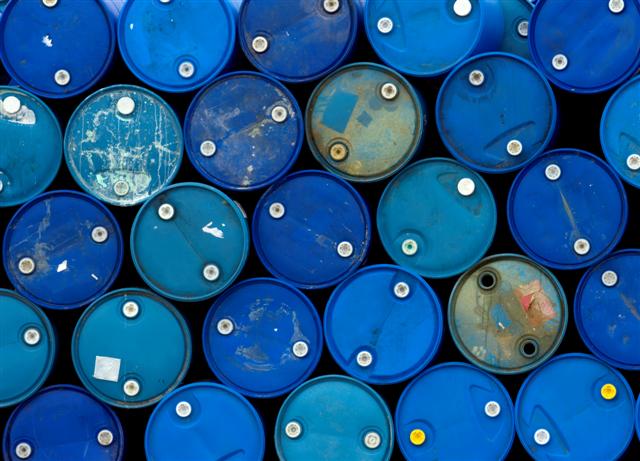
    Oil Barrels

    The most value of resources in 2011 in the oil and gas industry was found by Norwegian company Statoil.

    In 2011 Statoil discovered six so called high class drilling sites, each giving more than 250 million barrels of oil.

    According to Rystad Energy, this is the biggest founds last year over all oil companies in the world. The value of the resources is thought to be around 5 billion dollars.

    The research also found that Norway was the biggest production oil company in 2011.

    One of the discoveries was outside of Tanzania, an enormous well almost as big as the highly productive Snow White area, north of Norway.

    Statoil´s vice president, Tim Dodson, says that three things explain the success. Firstly, how quickly the company can move in search for new areas when the competition is this big, secondly the ability to drill a selection of boreholes in highly productive areas, meaning they take high risks, and lastly the positioning of the company which has high stakes in rich areas such as Norway and the gulf of Mexico.

    Dodson said the company spends three billion dollars each year in research. “That means we must have high success to justify the expenditure,” sais Dodson.

    Source

    Tekniske Ukeblad

  • New Arctic brigades in the making

    Helicopter and a vessel in the Arctic ocean

    Norway and Russia are strengthening their cooperation in the Arctic. The two states already have an extensive cooperation, but are strengthening with military relations and multi-branch exercises with common strategic and environment-based programs.

    The countries recently held talks about the strengthening of political and military operations. Russian Deputy Defense Minister Anatoly Antonov and Norwegian Defense Minister Espen Barth Eide with Roger Ingebrigtsen, state secretary for defense, attended the meetings.

    Both countries are reorganizing their naval, air and land forces in the strategic High North. Both countries are planning Arctic brigades, Russia in the Kola Peninsula and Norway in Skjold, in the High North’s Troms county. The countries also discussed NATO’s missile defense plan for Europe, which Russia is robustly opposed to.

    “Our relations with Russia have never been better than they are now,” Ingebrigtsen said. “We want to deepen the good relationship that we have even further. Among other things, we would like to hold more joint training exercises, both on land and at sea, probably in 2013.”

    The strengthened relationship, Antonov said, is reflected in the fact that the two militaries will participate in 24 joint exercises and events over the next 12 months. “The goal for both sides is increased security in the High North, which can only benefit our countries,” Antonov said.

    The annual naval exercise POMOR-2012, which takes place in May, will be the next major demonstration of stronger bilateral military collaboration between Norway and Russia. The exercise will involve Norwegian and Russian naval and air assets, including frigates, destroyers, helicopter support and combat aircraft.

    The range of joint tasks will include boarding operations, search and rescue, air defense, navigation and interoperability of communication procedures and systems.

    Source: Defensenews

  • Nordic Council of Ministers

    Nordic Council of Ministers

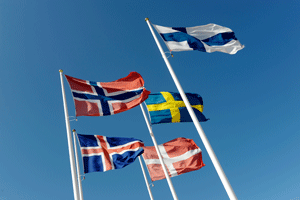
    Flags of Scandinavian countries

    The cornerstone of Nordic cooperation is the Nordic Council, which represents Denmark, Finland, Iceland, Norway, Sweden, the Faroe Islands, Greenland and Åland.

    The “Norden” consists of two separate but interoperable entities, The Nordic Council, an official inter-parliamentary body, and the Nordic Council of Ministers, a forum for Nordic inter-governmental cooperation. In addition to the Council and the Council of Ministers, there are more than 20 official Nordic institutions – and about the same number of unofficial ones. The Nordic Innovation Centre (NICe), NordForsk, Nordic Culture Point, Nordic Project Fund (NOPEF), the Nordic Centre for Welfare and Social Issues and the Nordic School of Public Health (NHV) are full Nordic institutions, as are the Nordic houses in Iceland and the Faroe Islands. One of the main institutions in the second category is the Nordic Investment Bank (NIB), which has been jointly owned by the five Nordic and three Baltic states since 2005. Another key organisation is the Nordic Cultural Fund, which supports culture in the Region as well as Nordic projects elsewhere in the world.

    Norden

    The Nordic Council is the official inter-parliamentary body. Formed in 1952, it has 87 elected members from Denmark, Finland, Iceland, Norway and Sweden, as well as the three autonomous territories (Greenland, the Faroe Islands and Åland). The members are all national MPs nominated by the party groups in their home parliaments. There are no direct elections to the Council. It is run by a Presidium and convenes for an annual autumn meeting called the Session, which passes recommendations to the national governments. The main priorities in the work of the Nordic Council are: climate, environment and energy; education and research; and welfare and culture.

    The cornerstone of the cooperation is The Helsinki Treaty, which regulates official cooperation between Denmark, Finland, Iceland, Norway and Sweden. It was signed on 23 March 1962 and came into force on 1 July 1962. The main objective of the treaty is to maintain and develop further co-operation between the Nordic countries in the legal, cultural, social and economic fields, as well as in those of transport and communications and environmental protection. In addition, the treaty establishes a foundation for joint positioning in matters of common interest which are dealt with by European and other international organisations and conferences.

    The Council of Ministers is the official inter-governmental body. The prime ministers have overall responsibility for its work. In practice, this responsibility is delegated to the ministers for Nordic cooperation and the Nordic Co-operation Committee, which co-ordinates the day-to-day work. Despite its name, the Council of Ministers, which was founded in 1971, consists of several councils. These councils meet a couple of times a year. At present, there are 11 of them.

    On of the areas of Nordic cooperation is the Arctic. The Nordic countries cooperate to improve the quality of life for the indigenous peoples in the northern areas and to promote social and cultural development for the Arctic people. Nordic cooperation also strives to protect the sensitive and characteristic Arctic nature, and to ensure sustainable use of the region’s resources, and protection of its biological diversity.

    An Advisory Expert Committee was established in conjunction with the adoption of the new Arctic Co-operation Programme in 2002. The Arctic Expert Committee is made up of Nordic members of the Arctic Council and representatives from the autonomous territories. In Nordic Council terms the Arctic Expert Committee will offer advice to the Ministers for Co-operation and the Nordic Co-operation Committee on matters relating to the Arctic.

    Following the increasing importance of the Arctic region in international politics, the Nordic Council will discuss the controversial question of a Nordic strategy for the Arctic Region in its meeting in Reykjavik, 21-23 March, 2012 . The meeting will also discuss oil extraction in the Arctic and recommendations for allocating responsibilities in the event of environmental incidents. A plenary session will be in the Icelandic parliament on Friday 23 March, 08:30-11:45 local time.

    Sources: Norden.org, Nordic Co-operation

  • Same quota for Minke whales in Norway

    Same quota for Minke whales in Norway

    Arctic Portal news

    The Norwegian Ministry of Fisheries and Coastal Affairs has renewed the quota of Minke whales in Norwegian waters. The quota of 1286 animals is the same as last year.

    The quota is set based on models developed by the Scientific Committee of the International Whaling Commission (IWC).

    “With this we have decided on a quota that fulfills the necessity of sustainable development of the harvesting of the whale stocks,” Lisbeth Berg-Hansen, the Minister of Fisheries and Coastal Affairs said.

    Berg-Hansen also stressed that Norway must facilitate for continued stability and favorable conditions for the whaling industry.

    Sources

    BarentsObserver

    Ministry of Fisheries in Norway

  • Statoil strengthens around Greenland

    Statoil strengthens around Greenland

    Oil barrels

    Statoil in Norway, owned at 70% by the state, has bought searching permissions in Greenland. This strengthens the status of Statoil around Greenland.

    The seller is oil explorer Cairn Energy who sold 30% of their oil research permissions.

    The reason is that Cairn wants to go into cooperation with a big company with experience of searching for oil in the Arctic.

    Statoil is the frontrunner in that race.

    Cairn spent more than anticipated in research in 2011, over 400 million pounds. Simon Thomson, says that Statoil´s experience will increase the odds of finding oil around Greenland.

    “In Greenland, Statoil’s extensive Arctic operating and development experience makes them the partner of choice for the Pitu block where we see significant potential,” he said to the BBC.

    Sources

    BBC

  • Another major oil find for Norway

    Another major oil find for Norway

    Oil rig

    Norway has found the cornerstone of its oil production for the next year. The Barents Region of Skrugard is thought to give Norway up to 900 million barrels of oil.

    Aker Barents oil rig made the discovery in the Havis area. Statoil announced the found today.

    The Havis area will produce 200-30 million barrels but the surrounding area up to 600 million barrels.

    This is the second major discovery in the last nine months, much to the delight of Norwegians.

    “This found will be profitable both for Statoil and for Norway,” the president of Statoil, Helge Lund, announced.

    This is a new area which is very rich in oil. The one who searches, will find oil. There is a lot of research behind this,” Lund said.

    “Since the last major finding in 1997 we have made around 250 researches which is a major task,” he said.

    Sources

    NRK