Tag: Norway

  • Norway to send gas through the NRS

    Norway to send gas through the NRS

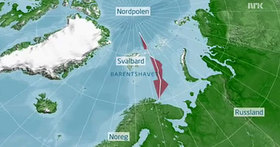
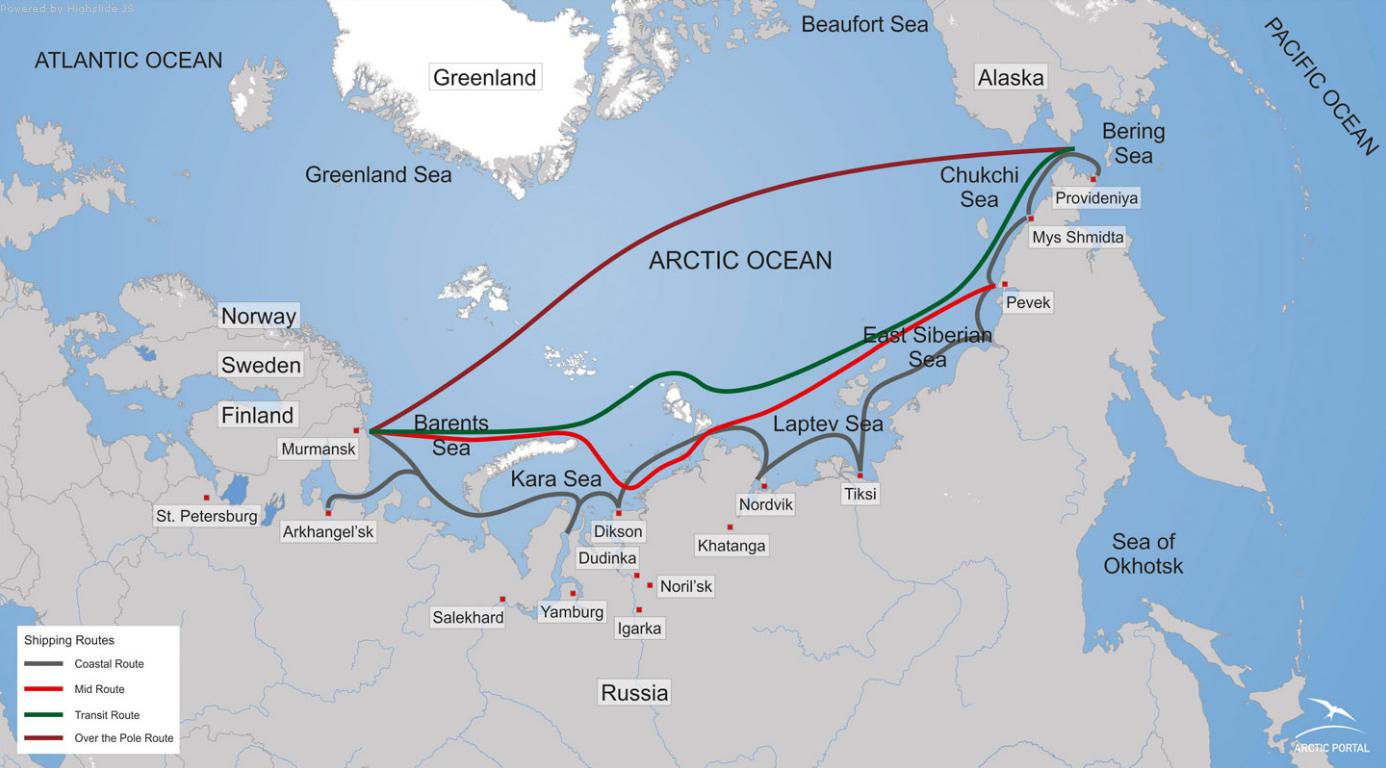
    Map of the Northern Sea Route

    Norway hopes to use the Northern Sea Route in a few months. Increased shipping saw 27 vessels using the route last year, a huge increase like indeed in the Northern Sea route.

    They want to transport gas from the Snowhite area to Asia. An LNG tanker will sail between Hammerfest in Norway to Japan as soon as the ice is thin enough.

    The vessel, Ribera del Duera Knutsen, is strentghened for sailing in sea ice. In fact it is the only LNG tanker in the world with an 1A class permission for sailing in ice.

    The sailing would take around 20 days, a big improvement from the route through the Suez Canal used today. This means the ship can go three tours next summer.

    “We have not been in contact with Statoil about the transport but technically it is possible,” Synnøve Seglem from OAS Shipping said to the NRK. “It is of course a feasible option for everybody,” he added.

    Sources

    NRK

  • Climate research in Norway at final stage

    Climate research in Norway at final stage

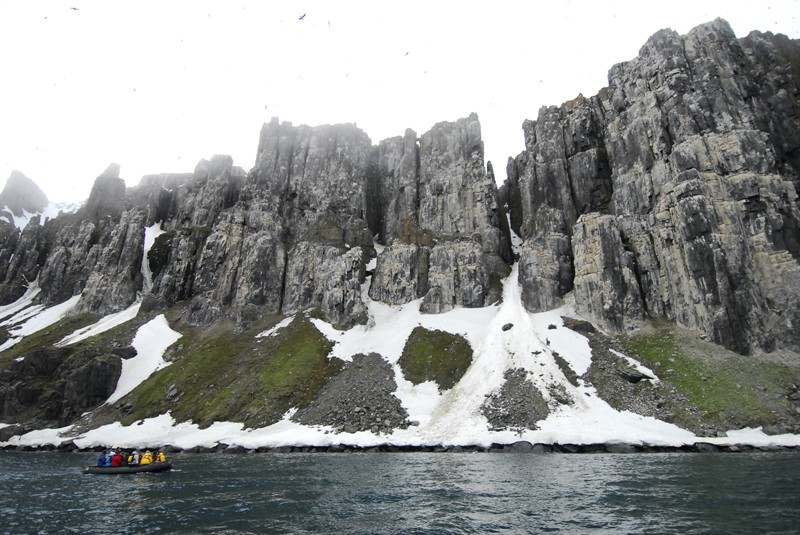
    A rocky coast in Svalbard

    A huge project in Norway enters its final year in January. The NORKLIMA project, The Research Council of Norway’s 10-year Large-scale programme on Climate Change and its Impacts in Norway, is entering its final stages.

    Continued activities for climate change research in Norway are under way.

    “Now we want to hear the thoughts of the various national and international stakeholders regarding future needs for knowledge about climate issues,” says Camilla Schreiner, Director of the Department for Climate and Polar Research at the Research Council.

    In cooperation with Norway’s universities, the Research Council is hosting dialogue meetings around the country to gather input and viewpoints from research institutions and trade and industry. In addition, a separate dialogue meeting with relevant ministries, agencies and administrative bodies will be held.

    The institute wants to do a thorough overview of the situation before it released its final report in 2013.

    Although this seems to be political rather then scientific, a host of research programs will go on until the summer of 2012.

    “We don’t yet know the future model for Norwegian climate research in the post-NORKLIMA era,” continues Dr Schreiner. “But the objective is clear: its targets and structure will enable Norwegian researchers to make a significant contribution to dealing with climate change effectively – at both the national and the global level.”

    Source: The Research Council of Norway

  • Gold and copper found in Finnmark

    Gold and copper found in Finnmark

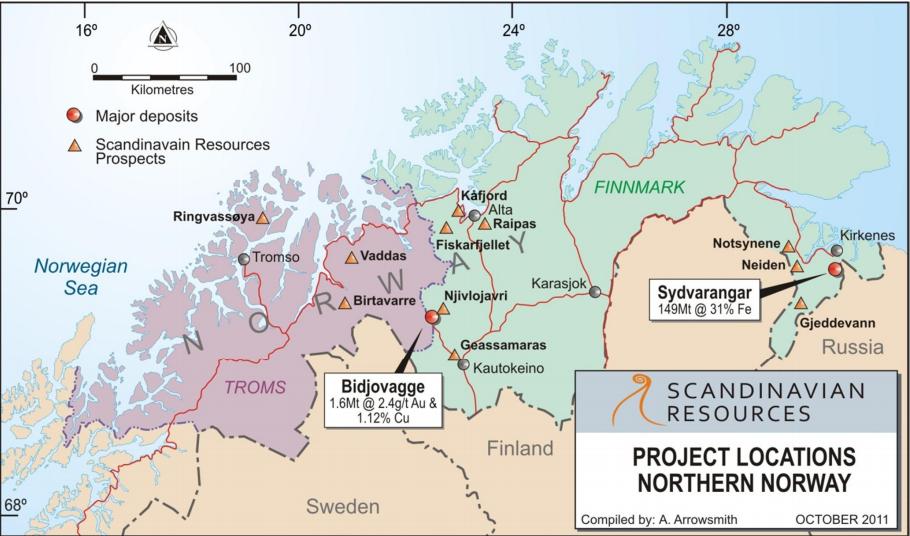
    Gold find in Njivlojàvri

    Scandinavian Resources have announced a major find of gold and copper in Finnmark, Norway.

    The highlights of the findings revealed 32,1 % copper and 3,75 g/t of gold, according to BarentsObserver.

    “The most important task now is to determine if an economic source to this surface mineralisation exists within our project area; that is what we will focus on next summer. This is a great start and whilst it’s early days it’s very exciting to be chasing such high grade precious and base metals occurrences, Exploration manager Amanda Arrowsmith told BarentsObserver.

    Exploration in the surrounding areas will continue, as well as search for iron in Northern Sweden.

    Source: Barentsobserver & Scandinavian Resources statement.

  • Open meeting in Akureyri

    Open meeting in Akureyri

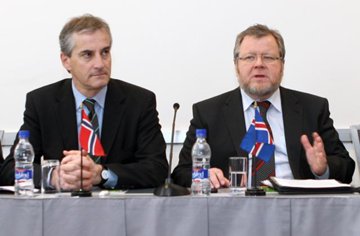
    Jonas Gahr Støre and Mr. Össur Skarphéðinsson

    Ministers of Foreign Affairs of Norway and Iceland will meet together in Akureyri this week.

    Mr. Jonas Gahr Støre and Mr. Össur Skarphéðinsson will attend an open meeting in Akureyri on Thursday 29th of September.

    Thee meeting is at Hof cultural house and starts at 15.

    It is in the honour of the science cooperation in Arctic issues which the ministers will sign.

    After the meeting an exhibit on Arctic explorer Friðþjóf Nansen will be opened.

  • First NATO headquarters in the Arctic as Norway moves it’s military leadership into the Arctic Circle

    First NATO headquarters in the Arctic as Norway moves it’s military leadership into the Arctic Circle

    Military headquarters

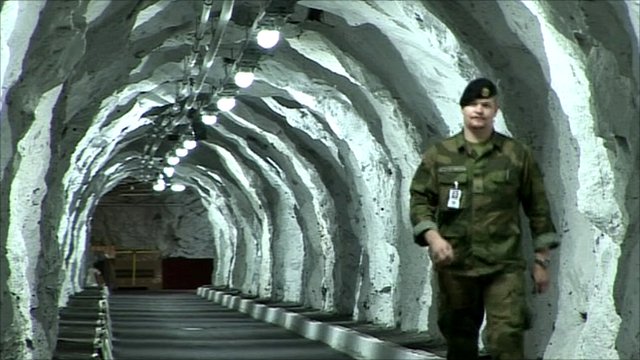
    Norway is the first of the NATO countries to move it’s military headquarters to the Arctic by formally opening a new high tech Operations Center located one kilometer inside the mountain at Reitan outside Bodø. North Norway.

    The operational center ,which has been described as unique in the world by H.M. King Harald of Norway, contains the most modern technology allowing military commanders to plan operations in different parts of the world simultaneously. The center contains Norway’s largest flat screen covering an approximitely 40 square meters. The complex was essentially a cold-war base, covering an aproximit 18.000 square meter five stories high and built to withstand a nuclear blast.

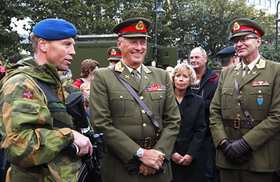
    Military generals

    The opening of the command center, is in line with the governments increased focus on the Arctic regions. The previous command center was located in Stavanger in southern part of Norway. The move can be estimated to bring the military command not only physically closer to the Arctic but mentally, including a first hand contact with all the questions concerning the High North and a deeper understanding of the stakeholders.

    To Take a look into the military complex follow this link

    To watch a video from the opening follow this link

    Source: Barents Observer & BBC News

  • Will Norway back out from Shtokman?

    Will Norway back out from Shtokman?

    Arctic on the map

    Barents Observer reports that Vladimir Selin, Chief Research Scientist at the Kola Science Center shares his opinion that the Agreement between Russia and Norway on the delimitation of the Barents Sea will result in Norway moving out of the Shtokman gas field and believes that it is part of the agreement.

    ” It is hard to understand who’s behind the Russian side in the Russian-Norwegian agreement from September 15, Selin says to Regnum.ru. – It is also hard to see why Russia needs this agreement – the pluses for Russia are unclear, but the minuses are evident”

    According to Selin Russia does not possess the necessary technology needed to develop the fields covered by the agreement and will not do so for years to come. Selin theorizes that, with Shtokman as the main priority for Russia and the fact that Norway has used up all its rich resources, a side agreement was made on the two nations priorities as the gain for Russia is not nearly as visible as the gain by Norway.

    He further states that Statoil will not necessarily officially withdraw from the shtokman gas field, but reduce their activities to next to nothing.

    Source: Barents Observer

  • Historical border deal between Russia and Norway

    Historical border deal between Russia and Norway

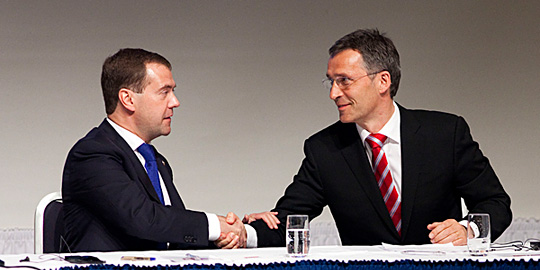
    Stoltenberg and Medvedjev shake hands

    A historical deal between Russia and Norway was signed yesterday by president of  Medvedev of Russia and Norwegian Prime minister Stoltenberg.

    The treaty resolves what has been for several decades the most important outstanding issue betweem Norway and Russia. The disagreement was about the maritime boundary between Norway and Russia in the Barents Sea and the Arctic Ocean and has largely kept the two nations from utilizing natural resources in the area, and both nations can be expected to start looking into oil and gas exploration within the area now once the deal has been signed.

    The agreement signifies the strengthening cooperation between the two nations which have gradually increasing over the last 20 years. Prime minister Stoltenberg said in an interview with the Barrentsobserver that ” Norway and Russia have developed a broad cooperation in the north consisting of organization, cultural workers, businesses, educational- and research institutions etc.” and he higlighted the importance of every-day contact over the borders.

    After the signing of the agreement the two heads of state continued discussing the possible within the energy sphere. Were both parties have aspirations for future co-operation

  • Arctic Portal in Arctic Frontiers Conference

    Arctic Portal in Arctic Frontiers Conference

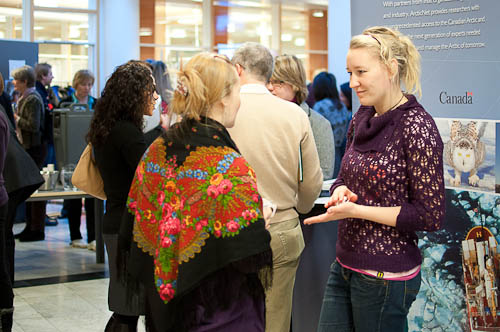
    Arctic frontiers in TromsoArctic Frontiers Conference 2010 in Tromso, Norway was the 4th international Arctic meeting platform for stimulating and motivating pan-Arctic integration. This year’s Arctic Frontiers theme was “Living in the High North”, and had special focus on challenges to the development of sustainable communities.

    The Conference is traditionally divided in to two sections; Policy section and Science section. This years Policy section had two sessions concentrating on Changes in strategies for the Arctic and Sustainable communities in the Arctic. The Science section was on the other hand divided in to four parts, each part representing different aspects affecting Arctic communities. Part I dealt with changes in ice and snow on land, in the seas, and in the ground (the cryosphere) and the distribution of Earth ?s heat and water. Part II concentrated on sustainable communities in the north focusing on the themes of economy, self-governance, well-being and health, while Part III covered issues on changing Marine Biodiversity in the Arctic.

    This years Part IV was of special interest of the Arctic Portal and its partners, the session dealing with E-learning in the High North. The aim of the E-learning part of the conference was to exchange knowledge and research about E-learning in the Arctic communities and regions and specify the learning processes, pedagogy, and appropriate information technologies relevant to distant learners in these communities.

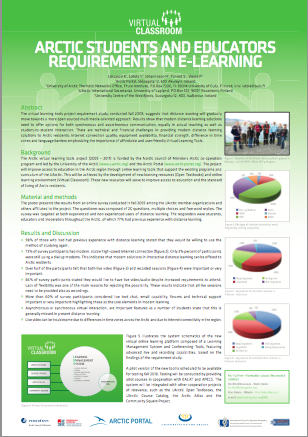
    Virtual Classroom posterThe Arctic Portal together with the University of the Arctic, University Centre of the Westfjords, International Centre for Reindeer Husbandry and Association of Polar Early Career Scientists is developing an online system that supports distance learning in the Arctic. This so called Virtual Classroom will be a virtual learning solution with a two-way communication between the teacher and students with open discussions and capabilities for classroom participation and real-time interaction. The Virtual Classroom will be accessible from any computer, giving that way inhabitants of small rural communities an opportunity to study without having to relocate to larger communities with traditional distance learning equipment / schools.

    The Arctic Portal, together with other project partners, participated in the Arctic Frontiers Part IV poster session introducing results from their user requirement survey conducted in fall 2009. The survey examined the needs and requirements of students and educational staff in UArctic member institutions, providing the project group as well the Arctic Frontiers a valuable information on how the users of theses systems experience current technology and pedagogical preferences.

    The main outcomes of the survey were that a real time interaction with the teacher and other students is highly appreciated. Many students felt that one of the downsides of distance learning is the lack of real time interaction within the class. In addition, many people thought that an access to a recorded lectures was highly preferable to enhance the learning experience. On the other hand, many students expressed their satisfaction with the contemporary distance learning arrangements, since it gave them an opportunity to organize their time and studies as they preferred independent of the schedule of the school.

    To learn more about the Virtual Learning project, please visit the homepage of the project

  • Svalbard – At the End of the World

    Svalbard – At the End of the World

    Svalbard map

    If you would travel to the end of the world, where would you go? For some world ends in south, but if you would head north you would most likely end up in Svalbard, a group of islands between 74° – 81° N in the Arctic Sea.

    The islands were first discovered in the 16th century by a Dutch explorer Willem Barents and visited by many other nationalities during the next 300 years. Russian trappers were first to winter on the islands between 1715-1850. Norwegians on the other hand did not start regular hunting on the islands before the mid 19th century.

    Until the beginning of the 20th century, Svalbard, as the islands are called today, was “no mans land”. Many negotiations were held to establish a sovereignty over the islands and finally in 1920, a Spitsbergen Treaty was signed establishing a Norwegian sovereignty over the islands. In the Treaty, Svalbard was made a part of the Norwegian Kingdom, giving though all the signatory nations unrestricted right to natural resource exploitation. Due to this right small “foreign” mining communities have been established on the islands over the years, the biggest being the Russian settlement in Barentsburg with today some 500 inhabitants.

    Svalbard archipelago is 63 000 sq.km some 60% being covered by glaciers. Largest islands are Spitsbergen (37 673 sq.km), Nordaustlandet, Barentsøya, Edgeøya and Prins Karls Forland. Largest settlements on the other hand are Longyearbyen, Norwegian administrative centre, with 2 080 inhabitants, Barentsburg, Russian mining community, with 500 inhabitants, Ny-Ålesund, Norwegian international research centre, with 40 inhabitants, Sveagruva, Norwegian mining community, with 210 commuters and Hornsund, Polish research station, with 8 inhabitants.
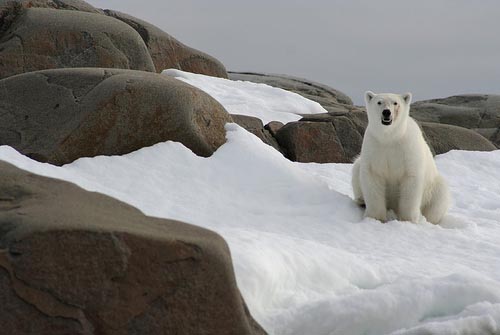
    Polar bear in Svalbard

    Despite of its harsh climate, Svalbard is a home for some Arctic animals. Svalbard Reindeer, Arctic fox, Polar Bear and southern Vole (a foreigner that has settled on the islands) inhabit the islands in addition to wide range of sea mammals and 36 species of birds that nest on the rocky mountain cliffs. Polar bear used to be hunted, but was protected in 1973 and today only 3-4 polar bears are killed yearly. Though the islands are well above the tree-line and only 6-7% of the land area is covered by vegetation a great variety of flowers can also be found in the islands.

    The main industries in Svalbard are mining, tourism and research. For long period the only industry found in the islands was mining, but recently eco-tourism and international research have become increasingly important.

    It is estimated that around 70 000 tourists visit the islands every year arriving either by plane or by sea. Great majority of the visitors are Norwegian, but mainland Europeans are increasingly visiting the islands as well. Most of the tourist, apart from the cruise liners visiting Svalbard for a day or two as part of a longer cruise, come to the archipelago for the extraordinary nature and extreme conditions. Different kinds of organized outdoors activities are among the most popular tourist attractions in addition to archaeological and mining museums, which can be found in Longyearbyen, Barentsburg, Ny-Alesund and Bear Island.
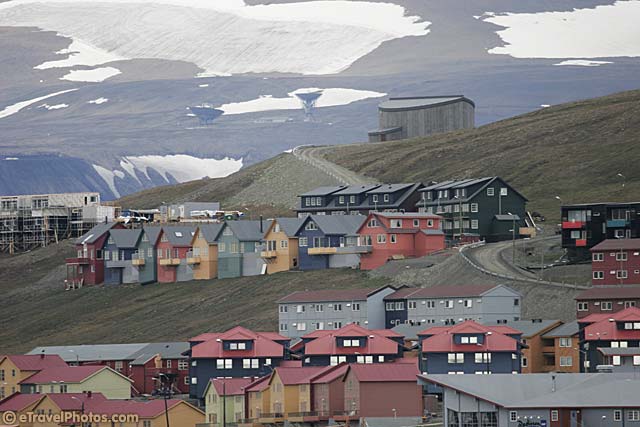
    Longyearbyen, Svalbard

    Svalbard is one of the main areas for Arctic research. Due to its geographical situation it offers an ideal insight in to the Arctic reality. Norway is by far the largest research nation in Svalbard accounting almost for half of the research days on the islands. Russians, Germans and Polish account together for another 40%, together with Norwegians accounting for 84% for the Svalbard research. Norway operates also a University Center in Svalbard (UNIS) which offers higher education at the undergraduate, graduate and postgraduate level in Arctic Biology, Arctic Geology, Arctic Geophysics and Arctic Technology. Yearly, approximately 350 students come to Svalbard for a shorter or longer period half being Norwegian students and half international students.

    Though at the end of the world, Svalbard offers a variety of interesting opportunities for work, education and travel for those interested in the Arctic. To learn more about Svalbard please visit the following homepages:
  • Arctic Council Ministerial Meeting in Tromsø

    Arctic Council Ministerial Meeting in Tromsø

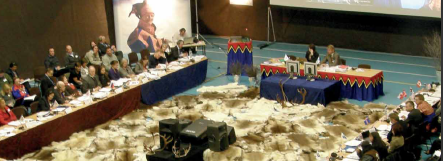
    Arctic Council

    During this week 27th of April – 1st of May, Tromsø in Northern Norway will be the capital of the Arctic as the city is the venue for The Arctic Councils biennial Ministerial Meeting. Besides this event the Norwegian minister of Foreign Affairs, Mr. Jonas Gahr Støre, together with former US Vice-president, Mr. Al Gore, have called several of the worlds foreign ministers to a conference about the global warming. The conference entitled “Melting Ice: Regional Dramas, Global Wake-Up Call” takes place.

    The two meetings will gather around 400 of the worlds leading experts and politicians on Arctic matters. In addition round 80 journalists and photographers have announced their participation.

    At the end of the ministerial meeting the Chairmanship will be handed over to the Danish delegation. The new chair of the Arctic Council will be MFA Per Stig Møller

    Parts of the “Melting Ice” Conference are broadcasted live at the Arctic Portal Webcast, along with parts of the Arctic Council´s Ministerial Meeting. All videos presented will be archived at the Webcast Archive.

    About the Arctic Council

    Starting in the late 1980s, international cooperation in the Arctic has increased to the extent that a new regional identity is emerging, with numerous political initiatives and new fora.
    The so-called Murmansk Speech by President Mikhail Gorbachev of the Soviet Union is often regarded as the initiating event for current regional cooperation in the Arctic. It had still the Soviet rhetoric on peace but reflected more the processes of glasnost and perestroika in the Soviet Union through its six proposals. The first two were about establishing a nuclear-weapon-free zone in northern Europe and reducing military activities. The others discussed confidence-building measures in northern seas, civilian cooperation in developing natural resources, coordination of scientific research, cooperation in environmental protection, and opening the Northern Sea Route to foreign ships.

    SAO meeting in Kautokeino

    SAO Meeting, Kautokeino, Norway, November 19. – 20. 2008

    Intergovernmental Arctic cooperation officially started in 1989 with the Rovaniemi process in the wake of Mikhail Gorbachev’s Murmansk speech. At the first ministerial meeting in Rovaniemi, Finland, of the eight Arctic states, which also included three northern indigenous peoples organizations, the Arctic Environmental Protection Strategy (AEPS) was signed in June 1991. The initial focus on environmental protection gradually expanded to related fields, notably sustainable development. In 1996, the Arctic states replaced the AEPS with the Arctic Council as a high-level intergovernmental forum for Arctic international cooperation that would include as Permanent Participants a certain number of transnational northern indigenous peoples organisations. Therefore the Arctic Council was established as a high level intergovernmental forum to provide a means for promoting cooperation, coordination and interaction among the Arctic States. The Arctic Council deals with common Arctic issues, with the involvement of the Arctic Indigenous communities and other Arctic inhabitants. These issues are, in particular, sustainable development and environmental protection in the Arctic.

    For further information, please visit the Arctic Council homepage and Melting Ice: Regional Dramas, Global Wake-Up Call Conference homepage.

    Reference

    Arctic Human Development Report
    The Arctic Council