Tag: oil

  • Big hope for oil in Dreki Area

    Big hope for oil in Dreki Area

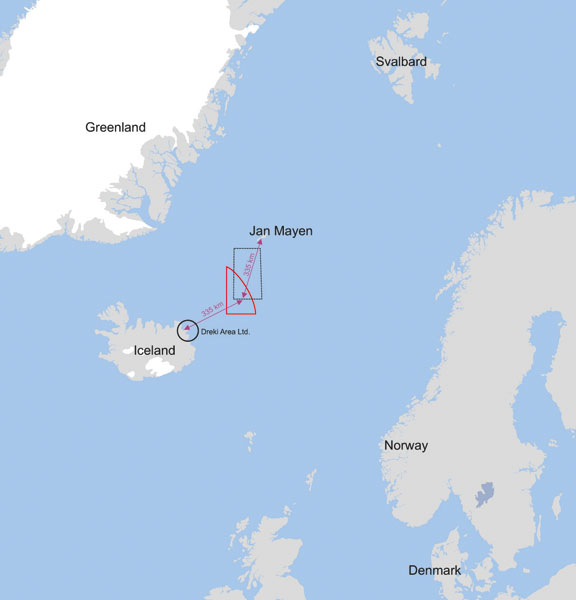
    Map of the dreki area

    New research strengthens the belief that there is oil in the seabed around Jan Mayen.

    Jan Mayen is a Norwegian archipelago north of Iceland. The Map shows the EEZ around Jan Mayen, which Norway is entitled to. However, the Dreki Area is also within Iceland’s jurisdiction so the country could benefit if oil is found.

    “The samples from the seabed around Jan Mayen is stunning, the oldest bedrocks are 260 million years old. The analysis of the material is surprising,” Sissel Eriksen, exploration director of Norwegian Petroleum Directorate told Geo365.no.

    “We had hoped, but not expected, to find so ancient sedimentary rocks around Jan Mayen. The influence of volcanic rocks in the area is less than we previously thought – volcanic rocks generally have no potential for oil and gas. But this means we have rocks that may contain material that forms the oil and gas. Two important prerequisites for potential petroleum deposits are thus met,” says Eriksen.

    The expedition was in July this year with agreement with Icelandic authorities. The samples were taken from both the Icelandic and Norwegian side of the Jan Mayen ridge.

    Environmental impact assessment will be next in line for the oil research in the Dreki area.

    Source: Geo365.on

  • Oil benefits for Iceland and Faroes

    Oil benefits for Iceland and Faroes

    Oil in the southern part of the Arctic

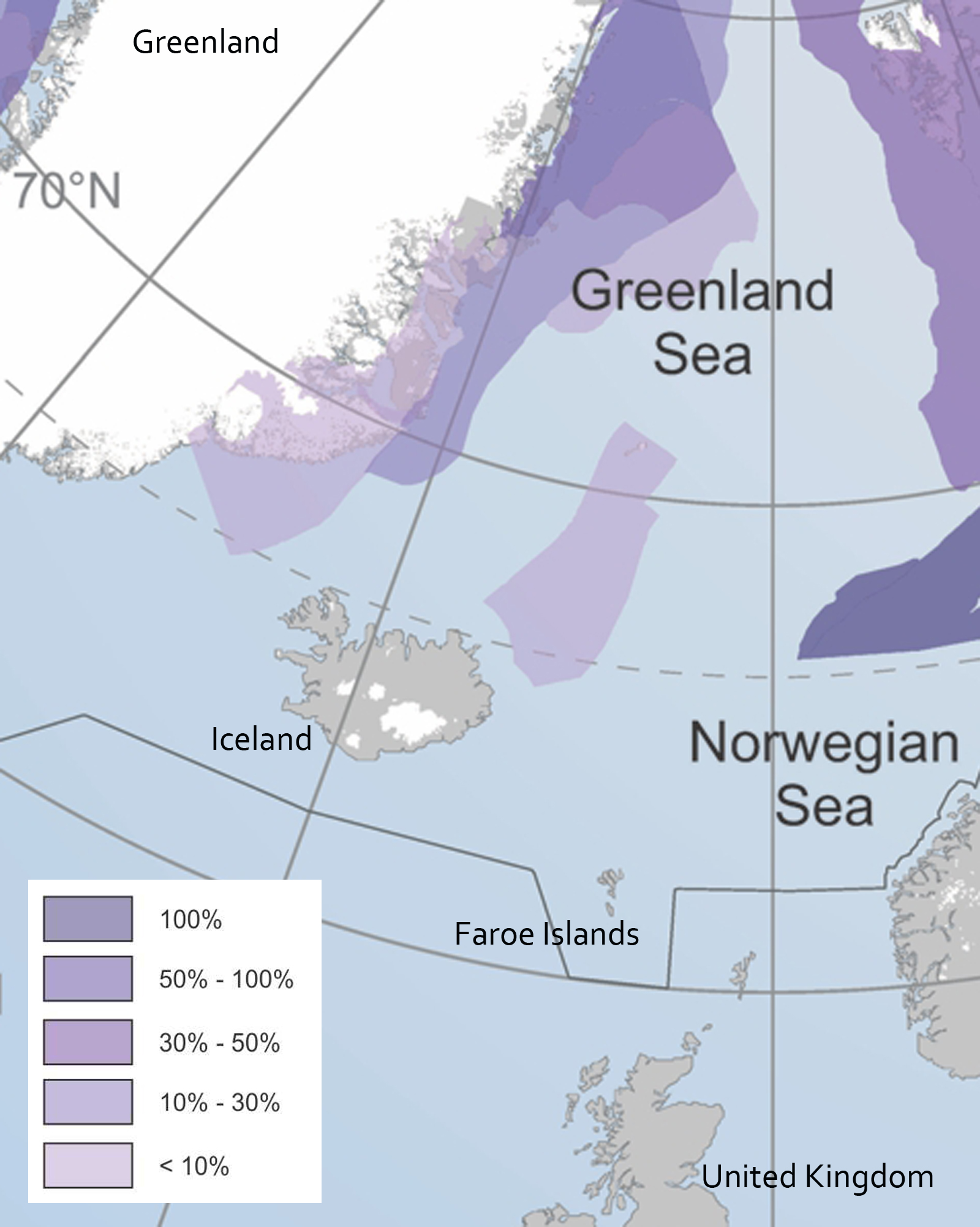
    In the southern part of the Arctic the dream of oil is still alive. Iceland is hoping to find oil in the Dreki area but the crisis hit country could benefit by other means.

    In the eastern part of Greenland lie vast resources of oil.

    Greenlands problem is the countries infrastructure. With scarce population, long distances and gruesome transport, Iceland could be the perfect partner in Greenlands oil adventure.

    The western part of Iceland could use a boost like an oil adventure. Icelandic oil from the Dreki area would also be sent to the Westfjords, if found.

    Greenland is hopeful that oil can be utilized around the year 2020.

    But near the Faroe Islands there is also some hope for oil. South of the Faroes, around the EEZ-lines of Faroes and the UK, utilizing of oil could start as soon as next year.

    With new technology British scientist have reduced the cost of oil utilization of around 30%, making the project feasible, and profitable for UK.

    This could mean the Faroes would get a slice of the oil cake, boosting the small nation’s economy significantly.

    Source: BBC

  • Russia to improve infrastructure

    Russia to improve infrastructure

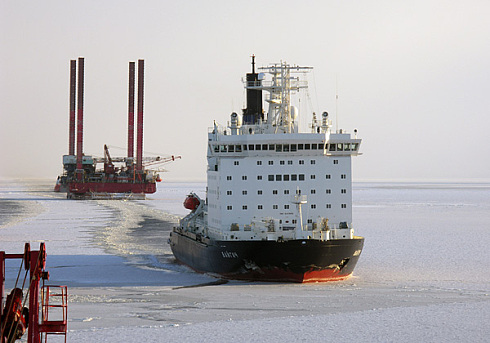
    Russian Icebreaker

    Russia’s infrastructure has been criticized when comes to oil issues in the Arctic. Now the Emergency minister Sergei Shoigu says that the country will respond to this and develop environmental protection infrastructure as soon as possible.

    “There [in the Arctic] we will need navigation safety projects and bases to deal with all kinds of tasks: from fuelling and navigation to communication systems and rescue. We must also set up centers to deal with – God forbid – oil spills,” Shoigu said at a news conference ahead of an international forum to discuss problems of the Arctic in Arkhangelsk next week. This year, the forum will focus on transport issues.

    The Russian emergencies minister said the next year’s forum should focus on environmental safety of hydrocarbon extraction and transportation in the Arctic.

    “In our opinion, safety issues during hydrocarbon extraction and transportation deserve to be the main topic of a separate forum. We will propose it for the next year, as we are convinced that this problem becomes a real threat when ignored,” the minister said.

  • A Shift to Arctic Oil

    A Shift to Arctic Oil

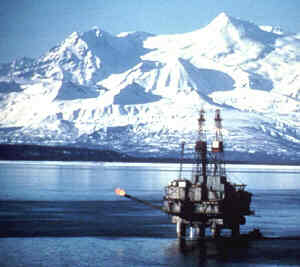
    offshore oil platform

    Unrest in the Middle East means the potential oil riches in Arctic areas like Greenland are more important than ever, the island’s premier said on Wednesday, criticizing environmental groups that want to hamper exploration.

    Greenlan enjoys self-rule as part of the Kingdom of Denmark, has issued 20 licenses for oil and gas exploration in Baffin Bay on its West coast. Some estimates put Greenland’s offshore oil reserves at 20 billion barrels.

    Kuupik Kleist said that there is a strong focus on the Arctic, especially because of the richness of natural resources. The very last days’ developments in the Middle East have put more (emphasis) on this focus.

    We are of course influenced and also highly affected by what’s happening on world markets,” Mr. Kleist said at an Ottawa conference on the Arctic.

    Speaking separately, Greenland’s industry and mineral resources minister, Ove Karl Berthelsen, said exploration licenses for blocks in the Greenland Sea to the east would be auctioned in 2012 and 2013. Firms with licenses include U.S.-based ConocoPhillips and Exxon, Canada’s Encana, Norway’s Statoil, France’s GDF Suez, Britain’s Cairn Energy, Royal Dutch Shell Plc, Denmark’s Maersk and DONG Energy, and Greenland’s national oil company Nunaoil.

    Kuupik Kleist

    Although environmental groups say the Baffin Bay exploration blocks are particularly vulnerable to oil spills and should be kept off limits, Kuupik Kleist made it clear there is no turning back where he said that if Greenland should stay away from exploiting its mineral resources, some other place on Earth will do it.

    Greenland, dependent on the fishing industry and funding from Denmark, says it needs the money to cope with pressing social needs. Mr. Kleist stated that the status quo is not an option, since Greenland is faced with big huge challenges in all areas, social, educational, health and infrastructure.

    The Greenland government says while there are risks to offshore drilling, modern technologies mean the dangers are much lower than in the past. Last year, Greenpeace protesters boarded a drilling rig operated by Cairn Energy to highlight what they said were the dangers of a spill in one of the world’s most remote regions.

    You see environmental groups coming now to the Arctic area and trying to hinder activities conducted by indigenous governments… Why didn’t they do that like 100 years ago, 50 years ago or even just 15 years ago?” said Kleist. “I think Greenpeace has a lot of work to do in other places in the world. Greenland is not the most dangerous place.

    Source: Reuters

  • Shell pushing to win approval for its plan to drill for oil in the Alaskan Arctic

    Shell

    Royal Dutch Shell is beginning a public lobbying campaign, including national advertising, on Monday. The giant oil company is promising to make unprecedented preparation to prevent the kind of disaster that polluted the Gulf of Mexico earlier this year. With the turmoil and damage created by the BP spill it can be imagined that they have quit a job to do.

    The plan is to drill in Alaska’s Beaufort and Chukchi seas is not a new venture but something that has been stalled by lawsuits and regulatory delays four years. The company was close to overcome all hurdles when the BP accident occurred. Due to the BP accident the Obama registration suspended most new offshore drilling, including within the sesitive waters of the Arctic. Since then the moratorium on gulf drilling has been lifted,Shell is pressing the Interior Department to grant final approval for its Arctic projects by the end of this year so that the company has enough time to move the necessary equipment to drill next summer, when the ice clears.

    following the BP accident, both individuals and official parties have become more aware of the environmental risks involved with such ventures which will hopefully lead to strenghtendend security meassures and the strengthening of response units, if such an accident is to o cure again.