Tag: PAGE21

  • New series of PAGE21 winter blogs

    New series of PAGE21 winter blogs

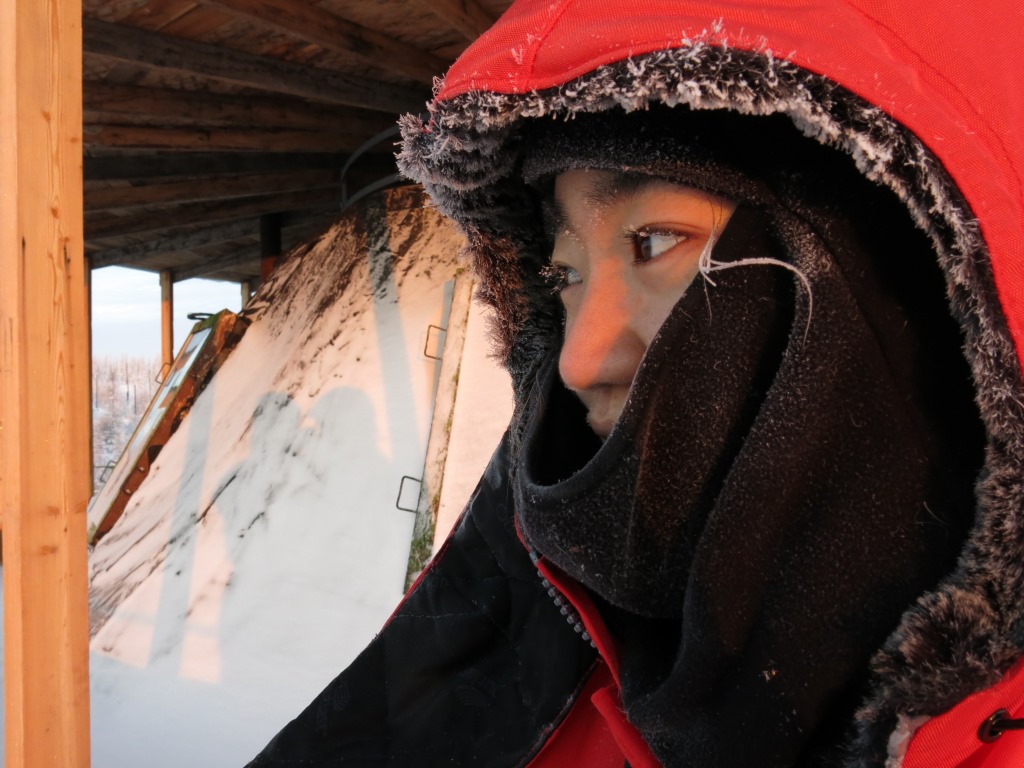
    Min Jung Kwon, young researcher from PAGE21 project in Cherskii, northern Russia.

    Some of the PAGE21 young researchers have departed to remote Arctic areas to gather winter flux measurements.

    Findings from their expeditions will be published weekly through the PAGE21 winter blogs. There you can learn about temperatures in the Arctic during harsh winter season, weather conditions and difficulties it can cause for humans ‘activities.

    What is more, you can learn the basics about the Arctic permafrost and get the insight into the real work of researchers.

    PAGE21 blogs have been published since summer 2012. They have gotten great recognition from scientists, general public and policy makers. For last two years they have been visited over 300 000 times.

    Follow PAGE21 winter blog here! Give us your recognition on Twitter and Facebook.

    PAGE21 project aims to understand and quantify the vulnerability of permafrost environments to a changing global climate, and to investigate the feedback mechanisms associated with increasing greenhouse gas emissions from permafrost zones.

    This research will make use of a unique set of Arctic permafrost investigations performed at stations that span the full range of Arctic bioclimatic zones. The project will bring together the best European permafrost researchers and eminent scientists from Canada, Russia, the USA, and Japan.

    The PAGE21 is a Large-scale integrating collaborative project under the ENV call topic “Vulnerability of Arctic permafrost to climate change and implications for global GHG emissions and future climate” (ENV.2011.1.1.3-1) coordinated by Professor Hans-Wolfgang Hubberten from AWI.
  • PAGE21 General Assembly has started

    PAGE21 General Assembly has started

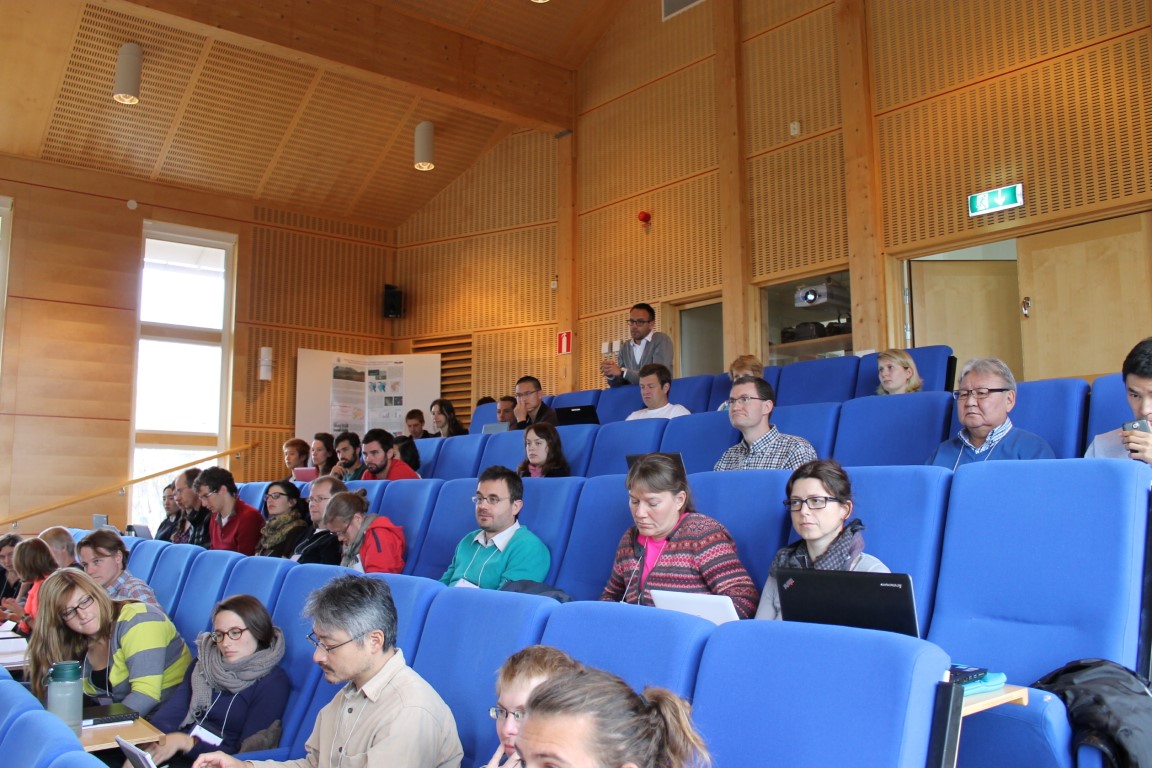
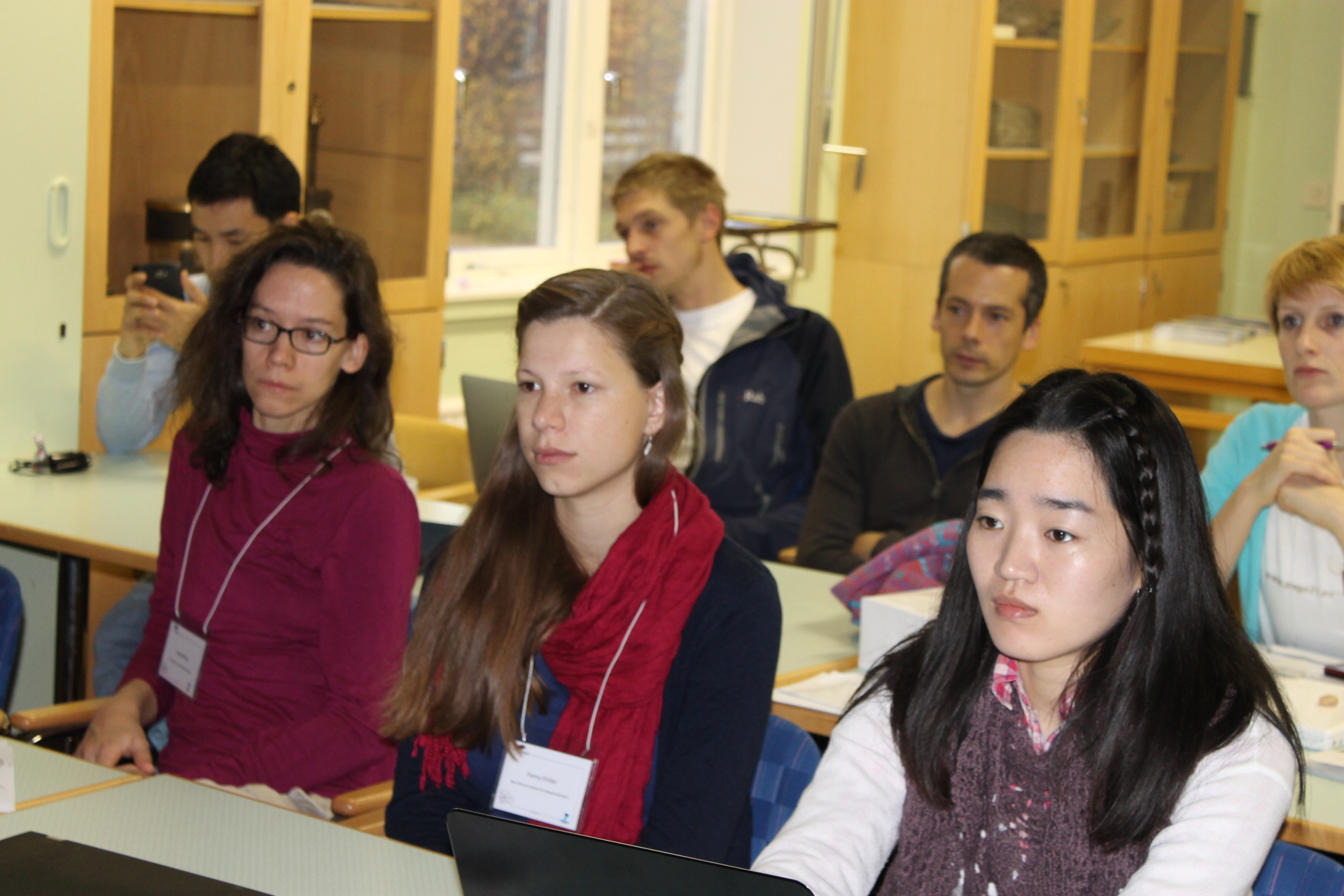
    Participants of PAGE21 General Assembly gathered in Abisko, northern Sweden

    Today, Monday the 23rd of September, participants of PAGE21 General Assembly have been officially welcomed in Abisko Research Station.

    The opening session was held by Margarieta Johansson who described general features of conference venue.

    Financial management, reporting, communication and outreach strategies have been presented by Leena – Kaisa Viitanen, representative from Alfred Wagener Institute in Germany and Magdalena Tomasik from project´s Icelandic partner – Arctic Portal.

    Jean – Pierre Lanckman and Boris Biskaborn presented principles of earth system science and permafrost database that will be launched in March 2014.

    Permafrost scientists and administrative representatives will cooperate on development of the project during the next two days.

  • PAGE21 researchers meet in Abisko

    PAGE21 researchers meet in Abisko

    PAGE21 young researchers meet in Abisko, northern Sweden

    Today, Sunday the 22nd of September, permafrost young researchers gathered in Abisko during the 2nd Page21 General Assembly Young Researchers workshop.

    Scientists are being part of PAGE21 project which is is a Large-scale integrating collaborative project under the ENV call topic “Vulnerability of Arctic permafrost to climate change and implications for global GHG emissions and future climate” (ENV.2011.1.1.3-1) coordinated by Professor Hans-Wolfgang Hubberten from AWI.

    Young researchers discussed several topics to include protocols and data management, general challenges in permafrost research as well as cooperation with Page21´s Canadian partner – ADAPT.

    Presentation on project´s communication and outreach strategies was given to inform about great success of this summer´s blogs that were written by young researchers during their work in the Arctic field sites.

    Blog have received over 10 000 entries during few months and the number is still growing.
    Arctic Portal who is hosting PAGE21 website and administrating Work Package 1: ´´Communication and Outreach´´ decided to keep on with blogs project to bring even more awareness to important permafrost research.

    At the beginning of next month both partners will also start new series of Young Researchers Profiles in order to bring more recognition to scientists committed to the project.

    After indoor part of the workshop, group of scientists attended field exercises.

    Young scientists will attend PAGE21 General Assembly that starts tomorrow and lasts until Tuesday.

  • New series of PAGE21 live blogs

    New series of PAGE21 live blogs

    Stefanie and Young Sound Fjord in the background Kjersti Gisnås

    PAGE21 young researchers have just started their fall season of permafrost investigation in remote areas, located in the northern hemisphere. So far we have received interesting writings from Samoylov and Zackenberg, located in North – East Greenland.

    While collecting data on permafrost temperature, CO2 and CH4 fluxes, delegates from all the research stations, explain the particularity of the research done at each site. What is more they describe adventures, dangers and exciting daily life in remote Arctic locations.

    PAGE21 Blogs are available for the public and can be accessed here.

    PAGE21 project aims to understand and quantify the vulnerability of permafrost environments to a changing global climate, and to investigate the feedback mechanisms associated with increasing greenhouse gas emissions from permafrost zones.

    This research will make use of a unique set of Arctic permafrost investigations performed at stations that span the full range of Arctic bioclimatic zones. The project will bring together the best European permafrost researchers and eminent scientists from Canada, Russia, the USA, and Japan.

    The PAGE21 is a Large-scale integrating collaborative project under the ENV call topic “Vulnerability of Arctic permafrost to climate change and implications for global GHG emissions and future climate” (ENV.2011.1.1.3-1) coordinated by Professor Hans-Wolfgang Hubberten from AWI.
    Sources

    PAGE21

  • PAGE21 field season continues

    PAGE21 field season continues

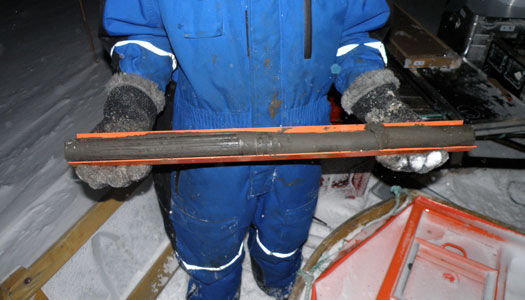
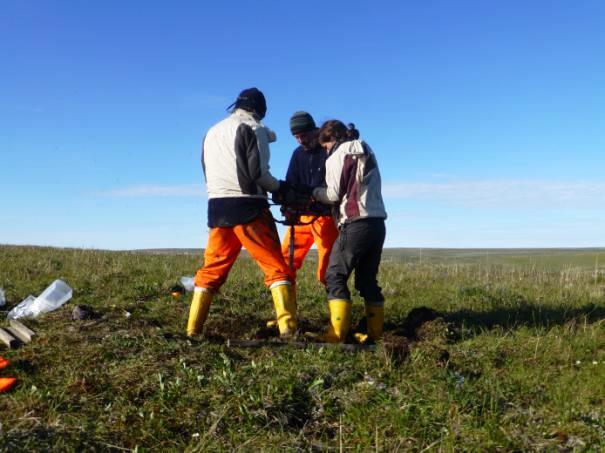
    The coring team working to get the core barrel out of the ground in Herschel Island

    PAGE21 young researchers have continued their season of permafrost investigation in remote areas, located in the northern hemisphere.

    Teams of scientists took off to Kytalyk and Herschel Island in the end of June. Researchers will come back to their home institutions at the beginning of September.

    While collecting data on permafrost temperature, CO2 and CH4 fluxes, delegates from all the research stations, explain the particularity of the research done at each site. What is more they describe adventures, dangers and exciting daily life in remote tundra locations.

    PAGE21 Blogs are available for the public and can be accessed here.

    PAGE21 project aims to understand and quantify the vulnerability of permafrost environments to a changing global climate, and to investigate the feedback mechanisms associated with increasing greenhouse gas emissions from permafrost zones.

    This research will make use of a unique set of Arctic permafrost investigations performed at stations that span the full range of Arctic bioclimatic zones.

    The project will bring together the best European permafrost researchers and eminent scientists from Canada, Russia, the USA, and Japan.

    Page21 on Facebook

    Page21 on Twitter

    Sources

    PAGE21

    PAGE21 Blogs

  • PAGE21 field season has now begun

    PAGE21 field season has now begun

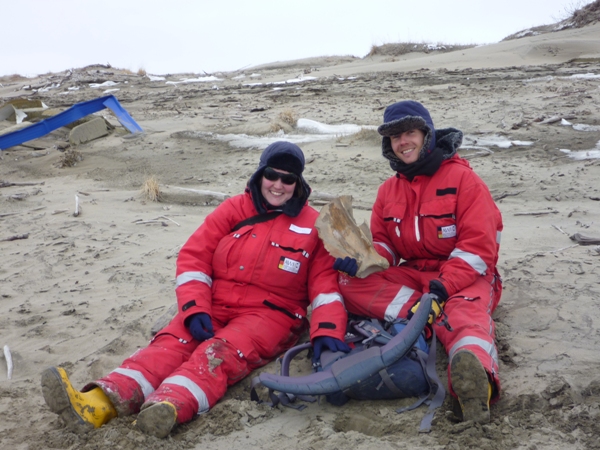
    Researchers from the University of Hamburg in Samoylov Island

    PAGE21 young researchers have just started their season of permafrost investigation in remote areas, located in the northern hemisphere. First groups took off to Kytalyk and Herschel Island earlier this month. Researchers will come back to their home institutions at the beginning of September.

    While collecting data on permafrost temperature, CO2 and CH4 fluxes, delegates from all the research stations, explain the particularity of the research done at each site. What is more they describe adventures, dangers and exciting daily life in remote tundra locations.

    PAGE21 Blogs are available for the public.

    PAGE21 project aims to understand and quantify the vulnerability of permafrost environments to a changing global climate, and to investigate the feedback mechanisms associated with increasing greenhouse gas emissions from permafrost zones. This research will make use of a unique set of Arctic permafrost investigations performed at stations that span the full range of Arctic bioclimatic zones. The project will bring together the best European permafrost researchers and eminent scientists from Canada, Russia, the USA, and Japan.

    The PAGE21 is a Large-scale integrating collaborative project under the ENV call topic “Vulnerability of Arctic permafrost to climate change and implications for global GHG emissions and future climate” (ENV.2011.1.1.3-1) coordinated by Professor Hans-Wolfgang Hubberten from AWI.
    Sources

    PAGE21

    PAGE21 Blogs

  • PAGE21 General Assembly decided

    PAGE21 General Assembly decided

    Abisko scientific research station

    The PAGE21 General Assembly date and venue has been decided. The 2nd PAGE21 General Assembly will take place 23 – 24 September 2013 at the Abisko Scientific Research Station in Sweden. In addition to the General Assembly, a joint Media Event with the FP7 project INTERACTwill be organized on 25 September 2013.

    A WP4 workshop as well as a Young Researcher workshop for PAGE21 and ADAPT PhD students and Post Doctorates are planned on 21 and 22 September respectively.

    PAGE21 Project aims to understand and quantify the vulnerability of permafrost environments to a changing global climate, and to investigate the feedback mechanisms associated with increasing greenhouse gas emissions from permafrost zones.

    This research will make use of a unique set of Arctic permafrost investigations performed at stations that span the full range of Arctic bioclimatic zones. The project will bring together the best European permafrost researchers and eminent scientists from Canada, Russia, the USA, and Japan.

    The PAGE21 is a Large-scale integrating collaborative project under the ENV call topic “Vulnerability of Arctic permafrost to climate change and implications for global GHG emissions and future climate” (ENV.2011.1.1.3-1) coordinated by Professor Hans-Wolfgang Hubberten from AWI.

    Click here to read more about the project.

    Source

    PAGE21

  • Live blog from research fields

    Live blog from research fields

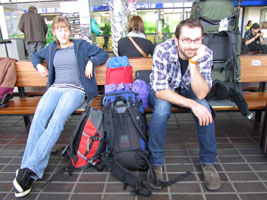
    researchers at the railway station in Kuopio in Finland

    The PAGE21 permafrost project has set up an interesting feature on its website. It is a live blog from research fields in the Arctic.

    PAGE21 carries out extensive research this summer and this is a unique way to get a peak inside the researchers, their work, facilities and life outside the research.

    There are already a few blog articles on the website, which can be accessed here.

    Alfred Wegener Institute in Germany will be blogging from Samoylov in german, there will be blog from Herschel Island in English and a group of five reserachers from the University of Eastern Finland has already begun their expedition to Seida in North-West Russia.

    Click here to go to the website.

    Source

    Fox

  • New drill for permafrost in Svalbard

    New drill for permafrost in Svalbard

    Permafrost core

    The PAGE21 project, a new EU 7th framework collaborative research project which Arctic Portal proudly is a part of, will expand knowledge of permafrost in the Arctic. Drilling starts next week in Adventdalen, Svalbard.

    A total of 18 institutions from 11 countries are involved and UNIS is in charge of the field campaign in Adventdalen outside Longyearbyen that starts next week.

    The five main research field sites are Zackenberg in North Eastern Greenland, Abisko in Northern Sweden, Adventdalen and Ny-Ålesund in Svalbard, and Samoylov Island and Kytalyk in Russia. The individual key field research sites are collecting field data on the permafrost, such as determining its temperature, its amount of ice, the origin of the ice, and the distribution of permafrost landforms in the study areas.

    A new specially designed hydraulic drill rig has been bought for drilling. UNtil now the drilling has been hand made, down to only 2 meters. The new drill is able to collect cores from the permafrost in both sediments and bedrock down to potentially 50 m depth.

    The drill in testing in Svalbard

    The drilling that starts next week will collect up to 110m of permafrost cores from ice-wedge polygons, pingos and solifluction sheets in Adventdalen.

    The PAGE21 project combines field measurements of permafrost processes, pools, and fluxes, with remote sensing data and global climate models at local, regional and, for the first time, pan-Arctic scales.

    The output from this research will help to advance our understanding of permafrost processes at multiple scales, resulting in improvements in global numerical permafrost modelling and the ensuing future climate projections.

    Source: UNIS

  • New website launched for PAGE21

    New website launched for PAGE21

    PAGE 21

    A new website was launched today, PAGE21.eu. The EU funded project brings leading scientists together studying permafrost.

    Permafrost is defined as ground that remains continuously at or below 0°C or at least two consecutive years; some 24% of the land surface in the northern Hemisphere is classified as permafrost.

    The main research question is: What happens when the vast amounts of carbon in Arctic soils are released to the atmosphere?

    Fieldresearchers, operators of long term observatories and modellers from 18 partner institutions in the EU intend to answer this question within the PAGE21 project.

    By pooling expertise from various subjects, the scientists aim to deliver a valuable foundation for the United Nations 5th World Climate Report.

    Arctic Portal designed, programed and hosts the website, which is indeed inspired by permafrost. Arctic Portal also works on data managment for the project.

    Click here to visit the website.