Tag: permafrost

  • Research positions available in Hamburg

    Research positions available in Hamburg

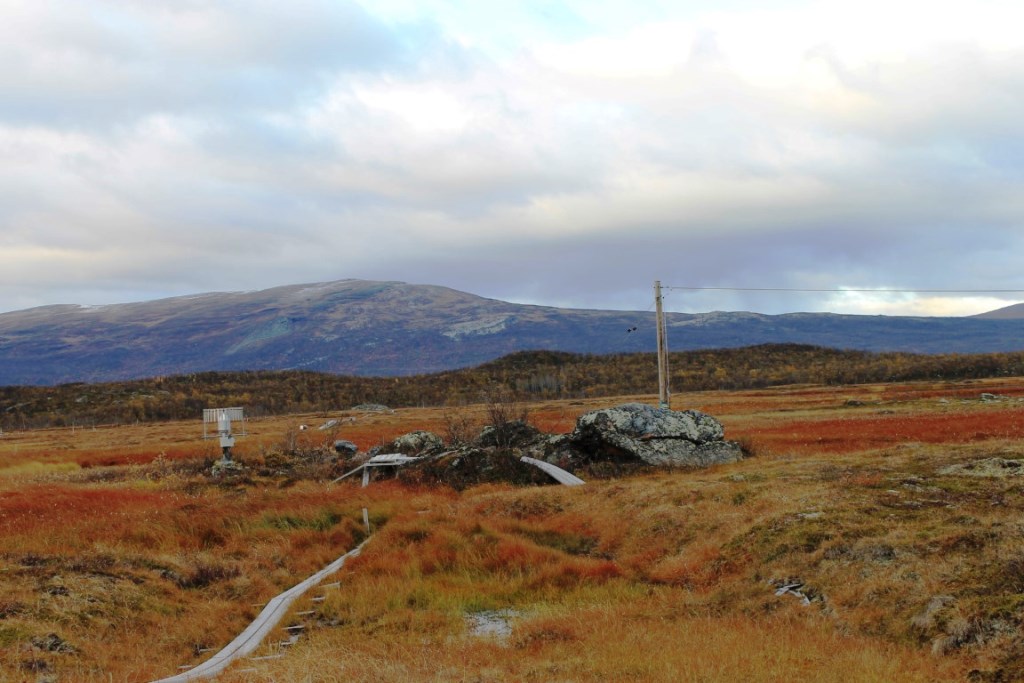
    Permafrost research site, Abisko, northern Sweden

    The University of Hamburg has an opening for 2 research associate positions (with opportunity to pursue a PhD dissertation) to work on the investigation of land-atmosphere carbon (CO2 and CH4) exchange of permafrost landscapes using eddy covariance flux measurements (position 1) and stable isotope (13CO2) techniques (position 2), respectively.

    Both research associates will work within the collaborative project “CARBOPERM – Carbon in Permafrost” which is funded by the Federal Ministry of Education and Research of Germany.

    The first position is dedicated to the micrometeorological investigation of the balances and controls of the exchange fluxes of CO2 and CH4 between the atmosphere and the dominant tundra types in the north-Siberian Lena River Delta.

    The second position is dedicated to the partitioning of the carbon fluxes into the underlying physiological processes, e.g., photosynthesis, autotrophic respiration, heterotrophic respiration, CH4 production and CH4 oxidation as well as to investigating the gas transport processes within the soil-vegetation-atmosphere continuum using stable isotope techniques.

    The short-term contracts terminate on 30.09.2016, subject to the actual granted funds. The preferred starting date is 1 January 2014.

    Closing date for applications: 15 November 2013

    Follow the link for more information on the available job opportunities.

  • New series of PAGE21 live blogs

    New series of PAGE21 live blogs

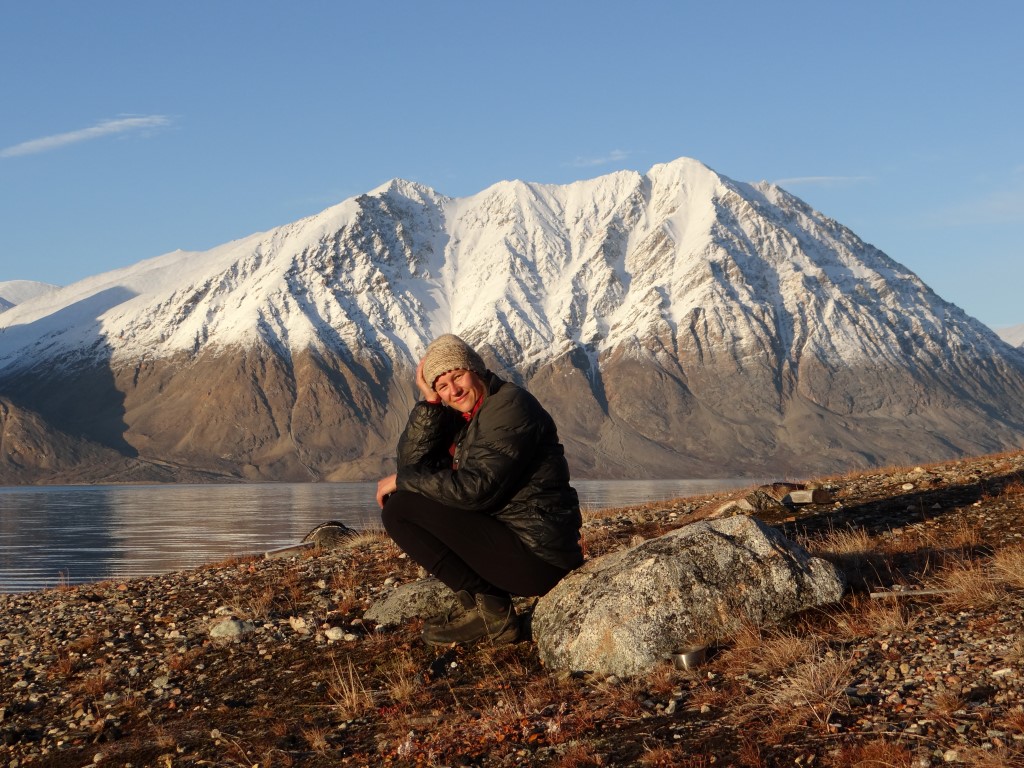
    Stefanie and Young Sound Fjord in the background Kjersti Gisnås

    PAGE21 young researchers have just started their fall season of permafrost investigation in remote areas, located in the northern hemisphere. So far we have received interesting writings from Samoylov and Zackenberg, located in North – East Greenland.

    While collecting data on permafrost temperature, CO2 and CH4 fluxes, delegates from all the research stations, explain the particularity of the research done at each site. What is more they describe adventures, dangers and exciting daily life in remote Arctic locations.

    PAGE21 Blogs are available for the public and can be accessed here.

    PAGE21 project aims to understand and quantify the vulnerability of permafrost environments to a changing global climate, and to investigate the feedback mechanisms associated with increasing greenhouse gas emissions from permafrost zones.

    This research will make use of a unique set of Arctic permafrost investigations performed at stations that span the full range of Arctic bioclimatic zones. The project will bring together the best European permafrost researchers and eminent scientists from Canada, Russia, the USA, and Japan.

    The PAGE21 is a Large-scale integrating collaborative project under the ENV call topic “Vulnerability of Arctic permafrost to climate change and implications for global GHG emissions and future climate” (ENV.2011.1.1.3-1) coordinated by Professor Hans-Wolfgang Hubberten from AWI.

    Sources

    PAGE21

  • PAGE21 field season has now begun

    PAGE21 field season has now begun

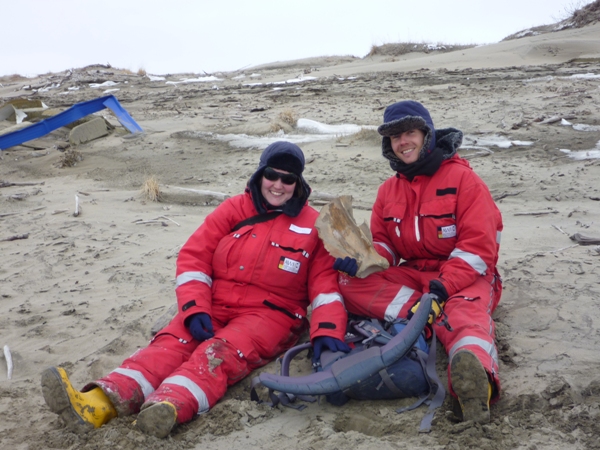
    Researchers from the University of Hamburg in Samoylov Island

    PAGE21 young researchers have just started their season of permafrost investigation in remote areas, located in the northern hemisphere. First groups took off to Kytalyk and Herschel Island earlier this month. Researchers will come back to their home institutions at the beginning of September.

    While collecting data on permafrost temperature, CO2 and CH4 fluxes, delegates from all the research stations, explain the particularity of the research done at each site. What is more they describe adventures, dangers and exciting daily life in remote tundra locations.

    PAGE21 Blogs are available for the public.

    PAGE21 project aims to understand and quantify the vulnerability of permafrost environments to a changing global climate, and to investigate the feedback mechanisms associated with increasing greenhouse gas emissions from permafrost zones. This research will make use of a unique set of Arctic permafrost investigations performed at stations that span the full range of Arctic bioclimatic zones. The project will bring together the best European permafrost researchers and eminent scientists from Canada, Russia, the USA, and Japan.

    The PAGE21 is a Large-scale integrating collaborative project under the ENV call topic “Vulnerability of Arctic permafrost to climate change and implications for global GHG emissions and future climate” (ENV.2011.1.1.3-1) coordinated by Professor Hans-Wolfgang Hubberten from AWI.

    Sources

    PAGE21

    PAGE21 Blogs

  • Live blog from research fields

    Live blog from research fields

    researchers at the railway station in Kuopio in Finland

    The PAGE21 permafrost project has set up an interesting feature on its website. It is a live blog from research fields in the Arctic.

    PAGE21 carries out extensive research this summer and this is a unique way to get a peak inside the researchers, their work, facilities and life outside the research.

    There are already a few blog articles on the website, which can be accessed here.

    Alfred Wegener Institute in Germany will be blogging from Samoylov in german, there will be blog from Herschel Island in English and a group of five reserachers from the University of Eastern Finland has already begun their expedition to Seida in North-West Russia.

    Click here to go to the website.

    Source

    Fox

  • New drill for permafrost in Svalbard

    New drill for permafrost in Svalbard

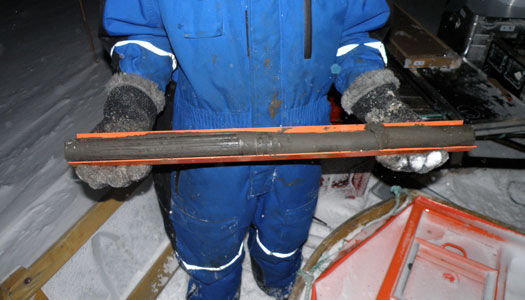
    Permafrost core

    The PAGE21 project, a new EU 7th framework collaborative research project which Arctic Portal proudly is a part of, will expand knowledge of permafrost in the Arctic. Drilling starts next week in Adventdalen, Svalbard.

    A total of 18 institutions from 11 countries are involved and UNIS is in charge of the field campaign in Adventdalen outside Longyearbyen that starts next week.

    The five main research field sites are Zackenberg in North Eastern Greenland, Abisko in Northern Sweden, Adventdalen and Ny-Ålesund in Svalbard, and Samoylov Island and Kytalyk in Russia. The individual key field research sites are collecting field data on the permafrost, such as determining its temperature, its amount of ice, the origin of the ice, and the distribution of permafrost landforms in the study areas.

    A new specially designed hydraulic drill rig has been bought for drilling. UNtil now the drilling has been hand made, down to only 2 meters. The new drill is able to collect cores from the permafrost in both sediments and bedrock down to potentially 50 m depth.

    The drill in testing in Svalbard

    The drilling that starts next week will collect up to 110m of permafrost cores from ice-wedge polygons, pingos and solifluction sheets in Adventdalen.

    The PAGE21 project combines field measurements of permafrost processes, pools, and fluxes, with remote sensing data and global climate models at local, regional and, for the first time, pan-Arctic scales.

    The output from this research will help to advance our understanding of permafrost processes at multiple scales, resulting in improvements in global numerical permafrost modelling and the ensuing future climate projections.

    Source: UNIS

  • What is Permafrost?

    Permafrost covers a large area of the Arctic and a total of 25% of the earth surface. But what is it and why is it in the focal point of contemporary climate change research.

    What is Permafrost?

    Permafrost is defined as ground (soil or rock and included ice or organic material) that remains at or below 0°C for at least two consecutive years. Therefore, the ground is permanently frozen, hence the name Permafrost.

    Most of the permafrost that exists today was formed during cold glacial periods. It has persisted through interglacial periods the last 10,000 years. Relatively shallow permafrost (30 to 70 meters) was formed during the last 6,000 years and some during the Little Ice Age (from 400 to 150 years ago). In continental interiors, permafrost temperatures at the boundaries between continuous and discontinuous permafrost areas are generally about -5°C, corresponding roughly with the -8°C mean annual air temperature.

    Permafrost in mid- and low- latitude mountains is warm and its distribution is closely related to characteristics of the land surface, slope gradient and orientation, vegetation patterns, and snow cover.

    Subsea permafrost occurs close to 0°C over large areas of the Arctic continental shelf, where it was formed during the last glacial period on the exposed shelf landscapes.

    Permafrost is geographically continuous beneath the ice-free regions of the Antarctic continent and occurs beneath areas in which the ice sheet is frozen to its bed.

    Why is it important?

    Climate scientists have predicted that global warming will warm the earth of at least two degrees Celsius by the year 2100. Some say the figure could rise to 5 degrees. This will have significant effects on permafrost regions.

    Climate change will lead to the earths warming, therefore melting large permafrost areas. The projections are that permafrost will though not disappear completely. A projected decline in the extent of permafrost will have a major impact on the Earth ecosystem, affecting global climate through the mobilization of carbon and nitrogen stored in permafrost.

    The largest permafrost areas are in Siberia, where the thickest permafrost can also be found. In Central Siberia the soil can be frozen to a depth of over 1500 meters. Permafrost is also common in Alaska and Canada. Click the map on the right to expand it and see the main permafrost areas.

    On the southern fringes of permafrost areas, where the permafrost is already relatively warm, it could disappear completely. Further north, much more soil could melt – perhaps up to 80 centimeters deep instead of 50 centimeters, as it is today.
    In all these areas fauna and flora have to adjust. Where the soil was previously dry, it could become wet. Conversely, areas with many lakes can suddenly dry up, because of the thawing permafrost. The thawing can become so severe, that the permafrost becomes permeable and the lake water will seep into the underlying ground.

    But humans could ultimately be effected as well, and in fact already have. In Siberia, railway lines have subsided and therefore are ruined. Many areas, in Siberia especially, could be affected since many things are built on permafrost. When the ground thaws, the foundation can fall, like the case with the railway lines. Same applies to some airport runways, roads and households, both in Siberia, Alaska and Canada.

    Thawing permafrost can further make Oil pipelines unstable both in Russia, Alaska and Canada. The Trans-Alaskan pipeline system is in some places built on permafrost. If it would fall it could cause a major disaster. Houses have also fallen because of permafrost thaw, like the picture at the top shows.

    Another aspect of the permafrost thaw is the methane buried under it. The effects of such greenhouse gas release are still unknown and further research on this is both needed and due. General consensus is that the permafrost thaw will lead to an increase in greenhouse gas emissions.

    PAGE21

    As noted, further research is necessary. Currently, numerous prestige institutions are working together within the “PAGE21 – Changing Permafrost in the Arctic and its Global Effects in the 21st Century” project to better understand the feedbacks of the Arctic permafrost carbon and nitrogen pools to global climate change.

    PAGE21 will aim to understand and quantify the vulnerability of permafrost environments to a changing global climate, and to investigate the feedback mechanisms associated with increasing greenhouse gas emissions from permafrost zones.
    This research will make use of a unique set of Arctic permafrost investigations performed at stations that span the full range of Arctic bioclimatic zones. The project will bring together the best European permafrost researchers and eminent scientists from Canada, Russia, the USA, and Japan.

    The four year project, coordinated by Dr. Hans-Wolfgang Hubberten at the Alfred Wegener Institute in Germany, will contribute directly to the existing permafrost monitoring frameworks to further research into permafrost and climate change and works in close connection with members of the IPCC 5th Assessment Working Group.

    Sources:International Permafrost Association I Alfred Wegener Institution I PAGE21 website
  • New website launched for PAGE21

    New website launched for PAGE21

    PAGE 21

    A new website was launched today, PAGE21.eu. The EU funded project brings leading scientists together studying permafrost.

    Permafrost is defined as ground that remains continuously at or below 0°C or at least two consecutive years; some 24% of the land surface in the northern Hemisphere is classified as permafrost.

    The main research question is: What happens when the vast amounts of carbon in Arctic soils are released to the atmosphere?

    Fieldresearchers, operators of long term observatories and modellers from 18 partner institutions in the EU intend to answer this question within the PAGE21 project.

    By pooling expertise from various subjects, the scientists aim to deliver a valuable foundation for the United Nations 5th World Climate Report.

    Arctic Portal designed, programed and hosts the website, which is indeed inspired by permafrost. Arctic Portal also works on data managment for the project.

    Click here to visit the website.