Tag: petroleum

  • Svalbard for petroleum activities?

    Svalbard for petroleum activities?

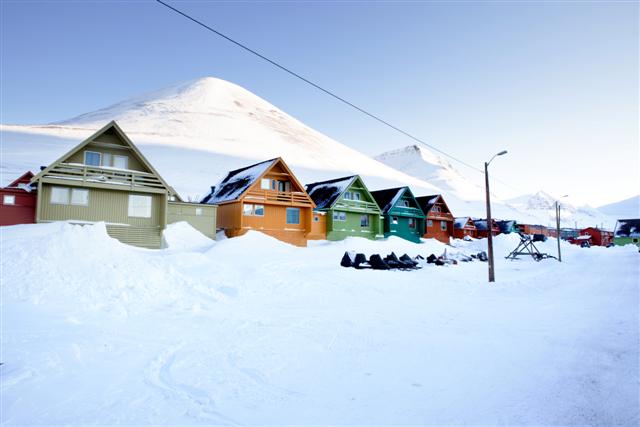
    Longyearbyen, Svalbard

    The Norwegian government is looking into the possibility of using Svalbard for oil and gas infrastructure. The unique nature of Svalbard has until now been thought to fragile for any kind of petroleum work.

    The increased petroleum activities in the northern seas are reaching Svalbard but it is said to be influenced heavily by geopolitics, politics, commercial interests and environmental protection.

    The Norwegian Ministry of Environment has asked for Svalbard to be evaluated as a world heritage site by UNESCO.

    In relation to that work, it will be assessed what impacts it would have on Svalbard to be any kind of use for petroleum activities in the northern Barents sea, these include logistics, supply, and land bases, says Eldbjørg Waage Melberg from the oil ministry.

    Oil analyst and former Secretary of State for Petroleum and Energy, Hans Henrik Ramm, believes it will be a huge mistake to look away from new business opportunities on Svalbard.

    „You must use balance different interests, including industrial opportunities. It is not reasonable to adopt protective measures to limit future choices, especially if it involves the transfer of decision making from Norway, as one does by seeking World Heritage status,” says Ramm.

    Norway produces coal in Svalbard but tourism and research are high on the agenda on the archipelago, as well as the Svalbard University Center.

    Sources

    Tekniske Ukeblad

    UNESCO

  • Arctic Energy

    In the recent years, the world’s attention has turned to the Arctic, not least because of its vast energy resources. Due to the climate change and its significant impact to the Arctic environment resources that have long been unreachable are becoming feasible for exploitation. It is estimated that up to fifth of the world’s undiscovered petroleum resources are to be found in the Arctic while the Arctic’s share of the worlds known resources today is around 12%.

    Russia is by far the most important gas producer in the Arctic. Almost all proven Arctic gas reserves are located in Northern Russia as well as 90% of the proven oil reserves. Together produce Northern Russia and Alaska 97% of the total Arctic oil and gas the Arctic’s total global share of production being around 16%. Furthermore, Russia is considered to contain by far the largest volume of the undiscovered petroleum reserves. Other significant regions where petroleum is to be found are Alaska and the Norwegian Sea, which will in future introduce new oil producing states within the Arctic, namely Greenland and Iceland.

    In the face of the petroleum race in the Arctic, some concerns have been raised about the very fragile Arctic environment. In addition to the actual drilling, transportation of the petroleum will impose the Arctic environment to a severe threat in case of an oil spill or shipwreck.

    Even though the conventional petroleum industry is still today dominant in the Arctic, some renewable energy developments are also taken place in the Arctic. The renewable energy sector is however still quite small compared to the conventional one, but can be expected to grow in the future.

    The newly published  Arctic Energy Portal aims at providing a comprehensive information gateway to the Arctic energy projects, new developments and controversies concerning the resource exploitation. At present, the Portal will concentrate mostly on oil and gas, but as new projects and developments take place in renewable energy sector the Portal will broaden its scope of information and cover renewable sector as well.