The 2nd Polar Law Symposium was held at the University of Akureyri the past weekend, September 10-12. This years Symposium was environment oriented having an indication of environment in all four themes. The themes this year were New Shipping Routes and Environmental Implications for the Polar Regions, Effective Environmental Governance, The Exploration and Exploitation of Resources and Human Rights and Polar Regions.
Many distinguished speakers discussed the issues from different perspectives, but perhaps the most interesting or rather most anticipated information being shared at the Symposium was about the new Arctic policy of the Russian Federation by H.E. Victor Tatarintsev, Ambassador of the Russian Federation in Iceland.
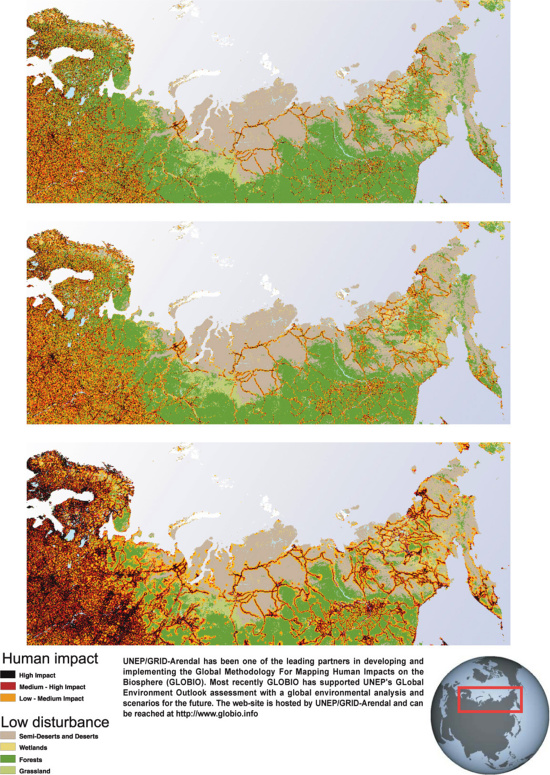 Due to the new environmental developments in the Arctic and the international attention the area has gained in the past few years in international politics the Russian Federation has adapted a new Arctic Strategy to 2020 and beyond.
The importance of the Arctic for the Russian Federation can not be undermined knowing the fact that it contains 1% of the Russian population and 18% of the territory, but produces 20% of the GDP and 20 % of Russia’s total export.
According to H.E. Victor Tatarintsev the peace and international cooperation are the key issues in the Arctic in coming years. Russia will emphasize the cooperation through already existing framework, namely the Arctic Council and the Barents Euro-Arctic Council and does not aim at increasing its military presence in the area.
The Arctic sea route will be of high importance for Russia as a strategic national transport route and reconstruction of the existing infrastructure on the Arctic coast-line will be one of the main tasks on national level. The sea route will not be important only because of the immense oil and gas production in the Russian north but also because of the development gap between the north and south, which must be cut down for the benefit of the people living in the area. New ports must be built to the remote areas to enable import of new technology and development and new kind of tourism in these areas must be made possible.
Arctic Indigenous peoples play also a role in the new Russian Arctic Policy Russia committing itself to the existing international standards for the protection of indigenous livelihoods and will follow.
 Despite the fact that Russia is very committed to the existing cooperation regime and intends to obey the international law in all matters, H.E. Victor Tatarintsev reminded people not to simplify the situation too much. Certain unresolved legal and political issues remain in the Arctic and cooperation should be enhanced to abolish uncertainties around these issues. As an example he pointed out the Russian flag in the bottom of the Arctic sea incident, which according to him was purely scientific expedition and did not imply the political contention as it taken by the international community.
As a conclusion, it can be said that the Russian Arctic policy aims to intensify the national development with the utmost goal of protecting legitimate aspirations of the Russian Federation while working within the international community.


 Even though northern Alaska was warmer then, it was still probably cold enough for occasional snow and was farther north than it is today, so the sun didn’t rise for weeks in midwinter. Today, the North Slope’s grizzly bears are tucked away in hillside dens, but it’s tough to picture a 35-foot hadrosaur hibernating, Fiorillo wrote. Dinosaurs may have dialed down their metabolism to require less food, and some researchers have suggested they might have migrated south during the deep dark of midwinter. To check the migration hypothesis, Fiorillo and Gangloff compared bone length and body masses of hadrosaurs to the north’s master of migration, the caribou. They decided that juvenile hadrosaurs were relatively much smaller than juvenile caribou, and that it was unlikely the hadrosaurs migrated.