Tag: polar bear

  • Starved polar bear perished in Svalbard

    Starved polar bear perished in Svalbard

    Polar bear dead of starvation

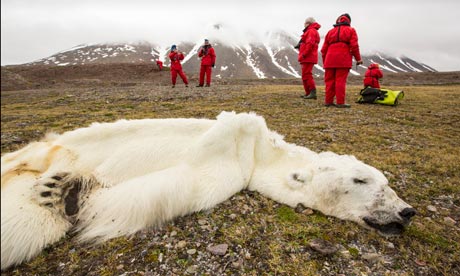
    A starved polar bear found found dead in Svalbard as “little more than skin and bones” perished due to a lack of sea ice on which to hunt seals, according to a renowned polar bear expert.

    Climate change has reduced sea ice in the Arctic to record lows in the last year and Dr Ian Stirling, who has studied the bears for almost 40 years and examined the animal, said the lack of ice forced the bear into ranging far and wide in an ultimately unsuccessful search for food.

    “From his lying position in death the bear appears to simply have starved and died where he dropped,” Stirling said. “He had no external suggestion of any remaining fat, having been reduced to little more than skin and bone.”

    The bear had been examined by scientists from the Norwegian Polar Institute in April in the southern part of Svalbard, an Arctic island archipelago, and appeared healthy. The same bear had been captured in the same area in previous years, suggesting that the discovery of its body, 250km away in northern Svalbard in July, represented an unusual movement away from its normal range. The bear probably followed the fjords inland as it trekked north, meaning it may have walked double or treble that distance.

    Polar bears feed almost exclusively on seals and need sea ice to capture their prey. But 2012 saw the lowest level of sea ice in the Arctic on record. Prond Robertson, at the Norwegian Meteorological Institute, said: “The sea ice break up around Svalbard in 2013 was both fast and very early.” He said recent years had been poor for ice around the islands: “Warm water entered the western fjords in 2005-06 and since then has not shifted.”

    Stirling, now at Polar Bears International and previously at the University of Alberta and the Canadian Wildlife Service, said: “Most of the fjords and inter-island channels in Svalbard did not freeze normally last winter and so many potential areas known to that bear for hunting seals in spring do not appear to have been as productive as in a normal winter. As a result the bear likely went looking for food in another area but appears to have been unsuccessful.”

    Research published in May showed that loss of sea ice was harming the health, breeding success and population size of the polar bears of Hudson Bay, Canada, as they spent longer on land waiting for the sea to refreeze. Other work has shown polar bear weights are declining. In February a panel of polar bear experts published a paper stating that rapid ice loss meant options such the feeding of starving bears by humans needed to be considered to protect the 20,000-25,000 animals thought to remain.

    The International Union for the Conservation of Nature, the world’s largest professional conservation network, states that of the 19 populations of polar bear around the Arctic, data is available for 12. Of those, eight are declining, three are stable and one is increasing.

    The IUCN predicts that increasing ice loss will mean between one-third and a half of polar bears will be lost in the next three generations, about 45 years. But the US and Russian governments said in March that faster-than-expected ice losses could mean two-thirds are lost.

    Attributing a single incident to climate change can be controversial, but Douglas Richardson, head of living collections at the Highland Wildlife Park near Kingussie, said: “It’s not just one bear though. There are an increasing number of bears in this condition: they are just not putting down enough fat to survive their summer fast. This particular polar bear is the latest bit of evidence of the impact of climate change.”

    Ice loss due to climate change is “absolutely, categorically and without question” the cause of falling polar bear populations, said Richardson, who cares for the UK’s only publicly kept polar bears. He said 16 years was not particularly old for a wild male polar bear, which usually live into their early 20s. “There may have been some underlying disease, but I would be surprised if this was anything other than starvation,” he said. “Once polar bears reach adulthood they are normally nigh on indestructible, they are hard as nails.”

    Jeff Flocken, at the International Fund for Animal Welfare, said: “While it is difficult to ascribe a single death or act to climate change it couldn’t be clearer that drastic and long-term changes in their Arctic habitat threaten the survival of the polar bear. The threat of habitat loss from climate change, exacerbated by unsustainable killing for commercial trade in Canada, could lead to the demise of one of the world’s most iconic animals, and this would be a true tragedy.

    Source
    Guardian

  • Illegal trade on increase in Russia

    Illegal trade on increase in Russia

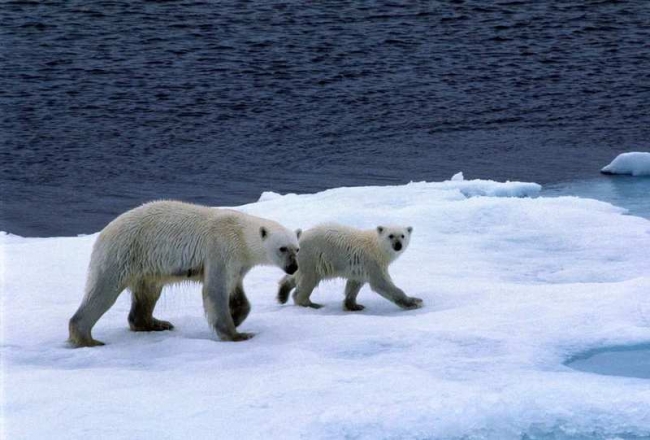
    Polar bear with cub

    Illegal trade of polar bears products is on the increase in Russia.

    Last month, WWF Russia presented study showing that illegal trade in polar bear products had been booming. Skins are for sale at 600,000 rubbles, mostly in Moscow, but internet ads also come from Murmansk.

    The environmental group in Moscow has monitored the internet over the last 20 months searching for ads selling or buying polar bear skins. 47 skins for sale have been discovered, some ads offering more than 3 skins, according to the study.

    Soviet Union outlawed polar bear hunting in 1957. Most of the skins where put up for illegal sale in Moscow, but WWF has also found skins for sale in Murmansk, St. Petersburg, Chelyabinsk, Kirov, Izhevsk, Dnepropetrovsk and Irkutsk.

    The study says the average price for a polar bear skin is 600,000 rubbles (€14,940), sharply up compared with black-market prices ten years ago.

    There are between 5,000 and 7,000 polar bears in Russia. Those in the Barents Region are partly migrating between the Norwegian archipelago of Svalbard and the Russian islands of Franz Josef Land and Novaya Zemlya.

    Source

    Barents Observer

  • Bear and her cub came to close

    Bear and her cub came to close

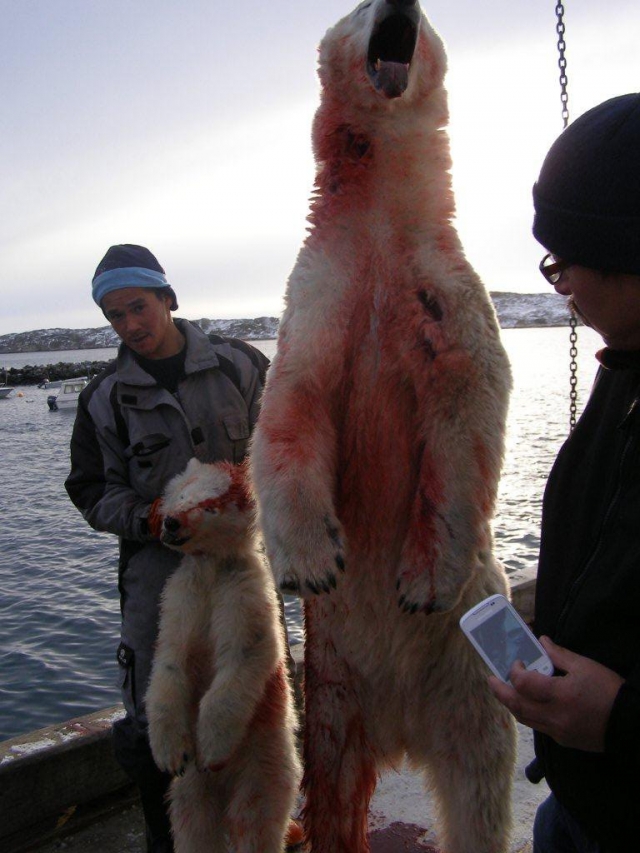
    The bear and her cub shot in Greenland

    A polar bear and a cub were shot in the town of Kangaatsiaq in Greenland yesterday. The pair had been circling the town for a few days.

    The people had tried to drive them away but when they came close to the town they saw no other option but to shoot.

    The mother had been swimming in the fjord with her cub on the back, like this video shows.

    After the pair went in the town shots were fired in the air but unfortunately that did not scare them away.

    “We had to shoot them both. The cub would not have survived without his mother,” Peter Løvstrøm from the department of hunting and fishing in Greenland said.

    “The meat will be distributed to the community’s institutions but the skin and everything else will be analyzed by the government,” Løvstrøm said. Those means are typical for such circumstances.

    Source:

    KNR

  • Polar bear extinction in 20 years?

    Polar bear extinction in 20 years?

    Polar bears feasting on a seal

    Arctic animals are under severe threat because of warming climate and there might be no polar bears in the Russian wild in 20-25 years. This is the prediction of leading polar bear specialist, Nikita Ovsyannikov, deputy director of Russia’s polar bear reserve on Wrangel Island in the Chukchi Sea to the northwest of Alaska.

    The Edmonton Journal reports that calculations are predicting that only around 1700 polar bears live around the Chukchi Sea, and that it had dropped from 4000 the last three decades.

    „It is worse for Russian polar bears than the bears in Canada or Greenland because the pack ice is retreating much faster in our waters,” said Ovsyannikov. „The best habitat is quickly disappearing. It is extreme. What we are seeing right now is very late freezing. Our polar bear population is obviously declining. It used to be that new ice was thick enough for them to walk on in late October. It now will happen much later.”

    With no drifting pack ice near the shore to hunt from, Russia’s polar bears have faced a stark choice. They either must go far out to sea on pack ice that has been drifting away from the coast in the late spring, or forage for food as best they can on Russia’s few Arctic islands or along the coast.

    However, venturing far from land presents special problems for female bears who traditionally build their hibernation and birthing dens on land.

    “Making a den on drifting ice is much more difficult,” Ovsyannikov said. “One reason is that there is a greater chance that other bears will disturb them there. “But some females are den-ning on the drifting ice because the ice is freezing up again so late in the fall that they cannot get back to land. We have evidence of this.”

    There will be no polar bears anywhere in the wild within 20 to 25 years, Ovsyannikov predicted.

    However, it is wrong to think that their “extermination” is only happening because of global warming, he said. Another key factor is that warmer air and sea temperatures have forced polar bears to spend more time on land where “too many of them were being shot and poached.”

    Other species under threat include seals, walrus, Arctic fox and snowy owls, he said.

    The big cargo ships transiting to Asia using the Northeast Passage pose another potential danger. Any spill will cause great harm across the north because oil dissolves slowly in cold water and is notoriously difficult to clean up if it comes into contact with drifting ice or ice that is attached to land.

    “It is inevitable that economic development will continue,” Ovsyannikov said. “So it is up to us to take as many precautions as possible because a shipping accident in the Arctic would be an absolute disaster for the entire ecosystem.”

    Source:

    The Edmonton Journal

  • Polar bear shot near Nuuk

    Polar bear shot near Nuuk

    The polar bear shot caught the attention of the people in Nuuk

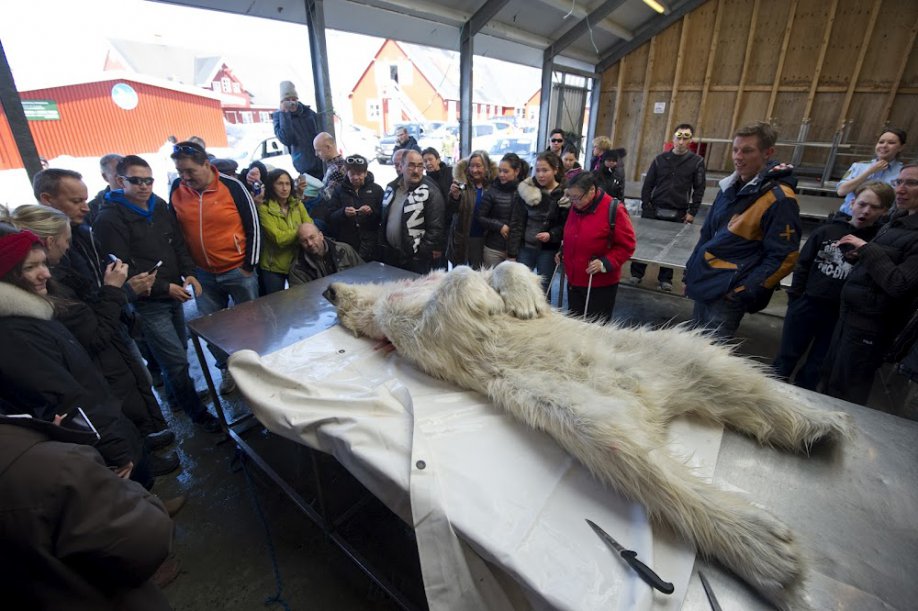
    A polar bear was shot near Nuuk in Greenland this week. It is rare that polar bear come this close to the capital.

    Two brothers spotted the bear, at first they thought it was a huge dog. A closer look identified the bear.

    The male polar bear smelled the brothers who ran to safety. The bear clawed the house but then moved away, and approached Nuuk.

    He was shot due to safety of the inhabitants.

    Many people have looked at the bear since it was shot, as can be seen on the pictures with the story below.

    Sources

    Sermitsiaq

  • Polar bear eating own cub pictured

    Polar bear eating own cub pictured

    polar bear cub

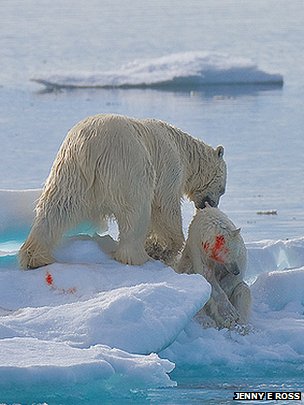
    Pictures of a polar bear dragging its own cub after killing it has shook many. The telling pictures by nature photographer Jenny Ross were published yesterday.

    She took the pictures in Svalbard but polar bears are known to kill their cubs for food if everything else fails.

    The actions are not common and have not been filmed often.

    “This type of intraspecific predation has always occurred to some extent. However, there are increasing numbers of observations of it occurring, particularly on land where polar bears are trapped ashore, completely food-deprived for extended periods of time due to the loss of sea ice as a result of climate change,” she told BBC News.

    Jenny was on a boat with here telephoto lens but did not realize the bear hd its cub until she was close.

    “As soon as the adult male became aware that a boat was approaching him, he basically stood to attention – he straddled the young bear’s body, asserting control over it and conveying ‘this is my food’,” she said.

    Source: BBC

    See also: Jenny Ross’s website.

  • Polar bear attack in Svalbard

    Polar bear attack in Svalbard

    Polar Bear

    One person has deceased and four injured severely in a polar bear attack in Svalbard this morning. The incident happened at Von Postbreen, about 40 km from Longyearbyen.

    The injured were brought by helicopter to the hospital in Longyearbyen. They were then moved to Tromsö in Norway before transferred back home to Britain.

    A 17 year old male from Britain deceased and four others were seriously injured. They were travelling with a group of 80 with the British Schools Exploring Society, a youth development charity based in London.

    The bear was shot and killed after the attack. Although polar bears are common in Svalbard, they rarely attack people. From 1971, a total of five have been killed by polar bears on the archipelago.

  • Polar bear visits the dentist

    Polar bear visits the dentist

    Polar bear has his teeth removed

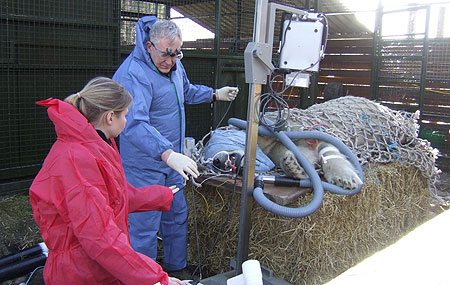
    It took dentists four hours to fix the toothache of Mr. Walker the polar bear at the Highland Wildlife Park in Kingussie, Scotland. Walker the polar bear had to undergo a dental treatment for a troublesome tooth.

    The 241 kg (531 lbs) polar bear was treated after staff at the wildlife park noticed that his jaw was swollen and had to undergo a dental treatment for a troublesome tooth. The 2 year old polar bear was at first given a course of antibiotics but the swelling did not heal and a team of vets was called in to help. Four vets worked together to tranquilize Walker before removing the affected tooth. After the procedure, they left the enclosure to allow the polar bear to come around from the anaesthetic.

    Spokesperson for the zoo, said that it was necessary to remove the affected tooth after Walker did not respond to antibiotics. Vets did an X-ray to see if root canal treatment would work, but the results showed that removing the tooth would be the only option.

    Walker the polar bear

    The operation is usually a standard procedure but operating on a polar bear is not a typical day for vets and the size of the polar bear meant that he could not be transferred anywhere for treatment. Walker’s huge size meant that 10 people were needed to lift him on to the operating table which was made from bales of hay for the polar bear to lie on during the procedure. The extraction took about four hours and the keepers made a swift exit before the bear awoke.

    Keepers at the wildlife park say that Walker has recovered well and is now up and about and eating normally. Vets reckon the infection could have started by Walker breaking the tip off a tooth, but they don’t know how or when.

    Walker celebrated his 2nd birthday on the 7th of December last year with a special birthday cake, full of his favourite food, which are not thought to be the cause of his ill tooth. He arrived at the Highland Wildlife Park at the start of the November 2010 and has now settled in and shares an enclosure with 28-year-old female polar bear Mercedes. The pair’s relationship got off to a tense start but Mercedes now appears to have accepted the new arrival in spite of his dental problems.

    Video from the Walker and Mercedes in Scotland from MaCmillan Media

    Sources:
    Highland Wildlife Park
    Mirror

  • Polar bear swims 687 km in search of ice

    Polar bear swims 687 km in search of ice

    Polar Bear swimming in the ocean

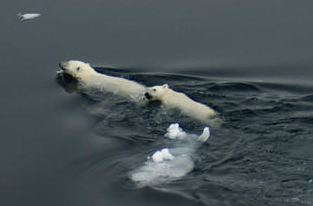
    A female polar bear swam for nine days straight to find hunting grounds in the Beaufort Sea.

    Her cub died during the 687-kilometre search for pack ice.

    Researchers, who tracked the bear with a radio collar in the summer of 2008, published their findings in the scientific journal Polar Biology.

    The article raises concerns that climate change is decreasing the amount of pack ice in the Arctic and is affecting polar bears’ hunting patterns.

    “The extraordinary long distance swimming ability of polar bears, which we confirm here, may help them cope with reduced Arctic sea ice,” researchers concluded.

    Source: The Star

  • Scientists confirm Polar bear Hybrid

    Scientists confirm Polar bear Hybrid

    Arctic Portal news

    Scientists in the Northwest Territories have come across a polar bear and grizzly hybrid in the Arctic. The animal that was killed on April 8 in the proximity of the Holman community by inuvialuit hunter David Kuptana.

    The animal is believed to be a second generation hybrid, meaning that it’s mother was a mixture of polar bear and grizzly bear, while it’s father was a regular polar bear. Scientists state that this may be the first second- generation polar-grizzly bear hybrid to be found in the wild.

    It is estimated that these hybrids will becoming increasingly apparent due to climate-change as polar bears are more likely to come into contact with grizzly bears due to declining summer sea ice, leaving them stranded on land.