Tag: policy

  • Nominations for Antarctica prize open

    Nominations for Antarctica prize open

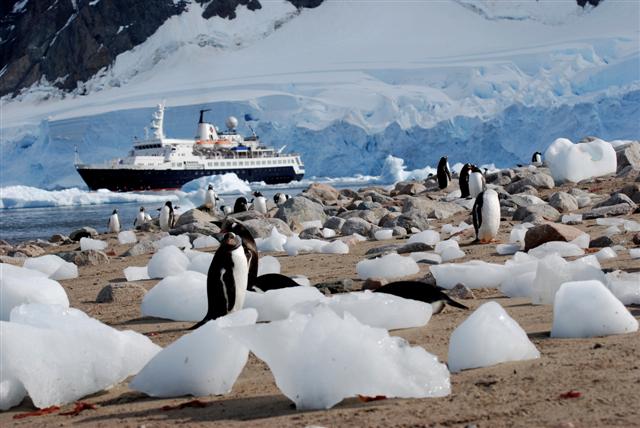
    Penguins in Antarctica

    Nominations for a prestigious prize for Science and Policy in Antarctica are now open.

    The “Martha T. Muse Prize for Science and Policy in Antarctica” is a US$ 100,000 unrestricted award presented to an individual in the fields of Antarctic science or policy who has demonstrated potential for sustained and significant contributions that will enhance the understanding and/or preservation of Antarctica.

    The Prize is inspired by Martha T. Muse’s passion for Antarctica and is intended to be a legacy of the International Polar Year 2007-2008.

    The prize-winner can be from any country and work in any field of Antarctic science or policy. The goal is to provide recognition of the important work being done by the individual and to call attention to the significance of understanding Antarctica in a time of change.

    A website with further details, including the process of nomination, closing date and selection of the Prize recipients is available at www.museprize.org.

    The Prize is awarded by the Tinker Foundation and administered by the Scientific Committee on Antarctic Research (SCAR).

    Source

    Muse Prize

  • The EU outlines its policy for the Arctic

    The EU outlines its policy for the Arctic

    The arctic

    The European Commission and the EU High Representative for Foreign Affairs and Security Policy have today outlined the way forward for the EU’s constructive engagement in the Arctic.

    A press release reads that “the Arctic region is a vital component of the Earth’s environment. Climate change in the Arctic is advancing dramatically, with change visible on a yearly basis, impacting significantly on its ecosystem and the livelihood of its inhabitants. At the same time, rapidly retreating sea ice alongside technological progress are opening up new economic opportunities in the region such as shipping, mining, energy extraction and fishing. While beneficial for the global economy, these activities also call for a prudent and sustainable approach: further repercussions for the fragile Arctic can be expected if top environmental standards are not met.”

    Summarized in three words, ”knowledge, responsibility, engagement”, the strategy adopted today contains a set of tangible actions that contribute to research and sustainable development in the region and promote environmentally friendly technologies that could be used for sustainable shipping and mining. It also underlines the EU’s activities in the Arctic since 2008. For example, the EU has made a contribution of 20 million EUR per year in Arctic research over the last decade and has invested more than 1.14 billion EUR in the sustainable development of the region since 2007.

    Catherine Ashton, the EU’s High Representative and Vice-President of the Commission stated: “With the actions presented today, we want to show the world that the EU is serious about its commitments towards the Arctic region. Developments in the Arctic add further urgency to our work to combat global climate change, and are of increasing strategic, economic and environmental importance to the European Union. The EU wants to make a positive contribution to the cooperation between the Arctic states and take into account the needs of indigenous and local communities inhabiting Arctic areas”.

    Commissioner for Maritime Affairs and Fisheries Maria Damanaki said: “The Arctic is rapidly going through important changes, allowing for new economic activity in a fragile part of the world. There are environmental challenges and opportunities that require global attention and the EU can help substantially: in research, funding, combating global warming and developing greener technologies. This is what the EU’s Integrated Maritime Policy is all about, to contribute to common solutions for the sustainable management of the seas.”

    The Communication contains a series of measures to support the effective stewardship of the Arctic. They include:

    • Support of Arctic research under the Commission’s proposed 80 billion EUR Horizon 2020 research and innovation programme (see IP/11/1475);
    • Contribution to search and rescue in the Arctic through the launch of the next-generation observation satellites (see IP/11/1477);
    • Stepping up of actions to combat climate change;
    • Use of EU’s funding opportunities to maximize sustainable development in the Arctic for the benefit of local and indigenous communities;
    • Promotion and development of environmentally friendly technologies that could be used by extractive industries in the Arctic;
    • Enhancing of bilateral dialogue on Arctic issues with Canada, Iceland, Norway, the Russian Federation and the United States, including by applying for permanent observer status in the Arctic Council;
    • Stepping up of efforts to hold regular dialogue with representatives of indigenous peoples organizations on EU policies and programmes;

    In total, the Communication contains 28 action points, the highlights are:

    • Climate change: the EU, on track to meet its Kyoto target, has incorporated its 20% greenhouse gas reduction commitment into law and remains committed to the long-term target of 80-95% reduction of its emissions by 2050.
    • Sustainable development: for the 2007 – 2013 financial period, the EU provides over €1.14 billion to develop the economic, social and environmental potential of the Arctic regions of the EU and neighbouring areas.
    • Research: The EU has made a leading contribution on Arctic research over the last ten years, contributing around 200 million EUR of EU funds to international research activities in the Arctic.

    The European Parliament and the EU Member States are now invited to submit their views on the proposed actions. The Communication also kick-starts a dialogue and consultation process with the Arctic countries, indigenous peoples and other interested parties to further refine the EU’s policy towards the Arctic.

    Source

    European Commission

  • EU-ARCTIC-Forum debate on EP Report A Sustainable EU Policy for the High North

    EU-ARCTIC-Forum debate on EP Report A Sustainable EU Policy for the High North

    EU Arctic Policy

    EU-ARCTIC-Forum will be hosting a debate with Arctic Stakeholders on the European Parliaments Report “A Sustainable EU policy for the High North” on 8. December 2010 in Brussels.

    Birgit Schnieber-Jastram, Chair of the EU-ARCTIC-Forum will host the meeting with the rapporteur Michael Gahler MEP and the shadow rapporteurs Anneli Jäätteenmäki MEP, Liisa Jaakonsaari MEP, Indrek Tarand MEP and Konrad Szymanski MEP before the December 9 vote of the Report in the Committee on Foreign Affairs.

    With the debate the EU-ARCTIC-Forum in the European Parliament wants to ensure a proper involvement of stakeholders facilitating thus well informed discourse in Brussels on Energy, Environment and Climate Change, Resources, World Trade Routes, Security, Sustainable Development etc, that are important subjects in the Arctic context.

    Those who want to participate and do not have an access badge to the EP yet, please send your details for registration (name, surname, date of birth, address) asap to Michael Gahler MEP. (michael.gahler(at)europarl.europa.eu)

    8. December at 17.15

    in Room ASP 3 H 1

    in the European Parliament in Brussels.


    Presentation and Consideration of the Draft Report on “A sustainable EU Policy for the High North” in the last meetings of the European Parliaments Committee on Foreign Affairs

    Summary

    Overall the Draft Report seems to be well perceived, both in the EU and in the Arctic. Thus there is justified hope that the Report will not only contribute to outline the EU’s Arctic policy, but also to contribute to confidence building with the Arctic stakeholders. The Draft Report undertakes to asses the existing legal and political framework in the Arctic as well as to establish a clear set of priorities of the European Union with regard to the Arctic. In the last part the Report is formulating suggestions and request to the European Commission and the Council and offering close cooperation to the Arctic states and stakeholders.

    The Draft Report is clearly stating that the Arctic Region is not a legal vacuum, but has a developed set of rules which nevertheless need to be further developed due to changing circumstances.

    Main priorities of the EU in the Arctic set out are:

    • The road to a sustainable socio-economic development and environmental protection
    • The potential of new world transport routes and their vital importance to the EU member’s states
    • The potential of developing resources like Hydrocarbons, Minerals, fish and biogenetic resources

    With regard to a sustainable socio-economic development the Eco-System based management approach as applied in the Barents today is recognized. The Report makes a clear statement as to the responsibility of the EU as one of the main contributors to pollution and climate change.

    In its conclusion the Report requests the Commission to set up a permanent Inter service on the Arctic and likewise in the future EEAS.
    Requests and suggestions are made as to a new circumpolar co-funding and co-programming research programme.
    Finally the importance of EU engagement in the further development of Northern Sea Routes is highlighted and suggestions as to the Galileo project are made.


    After an intense period of organized hearings, meetings and preparations on Tuesday, 9. November, the Draft of the European Parliaments Report on “A sustainable EU Policy for the High North” was presented and debated by the Parliaments Rapporteur Michael Gahler MEP.

    Draft Report

    List of Amendments


    About the EU-ARCTIC-Forum in the European Parliament

    Function

    The EU-Arctic-Forum was constructed to provide the European Institutions with a cross-party platform to foster a better understanding of changes in the Arctic Region and its implication for Europeans citizens politics and businesses, to facilitate a well informed and balanced debate, as well as to bolster the development of a coherent European Policy with regard to the Arctic Region.

    The EU-ARCTIC-Forum is the European Parliament’s platform working on all Issues with regard to the Arctic, providing not only for exchange and input of information but to interlink the so far too often fragmented debates on the Arctic.

    Participants

    The EU-ARCTIC-Forum is involving a number of MEP’s from all major political groups and several committees, Delegations and Intergroup’s such as the Committees on Foreign Affairs, Environment, Transport, Industry, Research and Energy, Development and Transport.

    Thus the EU-ARCTIC-Forum works as the European Parliaments platform interlinking all issues regarding the Arctic Region.

    It invites on a regular basis speakers from the scientific community, business, NGOs, and international institutions in the format of breakfast briefings, seminars or dinner speeches.

    Future Meetings are already organized and interest to participate was already expressed by several Commissioners and other High Officials, Foreign Ministers and Ambassadors of several Arctic States, as well as high profile leaders of the international or European Institutions such as the European Environmental Agency, the International Maritime Organization and the Nordic Council of Ministers, but also from Civil society, NGO’ s and the energy, fishing and shipping industry as well by leading academics in the field.

    Contributions

    In light of the ambition to stimulate and contribute to an informed debate, we call for contributions to the EU-ARCTIC-Newsletter by all interested participants and readers. We want to invite you to share your insights and opinions with the politicians, experts and stakeholders whose work will be addressed by this newsletter.

    The editor of the EU-Arctic-Newsletter and the organizers of the EU-ARCTIC-Forum look forward to your valuable comments and contributions and would like to draw your attention in particular to the forthcoming activities on the European Parliaments Report on “A sustainable EU Policy for the High North” in November and December in Brussels!
  • Finland’s strategy for the Arctic region

    Finland’s strategy for the Arctic region

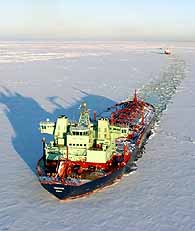
    Jaanmurtaja Icebreaker

    Over the past decade or so the world has become to realise the great importance of the Arctic region to the global ecology.

    New geopolitical situation that emerged after the end of the cold war enabled new scientific research and gradually the economical potential of the region came apparent. This notable change in how the Arctic is perceived has led to a series of new policy statements. Norway was the first Arctic country to establish an Arctic Policy in 2006 under the name “Norwegian High North strategy” and today, seven out of the eight Arctic Countries have an Arctic policy in addition to the EU Commission communication on European Union and the Arctic region.

    Finland was seventh Arctic country to draft an Arctic Policy. The Strategy was released June 4, 2010 and concentrates on seven priority sectors: security, environment, economy, infrastructure, indigenous peoples, institutions and the European Union. The strategy is not a final measure but rather a starting point in shaping Finland’s Arctic policy and will contribute to EU’s Arctic Policy, which is currently a work in progress.

    The strategy identifies as biggest security threats increasing seafaring and exploitation of the natural resources. Though there is no race to the natural resources in sight, activities in the region should continue to be based on the rule of international law and in order to protect the Arctic environment best practices and sustainable development should be pursued in activities throughout the region. The strategy recognizes that infrastructure is still lacking both onshore and offshore and needs to be improved in collaboration with neighboring countries. What comes to the economical potential of the region has Finland Arctic expertise in various sectors, especially in marine technology and logistics, which can be utilized in the large projects particularly in the Barents Region, but also in crosspolar transportation.

    Alexander Stubb

    According to the strategy will Finnish Sami continue to enjoy their rights as indigenous peoples and Finland will continue the work towards a national solution which will meet the minimum requirements of the ILO Convention on Indigenous and Tribal Peoples no.169.

    In the institutional level Finland emphasizes the importance of the Arctic Council as a forum for discussion and decision making. Finland lays down proposals for strengthening the Council so that the Council will be better prepared to act upon the contemporary situation. These proposals include revision of the mandate and working methods of the Council, better burden-sharing and a joint budget, establishment of a permanent secretariat, expansion of the normative role of the Council, enhanced interaction with non-Arctic actors and creation of a Communications and Outreach Strategy for the Council. In addition, Finland offers to host an Arctic Summit, a conference at the highest level, under the auspices of the Arctic Council to discuss and respond to the environmental concerns rising from the natural resource exploitation, to discuss the legitimacy of different actors in the Arctic and to the future development of the Arctic Council.

    But since Finland is an EU member state, as are Sweden and Denmark also, the EU Arctic Policy will play as well important role in Finnish Arctic strategy. The Strategy outlines that EU should consider the special features of the Arctic Region in the Union’s various policy sectors and increase its input in the area.
    Finland supports an establishment of EU Arctic Information Centre at the Arctic Centre of the University of Lapland and concurs the EU admittance as an permanent observer member of the Arctic Council.

  • Chinese Arctic Policy

    Chinese Arctic Policy

    Stockholm International Peace Research Institute (SIPRI) has launched a new report entitled “China and the High North prepare for an ice-free Arctic” dealing with the emerging interest of China on the anticipated Arctic Ocean shipping routes. The report is written by Linda Jakobson, the Acting Programme Director and Beijing-based Senior Researcher of the China and Global Security Programme of SIPRI, and is based on material gathered from officials, scholars and other primary sources in China.
    The main theme of the report is that despite the fact that China has no official Arctic policy “the country does appear to have a clear agenda regarding the Arctic”. Until now, China has mainly concentrated on the melting sea ice in the Arctic and its impact on China from the environmental point of view, but many Chinese academics are pointing out that China must broaden its focus from environmental issues to cover commercial and political issues as well.

    Chinese view on the arcticHu Zhengyue, Chinese assistant minister of foreign affairs stated in Arctic forum organized by the Norwegian Government on Svalbard in June 2009 that China supports Arctic countries’ sovereign and judicial rights under international law, pointing though out the need of refinement and development of the contemporary international law due to the circumstances that are arising from the melting of the ice. China points out that despite that large areas of the Arctic are under jurisdiction of coastal Arctic states, the Arctic cannot be seen as a regional matter only, due to the many international implications the emerging shipping routes and possible energy exploitation will have in future.

  • Polar Law Symposium: Russia’s Arctic Policy

    Polar Law Symposium: Russia’s Arctic Policy

    The 2nd Polar Law Symposium was held at the University of Akureyri the past weekend, September 10-12. This years Symposium was environment oriented having an indication of environment in all four themes. The themes this year were New Shipping Routes and Environmental Implications for the Polar Regions, Effective Environmental Governance, The Exploration and Exploitation of Resources and Human Rights and Polar Regions.

    Many distinguished speakers discussed the issues from different perspectives, but perhaps the most interesting or rather most anticipated information being shared at the Symposium was about the new Arctic policy of the Russian Federation by H.E. Victor Tatarintsev, Ambassador of the Russian Federation in Iceland.

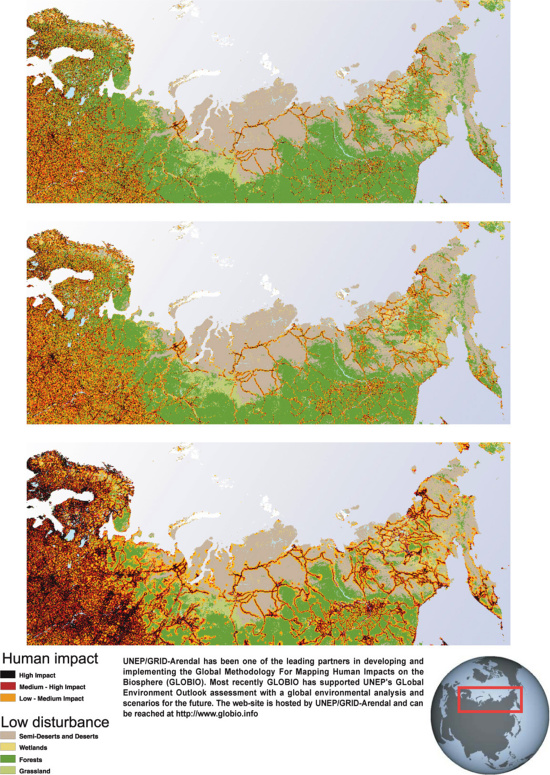
    human impact on the arcticDue to the new environmental developments in the Arctic and the international attention the area has gained in the past few years in international politics the Russian Federation has adapted a new Arctic Strategy to 2020 and beyond.

    The importance of the Arctic for the Russian Federation can not be undermined knowing the fact that it contains 1% of the Russian population and 18% of the territory, but produces 20% of the GDP and 20 % of Russia’s total export.

    According to H.E. Victor Tatarintsev the peace and international cooperation are the key issues in the Arctic in coming years. Russia will emphasize the cooperation through already existing framework, namely the Arctic Council and the Barents Euro-Arctic Council and does not aim at increasing its military presence in the area.

    The Arctic sea route will be of high importance for Russia as a strategic national transport route and reconstruction of the existing infrastructure on the Arctic coast-line will be one of the main tasks on national level. The sea route will not be important only because of the immense oil and gas production in the Russian north but also because of the development gap between the north and south, which must be cut down for the benefit of the people living in the area. New ports must be built to the remote areas to enable import of new technology and development and new kind of tourism in these areas must be made possible.

    Arctic Indigenous peoples play also a role in the new Russian Arctic Policy Russia committing itself to the existing international standards for the protection of indigenous livelihoods and will follow.

    Russian arctic shipDespite the fact that Russia is very committed to the existing cooperation regime and intends to obey the international law in all matters, H.E. Victor Tatarintsev reminded people not to simplify the situation too much. Certain unresolved legal and political issues remain in the Arctic and cooperation should be enhanced to abolish uncertainties around these issues. As an example he pointed out the Russian flag in the bottom of the Arctic sea incident, which according to him was purely scientific expedition and did not imply the political contention as it taken by the international community.

    As a conclusion, it can be said that the Russian Arctic policy aims to intensify the national development with the utmost goal of protecting legitimate aspirations of the Russian Federation while working within the international community.