Tag: project

  • Final remarks and project’s next steps

    Final remarks and project’s next steps

    AMATII logo

    Today, 6th of December 2012, the AMATII workshop (Arctic Transportation Infrastructure Response and Capacity and Sustainable Development in the Arctic) that for the past week has been taking place in the capital city of Iceland, comes to an end.

    The dialogue that has been taking place between representatives of public and private sector, policy makers and scientists, provided with better understanding of Arctic region and development of its maritime and aviation infrastructure.

    The matter of advanced economic development in the remote region in order to finance the development of Arctic infrastructure was highlighted. Funding infrastructure development in the High North has been recognized as a major issue for today’s policy makers.

    Gaps in knowledge were addressed by scientists from all of the Arctic states and future of the AMATII database as the main source of aviation and maritime information has been discussed. International instruments that are already in place should be used and employed by the project.

    The conference treated not only the current but also future activities in the Arctic in relation to maritime an aviation transportation sector.

    The Arctic Maritime and Aviation Transportation Infrastructure Initiative (AMATII) was a platform for addressing critical needs in the Arctic’s aviation and maritime environment.

    The Initiative approached Arctic air and maritime transportation policy, education, and research from various vantage points and facilitated on going and increased communication and collaboration throughout the Arctic.

    It was agreed that in the future, today’s initiative will serve as a coordination point for research and it will facilitate technology transfer within and between Arctic nations.

  • INTERACT calls for proposals

    INTERACT calls for proposals

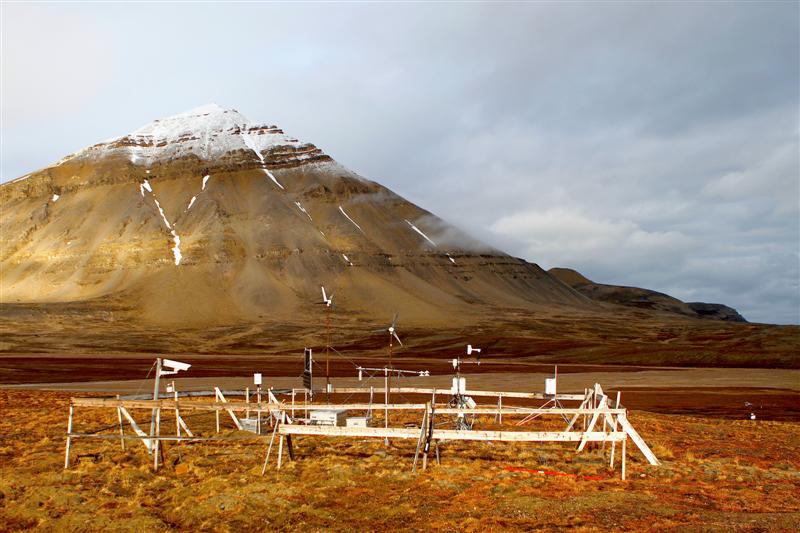
    Permafrost research site in Ny Alesund, Svalbard

    The INTERACT project is commencing its autumn period and is now calling for proposals for the next one.

    A call for summer 2013 and winter 2013/2014 will be open until 31st of October.

    The INTERACT project under EU FP7 has a Transnational Access program that offers access to 20 research stations in northernmost Europe and Russian Federation.
    The sites represent a variety of glacier, mountain, tundra, boreal forest, peatland and freshwater ecosystems, providing opportunities for researchers from natural sciences to human dimension.

    Transnational Access includes:

    • Free access for user groups/users to research facilities and field sites, including support for travel and logistics
    • Free access to information and data in the public domain held at the infrastructures

    The call for proposals for summer 2013 and winter 2013/2014 field seasons is open on the INTERACT website until 31st October, 2012.

    For additional information, visit the INTERACT website or contact WP4 coordinator Hannele Savela, hannele.savela(at)oulu.fi, or WP4 leader Kirsi Latola, kirsi.latola(at)oulu.fi.

  • Google helps preserve dying languages

    Google helps preserve dying languages

    Kid outside during winter

    Computer giant Google has launched a project to preserve over 3000 dying languages. The Endangered Languages Project is backed by a coalition of international scholars and linguists.

    Many of the languages are in the Arctic.

    “Of the 7,000 languages currently spoken, it is expected that 50 percent will not survive the turn of the century. And when the last fluent speaker of a language dies, that unique language could be lost forever. Google hopes to change that with this latest initiative,” read a statement.

    Users are encouraged to upload video, audio, or text files of rare dialects at the main website EndangeredLanguages.com. “Once they sign up they will be able to customize their profile page, upload material and add comments to the site,” according to Jason Rissman from Google.

    “The main goal of the site is language preservation; average citizens can help this cause by raising awareness in their local communities.”

    The project is supported by Google’s philanthropic arm, Google.org, but is a collaboration with the First People’s Cultural Council and the Institute for Language Information and Technology at Eastern Michigan University, who will takeover the project in the coming months.

    Click here to go to the website.

    Sources

    Fox

  • Student registration open for Master’s level course on Adaptation to Globalization in the Arctic: The Case of Reindeer Husbandry

    Student registration open for Master’s level course on Adaptation to Globalization in the Arctic: The Case of Reindeer Husbandry

    Virtual Learning Tools

    The Virtual Learning Tools project is a cooperation between the Arctic Portal, University of the Arctic, APECS, ICR, SVS and Hsvest to create a virtual learning tool specifically designed for Northern residents. During this January a pilot course led by Phillip Burgess at the ICR will commence within the system, prior to a formal launch in June 2011.

    Below is the Course announcement released by the University of the Arctic:

    Climate variability, climate change and the societal/cultural transformations associated with globalization have been, and continue to be, responsible for major changes in the physical environment, the biota and the cultures of the indigenous and other communities in the Arctic.

    Human-ecological systems in the Arctic are particularly sensitive to change, perhaps more than in virtually any other region. This is due in part to the variability of the Arctic climate and the livelihoods of Arctic peoples. Production systems of Arctic peoples in variable and unpredictable climates are based on the sequential utilization of, often, a large number of ecological or climatic niches. The essence of such systems is flexibility and the distribution of risk through diversity.

    Understanding vulnerability requires assessment of systems’ ability to adapt to impact and the extent to which freedom to adapt is constrained. International law has established the right of indigenous people like reindeer herders to participate at all levels of decision making in issues that concern their rights, livelihoods and future, and it is therefore an issue to consider in discussing adaptation.

    The course uses reindeer husbandry as a case based study for understanding rapid change in the Arctic. The cumulative impacts of climate change and globalisation on reindeer husbandry will be looked at and examined in terms of their impacts on the livelihood. Key drivers of change, vulnerability and adaptation will be identified and tools and barriers for adaptation for reindeer herders will assessed.

    The course has been created in a joint collaboration between IPY EALÁT, the EALÁT UArctic Institute for Circumpolar Reindeer Husbandry, the International Centre for Reindeer Husbandry, the Sami University College, Kautokeino, Norway, the Thule Institute, the University of Oulu Finland and the UArctic.

    This course is a following up of the ACIA Report to the Arctic Council and is a delivery from IPY EALAT # 399 consortium with its diverse activities from 2007 -2010 including workshops, lectures, seminars, speed talks, outreach and research activities which were all video recorded for teaching purposes.

    The course development has been supported by the Nordic council of Ministers Arctic co-operation funding (2006-2009, Thematic Network on Global Change in the Arctic, 2009- 2011, Arctic Virtual Learning Tools).

    Course is open for students registered in any of the University of Arctic member organizations (www.uarctic.org). There will be no pre selection to the course but 20 students will be accepted in the order of registration. Please note that for successful completion of the course, students will need to have sufficient English language reading, writing and comprehension skills.

    Acceptance for the course with login and technical information will be emailed directly to students in December 2010. The course is hosted by the University of Oulu, Finland (Faculty of Humanities & Thule Institute).

    The deadline for registration is December 10th, 2010 and enrollment and further information registration is only available online at www.vlt.is
  • Arctic Species Trend Index

    Arctic Species Trend Index

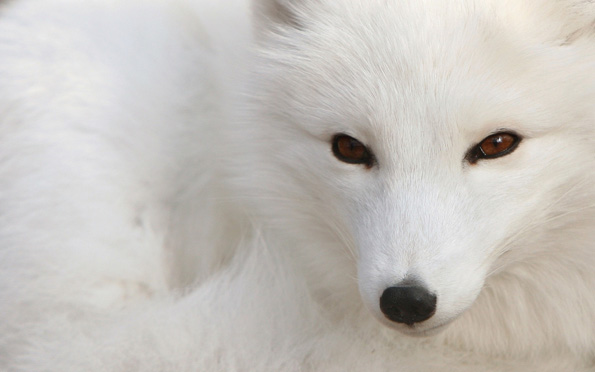
    Arctic foxArctic Species Trend Index (ASTI) is a biodiversity project commissioned and coordinated by the Arctic Council’s CAFF working group’s Circumpolar Biodiversity Monitoring Program. The ASTI keeps track how the Arctic’s ecosystems and the living resources dependent upon the ecosystems are responding to the environmental change taking place in the Arctic today. The Index, which was developed as a collaboration between the CBMP, the Zoological Society of London, UNEP World Conservation Monitoring Centre and the Worldwide Fund for Nature, uses population monitoring data to track trends in marine, terrestrial and freshwater Arctic vertebrate species. The index allows for a composite measure of the overall population trends of Arctic vertebrate populations. It can also be organized to display trends based on taxonomy, biome or region. Currently, the Index tracks almost 1000 Arctic vertebrate population data-sets by biome, taxa, migratory status etc. making it very important information source on Arctic biodiversity trends.

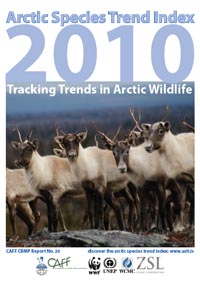
    ASTI coverThe ASTI has now released a new assessment on the Arctic’s biodiversity “Tracking Trends in Arctic Wildlife” according to which 26 per cent decline in species populations has occured in the high Arctic over the past 34 years. While some of these declines may be part of a natural cycle, there is concern that pressures such as climate change may be exacerbating natural cyclic declines.

    In contrast, population levels of species living in the sub-Arctic and low Arctic are relatively stable and in some cases, increasing. Populations of marine mammals, including bowhead whales found in the low Arctic, may have benefited from the recent tightening of hunting laws. Some fish species have also experienced population increases in response to rising sea temperatures.

    Because of the important role the Arctic ecosystem plays in the global ecology the results presented in the ASTI report are highly important for non-Arctic researchers as well. “Rapid changes to the Arctic’s ecosystems will have consequences for the Arctic that will be felt globally. The Arctic is host to abundant and diverse wildlife populations, many of which migrate annually from all regions of the globe. This region acts as a critical component in the Earth’s physical, chemical, and biological regulatory system,” says lead-author Louise McRae from the Zoological Society of London (ZSL).

    Further information on the project and the “Tracking Trends in Arctic Wildlife” report can be found on the ASTI homepage.

    For other complementary information, please see:

    The Circumpolar Biodiversity Monitoring Program (CBMP)

    The Zoological Society of London (ZSL)

    UNEP World Conservation Monitoring Centre (UNEP-WCMC)

    2010 International Year of Biodiversity

    Worldwide Fund for Nature (WWF)