
There exists no comprehensive definition on what Arctic is or where its borders lie. Different methods of defining the area give different outcomes and it is widely recognized that different regions within the Arctic vary enormously in terms of community viability, demographic, economic and social factors.
Consequently, the definition of the Arctic varies between different contexts.
In the human dimension, the Arctic covers Alaska (US), Canada north of 60°N together with northern Quebec and Labrador, Greenland, the Faroe Islands, Iceland, and the northernmost counties of Norway, Sweden and Finland.
In addition, the Murmansk Oblast, the Nenets, Yamalo-Nenets, Taimyr, and Chukotka autonomus okrugs, Vorkuta City in the Komi Republic, Norilsk and Igsrka in Krasnoyarsky Kray and parts of the Sakha Republic within the Russian Federation are considered as Arctic regions. (Arctic Human Development Report).
The Arctic region is within eight nation states Canada, Denmark/Greenland/Faroe Islands, Finland, Iceland, Norway, Sweden, The Russian Federation and the United States.
Here below each Arctic state is introduced as well as the Conference of the Arctic Parliamentarians, which is a cooperation body of the parliamentarians of all eight Arctic states. Following, the Arctic indigenous peoples are introduced through their representative organs.
Arctic States

The Conference of Parliamentarians of the Arctic Region (CPAR) is a parliamentary body comprising delegations appointed by the national parliaments of the Arctic states (Canada, Denmark, Finland, Iceland, Norway, Russia, Sweden, U.S.A.) and the European Parliament. The conference also includes Permanent Participants representing Indigenous peoples, as well as observers.The first Parliamentary Conference concerning Arctic cooperation was held in Reykjavik, Iceland in 1993. The Standing Committee of Parliamentarians of the Arctic Region, which is responsible for the work between conferences, started its activities in 1994.
The main aim of the Conference is to promote the work of the Arctic Council and it participates in the meetings of the Council as an observer. The Conference adopts a statement with recommendations to the Arctic Council and to the governments of the eight Arctic states and the European Commission. The Standing Committee closely monitors how the governments implement the Conference Statement, and take new initiatives to further Arctic cooperation.
Arctic Indigenous Peoples

The Arctic covers 40 million square kilometers or approximately 8% of the Earths surface, but hosts a population of only 4 million. Of the 4 million, various small groups of indigenous peoples, peoples who occupied the area long before the people of european tradition came, can be found. Almost all of them live today as a minority within the borders of contemporary nation states.
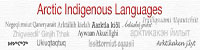
Only in Greenland are the Inuit in majority or 88% of the population while in Canada half of the population in the northern regions is indigenous. In Scandinavia and north-Russia, indigenous peoples are only a small fraction of the population or around 4-5%, Alaska having an indigenous population of around 20%.Despite that some 40 indigenous languages are still spoken in the Arctic, Russian, English and Scandinavian languages are the most dominant languages today. Only in Greenland is Inuktitut, an indigenous Inuit language, the only official language of the region.
In addition, Canada has just recently approved Nunavut’s proposal to declare Inuktitut, English and French the official languages of Nunavut.Arctic Indigenous peoples have been very active in promoting their rights in the international fora. The Saami in Scandinavia and the Inuit in Greenland and northern America have taken part in shaping the international law concerning the rights of indigenous peoples and participated in various international forums working for the promotion of their rights.
Permanent Participants to the Arctic Council

The Arctic Council Indigenous Peoples’ Secretariat is a support Secretariat for the International Indigenous Peoples’ Organisations that are Permanent Participants to the Arctic Council . IPS does not speak for the Permanent Participants. Instead, it creates opportunities for the Indigenous Peoples’ Organisations to speak for themselves, and helps provide them with necessary information and materials.
IPS work includes:
- Ensuring that Permanent Participants are sent documents and reports connected to the work of the Arctic Council and its working groups.
- Helping Permanent Participants to present their views to the Arctic Council and its Working Groups.
- Collecting and communicating information about the Arctic Council and its results to the Indigenous Peoples in the various parts of the Arctic.
- Providing co-ordination for the Indigenous Peoples’ Organisations to meet with each other, and to participate in the Arctic Council Working Groups.
 RAIPON was created in 1990 at the First Congress of Indigenous Peoples of the North. The Association was originally called the “Association of Peoples of the North of the USSR” and united 26 indigenous groups of the North Russia. Today, RAIPON unites 41 indigenous groups whose total population is around 250,000 people. These peoples are represented by 34 regional and ethnic organizations that have the authority to represent these groups both in Russia and in the international community.RAIPON is a permanent participant at the Arctic Council. RAIPON is an observer of UNEP Governing Council/Global Ministerial Environment Forum. RAIPON is an observer of World Intellectual Property Organization’s Committee on Intellectual Property and Genetic Resources, Traditional Knowledge and Folklore.Aiming to develop new knowledge about the interaction of actors in the High North, conducted by the Norwegian institute for defence Studies with partners and associates.
 The Aleut International Association (AIA) represents Aleut on the Russian and American Aleutian, Pribilof and Commander Islands. It is an Alaska Native not-for-profit corporation, 501(c)(3), registered in the State of Alaska, United States of America, in 1998. AIA was formed by the Aleutian/Pribilof Islands Association, U.S., one of the thirteen regional not-for-profit Alaska Native corporations created as a result of Alaska Native Settlement Claims Act in 1971, and the Association of the Indigenous Peoples of the North of the Aleut District of the Kamchatka Region of the Russian Federation (AIPNADKR).
AIA is governed by a Board of Directors comprised of four Alaskan and four Russian Aleuts under the leadership of a president. The current president is Mr. Michael Zacharof of Saint Paul Island, Alaska, U.S. The Executive Director is Victoria Gofman of Anchorage, Alaska, U.S.The organization was formed to address environmental and cultural concerns of the extended Aleut family whose wellbeing has been connected to the rich resources of the Bering Sea for millennia. Russian and American Aleuts are separated by distances, borders and the International Date Line but united by the great Bering Sea and the North Pacific.
Today, not only does the Aleut community share the resources of the region but the environmental problems as well. The need to understand global processes, such as trans-boundary contaminants transport, the impacts of climate change, and the effects of commercial fisheries on the ecosystem of the Bering Sea to name a few, was an impetus in joining in the work of international fora where AIA is actively pursuing collaboration with governments, scientists, and other organizations in developing programs and policies that could improve the wellbeing of the Aleut people and their environment. AIA was admitted as a permanent participant of the Arctic Council in 1998 and was granted Special Consultive Status by the Economic and Social Council of the United Nations in 2004. In addition, AIA is an accredited Non Governmental Organization (NGO) with the United Nations Framework Convention on Climate Change (UNFCCC) and the Global Environment Facility (GEF).

The Arctic Athabaskan Council (AAC) is an international treaty organization established to represent the interests of United States and Canadian Athabaskan member First Nation governments in Arctic Council fora, and to foster a greater understanding of the common heritage of all Athabaskan peoples of Arctic North America.The founding members of AAC include four Alaskan Athabaskan communities (Chickaloon Village Traditional Council, Healy Lake Traditional Council (Mendas Cha~Ag), Steven Village Tribal Government, Council, Northway Tribal Council)-and three Athabaskan representative bodies on the Canadian side-the Council of Yukon First Nations, representing eleven Yukon First Nations, the Dene Nation, representing 30 First Nations in the Northwest Territories and northern Manitoba, and Métis Nation-Northwest Territories, representing 13 communities in the Northwest Territories. In total, Arctic Athabaskan founding member governments represent approximately 32,000 indigenous peoples of Athabaskan descent residing in Arctic and Sub-Arctic North America. As more member governments from both the United States (Alaska) and Canada join, this number is expected to increase to approximately 40,000.
 The Gwich’in Council International (GCI) was established as a non-profit organization in 1999 by the Gwich’in Tribal Council in Inuvik, NWT, to ensure all regions of the Gwich’in Nation in the Northwest Territories, Yukon and Alaska are represented at the Arctic Council, as well as to play an active and significant role in the development of policies that relate to the Circumpolar Arctic. GCI has a number of priorities that relate to the environment, youth, culture and tradition, social and economic development and education.The founding members of GCI includes six Alaskan Gwich’in communities (Arctic Village, Chalkyitsik, Fort Yukon, Birtch, Circle and Venetie) two Gwich’in representative bodies in Canada – Vuntut Gwitchin First Nation representing Vuntut Gwitchin in Old Crow, Yukon, and Gwich’in Tribal Council representing four communities in the Beaufort Delta region in the Northwest Territories. In total, the Gwich’in Council International founding members represent approximately 9,000 indigenous peoples of Gwich’in descent. The GCI Secretariat rotates between the Gwich’in Tribal Council in Inuvik, NWT and the Vuntut Gwitchin First Nation in Old Crow, Yukon.
 The Saami Council is a non-governmental Saami organization (NGO), with member organizations in Finland, Russia, Norway and Sweden. Since its foundation in 1956 the Saami Council has actively dealt with Saami policy tasks.The primary aims of the Saami Council are the promotion of Saami rights and interests in the four countries having Saami population, to consolidate the feeling of affinity among the Saami people, to attain recognition for the Saami as one nation and to promote economic, social and cultural rights of the Saami in the legislation of the four states, Norway, Sweden, Russia and Finland. Saami Council renders opinions and makes proposals on questions concerning Saami people’s rights, language and culture.
Other indigenous organizations in the Arctic
Saami Parliaments
 The Finnish Saami Parliament was founded in 1996 by legislation (Act on Saami Parliament 1995/974). It is an independent legal entity of public law, which, due to its self-governmental nature, is not a state authority or part of the public administration. Its main purpose is to plan and implement the cultural self-government guaranteed to the Sámi as indigenous peoples under both international law and Finnish constitution. The Finnish Sámi Parliament functions under the administrative sector of the Ministry of Justice and has the capacity to make initiatives, proposals and statements to the state authorities.
The Swedish Saami Parliament was founded in 1992 (Act 1992: 1433). It is both a public authority and a parliament chosen by the Swedish Saami population. Its main aim is to improve the Saami’s possibilities to protect and develop their culture. The Swedish Saami Parliament functions under the Ministry of agriculture
The Norwegian Saami Parliament is an elected representative assembly for the Saami in Norway, with representatives chosen by direct elections in 13 constituencies across the country. These elections are held simultaneously with Norway’s general elections, but are based on a separate Sami electoral register.
 The Inuit Circumpolar Council is a transnational non-governmental organization representing 150 000 Inuit across the Circumpolar North. The ICC began originally as an Inuit Circumpolar Conference, first held in 1977, and gradually evolved to become a Council in the 10th General Assembly meeting of the Inuit Circumpolar Conference in 2006 in Utqiagvik, Alaska. The ICC represents today four different Inuit regional organizations in Canada, Alaska, Greenland and Russia.
The Russian regional Council in Chukotka was opened 2001 and it operates closely with the Yupik Society, which represents Chukotka’s Inuit locally and nationally. The ICC Alaska consists of Inuit from the North Slope Borough, Northwest Arctic Borough, the Bering Straits Region, and the Yukon-Kuskokwim Region and the ICC Canada represents the four land-claim regions, namely Inuvialuit, Labrador, Nunavik, and Nunavut. The ICC Greenland differs from the other regional Councils, representing different organisms of the Greenlandic society instead of representing specific area within the country.
Members in the Greenlandic ICC are thus NGOs like the women’s association, political entities such as Greenland’s parliament and political parties and special-interest groups, e.g. Greenland’s workers union (SIK). The principal objective of the ICC is to create unity amongst the Inuit to be able to promote their common agenda on the international level. In addition, the ICC stresses the importance of sustainable environmental management in order to preserve the wildlife and biological diversity and recalls the right of Inuit to the natural resources in their traditional areas.
 Inuit Tapiriit Kanatami (ITK) is the national Inuit organization in Canada, representing four Inuit regions – Nunatsiavut (Labrador), Nunavik (northern Quebec), Nunavut, and the Inuvialuit Settlement Region in the Northwest Territories. Inuit Tapiriit Kanatami, formerly Inuit Tapirisat of Canada, was founded in 1971 to represent and promote the interests of Inuit. In its history, ITK has been effective and successful at advancing Inuit interests by forging constructive and co-operative relationships with different levels of government in Canada, especially in the area of comprehensive land claim settlements, and representing Inuit during the constitutional talks of the 1980s.
Despite successes on the land claims front, Inuit still face enormous challenges in their quest for equal opportunity and prosperity in Canada. Specifically, they want the federal government to recognize that Inuit have different concerns and needs from other Aboriginal people and to commit itself to Inuit-specific policies and programs.
 The Innu Nation is the organization that formally represents the Innu of Labrador, approximately 2200 persons, most of whom live in the two Innu communities of Sheshatshiu and Natuashish. The Sheshatsiu Innu live in the community of Sheshatshiu while the Mushuau Innu live in the community of Natuashish. Some Innu also live in other communities within Labrador and on the Island part of the province of Newfoundland and Labrador. In order to protect their interests, their land and their rights from outside forces the Innu people first organized themselves. In 1976 under the Naskapi Montagnais Innu Association (NMIA).
In 1990, the NMIA changed its name to the Innu Nation. Today the Innu Nation forms the governing body of the Labrador Innu. In addition to the Innu Nation, residents of Sheshatshiu and Natuashish elect their own band council and the chiefs of both councils are members of the The Executive Council of the Innu Nation.
The Innu Nation’s mandate is to speak as one voice to protect the interests of the Innu people and to oversee all its political and business affairs. The Innu Nation is involved in on-going land claim and self-governance negociations with the Federal and provincial governments. As of 2006, the Innu of Labrador have been formally recognized under The Indian Act of Canada.
The Innu Nation is also involved in the social and economic development and well-being of its community

The Grand Council of the Crees is the political body that represents the approximately (2003) 14,000 Crees or “Eeyouch” (“Eenouch” – Mistissini dialect), as they call themselves, of eastern James Bay and Southern Hudson Bay in NorthernQuebec. The Grand Council has twenty members: a Grand Chief and Deputy-Grand Chief elected at large by the Eeyouch, the chiefs elected by each of the nine Cree communities, and one other representative from each community. The present Grand Chief is Matthew Mukash and the Deputy Grand Chief is Ashley Iserhoff. The Council’s head office is in the Cree community of Nemaska, although it also has offices in Montreal and Ottawa.

 Canada
 Greenland


 Iceland
 Norway
 The Russian Federation
 United States of America


 Barents Arctic Network of Graduate Schools (BANG) brings together Ph.D. students and experienced senior scientists specialised in problematics of the Barents region, and representing various disciplines.

