Tag: report

  • Arctic Biodiversity Assessment – Arctic Biodiversity Trends 2010: Selected indicators of change report

    Arctic Biodiversity Assessment – Arctic Biodiversity Trends 2010: Selected indicators of change report

    CAFF - Arctic Biodiversity Trends 2010CAFF – The Arctic Biodiversity Trends 2010 Report, produced by some of the world’s leading experts of Arctic ecosystems and biodiversity, is the Arctic Council’s contribution to the United Nations International Year of Biodiversity in 2010 and will be a preliminary product under the Arctic Council project ‘Arctic Biodiversity Assessment’ (ABA).

    In 2008, the United Nations Environment Program passed a resolution expressing ‘extreme concern’ over the impacts of climate change on Arctic indigenous peoples, other communities, and biodiversity. It highlighted the potentially significant consequences of changes in the Arctic. The Arctic Biodiversity Trends – 2010: Selected Indicators of Change report indicates that some of those anticipated impacts on Arctic biodiversity are already occurring.

    The report is based on twenty-two indicators and provides a snapshot of the trends being observed in Arctic biodiversity today. The polar bear is one of the most well-known species impacted by changes in the Arctic, but it is not the only one. The indicators show that the Arctic has changed dramatically during recent decades and that unique Arctic habitats for flora and fauna are disappearing. Furthermore, some species of importance to Arctic people or species of global attention are declining.

    The report presents 7 key findings;

    • Unique Arctic habitats for flora and fauna, including sea ice, tundra, thermokarst ponds and lakes, and permafrost peatlands have been disappearing over recent decades.
    • Although the majority of Arctic species are not currently declining, some harvested species of importance to Arctic people or species of global significance are declining.
    • Climate change is emerging as the most far reaching and significant stressor on Arctic biodiversity. However, contaminants, habitat fragmentation, industrial development, and unsustainable harvest levels continue to have impacts. Complex interactions between climate change and other factors have the potential to magnify impacts on biodiversity.
    • Since 1991, the extent of protected areas in the Arctic has increased, although marine areas remain poorly represented.
    • Changes in Arctic biodiversity are creating both challenges and opportunities for Arctic peoples.
    • Long-term observations based on the best available traditional and scientific knowledge are required to identify changes in biodiversity, assess the implications of observed changes, and develop adaptation strategies.
    • Changes in Arctic biodiversity have global repercussions.

    To download the report and to learn more about the Arctic biodiversity please go to the Conservation of Arctic Flora and Fauna (CAFF) Working Group under the Arctic Council homepage or Arctic Biodiversity Trends 2010 reports homepage
  • State of the Arctic Coast 2010 Report

    State of the Arctic Coast 2010 Report

    State of the Arctic Coast cover

    The Arctic coastal interface is a sensitive and important zone of interaction between land and sea, a region that provides essential ecosystem services and supports indigenous human lifestyles; a zone of expanding infrastructure investment and growing security concerns; and an area in which climate warming is expected to trigger landscape instability, rapid responses to change, and increased hazard exposure.

    Starting with a collaborative workshop hosted by the Norwegian Institute for Air Research in October 2007, the International Arctic Science Committee (IASC), the Land-Ocean Interactions in the Coastal Zone (LOICZ) Project and the International Permafrost Association (IPA) decided to jointly initiate an assessment of the state of the Arctic coast. The goal of this report is to draw on initial findings regarding climate change and human dimensions for the Arctic as a whole provided by the ACIA and AHDR reports to develop a comprehensive picture of the status and current and anticipated changes in the most sensitive Arctic coastal areas. Adopting a social ecological system perspective the report considers the implications of change for the interaction of humans with natural coastal systems. The report is intended as a first step towards a continuously updated coastal assessment and aims to identify key issues requiring future scientific attention in an international Earth system research agenda.

    State of the Arctic Coast 2010

    The draft report is the outcome of this collaborative effort and starts with a thematic review of the state of physical and ecological systems and human communities and activities on the Arctic coast as of 2010. It than moves to a more holistic and coupled-system perspective to identify
    knowledge gaps and future research needs. Current knowledge presented and synthesized is based on published literature and other sources.

    The document was prepared by an international writing team, including 15 Lead Authors and 27 Contributing Authors. The draft report was released during the IPY Oslo Conference, 8-12 June 2010. The whole report will soon be available for a 2-month public review during August-September with the objective to publish the final version early in 2011. Instructions for submitting review comments will be posted along with the full draft report by the end of July.

    General Editor: Donald L. Forbes (dforbes@nrcan.gc.ca)

    Editorial Board: Hugues Lantuit (hugues.lantuit@awi.de) Volker Rachold (volker.rachold@iasc.info) Hartwig Kremer (hartwig.kremer@loicz.org)

    For more information and to access the report, see: http://arcticcoasts.org

    To submit comments and questions, please email: info@arcticcoasts.org

    For more information and to access the draft report, see: http://arcticcoasts.org

  • Antarctic Climate Change and Environment

    Antarctic Climate Change and Environment

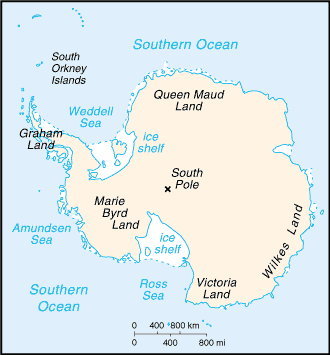
    Antarctica mapThe first comprehensive review of the state of Antarctica’s climate and its relationship to the global climate system was published in the beginning of December 2009 by the Scientific Committee of Antarctic Research (SCAR).

    The newly published report examines the highly complex relationship of Antarctic environment with the global ecosystem that is increasingly affected by human activity. Already some signs of the changed Antarctic environment had been detected, i.e. the Antarctic ozone hole, but the fact is that the climate change has and will most likely have an unprecedented affect on the Antarctic and thus to us all. For example, contains Antarctica 90% of the world’s ice and 70% of the world’s fresh water, which is enough to raise sea level by 63 m.

    The report draws, however, quite interesting picture of the changing environment in the Antarctic. While the overall surface temperature and ice coverage around the continent have remained the same over the past 30 years, some specific parts of Antarctica are experiencing significant change.

    First, the report points out that for the last 30 years the ozone hole has shielded the bulk of the Antarctic from the effects of the global warming. The report maintains that despite the quite extensive changes in the surface temperature and snowfall around the Antarctic the temperature as well as Antarctic overall snowfall have remained at the same level. It is further notable, that while sea ice extent across the Arctic Ocean has decreased markedly over recent decades, around the Antarctic it has increased by 10% since 1980, particularly in the Ross Sea region. This increase is a result of the stronger winds around the continent, changes in atmospheric circulation and the isolating effect of the ozone hole. This is especially interesting, since the Antarctic Circumpolar Current around the continent has warmed more rapidly than the global ocean as a whole resulting in a major change in the Southern Ocean ecosystem. In recent decades the Ocean has become less effective in absorbing CO2 and ecological key species (such as planktonic snails) are expected to be negatively affected by progressive ocean acidification.

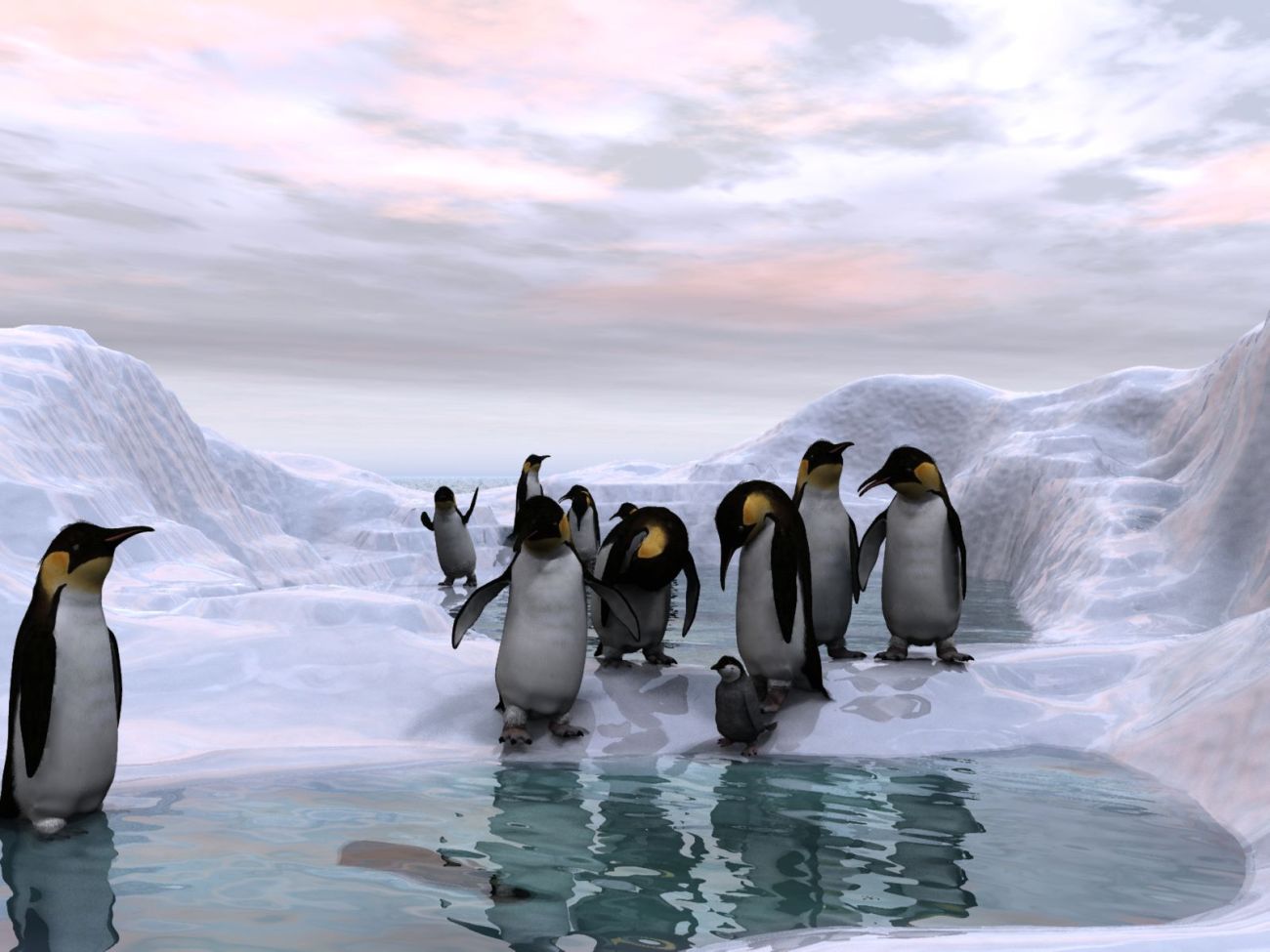
    Antarctic dawnOn the other hand, along with higher temperatures, the Antarctic Peninsula on the west coast of the continent, has experienced a marked switch from snowfall to rain during the summer, which has led to rapid expansion of plant communities and the colonization of newly available land by plants and animals. In addition, there has been significant thinning of the West Antarctic Ice Sheet, especially around the Amundsen Sea Embayment, as well as a few smaller coastal areas in East Antarctica, which has resulted in diminishing Krill stocks and changed distribution of Adélie penguins.

    The report predicts that if greenhouse gas concentration in the atmosphere doubles over the next century, the Antarctic will warm around 3°. This increase could contribute to a projected total sea level rise of up to 1.4 metres by 2100.

    For further information, please go to the Scientific Committee of Antarctic Research or access the SCAR publications

  • Climate Change and Arctic Sustainable Development Report

    Climate Change and Arctic Sustainable Development Report

    Arctic Portal news

    UNESCO Publishing has just released Climate Change and Arctic Sustainable Development: Scientific, Social, Cultural and Educational Challenges.

    This book brings together the knowledge, concerns and visions of leading Arctic experts in the natural and social sciences, and of prominent indigenous leaders from across the circumpolar North.

    For more information: http://publishing.unesco.org/details.aspx?&Code_Livre=4722&change=E

  • Arctic Marine Shipping Assessment Report 2009

    Arctic Marine Shipping Assessment Report 2009

    AMSA 2009 report

    The Protection of the Arctic Marine Environment working group of the Arctic Council has released a new Arctic Marine Shipping Assessment report for the year 2009.

    The AMSA working group, led by Canada, Finland and the United States has produced a extensive and well-illustrated document that represents a four-year effort to consider and review all aspects of Arctic shipping. It includes documentation of shipping activities from a baseline year (2004) and future projections in key areas such as environmental protection, marine infrastructure, human dimensions, and governance. The report also contains series of very useful maps and charts.

    Main topics of the report are:

    • Arctic Marine Geography, Climate and Sea Ice
    • History of Arctic Marine Transport
    • Governance of Arctic Shipping
    • Current Marine Use and the AMSA Shipping Database
    • Scenarios, Futures and Regional Futures to 2020
    • Human Dimensions
    • Environmental Considerations and Impacts
    • Arctic Marine Infrastructure

    The Arctic is undergoing extraordinary transformations early in the 21st century. Natural resource development, governance challenges, climate change and marine infrastructure issues are influencing current and future marine uses of the Arctic. The Arctic Council, recognizing these critical changes and issues, at the November 2004 Ministerial meeting in Reykjavik, Iceland, called for the Council’s Protection of the Arctic Marine Environment (PAME) working group to “conduct a comprehensive Arctic marine shipping assessment as outlined under the Arctic Marine Strategic Plan (AMSP) under the guidance of Canada, Finland and the United States as lead countries and in collaboration with the Emergency Prevention, Preparedness and Response (EPPR) working group and the Permanent Participants as relevant.” The Arctic Marine Shipping Assessment, or The AMSA 2009 Report, is the product of that Arctic Ministerial decision in Reykjavik and was approved at the 2009 Arctic Council´s Ministerial meeting in Tromsø.

    The AMSA 2009 Report