Tag: research

  • Don’t miss the deadline!

    Don’t miss the deadline!

    Arctic Energy Summit 2013

    Arctic Energy Summit calls for papers. The opportunity for submission expires on April 15th. Don’t miss this opportunity to share your research and insights with your peers at the premier Arctic energy event. We welcome submissions that directly address the conference theme.

    Submissions are accepted for Paper Presentations, Poster Sessions, Panels and Workshops. Click here for more information on the types of submissions accepted, abstract guidelines and the conference themes, or email aen@institutenorth.org.

    The 2013 Arctic Energy Summit is a multi-disciplinary event expected to draw several hundred industry officials, scientists, academics, policy makers, energy professionals and community leaders together to collaborate and share leading approaches on Arctic energy issues.

    The 2013 Summit will address energy extraction, production and transmission in the Arctic as it relates to three thematic areas and key questions.

    For more information about the conference, the registration and sponsorship’s opportunity, please visit the conference website.

    Source

    Arctic Energy Summit

  • Eurofleets 2 Calls are now open

    Eurofleets 2 Calls are now open

    Eurofleets 2

    EUROFLEETS2 which is a EU funded project providing scientists with 200 fully funded days of ship-time and 104 fully funded days of marine equipment to carry out ship-based research activities within any field of marine sciences.

    The project has now opened for proposals under three different categories: Polar and Sub polar Call – which is a ship time application to carry out research in the polar and sub Polar Regions. Deadline for applications is 24th of May 2013.

    Super – Integration Call – seeks to identify a truly cross cutting proposal, able to prove its scientific excellence, i.e. mobilizing private and public funding structures on top of EUROFLEETS funding.

    Visit www.eurofleets.eu and submit an “Expression of Interest” until the 15th of May 2013. The “Expression of Interest” is not binding but desirable. Logistically accepted pre-proposals will be invited to submit a full proposal from the 14 th of June till the 16th of September 2013.

    Embarked Equipment Call 2013: Equipment time is offered within participating scientific marine equipment (2x 3D HD TV Cameras, 2x ROV and MARUM-MeBo) to be deployed from RVs or from underwater vehicles funded by other sources than EUROFLEETS2. The call will open in June 2013.

    For more information, please visit the Project’s Website.

    Source

    EUROFLEETS

  • Young researchers gathered in Reykjavik

    Young researchers gathered in Reykjavik

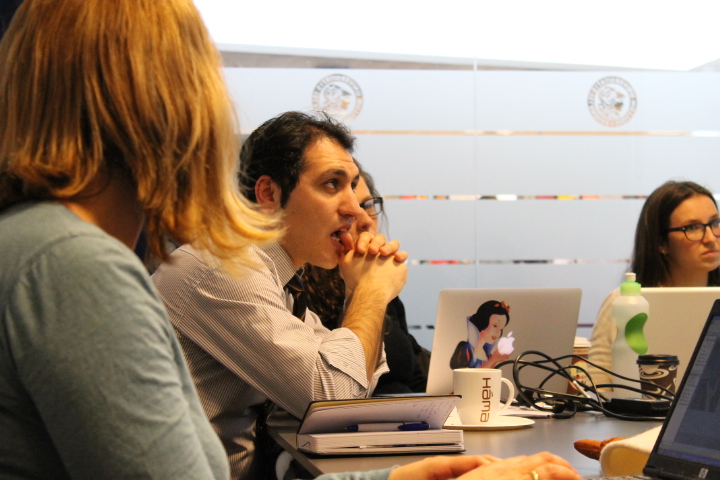
    Young researchers gathered yesterday at the University of Iceland

    Yesterday, 20th of March, young researchers met at the University of Iceland in order to discuss and present their on-going research work. Friendly and informal meeting involved young engineers, natural and social scientists.

    Ph.D and Master students from various parts of the world, to include Italy and Iran got a chance to present their high quality research, carried out at various highly recognized universities, to include University of Akureyri, Iceland, Tromso University in northern Norway and many others.

    Research topics were greatly focused around the Arctic issues and touched upon biosciences, fisheries, law, politics and international affairs. The meeting created the platform for information, knowledge and experience exchange and allowed the development of new ideas and further interaction between representatives of various disciplines.

    The meeting was chaired by Margaret Cela, the Project Manager of new Centre for Arctic Policy Studies, University of Iceland. The Centre which was formally opened on Tuesday, during the international meeting: ”Trans – Arctic Agenda” will be the forum for interdisciplinary collaboration in the field of Arctic research with emphasis on the role and policies of states and institutions, non – state and corporate actors, and broader aspects of governance, culture and society in the High North.

    Click here to read more about the new Centre for Arctic Policy Studies.

    Source

    Center for Arctic Policy Studies, University of Iceland

  • EU in the Barents region addressed

    EU in the Barents region addressed

    NArFU conference discussions

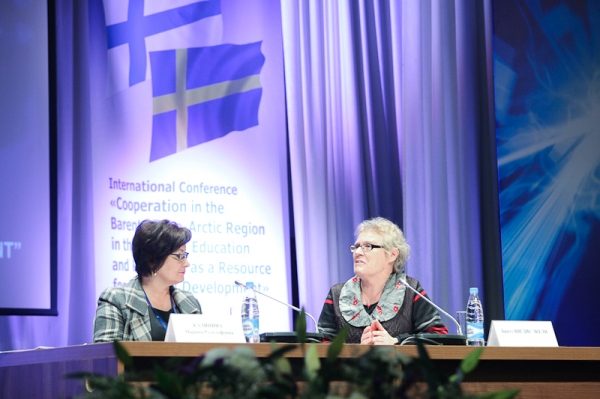
    Leading researches and experts, politicians, representatives from business and authorities are attending the conference “Cooperation in the Barents Euro-Arctic Region in the field of education and research as a resource for regional development”.

    The conference is held in the Northern (Arctic) Federal University (NArFU). 

    The conference yesterday started with the plenary session. Ingvild Broch, Coordinator External Review made a short overview of cooperation in the spheres of education and research in the BEAR and pointed out some future challenges. She touched upon some important historical facts of international cooperation between Russia and Scandinavian countries. Marina Kalinina, Vice-rector of International cooperation, NArFU spoke about “University as a Driving Force of Change” and named the priority goals of the Northern (Arctic) Federal University.

    Harry Malinen, Senior expert of the University of Lapland and Lapland University Consortium (Finland) talked about the opportunities for the universities within EU framework. He paid special attention to existing international programs in the Barents region and EU relevant for those who work within research and education area. Anatoly Smirnov, the President of the National Institute for Research of Global Security finished the plenary session with his report about information technologies in the Barents region.

    Later this day a new cooperation agreement was signed between NArFU and Finnmark College. Ingvar Hauge, the senior advisor of Finnmark University College and Elena Kudryashova, the Rector of NArFU signed the document that marks the beginning of a new stage in the history of collaboration between two universities. This agreement aims to develop partnership in educational and exchange programs as well as other important issues.

    “Murmansk and Arkhangelsk universities are the most important partners for us in Russia. I would like to bring forward cooperation in the fields like language, tourism, economics, social works, management of natural resources. And the most important sight of this cooperation is perhaps student and academic exchange, what I think we can bring forward,” Ingvar Hauge commented.

    After a short coffee break the participants of the conference went on parallel sessions that focused on different issues of Barents region cooperation and its connections to cooperation with business and industry, challenges in education, and carrier paths in BEAR for youth.

    Consul General of Sweden in St.Petersburg Mr. Jan Nyberg, visited NArFU in the framework of the conference this day as well. During a working meeting with Elena Kydryashova and Marina Kalinina he discussed the issues of cooperation between Russian and Swedish universities. Jan Nyberg also had an excursion around the campus and had a meeting with the students and lecturers from the Institute of Philology and Cross-Cultural Communication, who study Swedish language.

    During closing plenary session the participants had a possibility to sum-up the result of intensive sessions’ work and to share their findings and proposals for the new Kirkenes Declaration.

    Source

    NArFU

  • Big grant for Russian-Norwegian projects

    Big grant for Russian-Norwegian projects

    Arctic research

    Norway and Russia have strengthened their joint research ventures by putting around €1,5 million Euros to three projects.

    “The projects will enhance public knowledge of Norway and Russia. In the long term knowledge to facilitate better management of areas and benefit including petroleum industry,” according to the Research Council of Norway.

    The three projects that have received grants are “4DARCTIC: Structure and evolution of Arctic crust and mantle based on multi-scale Geophysical studies”, which is a joint project between the University of Oslo and the Institute of Petroleum Geology and Geophysics; “CLIMate variability and change in the Eurasian ARCtic in the 21st century”, a cooperation project between the Nansen Center and Voeikov Main Geophysical Observatory; “Combined effects of Petroleum and the Environment in bivalves from the Norwegian-Russian Arctic”, a joint project between the University of Tromsø and the Karelian Research Centre, RAS Institute of Biology.

    All the three projects are cooperation projects between scientists in Norway and Russia. The project partners are covering half of the expenses, the rest is covered by the Russian research foundation Russian Foundation for Basic Research (RFBR) and the Research Council of Norway is covering the Norwegian part, the BarentsObserver reports.

    “This research cooperation will give an important contribution to a holistic management of the sea and the resources in Arctic areas through a common knowledge base”, says the Research Council of Norway’s Director Arvid Hallén to the council’s web site.
    Source:
    BarentsObserver

    Research Council of Norway

  • French Arctic Marine Research introduced

    French Arctic Marine Research introduced

    Dr. Marie-Noëlle Houssais

    Today at the University of Akureyri, dr Marie – Noelle Houssais gave a speech on French contribution to the Arctic marine scientific research.

    For the past two decades France has been extremely active in contributing to main axes of Arctic marine research.

    Governmental and non – governmental organizations have been involved in monitoring and evaluating of the climate system, understanding the processes, underpinning its variability as well as estimating the future state of the Arctic and the potential impacts.

    Dr. Houssais highlighted socio – economic impacts of climate change in the Arctic to include marine transportation on northern sea routes, exploitation and extrication of marine living and non – living resources.

    France has a long history in both Arctic and Antarctic research activities and expeditions. Logistical support to polar activities in the country largely benefits Arctic and Antarctic projects.

    Dr. Marie Houssais is a Doctor of Sciences at Universitee Pierre et Marie Curie Paris Sorbonne (UPMC), an oceanographer physicist specializing in the polar regions. She was elected member of Scientific Council of the UPMC over the period 2008 – 2012. It was dr Houssais´ second visit to Iceland.

  • Yacht sail and research this summer

    Yacht sail and research this summer

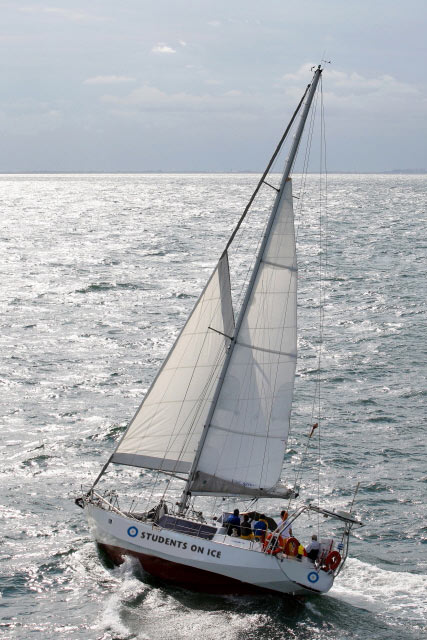
    The Arctic Tern

    Researchers have a unique opportunity to travel around the Arctic this summer. The Association of Polar Early Career Scientists invites researchers to join WWF and the Students on Ice Foundation on a summer expedition to the high latitudes of Greenland and the Canadian Arctic.

    The mean of travel is the expedition sailboat Arctic Tern, which will sail between communities whilst researchers can do their research on land, the sea or in the communities themselves.

    The Arctic Tern is a 50 ft. expedition sailing yacht with a retractable keel to meet the risks of sailing in ice-bound areas which also enables it to sail onto a beach.

    The journey will include experiences polar sailors. It was acquired by Students on Ice in September 2009 to serve as a platform for education, science research, film and media.

    Research areas will include ecosystem productivity, sea ice, flora and fauna, permafrost, ocean currents and cultural adaptations. Application deadline is May 21st and only seven places are available.

    Sources

    APECS

  • Little Ice Age caused by volcanic eruptions

    Little Ice Age caused by volcanic eruptions

    University of Colorado Boulder Professor Gifford Miller

    The Little Ice Age is a cold period that scientist have debated when begun, and how it started. New research sheds new light on this important time in question.

    A new study published in the Geophysical Research Letters, states that the Little Ice Age was caused by the cooling effect of several volcanic eruptions and sustained by changes in the Arctic ice cover.

    The research team conducted its work in Iceland and Canada, both in and near glaciers, and in ancient plants.

    The eruptions happened earlier then many have predicted the ice age began, just before 1300. Nasa for example says that it happened around 1550.

    This resulted in the Earth getting colder for centuries. The global dip was around 1°C, but parts of Europe cooled even more. The Thames River in London even froze.

    Disputes have arisen over what caused the cooling, but the new study concludes it was the volcanic eruptions. The four eruptions between 1250 and 1300 blasted huge clouds of sulphate particles into the upper atmosphere which cooled the Earth, because the sun´s beamc was reflected back into space.
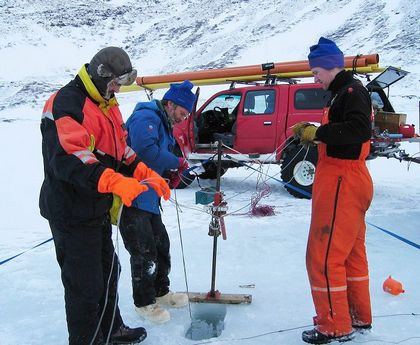
    Researchers in Hvítárvatn Iceland

    “This is the first time we can put an almost specific dates to the Little Ice Age,” Icelandic researcher Áslaug Geirsdóttir said. She was one of the partners in the project.

    “Key elements were the cores taken from the bottom of Hvítárvatn lake,” she said. The lake is near Langjökull in Iceland.

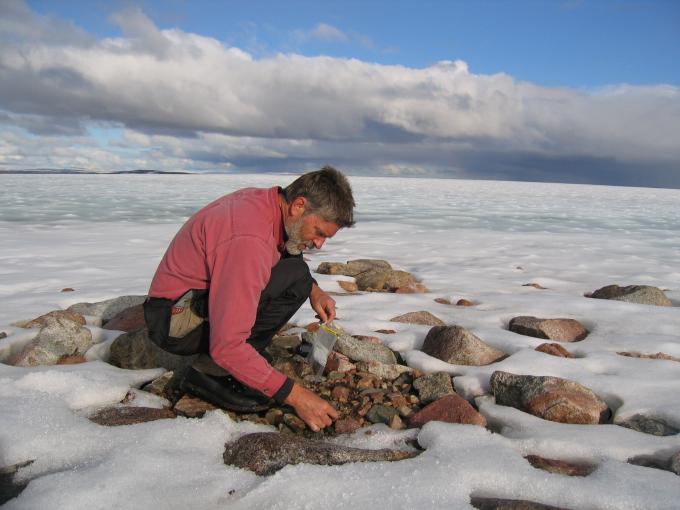
    The scientists studied several sites in north-eastern Canada and in Iceland where small icecaps have expanded and contracted over the centuries. When the ice spreads, plants underneath are killed and “entombed” in the ice. Carbon-dating can determine how long ago this happened, according to the BBC.

    These plants provide a record of the icecaps’ sizes at various times – and therefore, indirectly, of the local temperature.

    An additional site at Hvítarvatn in Iceland yielded records of how much sediment was carried by a glacier in different decades, indicating changes in its thickness.

    When the researchers plugged in the sequence of eruptions into a computer model of climate, they found that the short but intense burst of cooling was enough to initiate growth of summer ice sheets around the Arctic Ocean, as well as glaciers.

    The extra ice in turn reflected more solar radiation back into space, and weakened the Atlantic Ocean circulation commonly known as the Gulf Stream.

    The eruptions are known to cool the earth for a short period of time, not 8000 years, but the scientists have discovered how this happened.

    Sources

    Geophysical Research Letters

    BBC

    NASA

    Fréttablaðið


    The tags below provide an opportunity to view previously posted related news within the selected category

  • Antarctic Climate Change and Environment

    Antarctic Climate Change and Environment

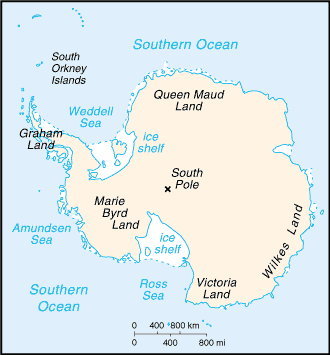
    Antarctica mapThe first comprehensive review of the state of Antarctica’s climate and its relationship to the global climate system was published in the beginning of December 2009 by the Scientific Committee of Antarctic Research (SCAR).

    The newly published report examines the highly complex relationship of Antarctic environment with the global ecosystem that is increasingly affected by human activity. Already some signs of the changed Antarctic environment had been detected, i.e. the Antarctic ozone hole, but the fact is that the climate change has and will most likely have an unprecedented affect on the Antarctic and thus to us all. For example, contains Antarctica 90% of the world’s ice and 70% of the world’s fresh water, which is enough to raise sea level by 63 m.

    The report draws, however, quite interesting picture of the changing environment in the Antarctic. While the overall surface temperature and ice coverage around the continent have remained the same over the past 30 years, some specific parts of Antarctica are experiencing significant change.

    First, the report points out that for the last 30 years the ozone hole has shielded the bulk of the Antarctic from the effects of the global warming. The report maintains that despite the quite extensive changes in the surface temperature and snowfall around the Antarctic the temperature as well as Antarctic overall snowfall have remained at the same level. It is further notable, that while sea ice extent across the Arctic Ocean has decreased markedly over recent decades, around the Antarctic it has increased by 10% since 1980, particularly in the Ross Sea region. This increase is a result of the stronger winds around the continent, changes in atmospheric circulation and the isolating effect of the ozone hole. This is especially interesting, since the Antarctic Circumpolar Current around the continent has warmed more rapidly than the global ocean as a whole resulting in a major change in the Southern Ocean ecosystem. In recent decades the Ocean has become less effective in absorbing CO2 and ecological key species (such as planktonic snails) are expected to be negatively affected by progressive ocean acidification.

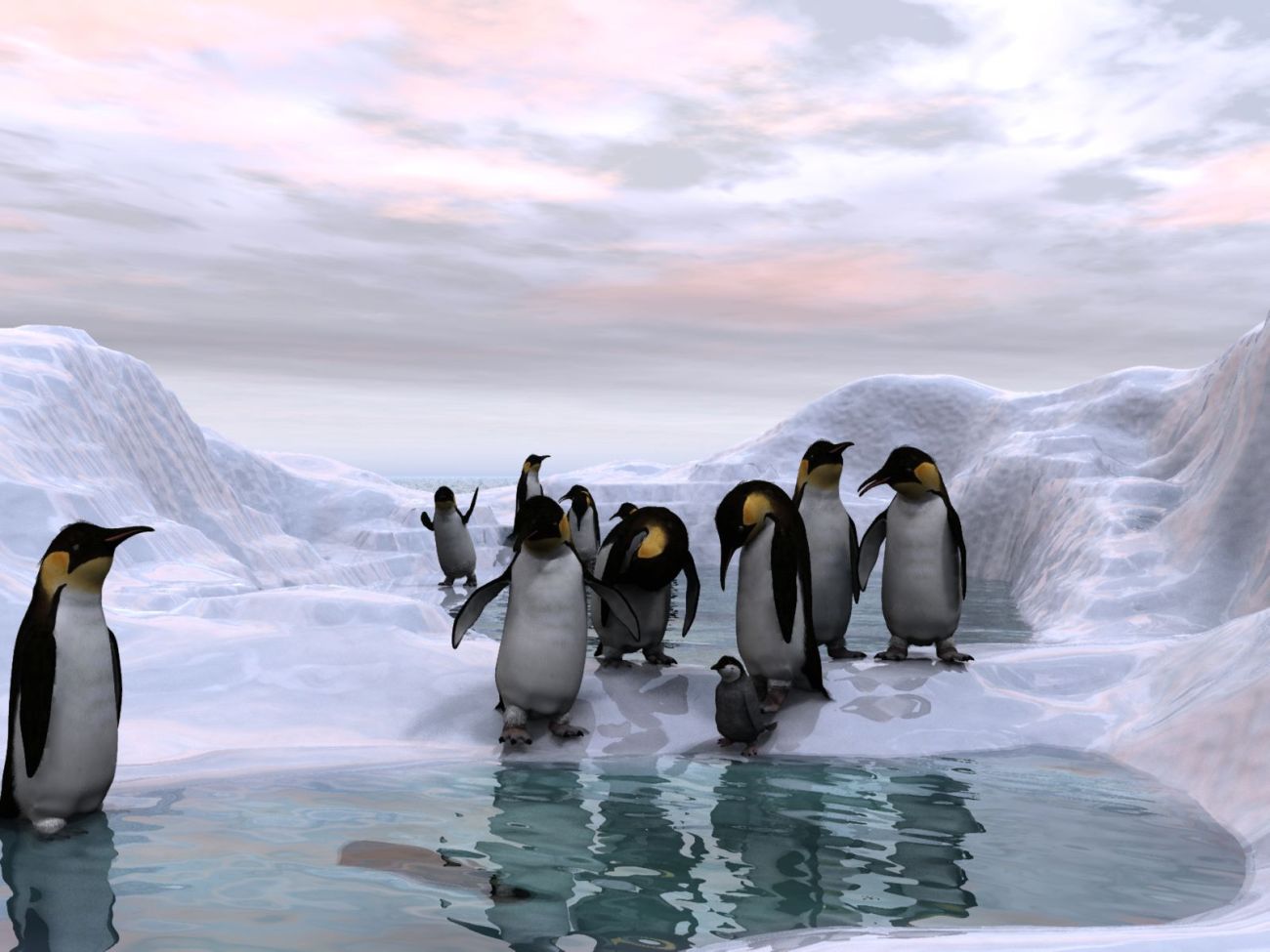
    Antarctic dawnOn the other hand, along with higher temperatures, the Antarctic Peninsula on the west coast of the continent, has experienced a marked switch from snowfall to rain during the summer, which has led to rapid expansion of plant communities and the colonization of newly available land by plants and animals. In addition, there has been significant thinning of the West Antarctic Ice Sheet, especially around the Amundsen Sea Embayment, as well as a few smaller coastal areas in East Antarctica, which has resulted in diminishing Krill stocks and changed distribution of Adélie penguins.

    The report predicts that if greenhouse gas concentration in the atmosphere doubles over the next century, the Antarctic will warm around 3°. This increase could contribute to a projected total sea level rise of up to 1.4 metres by 2100.

    For further information, please go to the Scientific Committee of Antarctic Research or access the SCAR publications