Tag: researchers

  • Polar bears strive for survival

    Polar bears strive for survival

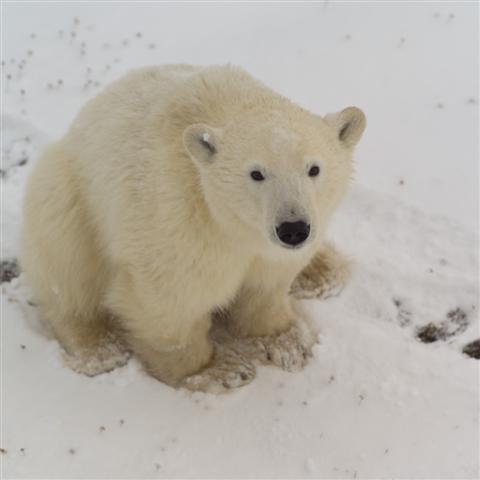
    Polar bear

    Citizens of Churchill in Northern Manitoba, Canada, had to learn how to scare polar bears away from their home town.

    Polar bears researchers found out that because of melting Arctic ice and longer summer season, polar bears are being exposed to hunger and above average temperatures in the northern hemisphere.

    Churchill in northern Manitoba bills itself as the polar bear capital of the world and its tourism-based economy depends on it. But as climate change forces the polar bears inland in search of food, attacks on humans are increasing.

    Can this small community continue to co-exist with the world’s largest land predator? Suzanne Goldenberg reports from Churchill where its bear alert programme uses guns, helicopters and a polar bear jail to manage the creatures.

    This trip was supported by Explore.org, Frontiers North and Polar bears International

    Video Source: The Guardian
  • Travel support available form MobilityDK

    Travel support available form MobilityDK

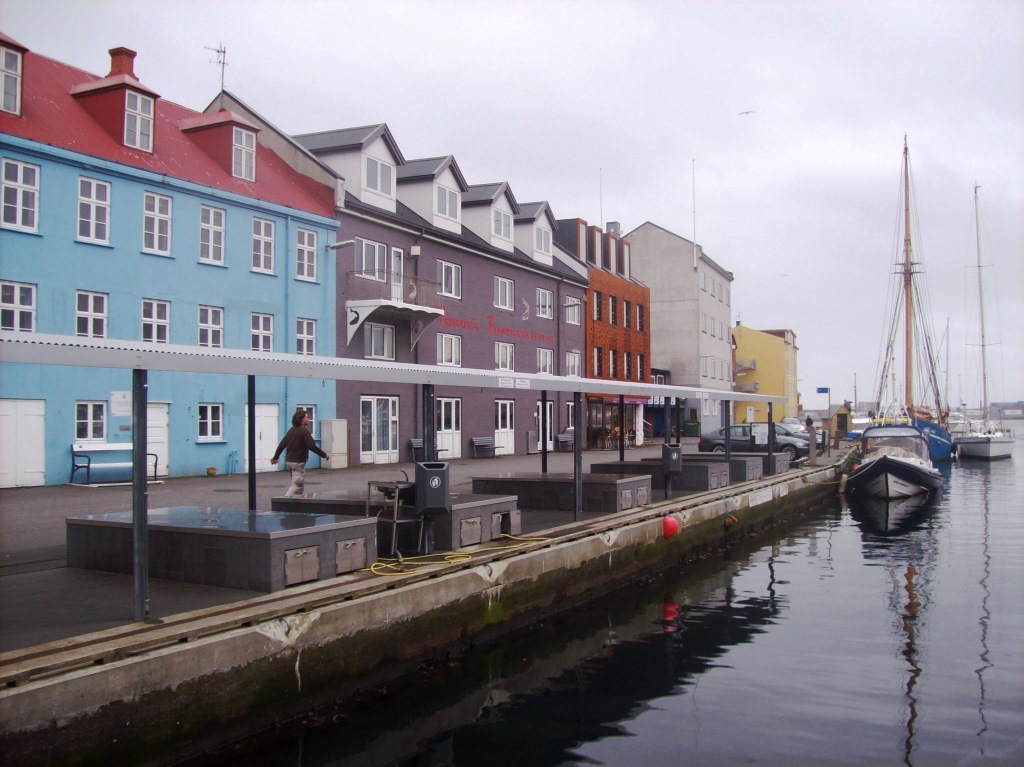
    Thorshaven, capital city of Faroe Islands

    The second application round from MobilityDK has now been open for students, teachers and researchers.

    The MobilityDK pilot model provides travel support for students, staff and researchers from UArctic member institutions, and it is available for Arctic-relevant mobility to and from Danish, Greenlandic and Faroese institutions.

    The deadline for applications is January 31st, 2014. Click here for more information or to apply for a travel funding.

    MobilityDK is a pilot model for providing financial support for teacher, researcher and student exchange.

    MobilityDK is a part of the UArctic Danish Mobility Project, the goal of which is to support mobility for the Kingdom of Denmark’s Arctic education activities, and mobility from the Kingdom of Denmark to Arctic educational activities in different areas of the Arctic through the UArctic network.

    The program is supported by the Danish Agency for Science, Technology and Innovation.

  • Breaking ice scares Russian researchers

    Breaking ice scares Russian researchers

    Search and rescue in the arctic

    Yesterday, 27th of May 2013, Russian government approved the plans to evacuate sixteen people and large amount of materials from the floating research station ´´North Pole – 40´´ that has been drifting close to the North Pole.

    The nuclear powered research icebreaker ´´Yamal´´ is now preparing to leave the Arctic waters on the rescue mission. The vessel is planned to leave Murmansk at the end of this week and it will reach its home station about two weeks later.

    The cost of this action is estimated to reach close to 1.6 million Euros.

    The Arctic ice has now broken up in pieces and makes it impossible for the crew to be rescued by plane or helicopter. The ice ridging on the floe does not allow building an airstrip for any plane. The floe has drifted out of reach for helicopters.

    Russian government claims that the ´´North Pole – 40´´ research icebreaker will continue its work in the Arctic even after it has been removed from the ice floe.

    An abandoned Polar station on Severnaya Zemlya is now being prepared to host Arctic researchers and their equipment.

    Russian drifting station ´´North Pole – 40´´ has been an important contributor to exploration of the Arctic. It carries out the program of complex year – round research fields of oceanology, ice studies, meteorology, aerology, geophysics, hydro-chemistry and marine biology.

    The “North Pole – 40” is organized by Russian Arctic and Antarctic Research Institute.

    Source: Barents Observer

  • Cod growing due to global warming

    Cod growing due to global warming

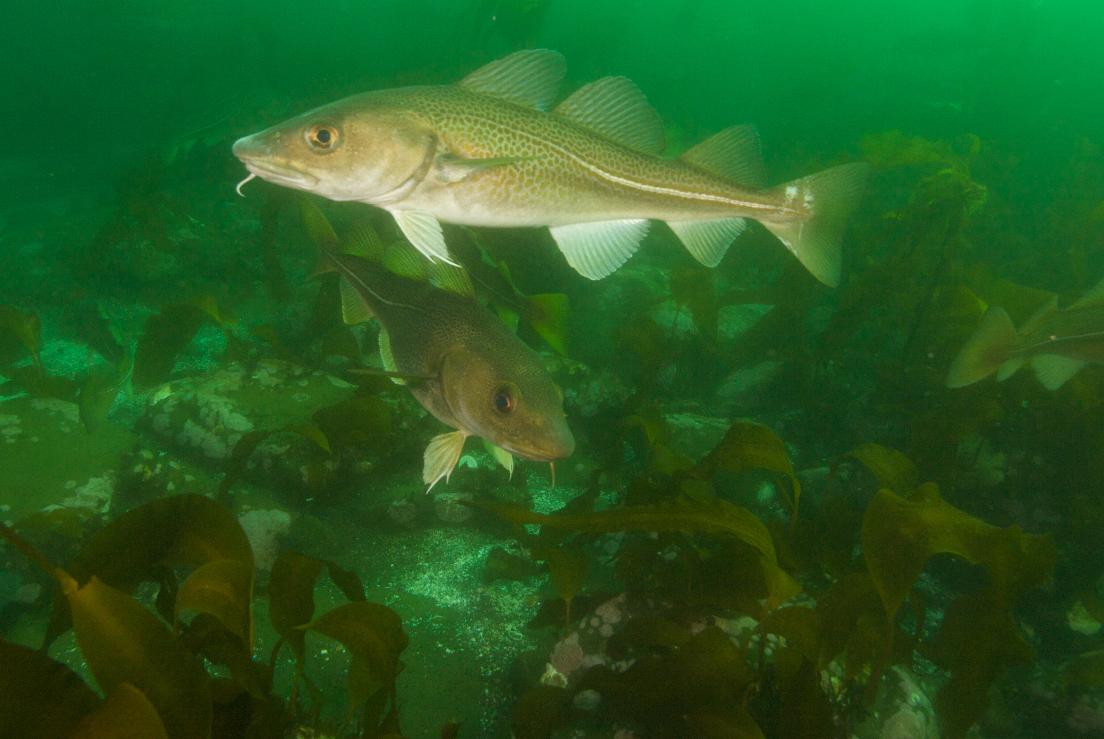
    Cod in Icelandic waters

    Researchers in agriculture had anticipated the North Sea cod to get smaller over time due to global warming. A new study shows quite the opposite, they are actually growing due to global warming.

    The study was introduced in Global Change Biology, an international journal.

    “When the seawater gets warmer, all life processes in the cod speed up,” says Peter Grønkjær, an associate professor of marine ecology at the Department of Biological Sciences at Aarhus university, who headed the study. “This causes the cod to digest their food faster and makes them convert it into extra muscle tissue,” he added.

    Overfishing has started a process in which the cod spend their energy on reproducing themselves rather than on growing bigger.

    “But over the past 30 years the increased ocean temperatures have compensated for the anticipated decrease in cod size,” says Grønkjær.

    He also states that global warming seldom has positive effects on the cod, but this change is the odd point. “But this doesn’t mean that the warming of the North Sea is generally good for the cod. The higher temperatures alter the ecosystem, which causes the composition of the crustaceans that the cod feed on to change too. And that makes it harder for the fry to survive.”

    The researchers made the discovery by reviewing figures from the International Council for the Exploration of the Sea (ICES).

    These figures showed that the ocean temperatures at various times that the average sizes of the fish at various times, that the location of the fish at various times and that when the fish became sexually mature at various times.

    “By linking all this data together, we can conclude that the weight change is caused by changes in the temperature,” says Grønkjær.

    The new findings will be used for developing strategies for how cod stocks in the North Sea can be preserved.

    Sources

    Science Nordic
    Videnskab
  • Job opportunities for PhD’s at the Thule Institute, University of Oulu

    Job opportunities for PhD’s at the Thule Institute, University of Oulu

    University of Oulu

    As a part of the University of Oulu recruiting funding programme Thule Institute is offering outstanding researchers with PhD’s Investigator Start-up Packages for five years The Deadline of applications is 30th of December 2010.

    Description of Recruiting Packages

    Research Fellow in River Basin Research

    The main duty of the research fellow is to carry out high-level research on climate change and land use impacts on river basins with special emphasis on research questions linking water resources, hydrology and ecology. Read more

    Research Fellow in Interdisciplinary and Transdisciplinary Research in Environmental Sciences

    The main duty of the Research Fellow is to carry out high-level research on interdisciplinary and/or transdisciplinary issues and methodologies in environment-related sciences and to publish the results in academic journals and volumes. The work includes the development of new research, and research-based teaching and graduate supervision activities.Read more

    Research Fellow in Sustainable Resource Management and Material Efficiency

    The main duty of the appointed person is to carry out high-level research on interdisciplinary issues and methodologies in material flows and resource efficiency and to publish the results in academic journals and volumes. The work includes development of new research, research-based teaching and supervision activities.Read more

    For more information please contact the Director of the Thule Institute, Professor Kari Laine.

    E-mail: kari.laine(at)oulu.fi