Tag: resources

  • The keyword is “Change”

    The keyword is “Change”

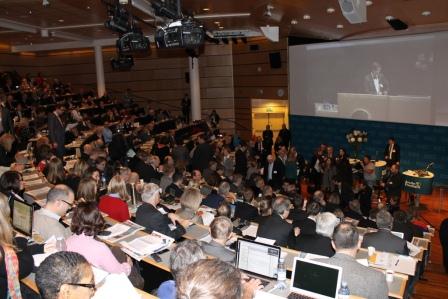
    First policy session of the Arctic Frontiers 2013

    New opportunities create new challenges. The present and close future creates the challenge of how to explore, develop and manage the great resources of the Arctic Region. New commercial activities and growing business community, together with democratic dynamics are to alter long time established social structures in the Arctic Region.

    Non – Arctic Asian and European states and organizations increase their interest in the Arctic.

    Policy session of the 7th Arctic Frontiers conference, that takes place in Tromso, northern Norway, addresses the contemporary and emerging political issues for the changing Arctic. How do states in and outside the region prepare strategically for the new Arctic reality?

    How does the global security architecture impact on security in the Arctic? How important is Arctic oil and gas production for global demand and the energy security of various states? How will traditional businesses interact with new industry, and if and how will profits from industrial activities benefit the people living in the High North.

    Those questions will be answered during the first two days of the 7th Arctic Frontiers that are taking place in Tromso, northern part of Norway. The conference will last until the 25th of January. It is divided into policy and science sessions. The policy sessions will be held today and tomorrow while the scientists will present their research during the next three days.

    For more information, please be referred to the conference website.

    Source
    Arctic Frontiers website

  • Alaska drilling season over

    Alaska drilling season over

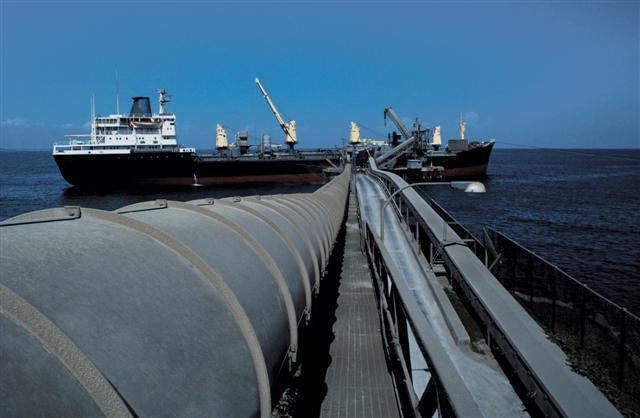
    Pipeline to an oil tanker

    The first drilling for natural resources in Alaskan waters for over two decades has been completed for this year. Shell was drilling and intends to return next year to go even deeper.

    Shell only had permission to go to 1400 feet with two boreholes, well short of oil and gas deposits. But potential deposits will be sought next year.

    Early this summer, at the start of a narrow window for exploratory drilling in the region, thick sea ice clinging to Alaska’s shores prevented Shell’s ships from cruising to the drill sites.

    “The mandatory close of the drilling window offshore Alaska brings to an end a season in which we once again demonstrated the ability to drill safely and responsibly in the Arctic,” said Curtis Smith, a Shell spokesman, in a statement Wednesday.

    “The work we accomplished in drilling the top portion of the Burger-A well in the Chukchi Sea and the Sivulliq well in the Beaufort Sea will go a long way in positioning Shell for a successful drilling program in 2013.”

    Oil companies bored 30 exploratory wells in the Beaufort Sea and another five in the Chukchi Sea between 1982 and 1997, but Shell’s work this summer may signal a new Arctic oil rush. Other companies waiting in the wings with leases in the Chukchi and Beaufort Seas include Repsol and ConocoPhillips.
    Sources:
    Alaska Dispatch
    FuelFIx

  • Arctic Energy

    In the recent years, the world’s attention has turned to the Arctic, not least because of its vast energy resources. Due to the climate change and its significant impact to the Arctic environment resources that have long been unreachable are becoming feasible for exploitation. It is estimated that up to fifth of the world’s undiscovered petroleum resources are to be found in the Arctic while the Arctic’s share of the worlds known resources today is around 12%.

    Russia is by far the most important gas producer in the Arctic. Almost all proven Arctic gas reserves are located in Northern Russia as well as 90% of the proven oil reserves. Together produce Northern Russia and Alaska 97% of the total Arctic oil and gas the Arctic’s total global share of production being around 16%. Furthermore, Russia is considered to contain by far the largest volume of the undiscovered petroleum reserves. Other significant regions where petroleum is to be found are Alaska and the Norwegian Sea, which will in future introduce new oil producing states within the Arctic, namely Greenland and Iceland.

    In the face of the petroleum race in the Arctic, some concerns have been raised about the very fragile Arctic environment. In addition to the actual drilling, transportation of the petroleum will impose the Arctic environment to a severe threat in case of an oil spill or shipwreck.

    Even though the conventional petroleum industry is still today dominant in the Arctic, some renewable energy developments are also taken place in the Arctic. The renewable energy sector is however still quite small compared to the conventional one, but can be expected to grow in the future.

    The newly published  Arctic Energy Portal aims at providing a comprehensive information gateway to the Arctic energy projects, new developments and controversies concerning the resource exploitation. At present, the Portal will concentrate mostly on oil and gas, but as new projects and developments take place in renewable energy sector the Portal will broaden its scope of information and cover renewable sector as well.