Tag: Rovaniemi

  • 5th Arctic Business Forum announced

    5th Arctic Business Forum announced

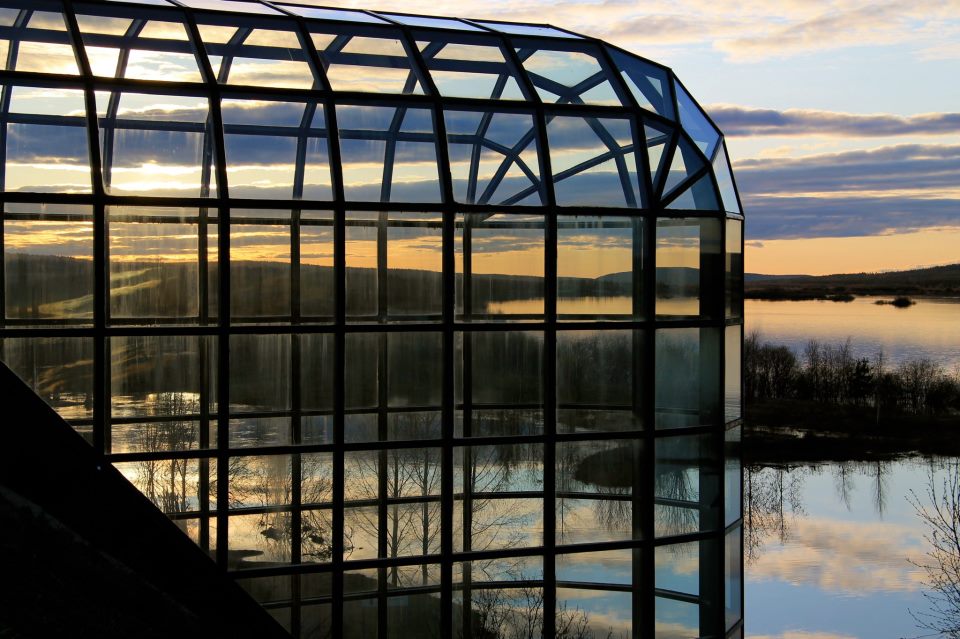
    Rovaniemi spring impressions

    The 5th Arctic Business Forum meeting will be held in Rovaniemi, northern Finland. The conference will be taking place from March 11th – 13th 2014.

    This annual event will introduce the latest business development and future prospects of the rising Arctic economy as a vital part of worldwide developments.

    Two days of world class presentations by invited speakers, a trade show and a high class social program in the very heart of Lapland Finland make the event an excellent opportunity for anyone interested in the arctic business development in terms of business opportunities and networking, exchanging ideas, insight and learning experience.

    The following current issues will be featured by the presentations:

    • What effects climate change has on Arctic business
    • Arctic sea routes and the influence on other transport methods
    • Shale gas developments and effects on arctic oil & gas industry
    • Raw material prices – is mining still profitable and sustainable
    • Best practices
    • how do SME’s get in and part of the large scale projects

    Additional information with program and registration details available at www.arcticbusinessforum.com 

    The conference is organized by Lapland Chamber of Commerce, Finland.

  • Protecting the sacred in the Arctic

    Protecting the sacred in the Arctic

    Indigenous lifestyle

    Conference recognition of Sacred Sites of Indigenous Peoples for Sustaining Nature and Culture in Northern and Arctic Regions, will take place 11 – 13 September 2013 in Rovaniemi and Pyhä, Finland.

    The conference brings together scientists, sacred natural sites custodians, Indigenous Peoples’ Organizations, policy makers, conservation and civil society leaders, to evaluate options for international and national law, policy and practice in order to better recognize, safeguard, conserve and manage Sacred Natural Sites (SNS) of Indigenous Peoples in Northern and Arctic regions.

    SNS are being increasingly recognized as an important means for the conservation of biological and cultural diversity, and the transmission of culture and identity.

    Yet, legal protection of SNS and related policies are still often insufficient or absent. It becomes increasingly difficult for custodians in the North to protect these ancient sites, due to economic developments (tourism, mining, forestry) and infrastructural development (roads, dams, mega projects).

    At the same time the need for protection may be challenged by some protection measures (identifying of location, mapping) and may raise the question of keeping intimacy and sensitivity of these places.

    At international level, SNS have been receiving increasing legal attention; they are now mentioned in several international legal instruments (e.g., CBD, UNDRIP). Yet, effective and culturally appropriate implementation is often still lacking.

    The Conference is co-organized by the Arctic Centre (University of Lapland), University of Montreal and the University of the Arctic Thematic Network on Arctic Law.

    In order to attend the conference, please complete and submit the registration form by 8th of August. Click here for more information about the event.

    Source

    Arctic Centre

  • One month for Rovaniemi abstracts

    One month for Rovaniemi abstracts

    Rovaniemi, Finland

    The 5th Polar Law Symposium will start in Rovaniemi, Finland, on 6th of September. The two day event will bring together internationally renowned scholars from all over the world where the Arctic will be the main focus.

    There are several themes for the symposium, as seen below. Previous symposia have proven to be extremely successful in promoting both scholarship and understanding of polar issues.

    Their outcomes were beneficial to scholars, students and academicians, government agencies, policy makers, jurists and various stakeholders alike.

    The symposium invites researchers, faculty members, young scholars, jurists, post-graduate research students, policy makers, stakeholders and others interested to submit abstracts within the scope of the below mentioned theme.

    The abstract should contain no more than 200 words and should be sent to Kamrul Hossain by 31. March 2012.

    The theme for the symposium is quite open. It covers a wide variety of topics relating to the Arctic and the Antarctic.


    • Human rights issues, such as autonomy and self-government vs self-determination, the rights of indigenous peoples to land and natural resources and cultural rights and cultural heritage, indigenous traditional knowledge.
    • Local and national governance issues.
    • Environmental law, climate change,security and environment implications of climate change, protected areas and species.
    • Regulatory, governance and management agreements and arrangements for marine environments, marine mammals, fisheries conservation and other biological/mineral/oil resources.
    • Law of the sea, the retreating sea ice, continental shelf claims.
    • Territorial claims and border disputes on both land and at sea.
    • Peace and security, dispute settlement.
    • Jurisdictional and other issues re the exploration, exploitation and shipping of oil, gas and minerals, bioprospecting.
    • Trade law, potential shipping lines through the northwest and northeast passages, maritime law and transportation law.
    • The roles and actual involvement of international organizations in the Polar regions, such as the Arctic Council, the European Union, the International Whaling Commission, the Nordic Council, the North Atlantic Treaty Organization, and the United Nations, as well as NGOs.

    These include:

    • Human rights issues, such as autonomy and self-government vs self-determination, the rights of indigenous peoples to land and natural resources and cultural rights and cultural heritage, indigenous traditional knowledge.
    • Local and national governance issues.
    • Environmental law, climate change,security and environment implications of climate change, protected areas and species.
    • Regulatory, governance and management agreements and arrangements for marine environments, marine mammals, fisheries conservation and other biological/mineral/oil resources.
    • Law of the sea, the retreating sea ice, continental shelf claims.
    • Territorial claims and border disputes on both land and at sea.
    • Peace and security, dispute settlement.
    • Jurisdictional and other issues re the exploration, exploitation and shipping of oil, gas and minerals, bioprospecting.
    • Trade law, potential shipping lines through the northwest and northeast passages, maritime law and transportation law.
    • The roles and actual involvement of international organizations in the Polar regions, such as the Arctic Council, the European Union, the International Whaling Commission, the Nordic Council, the North Atlantic Treaty Organization, and the United Nations, as well as NGOs.
  • Symposium in Rovaniemi calls for abstracts

    Symposium in Rovaniemi calls for abstracts

    Rovaniemi, Finland

    The venue for the 5th Polar Law symposium will be Rovaniemi in Finland. The symposium is held in September 2012.

    The Symposium – the home which is in Akureyri Iceland – brings together internationally renowned scholars, partaking in both Antarctic and Arctic research, from different parts of the globe.

    Previous symposia have proven to be extremely successful in promoting both scholarship and understanding of polar issues. Their outcomes were beneficial to scholars, students and academicians, government agencies, policy makers, jurists and various stakeholders alike.

    The last symposium was hosted by the University of Greenland and held in Nuuk, Greenland, where, among others, the honorable President of the Republic of Iceland and the Premiere of Greenland participated in thelively discussions.

    The theme for the symposium is quite open. It covers a wide variety of topics relating to the Arctic and the Antarctic.

    These include:

    • Human rights issues, such as autonomy and self-government vs self-determination, the rights of indigenous peoples to land and natural resources and cultural rights and cultural heritage, indigenous traditional knowledge.
    • Local and national governance issues.
    • Environmental law, climate change,security and environment implications of climate change, protected areas and species.
    • Regulatory, governance and management agreements and arrangements for marine environments, marine mammals, fisheries conservation and other biological/mineral/oil resources.
    • Law of the sea, the retreating sea ice, continental shelf claims.
    • Territorial claims and border disputes on both land and at sea.
    • Peace and security, dispute settlement.
    • Jurisdictional and other issues re the exploration, exploitation and shipping of oil, gas and minerals, bioprospecting.
    • Trade law, potential shipping lines through the northwest and northeast passages, maritime law and transportation law.
    • The roles and actual involvement of international organizations in the Polar regions, such as the Arctic Council, the European Union, the International Whaling Commission, the Nordic Council, the North Atlantic Treaty Organization, and the United Nations, as well as NGOs.

    Researchers, faculty members, young scholars, jurists, post-graduate research students, policy makers, stakeholders and others interested to submit abstracts within the scope of the above mentioned theme. The abstract should contain no more than 200 words and should be sent to Kamrul Hossain (khossain@ulapland.fi) by 31. March 2012.

    The symposium will be held in the Arctic Centre, University of Lapland, Rovaniemi, Finland from 6th to 8th of September.

    Participants’ registration is from June 15th – August 15th, 2012. Registrations are sent to Raija Kivilahti
    (raija.kivilahti@ulapland.fi).

  • UArctic 10 Years – A History

    UArctic 10 Years – A History

    In Rovaniemi 8th of June 2011, the Council of the University of the Arctic (UArctic) celebrates the tenth anniversary of its launch, which was held in the same city in 2001. The occasion is being marked by a special seminar organized at the University of Lapland on the theme of Green Growth and the Arctic.

    The occasion is being marked by a special seminar organized at the University of Lapland on the theme of Green Growth and the Arctic, with keynote speeches from Ólafur Ragnar Grímsson (President of Iceland), Hannele Pokka (Permanent Secretary of Finland’s Ministry of the Environment), Gustaf Lind (Sweden’s Arctic Ambassador), and J. Okalik Eegeesiak (President of the Qikiqtani Inuit Association). The seminar discussions examined the question of whether a ‘Green Growth’ opportunity exists for the Arctic, or whether the destiny of the North is to remain an area of resource extraction.

    The Chair of the UArctic Council, Jim McDonald of the University of Northern British Columbia remarks, “It is only appropriate that the University of the Arctic returns to Rovaniemi to mark the first decade of its remarkable growth and development. Lapland has been the crucible for many important circumpolar processes. It should be noted that UArctic’s tenth anniversary coincides – not coincidentally – with the twentieth anniversary of the Rovaniemi process that began in 1991 with the Arctic Environmental Protection Strategy, which led to the establishment of the Arctic Council. The decisions taken here pave the way for our organization’s next ten years.”

    UArctic locationsThe history of UArctic goes long back, to a proposal made to the Senior Arctic Officials of the Arctic Council to look into the establishment of an ‘Arctic university.’ The subsequent work performed by the Circumpolar Universities Association laid the groundwork for the network and activities that exist today.

    On June 12, 2001, the University of the Arctic officially came into being. At a Launch event in Rovaniemi, Finland, two hundred people gathered to celebrate the realization of this dream. The organization was established with the principles of interdisciplinarity, circumpolarity and diversity. Its strength based on support not only by institutions of higher education and governments, but also that of northern indigenous peoples. In the first years after the launch, UArctic’s core programmatic activities were established with the Circumpolar Studies undergraduate program and the north2north mobility program. Enrollments in Circumpolar Studies and north2north exchanges now number many hundred, and these first students are already making their mark in northern science and public leadership.

    The UArctic International Secretariat was established at the University of Lapland, Finland, in 2001, and soon afterwards UArctic hired President Lars Kullerud to lead the activities and overall development of UArctic. UArctic’s administration was gradually distributed to offices in almost all Arctic countries. The establishment of Thematic Networks in 2005 marked a new direction in UArctic’s programmatic delivery, supporting new research and educational cooperation among smaller groups of members with common interests and expertise. This development was also supported by increased graduate-level programs including PhD networks and field schools.

    UArctic thematic networksThe University of the Arctic’s importance as an international actor was demonstrated in the role it played in the 2007-2008 International Polar Year, helping to coordinate the education and outreach activities resulting from the IPY’s international scientific research projects. The UArctic Rectors’ Forum first met in 2007, which provided a new opportunity for the leadership of the circumpolar region’s higher education institutions to address areas of common interest. To better serve its members, UArctic developed the GoNorth program to promote student recruitment to northern higher education institutions and the UArctic Catalogue as joint listing of course and program information from all members.

    UArctic has accomplished much to date in creating an empowered and sustainable North. It is telling that the organization’s original vision, goals and values remain valid today, while it has grown to meet additional needs and serve more areas of the Circumpolar North. The success of the organization can truly be seen, however, in the large numbers of students who have benefited from educational opportunities that would not have been possible without the University of the Arctic and the collective efforts of its members.

    Source: UArctic