Tag: Russia

  • Two Russian nuclear submarines lifted from the Arctic Ocean

    Two Russian nuclear submarines lifted from the Arctic Ocean

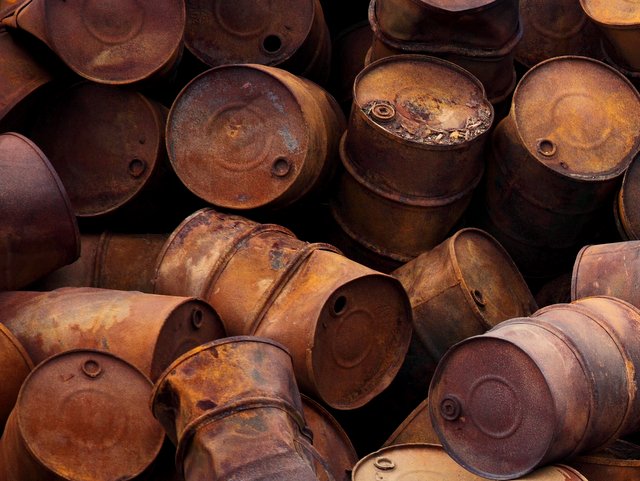
    rusted old oil barrels

    Russia intents to lift up two nuclear submarines who sunk in the Arctic. The submarines are the nuclear powered K-27 and K-159, who sunk in the Kara Sea and the Barents Sea.

    Click here to see a map of sunken nuclear submarines in the Arctic.

    The release of the strategic development of Russia’s Arctic zone saw this proposal, but according to the draft several measurements are included to clean the Arctic waters of pollution.

    There will also be action to remove dangerous waste left behind after the military units on Franz Josef Land, New Siberian Islands and Bely Island.

    The K-27 submarine was dumped in the Kara Sea in 1980 and is lying on 75 meters depth. K-159 sank in the Barents Sea during towing in 2003 and could be laying up to 250 meters under the surface of the sea.

    A joint Russian-Norwegian expedition to the K-27 earlier this autumn concluded that the submarine is not yet leaking radioactivity but that it is urgent to lift it for safe decommissioning.

    International assistance will be needed since Russia does not the capacity to complete the operation on its own. When Kursk was raised in 2001 Dutch companies lifted the submarine.

    Source:

    Barents Observer

    Izvestia

  • Russia to build a new icebreaker

    Russia to build a new icebreaker

    Cargo Ship

    Russian is building a new icebreaker to be delivered in 2015. The shipbuilding company Baltiisky Yard oversees the project of the 25 megawatt vessel to serve the Russian Arctic.

    The ice breaker will be the biggest of Russia´s diesel-engine icebreakers and designed to operate in heavy winter ice conditions. Russias fleet will include nuclear and non – nuclear powered vessels.

    According to the company, the vessel will be 146,8 meters long and have a deadweight of 22258 tons. It will have a crew of 38 and will be able to operate autonomously for 60 days in up to two meters thick ice.

    The construction contract is worth close to 7,5 billion RUB.

    So far ships have been chartered out on research operations, search and rescue emergencies as well as touristic expeditions.

    Sources

    Maritime Professional

  • Russian megaport in the making

    Russian megaport in the making

    Arctic shipping

    A new port in the Yamal Peninsula will be on of the biggest Arctic ports when ready. Russia is building the Sabetta port and are hopeful it will boost Arctic shipping, especially in the Northern Sea Route.

    The new port, a joint initiative of the Novatek company and Russian federal authorities, will be a key component in the development of the gas-rich Yamal Penisula. Linked with the South Tambey field and a major projected LNG plant, the port will be built to handle more than 30 million tons of goods per year.
    The new port is planned to be operational all-year-round, despite the highly complex ice conditions of the Ob Bay.

    In a first phase, the port will by summer 2014 be developed to handle the deliveries of modules to the LNG plant. In the second phase, the port will be developed as a terminal handing LNG tankers, Novatek informs.

    The construction of the port was officially marked in a ceremony attended by Novatek Board Chairman Leonid Mikhelson, Russian Minister of Transport Maksim Sokolov and other prominent guests. In his speech, Minister Sokolov maintained that the construction of the Sabetta port marks the start of a new period in Russian Arctic shipping, one which “by year 2030 could lead to the boost of hydrocarbon shipments to 50 million tons per year from the Ob Bay alone”, a press release from the ministry reads.

    Source

    Barents Observer

  • Final order in Kolskaya case

    Final order in Kolskaya case

    Kolskoya Oil rig

    Yesterday the High Court of Murmansk declared the 24 missing Kolskaya workers, dead.

    On the 18th of December 2011, newspapers from all over the world announced 53 victims after an oil rig overturned in the Sea of Okhotsk in the Russian Far East. National and international search and rescue services were called the same night to conduct one of the most difficult rescue actions in the world´s history.

    Yesterday, 1st of August 2012, a bit more than half a year after the tragedy occurred, the court of Murmansk declared last crew members whose bodies have never been found, dead.

    The decision was valuable for families of the missing ones, who will now receive the compensation from AMNGR Company.

    In March 2012, the director of AMNGR was fired, after the investigation proved that several mistakes were made during the towing operation. According to the reports, AMNGR failed to evacuate ´non – essential´ member of the rig before towing. What is more, it was found out that the distress signal was sent out far too late for the rescue ice – breaker to come in time.

    The Kolskaya tragedy was without a doubt, the largest accident in the Russian history of oil and gas sector.

    Source

    AMNGR Press Centre

  • New Arctic brigades in the making

    Helicopter and a vessel in the Arctic ocean

    Norway and Russia are strengthening their cooperation in the Arctic. The two states already have an extensive cooperation, but are strengthening with military relations and multi-branch exercises with common strategic and environment-based programs.

    The countries recently held talks about the strengthening of political and military operations. Russian Deputy Defense Minister Anatoly Antonov and Norwegian Defense Minister Espen Barth Eide with Roger Ingebrigtsen, state secretary for defense, attended the meetings.

    Both countries are reorganizing their naval, air and land forces in the strategic High North. Both countries are planning Arctic brigades, Russia in the Kola Peninsula and Norway in Skjold, in the High North’s Troms county. The countries also discussed NATO’s missile defense plan for Europe, which Russia is robustly opposed to.

    “Our relations with Russia have never been better than they are now,” Ingebrigtsen said. “We want to deepen the good relationship that we have even further. Among other things, we would like to hold more joint training exercises, both on land and at sea, probably in 2013.”

    The strengthened relationship, Antonov said, is reflected in the fact that the two militaries will participate in 24 joint exercises and events over the next 12 months. “The goal for both sides is increased security in the High North, which can only benefit our countries,” Antonov said.

    The annual naval exercise POMOR-2012, which takes place in May, will be the next major demonstration of stronger bilateral military collaboration between Norway and Russia. The exercise will involve Norwegian and Russian naval and air assets, including frigates, destroyers, helicopter support and combat aircraft.

    The range of joint tasks will include boarding operations, search and rescue, air defense, navigation and interoperability of communication procedures and systems.

    Source: Defensenews

  • Over 600 Anglers rescued in Russia

    Over 600 Anglers rescued in Russia

    fishing through ice

    Over 600 anglers, fisherman who were angling through the ice, have been rescued after an ice sheet broke off. The Russians were not harmed.

    The emergencies ministry said that 48 people were involved in the rescue operation, two helicopters and 11 ships weere used to fetch the people of the moving ice sheet.

    Fishing through bore-holes on ice-bound waters is a popular winter pastime in Russia.

    Taymuraz Kasayev, of the emergencies ministry, said the area’s residents had been told to stay away from the ice.

    “We warned people through the media that going out on to the ice on this stretch of the coastline is extremely dangerous and is not allowed,” he told the NTV television channel.

    One of the rescued anglers, Vladimir Vasilenko, said he had ventured on to the ice floe knowing that the windy conditions might pose a risk.

    “The wind was blowing from the shore, and it was clear that something might happen, but people were still going out, so we did too,” he said.

    “It was the excitement, of course. We also heard on the radio that it would be the last chance for fishing on the ice. And so we rushed out to go fishing.”

  • Joint Canadian-Russian council?

    Joint Canadian-Russian council?

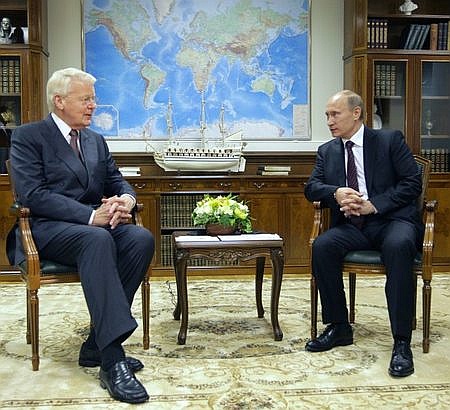
    Vladimir Putin and Ólafur Ragnar Grímsson

    The relationship between Canada and Russia is set to strengthen with an establishment of a joint research council. The countries relationship is thought to be stiff.

    “We have normal relations,” said newly elected president Vladimir Putin said, adding that he would like to meet with Stephen Harper, prime minister of Canada, at coming G8 and G20 summits. “The volume of trade is very low. Perhaps that is part of the problem.”

    Putin spoke to a group of six newspaper editors invited to his residence outside Moscow. In response to questions about Canadian relations, he said he would push for a joint scientific team, and pointed to a successful Russia-Norway approach to Arctic sovereignty.

    “The border of the continental shelf needs to be determined by scientists,” he said. He also tried to calm concerns over Russian exploration. “You needn’t suspect us of some kind of unilateral action. Yes, we have been exploring the shelf. What’s wrong with that?”

    The words from Putin are encouraging as Canada and Russia share boarders in the middle of the Arctic Ocean where land claims are being disputed. A joint research council could help the relationship between the two Arctic giants across the Arctic Ocean in the search for resources in the north.

    Source: The Globe and Mail

  • Russia boost coal production

    Russia boost coal production

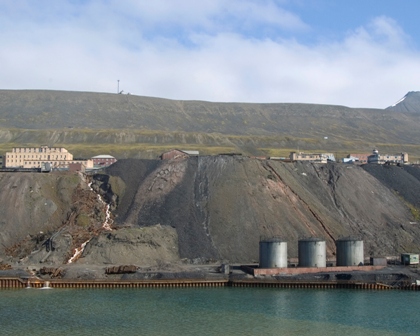
    Coal site in Barentsburg, Svalbard

    Russia will increase its coal production significantly over the next years. Russia produces around 330 million tons of coal each year but it will be increased to 440 million tons.

    A new development program was introduced by Prime minister Vladimir Putin yesterday. He said that 3,7 trillion rubles will be spent on the program, over the next 18 years.

    Most of the money will be spent on investment in private companies. Putin also said that infrastructure of transportation of coal needed to be looked at closely.

    Russia is the 6th largest coal producer in the world, producing around 5% of the worlds production. More than one third of it is exported.

    Coal production sites in Kusbass will be strenthened, as well as in Vorkuta.

    Source: BarentsObserver

  • New production record for Russia

    New production record for Russia

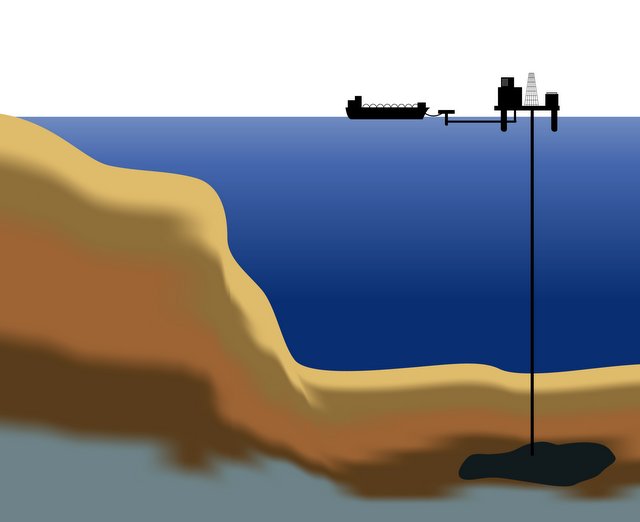
    Offshore oil production schema

    Oil production in Russia last year set a new record for post-soviet times. A total of 511 million tons were produced in 2011.

    The production only went up one percent from 2010. The trend is unlikely to continue for the next three years.

    Sergei Kudriashov, Russias vice minister of energy, confirmed this to Russian public television station Russia 24.

    “We understand that in the three coming years, we are going to have a lull in the operation of new deposits. That’s why the principle task now is to use the resources we have and maximise the efficiency of work in old deposits,” he said.

    HIs estimate is that Russia will produce around 510 million tons the next three years, but no more records will be set for a few years.

    “In 2008, when oil prices were at a high, we saw a drop in production. In the last three years, we’ve succeeded in reversing the trend,” he said.

    Sources

    Sunday Times

    Russia 24

  • 18.000 tons of junk to be removed

    18.000 tons of junk to be removed

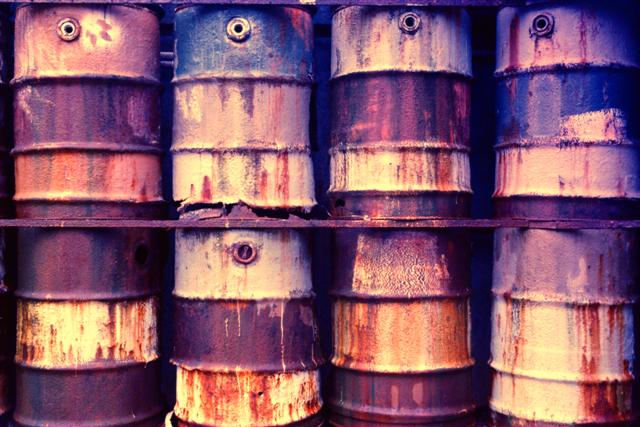
    Old oil barrel dump

    Around 18.000 tons of scrap metal will be removed from the Arctic in 2012 by Russia. The country is cleaning up the Arctic and hundreds of millions of rubles will be injected to the program.

    The Arctic Islands of Russia are full of junk, causing environmental hazards. This year the program will focus on Svalbard and Amderma.

    Amderma is planned to become a key site in the development of offshore oil and gas fields in the western part of the Russian Arctic and an important base for traffic along the Northern Sea Route.

    A staggering 114.000 tons of local scrap stockpiles are thought to be in Amderma.

    Over 1800 empty fuel barrels were transported from Wrangel Island to Arkhangelsk last year. That is only a drop in the bucket since 250,000 barrels holding some 40 to 60,000 tons of oil products are still in the area.

    Other kinds of waste include abounded aircrafts, rusty broken radar stations, different kind of Arctic vehicles and other leftover garbage.

    Sources

    BarentsObserver

    Nyaryana Vynder