Despite repeatedly critics from UN and EU, Finland has no intention to ratify ILO-Convention No. 169. Convention No.169 is a legally binding international instrument open to ratification, which deals specifically with the rights of indigenous and tribal peoples.
Today, it has been ratified by 20 countries. Once it ratifies the Convention, a country has one year to align legislation, policies and programmes to the Convention before it becomes legally binding. Countries that have ratified the Convention are subject to supervision with regards to its implementation
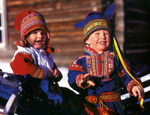
The Sami people lives in all four member countries in the Barents Region. Norway was one of the first countries to ratify the convention, accepting more power and influence in issues dealing with indigenous and Sami rights, like reindeer herding. In Finland, the debate on the ILO-Convention has been going on for decades. Minister of Justice, Tuija Brax, says to Alma Media newspapers that the skeleton law, prepared for a long time by the Ministry of Justice, broke down because of the Centre Party’s opposition. Finland has a majority coalition formed by four parties.
UN has repeatedly criticized Finland for that it has not ratified ILO-Convention No. 169 related to the indigenous people’s rights. In the context of land rights, the UN special reporter James Anaya recommends strengthening the position of Sami languages, traditional livelihoods and reindeer herding Discussing EU’s Arctic Policy, the EU Parliament demanded in January that Finland and Sweden should approve the ILO-convention. Also, Finland’s Minister for Foreign Affairs Alexander Stubb said to YLE News in January that this situation is harmful for Finland’s foreign policy.
Source: Barents Observer

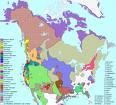 their own culture and language were weakened intentionally. Due to the assimilation process along with the decline of indigenous inhabitants, many of the languages were about to extinct when the international indigenous movement emerged in the beginning of the 1970’s. The dominant languages in the Arctic today are Russian, English and Scandinavian languages, all which have been introduced to the Arctic inhabitants by a colonial power. However, in the recent years the indigenous languages have gained stronger status within the Arctic states either as protected cultural heritage or as an official language.
 In Greenland, along with the establishment of the Greenland Self-Government in June this year, the Inuktitut became the only official language, Danish having being another official language in Greenland since 1950’s.