Tag: search and rescue

  • The first live search and rescue exercise

    The first live search and rescue exercise

    SAREX 2012 exercise

    The first live search and rescue exercise among the 8 Arctic states, “SAREX 2012”, took place 10-14 September in stormy weather and high seas in a remote area along Greenland’s east coast. The exercise involved personnel, authorities, airplanes, helicopters and ships from Canada, Denmark, the Faroe Islands, Greenland, Iceland, Norway, Russia and the United States.

    The Artic Councils website reports that all the ships, airplanes etc. were regional units normally operating in the High North nationally and in that context the exercise was conducted in a very realistic environment.

    Following the Search and Rescue agreement approved at the Ministerial meeting in Nuuk, May 2011, Denmark hosted this major scale exercise to launch a Search and Rescue mission in the High North. The emerging melting of ice and opening of new land and sea in the High North bring tourists and industry to the area.

    Every year 40 – 50 cruise ships sail among icebergs in cold waters where the temperature ranges from 0 – 5 degrees. These areas are also remote and far from dedicated rescue resources. The goal of the exercise was to test communications, equipment and procedures nationally and between the participating nations, to address the challenges caused by an influx into remote areas.

    The exercise consisted of three phases. In the first phase, Greenland’s Maritime Rescue Coordination Centre (MRCC) initiated a full scale search operation with aircrafts, ships and helicopters to quickly locate a missing cruise ship. Once the ship was located all efforts were focused on rescuing the passengers and crew from the wrecked ship. Fire fighters and medical personnel were flown in and parachuted.

    Landing in the sea was necessary since no landing elsewhere was possible. On board the cruise ship the situation was chaotic with injured people, people in shock, fire and smoke but in the end all personnel were brought safely to land for further treatment. The last part of the exercise was evacuating a fairly large number of injured people to the nearest hospital in Reykjavik, Iceland around 500 km away.

    For Denmark this exercise brings back memories of the loss of the passenger- and transport ship Hans Hedtoft. It disappeared in 1959 south of Greenland after a collision with an iceberg. The only item ever recovered from that was a life buoy which was later found on the coast of Iceland.

    All in all the exercise was a success. Many procedures were conducted professionally and proven correct, but more importantly the exercise also revealed areas for improvement both at the national level but also between the nations in a large scale combined operation.

    The aim being that the 8 Arctic states will be better prepared should a similar undesirable situation happen in reality.

    Source

    Arctic Council

  • Closer co-operation between the Arctic states

    Search and Rescue operations in the arctic

    Governments of eight Arctic states agreed on closer cooperation with regards to search and rescue operations on the Arctic waters.

    Representatives from Ministries of Defense from Canada, Denmark, Iceland, Norway, Finland, Russia, Sweden and United States met at the Canadian military base in Goose Bay later last week to discuss further cooperation in the High North.

    It was the first time that northern chiefs of defense had an opportunity to meet. Gen. Walter Natynczyk, Chief of the Canadian Defence Staff, said after the meeting that he was very pleased with the discussions amongst the eight generals: “Certainly what we saw was a great sense of a spirit of co-operation amongst everyone. We were able to gain an understanding of the unique challenges each faces with regards to emergency response and for support to our civilian authorities”.

    It was decided that from now on, the representatives of eight Arctic states will meet annually to discuss defense, search and rescue issues in the High North.

    Source: Barents Observer
  • New Cooperation Agreement on Search and Rescue in the Arctic

    New Cooperation Agreement on Search and Rescue in the Arctic

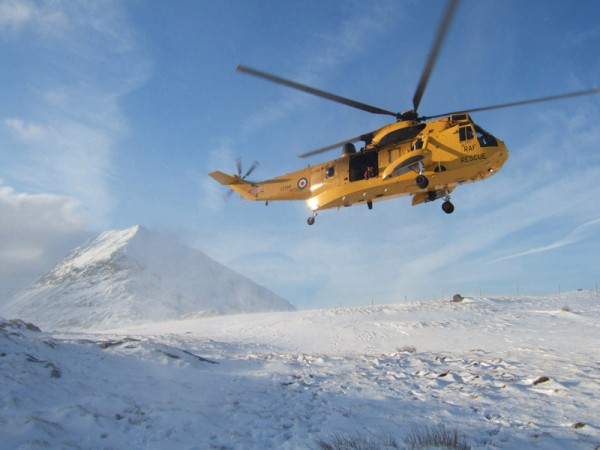
    Helicopter in the air

    Member states of the Arctic Council, Canada, Denmark on behalf f the Faroe islands and Greenland, Finland, Iceland, Norway, Sweden, Russia and The US have finished drafting a cooperation agreement on search and rescue in the Arctic in a meeting held in Reykjavík 14.-16.

    December. In addition to state representatives, around 50 academics and experts from the respective states and International Civil Aviation Organization participated in the meeting, which is a final part of a year long work process.

    The agreement targets the changed reality in the Arctic where due to the climate change increasing transportation opportunities have emerged in recent years and are only to increase in coming years. Until now, there have lacked a coordinated emergency response scheme for the Arctic ocean and airspace. The new agreement will divide the Arctic into specific search and rescue areas, each Arctic state being liable for specific territory.

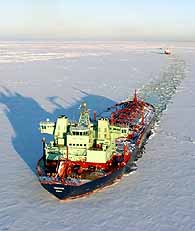
    jaanmurtaja

    The agreement is historical also in political sense, since it is the first international agreement between the eight Arctic states brought about under the auspices of the Arctic Council.  It is anticipated that this new agreement will follow other agreements targeting issues as important for the Arctic region, such as pollution and renewable natural resources.

    The agreement on search and rescue will have its final seal in the Arctic Council Ministerial Meeting in May 2011 in Nuuk, Greenland, where it will be signed by the eight Arctic States.

    Source: Icelandic Foreign Ministry