Tag: Shanghai

  • First China-Nordic Arctic Symposium

    First China-Nordic Arctic Symposium

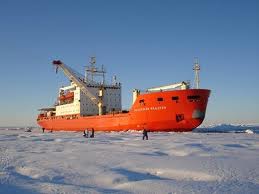
    A view from the Chinese research vessel Xuelong in Iceland.

    The first China-Nordic Arctic Cooperation Symposium will start tomorrow in Shanghai. The Polar Research Institute of China hosts the symposium in cooperation with the Icelandic Center for Research.

    Participants will be Chinese and Nordic institutions. The theme of the conference is “China-Nordic Cooperation for Sustainable Development in the Arctic: Human Activity and Environmental Change”.

    Three sessions are scheduled and open to participants:

    • Session I: Arctic Shipping and Resource Exploration
    • Session II: Arctic Policies and Governance
    • Session III: Climate Change and the Arctic in the Anthropocene

    The symposium will be a significant step towards the establishment of the China-Nordic Arctic Research Center, located at PRIC in Shanghai.

    Following the symposium in Shanghai on 4-6 June, there will be an organized excursion for the participants on 7 June.

    Further information is given by Mr. Egill Thor Nielsson, Visiting Scholar at PRIC.

    Sources
    Polar Research Institute of China

    RANNIS

  • Xuelong returns after historic voyage

    Xuelong returns after historic voyage

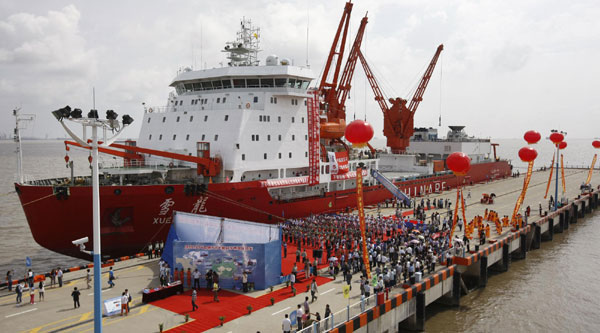
    Xuelong in the port of Shangai

    The historic voyage of the Xuelong, the Chinese icebreaker, was concluded yesterday when it returned to Shanghai. Xuelong, or the Snow Dragon, is the first Chinese vessel to complete a high-latitude voyage across the Arctic Ocean.

    The Xuelong travelled 18.500 nautical miles during the three month voyage, including 5370nm in the Arctic Ocean.

    A statement from the Polar Research Institute of China states that the expedition team has successfully performed various scientific research tasks. A total of 119 crew members were on board.
    The researchers conducted a systematic geophysical survey, installed an automatic meteorological station, as well as launched investigations on oceanic turbulence and methane content in the Arctic area.

    They also held academic exchanges with their counterparts in Iceland, and the two groups conducted a joint oceanic survey in the waters around Iceland.

    The CHINARE5, Chinas Fifth National Arctic Research Expedition, left the Chinese port of Qingdao on the 2nd of July. It arrived in Iceland in August and spent four days in the country, opening the ship to the public both in Reykjavik and Akureyri, as well as co-operating on symposiums in both towns.
    “It’s the longest Arctic expedition we’ve ever had in terms of both sailing time and distance,” said Chen Hongxia, a professor at the State Oceanic Administration’s First Institute of Oceanography, who participated in the voyage.
     

    “Unfortunately we didn’t reach the North Pole because Xuelong’s icebreaking capability isn’t strong enough,” said Wang Shuoren, political commissar of the icebreaker.

    China is designing a new icebreaker, which is scheduled to go into operation in 2014.

    Source

    China Daily

  • Russian cargo vessel to Shanghai and back through Northern Sea Route

    Russian cargo vessel to Shanghai and back through Northern Sea Route

    Norilsk Nickel

    Norilsk Nickel – Russian Arctic-class cargo vessel returned yesterday, Tuesday, to harbour in Dudinka after being first in history to navigate through the Arctic waters without any ice-breaker support.

    The vessel travelled through the Northern Sea Route by Russian Arctic coastline to Shanghai and back taking total of 58 days, total steaming time of 41 days, for the trip. Total length of the round trip Dudinka-Providence Bay-Busang-Shanghai-Nakhodka-Dudinka was 11,320 miles from which approximately half was in clear water and half in ices.

    According to Sergey Buzov, Deputy General Director – Head of Transport and Logistics unit of MMC Morilsk Nickel the trip was an invaluable experience, which they will use in future to plan their transport operations and can indeed be regarded as the Company’s contribution to the development of Russian Maritime Declaration in exploration and development of new Arctic regions and Arctic wealth.

    At the moment Company owns five ARC-7 ice-class vessels for Arctic transportation and the sixth will be introduced in 2011. The vessels are built in accordance with latest environmental and technological standards enabling them to navigate independently through Arctic ice without ice-breaker support.