Tag: shipping

  • Sabetta port becomes a reality

    Sabetta port becomes a reality

    Computer image of future Sabetta port

    Construction of Sabetta port, a key component in the huge Yamal LNG project, is now planned to start this summer.

    It is predicted that the Sabetta port will become one of the biggest in the Russian Arctic. Located in the Yamal Peninsula, it will boost shipping in the icy waters of the Ob Bay and the Northern Sea Route.

    Project Manager – Maksim Minin officially announced that the project has been delivered to the contractor and is ready to be reviewed by the state expert panel.

    The new port, a joint initiative of the Novatek company and Russian federal authorities, will be a key component in the development of the gas-rich Yamal Penisula. Linked with the South Tambey field and a major projected LNG plant, the port will be built to handle more than 30 million tons of goods per year.

    Sabetta port is planned to be operational all-year-round, despite the highly complex ice conditions of the Ob Bay.

    The total investments in the Sabetta port project amount to 75 billion RUB (€1,82 billion). The Russian government is investing 49 billion RUB (€1,19 billion) while private investments amount to 25 billion RUB (€607 million).

    The Yamal LNG project is developed by the JSC Yamal LNG, a joint venture of Novatek (80%) and Total (20%), and in close cooperation with the Federal Agency of Sea and River Transport and the Rosmorport state enterprise.

    Source

    Barents Observer

  • Big ideas in Faroe Islands

    Big ideas in Faroe Islands

    Faroe Islands

    The Faroe Islands are certainly small, but their force is growing. They have big ideas for the future, contrasting the few number of 50.000 inhabitants, both regarding oil and shipping.

    Next week a Chinese delegation will visit the islands with the view of cooperation regarding a large hub-port. Minister Johan Dahl confirmed this and says that they will also speak about the potential oil and gas exploring in their EEZ.

    “I want to talk to them about a potential hub-port,” Dahl confirmed. Iceland has also looked at the possibility of a hub-port and other locations are also under consideration for Arctic shipping.

    Next week the drill Cosl Pioneer will make shore in the Faroes. He will drill down to 5km, the deepest ever in the history of the islands.

    Oil companies have explored the area and remain hopeful that the black gold can make the Faroese nation one of the wealthiest ones in the world. At least per capital.

    Three companies are behind the project, Statoil has 50% of the rights, ExxonMobil from the USA has 49% and Atlantic Petrolium from the Faroes has 1%.

    The area is called Brugdan 2 and south-west of the Faroe Islands.

    Source

    Oljan

  • Trans-Arctic Shipping

    Trans-Arctic Shipping

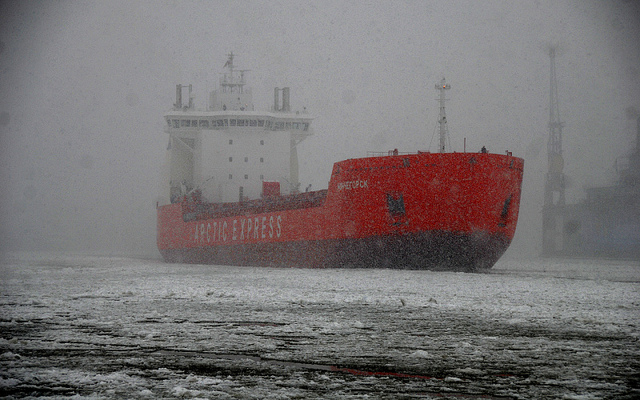
    Cargo Ship

    The Arctic is comprised of a large ocean area and land areas of eight states: Canada, Denmark (Greenland), Norway (Svalbard), Russia, USA (Alaska), Finland, Sweden and Iceland. The Arctic’s most pronounced feature, at least until very recently, has been the large ice-covered ocean. However, significant changes are taking place in the Arctic area, both on land and especially on the maritime areas.

    The 2004 Arctic Climate Impact Assessment listed the range of impacts that are occurring in a warming Arctic from human-influenced climatic change. The report concluded that the temperature has risen at twice the rate as in the rest of the world in the past few decades and there is increasing evidence of widespread melting of glaciers, permafrost and sea ice.

    The earth’s climate change, due primarily to increased emissions of carbon dioxide and other greenhouse gases, has been particularly intense in the Arctic. These changes have already reduced the extent and thickness of the sea ice in both the Arctic Ocean itself and the sea routes on each side.

    With its fleet of polar icebreakers, Russia has been able to use its Northern Sea Route for up to 6 months a year, although such use has thus far been limited to the support of exploration of its own resources and has not included international shipping. Such shipping, however, is bound to develop within the foreseeable future, particularly since the ice obstacle is not quite as severe on that side of the North Pole.

    Although Trans-Arctic shipping is commonly linked with favourable weather conditions, i.e. warmer climate, ice-free ocean and relatively calm weather, climate is not the only thing that encourages Trans-Arctic shipping.

    Other factors can make it even necessary for future development of the area and the world as a whole. However, those factors can change or even lose their weight in near future but as it stands they dominate the discourse on Trans-Arctic shipping.

    Why Trans Arctic Shipping?

    Currently the main driving force for shipping trough the Arctic Sea is transport of oil or gas from Arctic Russia. The discussion on Trans-Arctic shipping evolves, however, around the issues of global warming, Greenhouse Gas emission restrictions, changes in the geopolitical landscape, possible exploitation of fossil fuel fields in the Arctic and sustainable development in the Arctic. Although those factors do not possess predominant force to encourage Trans-Arctic shipping single-handedly, together they form a great pressure on the global society to prepare for new transportation routes.

    Preparations for ice fishing in Uummannaq, Greenland

    New technologies

    New technologies are important and sometimes essential for development in the Arctic. New ships with icebreaker abilities can shorten the transportation route from Yokohama (Japan) to Rotterdam from 11.212 nm (Suez Canal) to 7.825 nm which is roughly 30% shorter.

    This difference does however not have any relevance still, because the cost of these new ships are at average 150% on top of the cost of a normal new cargo ship.

    This means that it is unlikely that Trans-Arctic shipping can become lucrative, unless oil-price and charges for shipping canals rise and the building cost of Arctic-suitable ships drops.

    However, a significant reduction of sea-ice in the Arctic renders this formula obsolete so it is hard to point a finger on when Trans-Arctic shipping will emerge as a competitive commercial transport alternative.

    It is worth mentioning that technological advancement in the sector of extraction of non-renewable resources can also affect advancement in navigation. It would obviously not have any practical value to be able to pump oil from the seabed in -40°C if no ship would be able to transport the oil from the location.

    However, it is safe to say that this factor is largely dependant on the other factors but might become more important in the coming years. It should however be kept in mind that the race for resources in the Arctic really controls the development in this area.


    United Nations Framework Convention on Climate Change (adopted 9 May 1992, entered into force 24 March 1994) 31 ILM 849

  • Arctic Shipping

    Arctic Shipping

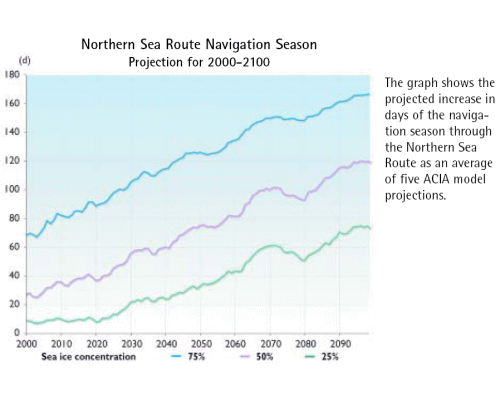
    Northern sea route navigation season projectionThe possibility of a trans-arctic shipping route has intrigued seafarers since the days of the first Arctic explorers, as it would shorten the distance between the Pacific Ocean and the Atlantic Ocean significantly. Challenging weather conditions and the lack of adequate shipping technology trans arctic shipping has not become a viable possibility as of yet. Shipping in the Arctic is on the rise and it is estimated that approximately 6000 vessels are operating annually in the Arctic region, many of them making multiple voyages. Off these 6000 ships operating in the Arctic almost all of them are declinational, conducted for community re-supply, moving natural resources out of the Arctic or marine tourism.

    The fact that the Arctic ice cap has been receding at an unprecedented rate, recent advancements in shipping technologies and an increasing interest in the Arctic’s resources have made the matter one of the most prominent issues in the northern hemisphere. Existing shipping lanes barely manage the current traffic as the Suez and Panama canal’s serve as bottlenecks and are not capable of servicing the largest container vessels of today. It is to be expected that shipment through the Arctic will become a viable option in the future. With growing technology and a receding ice cap the quest for resources companies are reaching further into the arctic region for resources and tourism activities by cruise liners is on the rise.

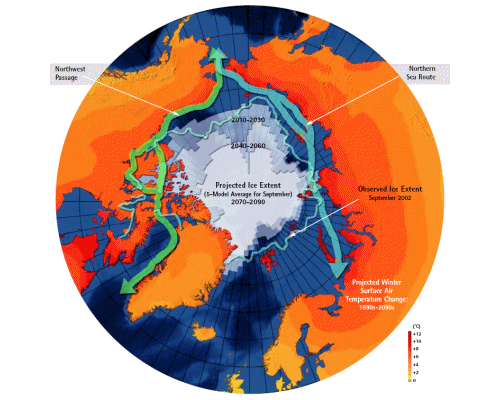
    shipping routesCurrently there seems to be a consensus that all of these activities will increase further and that trans arctic shipping will become a reality, that it is just a matter of time. There are nonetheless significant challenges, and issues that need to be analyzed and dealt with to prevent environmental disasters and ensure the safety of seafarers. It is clear that the benefits of these activities can be significant, but the environmental hazards are numerous as well. Infrastructure and safety measures are lacking and need to be addressed. There is an ongoing debate if there is a need for mandatory regulations by the IMO. The jurisdiction over the waterway is also disputed most prominently between the U.S and Canada.
    The matter has received substantial attention from researchers and organizations, some of these works can be found in the links bellow.

    Links

    Arctic Marine Shipping Assessment (AMAP) 2009 Report

    Recently published report, which is very detailed and covers most of the outstanding issues, possibilities and challenges connected to shipping activities in the Arctic

    North meets North, navigation and the future of the Arctic Report of a working group of the Ministry for Foreign Affairs Iceland 2006.

    Gives a substantial overview of shipping in the Arctic and what it’s future might hold. It also examines the possibilities of a transshipment port in Iceland.

    Arctic Shipping Activities into the next Decade1

    By: Norwegian Maritime Directorate

    Gives a brief overview over developments in shipping in different parts of Arctic Waters by type and estimates for future development in Arctic shipping.

    Developments in Arctic Shipping

    Produced by the research company Ocean Futures, Oslo for the Norwegian Atlantic Committee

    Guidelines for Ships Operating in Arctic Ice-Covered Waters

    Guidelines developed in 2002 by the International Maritime Organization for operating in Arctic Ice-Covered Waters

    The IMO Guidelines for Ships Operating in Arctic Ice-covered Waters From Voluntary to Mandatory Tool for Navigation Safety and Environmental Protection?

    By: Øystein Jensen

    Interesting report, which discusses if there is a need for mandatory guidelines for ships operating in Arctic Ice-covered waters.

    United Nations Law of the Sea (UNCLOS) /Direct link to the UNCLOS agreement

    International shipping is largely regulated by the UNCLOS agreement. All of the countries of the Arctic besides the U.S have ratified the agreement. They are non-the less to a great extent bound to it as customary international law.

    Maps

    Arctic sea routes

    By UNEP

    Ice Strengthened vessels and icebreakers

    Aker Arctic.

    Finnish company dedicated to building icebreakers and ice strengthened cargo vessels.

    Yamal the Russian Icebreaker

    The Yamal, a nuclear powered Icebreaker: Interesting information about the Russian icebreaker Yamal.

    Conferences and symposiums related to Arctic shipping

    International Symposium on Sea Ice in the Physical and Biogeochemical System

    International Glaciological Society 31 May – 4 June 2010

  • The dire situation of the world’s fisheries in the Arctic and beyond

    The dire situation of the world’s fisheries in the Arctic and beyond

    Fishing ship

    Fishing within the North East Atlantic has been a significant economic resource as well as a practice that has become rooted in the culture of fishing nations utilizing the resource. In the Icelandic sagas, the fish was considered to be a gift from the gods and free for all who sought it (Jón Þ. Þór, 2006). This has however changed in Iceland as well as the world in whole.

    Technological advancements have multiplied the possible catch of each vessel and the world’s population growth has increased the demand for fish significantly. Legal issues in connection with maritime boundaries and rights to fisheries both in countries’ economic zones as well as international waters have mostly been settled under the UNCLOS. The realisation that stocks would have to be managed to yield a maximum return has lead to the establishment of fisheries management schemes the world over, both within countries’ Exclusive Economic Zones (EEZ) and multilateral cooperation’s in connection to the high seas and migratory stocks.

    Despite measures taken, the somewhat dire situation of the world’s fisheries has become increasingly apparent, which can mostly be contributed to overfishing and the effect global warming has on the worlds fish stocks (FAO 2009). These findings, call for evaluation and further examinations of both the regulatory framework in place as well as the existing management schemes and cooperation’s.

    Climate change and predicted fluctuations in fish stocks have been a constant through the earths history, the rapid change now and in the foreseeable future is however unprecedented (UNDP 2007). Climate change is increasing the world’s temperature and one of the consequences is the migration of fish stocks towards the two poles to cooler water’s. For stocks already residing in cooler waters this may have a severe affect and recent studies indicate that the Atlantic cod stock may be significantly challenged. The warming will lead to a loss of habitat by the Cod in its more southern range and reduce survival during early life and offset growth. This is estimated to result in a decline of the Atlantic Cod stock by as much as 50% by 2050, and cause it to migrate further North (Cheung et al 2009).

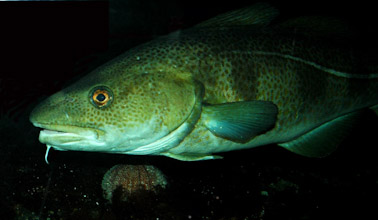
    Cod up close

    Fish and fisheries are extremely important to the Arctic region as its waters are often considered to be one of the richest fishing grounds in the world. Despite the drastic effects the significant fluctuations or collapse of the stock would have on the northern hemisphere its counterparts in the south would be considerably more vulnerable. Nations within Africa, who many of them are among the least developed nations in the world, generally have a less diversified economy and fewer means to deal with such change. In a global context fisheries are a significant part of the worlds nutritional intake, with at least 20% of the worlds annual consumption of dietary protein (Fao, 2007 (Allison et al 2009).

    Due to negative reports of the state of the fisheries globally, international and regional bodies are starting to react. One of the most commonly criticized fishery policies or organization is the European Union, which has recently addressed the issue of over fishing within its chambers. At the end of May 2009 European fisheries ministers concluded in a meeting to effectively scrap current rules that decide fishing quotas. Given this conclusion the European Union has decided to draw up a new common fisheries policy before 2012.

    It will be interesting to see if the new fishing policy will be adequate to deal with E.U problems in connection to fishing as 80% of E.U fishing grounds are estimated to be overfished (BBC News, 2009). Similarly it will be interesting to sea how regional bodies like the North East Atlantic Fisheries Committee (NEAFC) will be able to manage changes in migratory patterns of stocks.
    The position as it is portrayed by many of the leading specialist’s and organizations on a global scale will demand for close cooperation and some difficult decisions so world fishing can become sustainable within the changing environment at hand.

    Illegal and unregulated fishing also continues to be an important issue. It’s value has been estimated being between $4bn and $9bn. It also presents a further danger to species, which are already under threat of being overfished. Some interesting videos on the matter can be seen by following the links bellow:

    Sources

    • Allison, Edward H. Conway, Ashley S. Halls, Graham M. Pilling, John D. Reynolds, Neil L. Andrew & Nicholas K. Dulvy. (2009) Vulnerability of national economies to the impacts of climate change on Fisheries. Fish and Fisheries magazine
    • Cheung, William W.L. Lam, Vicky W.Y. Sarmiento, Jorge L. Kearney, Reg Watson & Pauly, Daniel (2009). Projecting global marine biodiversity impacts under climate change scenarios. Fish and Fisheries magazine
    • FAO (2007) The State of World Fisheries and Aquaculture
      2006. Food and Agriculture Organisation of the United
      Nations, Rome. Retrieved 18.02.09 from: http://www.fao.org/docrep/009/a0699e/A0699E00.HTM
    • FAO (2009) THE STATE OF WORLD FISHERIES AND AQUACULTURE
      2008. http://www.fao.org/docrep/009/a0699e/A0699E00.HTM
    • Jón Þ. Þór (2002) Sjósókn og Sjávarfang. Saga Sjávarútvegs á Íslandi. 1. Bindi Árbáta og skútuöld. Bókaútgáfan Hólar á Akureyri.
      UNDP (2007). Climate change threatens unprecedented human development reversals. http://content.undp.org/go/newsroom/2007/november/hdr-climatechange-20071127.en
  • Arctic Marine Shipping Assessment Report 2009

    Arctic Marine Shipping Assessment Report 2009

    AMSA 2009 report

    The Protection of the Arctic Marine Environment working group of the Arctic Council has released a new Arctic Marine Shipping Assessment report for the year 2009.

    The AMSA working group, led by Canada, Finland and the United States has produced a extensive and well-illustrated document that represents a four-year effort to consider and review all aspects of Arctic shipping. It includes documentation of shipping activities from a baseline year (2004) and future projections in key areas such as environmental protection, marine infrastructure, human dimensions, and governance. The report also contains series of very useful maps and charts.

    Main topics of the report are:

    • Arctic Marine Geography, Climate and Sea Ice
    • History of Arctic Marine Transport
    • Governance of Arctic Shipping
    • Current Marine Use and the AMSA Shipping Database
    • Scenarios, Futures and Regional Futures to 2020
    • Human Dimensions
    • Environmental Considerations and Impacts
    • Arctic Marine Infrastructure

    The Arctic is undergoing extraordinary transformations early in the 21st century. Natural resource development, governance challenges, climate change and marine infrastructure issues are influencing current and future marine uses of the Arctic. The Arctic Council, recognizing these critical changes and issues, at the November 2004 Ministerial meeting in Reykjavik, Iceland, called for the Council’s Protection of the Arctic Marine Environment (PAME) working group to “conduct a comprehensive Arctic marine shipping assessment as outlined under the Arctic Marine Strategic Plan (AMSP) under the guidance of Canada, Finland and the United States as lead countries and in collaboration with the Emergency Prevention, Preparedness and Response (EPPR) working group and the Permanent Participants as relevant.” The Arctic Marine Shipping Assessment, or The AMSA 2009 Report, is the product of that Arctic Ministerial decision in Reykjavik and was approved at the 2009 Arctic Council´s Ministerial meeting in Tromsø.

    The AMSA 2009 Report