Tag: Shtokman

  • Putin urges Shtokman decision

    Putin urges Shtokman decision

    Oil tanker

    Russian president Vladimir Putin urges oil companies to make their final decision on the Shtkoman gas project. The Shtokman area is one of the riches gas wells in the world.

    Putin met with Statoil´s CEO, Helge Lund, on Friday, but Gazprom (owned by the Russian government) is the leading player in the field. Statoil (owned by the Norwegian government) holds a 24 percent share of the Shtokman Development AG, the joint venture responsible for the project. Gazprom holds 51 percent, while Total (from France) holds 25 percent.

    This ownership could change in the nearest future.

    “You have a very good and big project with Gazprom” Putin said to Lund. “The huge production assets of Shtokman have global significance and we have to make active progress,” Putin said, according to the Barents Observer.

    Statoil could exit from the project and discussions with Gazprom are taking place. Speculations surrounding Shell to take over from Statoil have emerged.

    Reports say that Gazprom wants to get rid of Statoil, due to conflicting views on the project development model.

    Statoil has officially supported Gazprom’s intention to skip the project’s pipeline part and instead develop Shtokman as a 100 percent LNG project.

    Statoil has long stressed that project development costs need to be reduced and that tax breaks must be introduced. The development costs for the project’s first phase have reportedly grown to about $30 billion, up from the originally planned $20 billion.

    Statoil has invested around $1.5 billion in the Shtkoman project, which it could lose if pulling out.

    Source

    Barents Observer

  • Shtokman decision in December

    Shtokman decision in December

    Shoktoman

    A final investment decision for the megaproject in the Shtokman gas field is expected in December. The Shtokman field is located 550km offshore Russia in the Barents Sea.

    The estimated price tag of development will be presented in next month to the investors.

    It is believed to be one of the largest gas fields but the project has already been delayed. The partners in the Shtokman project – Norway’s Statoil, France’s Total and Russian gas export monopoly Gazprom – have delayed pipeline gas production from Shtokman until 2016 instead of the originally planned 2013.

    It is expected to require some $15 billion of investment in its first phase alone, according to the BarentsObserver.

    The field, which contains 3.9 trillion cubic metres of gas and 56 million tonnes of condensate, is 550 km offshore at a depth of 340 metres, was discovered by the Soviet Union in 1988 and its start-up has been repeatedly delayed due to problems with financing and the lack of transport infrastructure in place.

  • Will Norway back out from Shtokman?

    Will Norway back out from Shtokman?

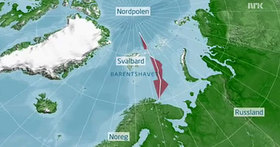
    Arctic on the map

    Barents Observer reports that Vladimir Selin, Chief Research Scientist at the Kola Science Center shares his opinion that the Agreement between Russia and Norway on the delimitation of the Barents Sea will result in Norway moving out of the Shtokman gas field and believes that it is part of the agreement.

    ” It is hard to understand who’s behind the Russian side in the Russian-Norwegian agreement from September 15, Selin says to Regnum.ru. – It is also hard to see why Russia needs this agreement – the pluses for Russia are unclear, but the minuses are evident”

    According to Selin Russia does not possess the necessary technology needed to develop the fields covered by the agreement and will not do so for years to come. Selin theorizes that, with Shtokman as the main priority for Russia and the fact that Norway has used up all its rich resources, a side agreement was made on the two nations priorities as the gain for Russia is not nearly as visible as the gain by Norway.

    He further states that Statoil will not necessarily officially withdraw from the shtokman gas field, but reduce their activities to next to nothing.

    Source: Barents Observer