Tag: Siberia

  • Cold winter conditions in the Arctic

    Cold winter conditions in the Arctic

    Climate conditions have been negative

    States for 2012 was climate conditions in Scandinavia, Siberia, Alaska and Canada have been colder than average this winter.

    The National Snow and Ice Data Center reports that the Arctic sea ice extent for December 2012 was well below average, driven by anomalously low ice conditions in the Kara, Barents, and Labrador seas.

    NSIDC states that the winter has been dominated by the negative phase of the Arctic Oscillation, bringing the cold climate around the Arctic.

    The Arctic Oscillation is an Arctic climate index with positive and negative phases, which represents the state of atmospheric circulation over the Arctic. The positive phase brings lower-than-normal pressure over the polar region, steering ocean storms northward, bringing wetter weather to Scotland and Scandinavia, and drier conditions to areas such as Spain and the Middle East.

    Reports today also show that the average temperature for USA for 2012 was above average, showing different climate than in the Arctic, outside of Alaska.

    Sources
    NSIDC

    NOAA 1

    NOAA 2

  • Russia opens second largest gas field

    Russia opens second largest gas field

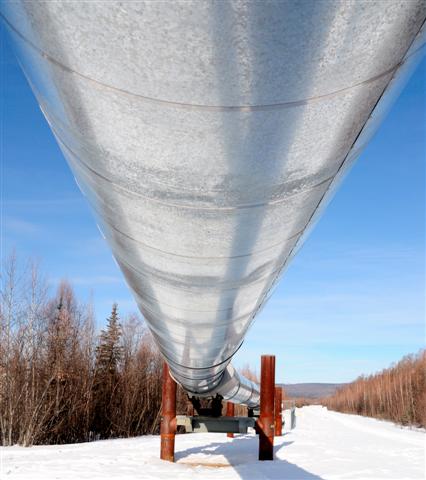
    Russian oil pipeline

    Russia opened its latest gas production site this week. President Vladimir Putin formally opened the commercial production at the Bovanenkovo field on the Yamal peninsula in extreme northwestern Siberia.

    The discovery of the site by the Soviets in the early 1970s created excitement and frustration in equal measure. The excitement was because of the huge potential, the frustration because of the severe ice conditions, permafrost and remoteness.

    Now the site has opened up and Russian energy giant Gazprom estimates to be 4.9 trillion cubic meters (177 trillion cubic feet) of natural gas in the field – making it one of the world’s three largest deposits.

    “The field will produce 115 billion cubic meters (4,060 billion cubic feet) of gas and that will go up to nearly 140 billion,” Putin told the field’s workers by live video.

    “This is nearly the equivalent of how much we export to Europe,” Putin stressed.

    The giant field is second in size in Russia only to Gazprom’s Urengoi deposit to the south. It is a part of an Arctic project that Gazprom has been pinning its hopes on as older wells run dry.
    Source:
    AFP
    See also:
    Gas in the Arctic

    Arctic Energy Portlet