Tag: Sweden

  • Sámi Customary Rights conference

    Sámi Customary Rights conference

    Polar bear in the Arctic

    The conference Sámi Customary Rights in Modern Landscapes – Indigenous People and Nature Conservation will be held in Luleå, Sweden, 28-29 August 2013, with an optional excursion and workshop in Jokkmokk on the 30th of August.

    The conference aims to explore how culturally defined values, ideologies and policies have formed, and continue to form, the basis of Indigenous rights and management models of nature conservation areas in Sápmi.

    Comparisons with, or cases of, the situations of other Indigenous Peoples are welcome. The conference seeks to bring together different disciplines such as history, political science, law, cultural geography, sociology and anthropology.The purpose is to combine different scientific disciplines such a history, political sciences and law. Some specific issues include:

    • How the cultural imagination of nature and landscape among different Indigenous groups has influenced the establishment of nature conservation areas and the design of governance models for natural resources.
    • How the contemporary governance of protected areas has been influenced by the principles of equality and positive discrimination, affecting the possibilities to establish adaptive co-management arrangements of specific areas.
    • How the legal situation of the Sámi and other Indigenous Peoples has been recognized, especially concerning longstanding customary territorial rights.

    For more information see the conference website.

    Source

    Sámi Customary Rights in Modern Landscape

  • PAGE21 General Assembly decided

    PAGE21 General Assembly decided

    Abisko scientific research station

    The PAGE21 General Assembly date and venue has been decided. The 2nd PAGE21 General Assembly will take place 23 – 24 September 2013 at the Abisko Scientific Research Station in Sweden. In addition to the General Assembly, a joint Media Event with the FP7 project INTERACTwill be organized on 25 September 2013.

    A WP4 workshop as well as a Young Researcher workshop for PAGE21 and ADAPT PhD students and Post Doctorates are planned on 21 and 22 September respectively.

    PAGE21 Project aims to understand and quantify the vulnerability of permafrost environments to a changing global climate, and to investigate the feedback mechanisms associated with increasing greenhouse gas emissions from permafrost zones.

    This research will make use of a unique set of Arctic permafrost investigations performed at stations that span the full range of Arctic bioclimatic zones. The project will bring together the best European permafrost researchers and eminent scientists from Canada, Russia, the USA, and Japan.

    The PAGE21 is a Large-scale integrating collaborative project under the ENV call topic “Vulnerability of Arctic permafrost to climate change and implications for global GHG emissions and future climate” (ENV.2011.1.1.3-1) coordinated by Professor Hans-Wolfgang Hubberten from AWI.

    Click here to read more about the project.

    Source

    PAGE21

  • Joint Arctic defense strategy?

    Joint Arctic defense strategy?

    Satellite station in the arctic

    Two Arctic states might join military forces in the Arctic. Sweden and Finland have held talks about a joint weaponary and it is a central part of Sweden’s vision for Nordic Defence cooperation. Sweden is looking for a joint Nordic policy in foreign affairs, secutiry and defense strategy.

    Foreign Minister Carl Bildt and Defense Minister Karin Enstrom have written the proposal.

    “We want to create a more efficient use of resources, higher quality, better effects and an expanded variety of defence capabilities through cooperation”, the two ministers write, according to the BarentsObserver.

    “Joint ownership and use of military capacities and resources, so-called pooling and sharing, is a central part of the Swedish vision for Nordic defence cooperation”, they underline.

    The Finnish side positively responds to the Swedish proposal. Defence Minister Carl Haglund says to Yle that the possible conclusion of a treaty with Sweden is worth thorough examination, but believes that such an agreement can come only after “several years”.

    “Indeed, in practice this would mean that we should have some kind of defense agreement with Sweden, because we would be talking about crucial capabilities, for example in the navy or the air force,” Haglund says.

    At the same time, the Finns are reluctant to get Norway on board. Haglund underlines that “in any case, Nordic NATO member countries should not be included in this cooperation”.

    Sources

    BarentsObserver
    Dagens Nyheder
    Yle

  • Canada meets Sweden for Arctic Council

    Canada meets Sweden for Arctic Council

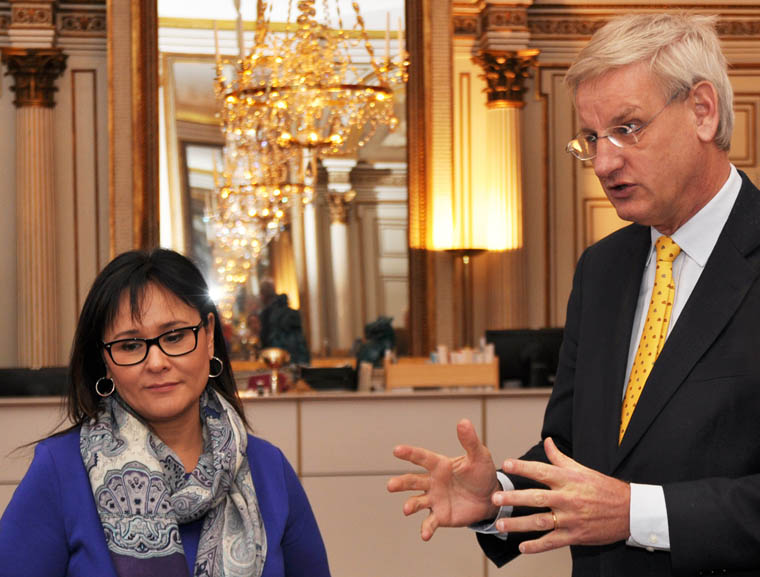
    Leona Aglukkaq and Carl Bildt at the press conference

    Canada will take over chairmanship in the Arctic Council in May 2013 from Sweden. The two countries have close cooperation for a smooth process when Canada takes its second chair of the council.

    Established in 1996, all eight Arctic States have held the Chair for the Arctic Council, with Sweden now completing the round.

    Sweden Minister for Foreign Affairs Carl Bildt met Canada’s Minister for the Arctic Council Leona Aglukkaq last week. Canada will serve as chair under Ms. Aglukkaq’s leadership, for the period 2013–2015. The work of the Arctic Council to protect the environment from oil spills, and Canada’s plans for its upcoming Chairmanship, were discussed at the meeting.

    Ms. Aglukkaq is now visiting the member states to introduce herself as the person who will lead Canada’s two-year chairmanship period. Tuesday it was the turn of Sweden and Minister for Foreign Affairs Mr. Carl Bildt.

    “We have worked to become more visible globally with regard to climate change, and to draw attention to the fact that climate change is occurring twice as fast in the Arctic than in the rest of the world. Awareness of this is now much greater in the global debate. This must be translated into political action, which takes a little longer. But I think we have made progress, for example on the issue of black carbon in the Arctic.” said Mr. Bildt.

    “Our priorities focus on development for people in the north: responsible resource development, safe shipping and sustainable circumpolar communities. The final priorities will be finalised when consensus has been reached in the Arctic Council at the Ministerial Meeting in Kiruna in May,” said Ms. Aglukkaq.

    During its chairmanship of the Arctic Council in 2011–2013, Sweden has worked to strengthen environmental protection during oil exploration in the Arctic. This has been achieved by developing safety standards based on best practice in the industry and negotiating an international agreement on cooperation in the event of oil spills. Sweden has also led efforts to establish the new permanent secretariat of the Arctic Council in Tromsø, Norway, which will open in May 2013, the Arctic Council website says.

    Sources

    Arctic Council

    Swedish Chairmanship

  • Nordic Council of Ministers

    Nordic Council of Ministers

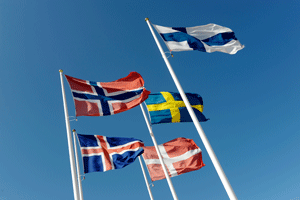
    Flags of Scandinavian countries

    The cornerstone of Nordic cooperation is the Nordic Council, which represents Denmark, Finland, Iceland, Norway, Sweden, the Faroe Islands, Greenland and Åland.

    The “Norden” consists of two separate but interoperable entities, The Nordic Council, an official inter-parliamentary body, and the Nordic Council of Ministers, a forum for Nordic inter-governmental cooperation. In addition to the Council and the Council of Ministers, there are more than 20 official Nordic institutions – and about the same number of unofficial ones. The Nordic Innovation Centre (NICe), NordForsk, Nordic Culture Point, Nordic Project Fund (NOPEF), the Nordic Centre for Welfare and Social Issues and the Nordic School of Public Health (NHV) are full Nordic institutions, as are the Nordic houses in Iceland and the Faroe Islands. One of the main institutions in the second category is the Nordic Investment Bank (NIB), which has been jointly owned by the five Nordic and three Baltic states since 2005. Another key organisation is the Nordic Cultural Fund, which supports culture in the Region as well as Nordic projects elsewhere in the world.

    Norden

    The Nordic Council is the official inter-parliamentary body. Formed in 1952, it has 87 elected members from Denmark, Finland, Iceland, Norway and Sweden, as well as the three autonomous territories (Greenland, the Faroe Islands and Åland). The members are all national MPs nominated by the party groups in their home parliaments. There are no direct elections to the Council. It is run by a Presidium and convenes for an annual autumn meeting called the Session, which passes recommendations to the national governments. The main priorities in the work of the Nordic Council are: climate, environment and energy; education and research; and welfare and culture.

    The cornerstone of the cooperation is The Helsinki Treaty, which regulates official cooperation between Denmark, Finland, Iceland, Norway and Sweden. It was signed on 23 March 1962 and came into force on 1 July 1962. The main objective of the treaty is to maintain and develop further co-operation between the Nordic countries in the legal, cultural, social and economic fields, as well as in those of transport and communications and environmental protection. In addition, the treaty establishes a foundation for joint positioning in matters of common interest which are dealt with by European and other international organisations and conferences.

    The Council of Ministers is the official inter-governmental body. The prime ministers have overall responsibility for its work. In practice, this responsibility is delegated to the ministers for Nordic cooperation and the Nordic Co-operation Committee, which co-ordinates the day-to-day work. Despite its name, the Council of Ministers, which was founded in 1971, consists of several councils. These councils meet a couple of times a year. At present, there are 11 of them.

    On of the areas of Nordic cooperation is the Arctic. The Nordic countries cooperate to improve the quality of life for the indigenous peoples in the northern areas and to promote social and cultural development for the Arctic people. Nordic cooperation also strives to protect the sensitive and characteristic Arctic nature, and to ensure sustainable use of the region’s resources, and protection of its biological diversity.

    An Advisory Expert Committee was established in conjunction with the adoption of the new Arctic Co-operation Programme in 2002. The Arctic Expert Committee is made up of Nordic members of the Arctic Council and representatives from the autonomous territories. In Nordic Council terms the Arctic Expert Committee will offer advice to the Ministers for Co-operation and the Nordic Co-operation Committee on matters relating to the Arctic.

    Following the increasing importance of the Arctic region in international politics, the Nordic Council will discuss the controversial question of a Nordic strategy for the Arctic Region in its meeting in Reykjavik, 21-23 March, 2012 . The meeting will also discuss oil extraction in the Arctic and recommendations for allocating responsibilities in the event of environmental incidents. A plenary session will be in the Icelandic parliament on Friday 23 March, 08:30-11:45 local time.

    Sources: Norden.org, Nordic Co-operation

  • Sweden welcomes four legged Finnish – Russian immigrant

    Sweden welcomes four legged Finnish – Russian immigrant

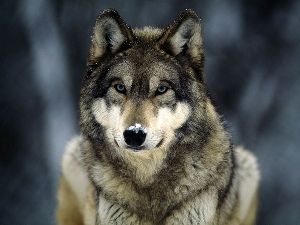
    grey wolf

    For the first time in years, a Finnish-Russian wolf is about to migrate into Swedish wolf territories. That could positively contribute to Swedish and Norwegian wolf genes, researchers say.

    The lone traveler has moved into Sweden’s northernmost county of Norrbotten and is wandering further towards Swedish wolf territories. In the last decade, only two other wolf individuals have made the long journey. This is reported in the Swedish public radio.

    Last time the wolf was traced, he was about one and a half mile from a previously known wolf territories where there is a lone female.
    The wolf which is believed to be a male, can bring new fresh genetic materials to the Swedish-Norwegian wolf stock, Swedish authorities say. Faeces samples revealed that the lone wolf came from the Finnish-Russian population, which could strengthen the heavily inbred Swedish-Norwegian wolf population.

    Authorities are now trying to trace the new immigrant and hope that it naturally enters and establishes itself in the Swedish population.

    Further information about wolves

    Sources:
    Barents Observer
    Swedish Radio
    National Geographic (Photo)