The summer is near and the Arctic sea ice has started its retreat. This means hard work for the polar bears in the Arctic.
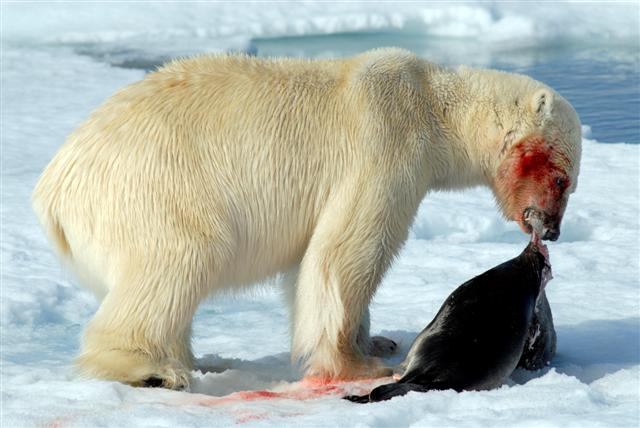
Their hunts for food has begun after the winter exile and are now swimming more than ever to eat.
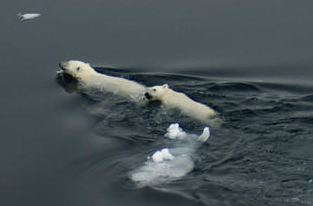
A research conducted for five years, between 2004 and 2009, shows that the average distance they swam was 154 kilometers.
Scientist used GPS technology to track 52 adult female polar bears in the Beufort Sea near Alaska. They managed to track 50 swims in total.
One case studied by the researchers tracked a female polar bear as she swam continuously for more than nine days, covering a distance of more than 687 kilometers. The bear lost 22 per cent of her body mass during the trip. Her cub died during the journey.
However, many cubs do survive the long swims, says Anthony Pagano, a lead author of the study. He told the Barents Observer:
“We were able to recapture or observe 10 of these females within a year of collaring, and six of these females still had their cubs,” Pagano said in a press release. “These observations suggest that some cubs are also capable of swimming long distances. For the other four females with cubs, we don’t know if they lost their cubs before, during, or at some point after their long swims.”
The study, published in the latest issue of the Canadian Journal of Zoology, is the first to use GPS to track polar bears’ long-distance swims. With declining levels of Arctic ice, these long swims could become more and more common.
There are about 25,000 polar bears in the Arctic. A 2004 survey of the Barents Sea polar bear population found about 3,000 polar bears in the region.
Source