Tag: weather

  • Arctic brings cold weather to China

    Arctic brings cold weather to China

    A man works in a frozen river in Taiyuan, Shanxi province

    The year 2012 was unusually cold in China, which may be a result of the record loss of Arctic sea ice. “Observation and data analysis showed that Arctic sea ice loss may cause cold and snowy winters in parts of Asia,” Chen Yu, senior engineer of the National Climate Center in China states.

    The Arctic sea ice saw it record low extent on September 16th 2012.

    The China Daily reports and Chen explains that when sea ice melts in the Arctic, the water temperature increases. When that happens, the air becomes moister and is more likely to form cold fronts.

    According to the China Meteorological Administration, in December most of China suffered colder weather than usual. On Dec 24, frequent cold fronts led to temperatures in 21 monitoring stations hitting record lows.

    And the cold weather continued and the weather has been cold since late December.

    Kang Zhiming, weather forecaster of the National Meteorological Center, said weather models showed the temperature will not rise until late January.

    “The weather authorities will keep a close eye on any changes in the weather, especially before Spring Festival, in order to give timely information to transport and related departments, particularly in the event of extreme weather,” Kang said.

    China has a research station in Ny Alesund, on Svalbard, and among other projects is monitoring weather and sea ice from the station.

    Source
    China Daily

  • Relation between weather and sea ice

    Relation between weather and sea ice

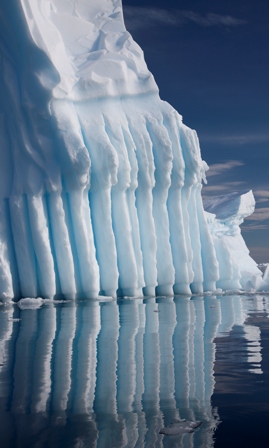
    Iceberg in the arctic

    The probability of snowy cold winters in Central Europe rises when the Arctic is covered by less sea ice in summer. Scientists of the Research Unit Potsdam of the Alfred Wegener Institute for Polar and Marine Research in the Helmholtz Association have made this discovery.

    The scientist have decrypted a mechanism in which a shrinking summertime sea ice cover changes the air pressure zones in the Arctic atmosphere and impacts our European winter weather. If there is a larce scale melt in the summer, like in recent years, two important effects are intensified.

    Firstly, the retreat of the light ice surface reveals the darker ocean, causing it to warm up more in summer from the solar radiation.

    Secondly, the diminished ice cover can no longer prevent the heat stored in the ocean being released into the atmosphere (lid effect). As a result of the decreased sea ice cover the air is warmed more greatly than it used to be particularly in autumn and winter because during this period the ocean is warmer than the atmosphere.

    “These higher temperatures can be proven by current measurements from the Arctic regions,” reports Ralf Jaiser, lead author of the publication from the Research Unit Potsdam of the Alfred Wegener Institute. The warming of the air near to the ground leads to rising movements and the atmosphere becomes less stable.

    “We have analysed the complex non-linear processes behind this destabilisation and have shown how these altered conditions in the Arctic influence the typical circulation and air pressure patterns,” explains Jaiser.

    Sources

    Alfred Wegener Institute

  • Water bulge might cause changing weather

    Water bulge might cause changing weather

    The rise of the bulge

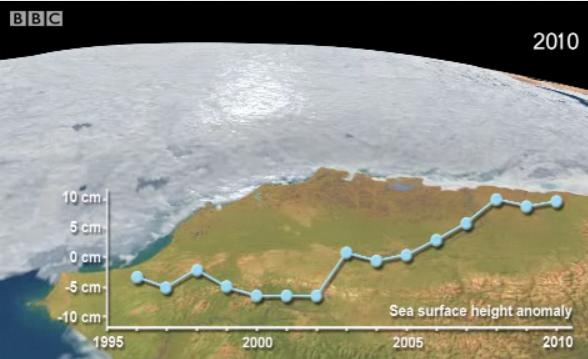
    Scientists have found an enormous dome in the western Arctic Ocean, full of fresh water. The bulge is thought to be around 8000 cubic meters in size and has risen about 15cm in 10 years.

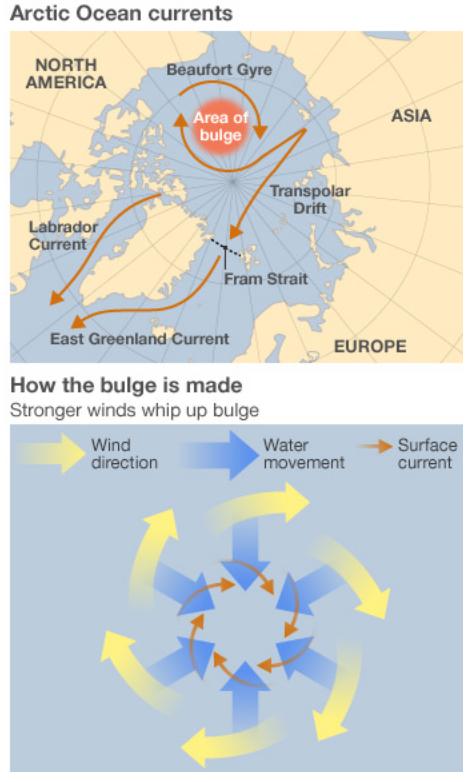
    The image on the right shows the rise of the bulge, rising fast in 10 years. The second picture then shows how a bulge is made.

    “In the western Arctic, the Beaufort Gyre is driven by a permanent anti-cyclonic wind circulation. It drives the water, forcing it to pile up in the centre of gyre, and this domes the sea surface,” explained lead author Dr Katharine Giles from the Centre for Polar Observation and Modelling (CPOM) at University College London to the BBC.

    The making of the bulgeAn ESA satellite was used to discover the bulge. Most of the fresh water is coming from the Russian side of the Arctic.
    Winds and currents have transported this fresh water around the ocean until it has been pulled into the gyre. The volume currently held in the circulation probably represents about 10% of all the fresh water in the Arctic, according to BBC.

    If the fresh water were to enter the North Atlantic in large volumes, the concern would be that it might disturb the currents that have such a great influence on European weather patterns.

    These currents draw warm waters up from the tropics, maintaining milder temperatures in winter than would ordinarily be expected at northern European latitudes.

    “The ice is now much freer to move around,” said Dr Giles to the BBC.

    “So, as the wind acts on the ice, it’s able to pull the water around with it. Depending on how ridged the surface of ice is or how smooth the bottom of the ice is – this will all affect the drag on the water.”

    “If you have more leads, this also might provide more vertical ice surfaces for the wind to blow against.”

    Sources

    BBC

  • The Northward Shift

    fishing hole in the ice

    Climate change poses both threats and opportunities for Arctic fisheries. Those concerns include indicators of a major ecosystem northward shift, meaning that species will shift northwards in order to find ideal habitat conditions.

    Such shift has ambiguous effects, especially in economical terms, meaning that traditional species that are harvested might leave traditional waters, moving from one Exclusive Economic Zone to another and or into unfishable waters

    Some will lose their ideal habitat, since a northward shift is not infinite and species that are weaker to adjustment will lose in the competition for their ideal habitat. That poses a threat to the traditional commercial fisheries for countries and areas that are economical dependable of traditional fisheries of such species.

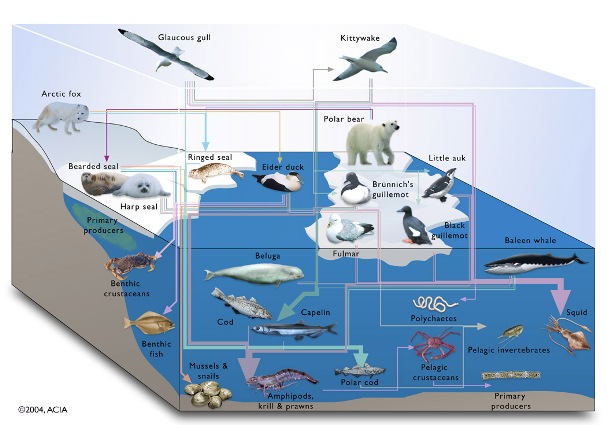
    Marine Food Web

    As an example, a northward shift of coldwater specie like capelin might have enormous affect to the biodiversity in the Arctic. Capelin feeds mainly from zoo plankton and is an important food source for many valuable benthic and pelagic species, such as Atlantic cod and Pollock.

    A northward shift of the capelin, due to warmer waters, might therefore affect other stocks significantly, even though warmer waters do not affect those species directly. The basis for growth of the Atlantic cod is capelin and without such important food source the cod needs to find substitute specie, like shrimp (which is also coldwater specie that is moving further north), herring, spawns, fingerlings or other smaller species.

    Species in the higher levels of the Arctic food web need to adapt by finding other food sources or simply move along with the current food source. One direct effect of climate change to one specie might
    therefore affect indirectly too many other species that depend on that species.