Tag: WWF

  • New tool to map the Arctic now available

    New tool to map the Arctic now available

    The new WWF web tool map

    Few days ago WWF launched ArkGIS (Arctic Geographical Information System) – a free, interactive mapping platform that combines and integrates existing data about the environment and human activity in the Arctic.

    By releasing a new web tool mapping both nature and activities, WWF hopes to be able to make relevant information universally available – in a very visible manner.

    The web-platform allows any user to download pre-made maps and videos, as well as developing customized maps on their own, using an interactive map service.

    ArkGIS is a project initiated and managed by WWF, but it brings together data from a host of information providers, including several Arctic Council working groups, the Institute of Marine Research, and the Norwegian Coastal Administration. Map layers to date include 368 identified areas of heightened ecological significance, and Arctic ship traffic, ice coverage, and bathymetry.

    Please click here to view the ArkGIS. Click here to connect to the Arctic Portal Mapping System.

    Source
    WWF Norway

  • Illegal trade on increase in Russia

    Illegal trade on increase in Russia

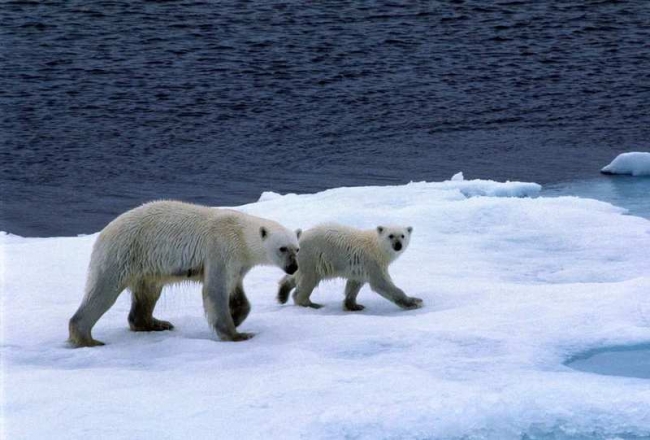
    Polar bear with cub

    Illegal trade of polar bears products is on the increase in Russia.

    Last month, WWF Russia presented study showing that illegal trade in polar bear products had been booming. Skins are for sale at 600,000 rubbles, mostly in Moscow, but internet ads also come from Murmansk.

    The environmental group in Moscow has monitored the internet over the last 20 months searching for ads selling or buying polar bear skins. 47 skins for sale have been discovered, some ads offering more than 3 skins, according to the study.

    Soviet Union outlawed polar bear hunting in 1957. Most of the skins where put up for illegal sale in Moscow, but WWF has also found skins for sale in Murmansk, St. Petersburg, Chelyabinsk, Kirov, Izhevsk, Dnepropetrovsk and Irkutsk.

    The study says the average price for a polar bear skin is 600,000 rubbles (€14,940), sharply up compared with black-market prices ten years ago.

    There are between 5,000 and 7,000 polar bears in Russia. Those in the Barents Region are partly migrating between the Norwegian archipelago of Svalbard and the Russian islands of Franz Josef Land and Novaya Zemlya.

    Source

    Barents Observer

  • Yacht sail and research this summer

    Yacht sail and research this summer

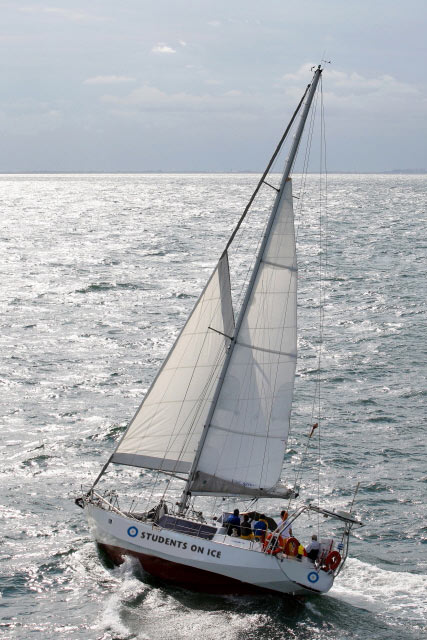
    The Arctic Tern

    Researchers have a unique opportunity to travel around the Arctic this summer. The Association of Polar Early Career Scientists invites researchers to join WWF and the Students on Ice Foundation on a summer expedition to the high latitudes of Greenland and the Canadian Arctic.

    The mean of travel is the expedition sailboat Arctic Tern, which will sail between communities whilst researchers can do their research on land, the sea or in the communities themselves.

    The Arctic Tern is a 50 ft. expedition sailing yacht with a retractable keel to meet the risks of sailing in ice-bound areas which also enables it to sail onto a beach.

    The journey will include experiences polar sailors. It was acquired by Students on Ice in September 2009 to serve as a platform for education, science research, film and media.

    Research areas will include ecosystem productivity, sea ice, flora and fauna, permafrost, ocean currents and cultural adaptations. Application deadline is May 21st and only seven places are available.

    Sources

    APECS

  • WWF celebrates 20 years of Arctic program

    WWF celebrates 20 years of Arctic program

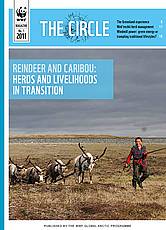
    WWF The Circle

    The WWF’s Global Arctic Programme celebrates this year its 20th anniversary of the creation of a WWF body to champion conservation in the Arctic.

    When WWF was founded in 1992 it says that there was very limited understanding of the Arctic and its importance. That has however changed, and interest today is great from all over the world.

    The WWF issues a magazine produced by the WWF Global Arctic Programme called The Circle, four times a year. Each issue focuses on a specific Arctic-related topic.

    The Circle is distributed free to around 3,000 arctic stakeholders worldwide, including government officials and publicly-elected representatives, indigenous organisations, conservationists, scientists, NGOs, libraries, and business executives.

    Its goal is to inform decision-makers, scientists and the interested public about arctic environmental and development issues.

    The latest issue is fresh and it celebrates the history of the Global Arctic Programme, and its ongoing mission to ensure a resilient, sustainable future for the Arctic.

    Click here to download the latest magazine.

    Sources

    WWF

  • VLT in the Circle

    VLT in the Circle

    the circle reindeer

    A coverage about the Virtual Learning Tools (VLT) is in the latest issue of the Circle, which is a magazine produced by the WWF Global Arctic Programme. An interview is in the issue with Philip Burgess from the International Centre of Reindeer Husbandry (ICR). Philip is one of the instructor and organizer of the Masters program that is taught at the VLT, “Adaptation to Globalization in the Arctic: The Case of Reindeer Husbandry”.

    In the article, he mentions the pros of participating in an online course such as the one taught at the VLT environment “The flexibility of the online environment allows students to follow the course according to their own schedules (and time zones!) through a weekly live lecture which is also archived for later viewing”.

    The rapid technology is creating a smaller world, as Philip states in the article: “On a recent occasion, I was sitting I Toronto, Canada while a professor was delivering a lecture in Tromsø, Norway. Students were participating from Russia, Norway, Finland, Sweden, the UK, the US and Canada. But we were all together in a shared digital room (although perhaps it should be called a digital lavvu, or chum)”.

    The Circle is published four times a year. Each issue focuses on one specific Arctic-related subject, the topic in the newest edition being ocean acidification. The latest issue has a focus on reindeer herding and caribou, entitled Reindeer and Caribou: Herds and Livelihood in Transition. This edition focuses on a number of themes that are current in the world of reindeer and caribou. Articles cover global warming, wild reindeer in Siberia, oil and gas impacts on Nenets reindeer husbandry and the impact of wind power development on reindeer herding districts in Sweden.

    Latest Issue of the Circle – Reindeer and Caribou: Herds and Livelihood in Transition

    Virtual Learning Tools

  • Newest edition of The Circle is out

    Newest edition of The Circle is out

    World Wildlife Fund

    The newest edition of the Circle is now out. It is a magazine produced by the WWF Global Arctic Programme, published four times a year. Each issue focuses on one specific Arctic-related subject, the  topic in the newest edition being ocean acidification.

    The Circle is distributed free to around 3,000 arctic stakeholders worldwide, including government officials and publicly-elected representatives, indigenous organisations, conservationists, scientists, NGOs, libraries, and business executives. The goal is to inform decision-makers, scientists and the interested public about arctic environmental and development issues.

    To read the latest Circle and view the past issues, please go to the WWF The Arctic Progarm homepage

    For further information about The Circle, or to contribute an article, please contact Becky Rynor, brynor@wwf.no or fill in WWF online form.

  • 4th edition of The Circle

    4th edition of The Circle

    WWF - World Wildlife Fund

    WWF International Arctic Programme’s quarterly publication The Circle has been issued and is now available online on the WWF homepage.

    The issue is dedicated to changing living conditions of Arctic species and includes articles on sea ice, Caribou, marine mammals and Arctic birds.